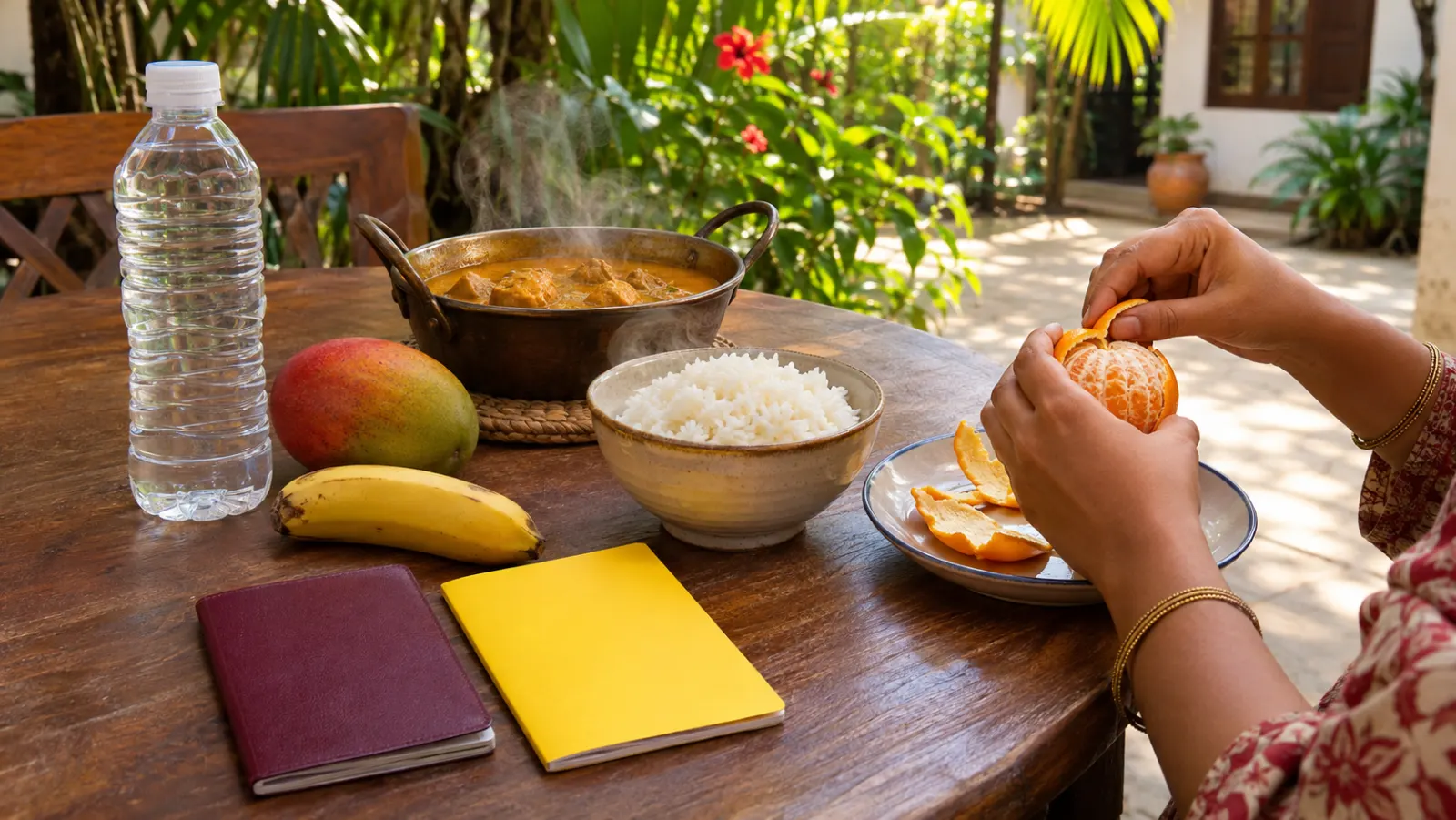
A traveller in Scarborough heading to Accra and another heading to Karachi might share a departure lounge at Pearson, but the vaccine conversations they need before boarding look quite different. One may be turned away at the airport without a yellow fever certificate. The other faces a much higher chance of typhoid, a bacterial illness that is becoming harder to treat in some regions.
These two vaccines get grouped together on travel clinic lists, yet they protect against very different diseases. Yellow fever is a virus carried by mosquitoes, and its vaccine comes with official paperwork and strict rules about where it can be given. Typhoid comes from contaminated food and water, and its vaccine is only partly protective, which means your eating habits abroad still carry a lot of weight.
This guide sets out what each disease is, which kinds of trips raise the question, how timing and certificates work, and what you can do at the table to lower your risk. It is general information; the specific advice for your itinerary should come from a travel health clinician who can check current requirements.
Yellow fever: a mosquito-borne virus with a paper trail
What it is
Yellow fever is a viral infection spread by the bite of infected mosquitoes, mostly in tropical areas of sub-Saharan Africa and South America. Many infected people have a mild illness or none at all, but a portion go on to a severe phase with high fever, jaundice (the “yellow” in the name), bleeding and organ failure, which can be fatal. There is no specific antiviral cure, so prevention is everything.
Which trips raise the question
Yellow fever comes up for two separate reasons, and it helps to keep them apart:
- Medical protection. Your destination, or part of it, has a risk of yellow fever transmission, so the vaccine is recommended to protect you.
- Entry requirements. A country asks to see proof of vaccination at the border. Some require it of every arriving traveller; others only require it if you are arriving from, or have transited through, a country with yellow fever risk.
That second point catches people out. A family flying to visit relatives in one country might connect through an airport in a yellow fever risk country, and that connection, depending on its length and the destination’s rules, can trigger a certificate requirement at the final stop. Bring your full flight routing, including layovers, to your appointment.
Requirements change, and they can differ from the medical recommendation. Always confirm current entry rules through official government travel advice and the embassy or consulate of each country on your route before you fly.
Where the vaccine is given
In Canada, yellow fever vaccine can only be given at designated Yellow Fever Vaccination Centres, and only those centres can complete the official certificate. Not every clinic or travel provider is designated, and vaccine supply can vary. Before you count on getting it at any particular location, including ours, call ahead to confirm whether yellow fever vaccine is currently available there and whether the certificate can be issued on-site. If it is not, the clinician can still help you work out whether you need it, review your safety, and point you toward where to go.
Our yellow fever vaccination page explains how we approach eligibility and documentation.
The certificate
Proof of yellow fever vaccination is recorded on the International Certificate of Vaccination or Prophylaxis, a small yellow booklet often called “the yellow card.” A few practical points:
- The certificate becomes valid 10 days after your first yellow fever vaccination, so getting vaccinated the day before you fly will not satisfy a border requirement.
- Under current international rules, a single dose is considered valid for life for certificate purposes, but some travellers may still be advised to have a booster for medical reasons, and individual countries’ practices can vary. Confirm this for your route.
- Keep the certificate with your passport for the whole trip, and keep a photo of it on your phone as a backup.
- The certificate must be properly completed and stamped by the vaccination centre. Handwritten notes or vaccine records from a regular clinic are not a substitute.
If you need other travel paperwork, such as a medical letter, ask about international travel health certificates.
Who should not receive it, or needs extra care
Yellow fever vaccine is a live vaccine, and it is not safe for everyone. It is generally avoided or used with great caution in:
- Infants under a certain age
- People with weakened immune systems, including from cancer treatment, organ transplant, some autoimmune drugs, or poorly controlled HIV
- People with a history of thymus disease or thymus removal
- People with a severe allergy to eggs or other vaccine components
- Pregnant or breastfeeding people, unless travel to a high-risk area cannot be avoided
Older adults, particularly those over about 60, have a higher risk of rare but serious side effects with a first dose, so the decision involves weighing their actual exposure against that risk.
When the vaccine is not advisable, a clinician at a designated centre may be able to provide a medical waiver for entry purposes. A waiver is paperwork, not protection. Some countries may not accept it, and it does nothing to stop infection, so changing or postponing the itinerary may be the safer choice for high-risk areas.
Side effects
Most people have mild effects in the days after vaccination, such as a sore arm, headache, muscle aches or a low fever. Seek medical care promptly if you develop a high fever, confusion, severe headache, a stiff neck, unusual weakness, yellowing of the skin, or signs of an allergic reaction in the weeks after vaccination, and mention that you recently had the yellow fever vaccine. Call 911 for trouble breathing, swelling of the face or throat, or collapse.
Typhoid: a food-and-water infection worth taking seriously
What it is
Typhoid fever is caused by a type of Salmonella bacteria that spreads through food and water contaminated by an infected person’s stool. It typically begins gradually with a fever that climbs over several days, along with headache, tiredness, stomach pain, loss of appetite and either constipation or diarrhea. Without treatment it can lead to serious complications, including bleeding or perforation of the bowel.
Where the risk is highest
Typhoid occurs in many parts of the world where clean water and sanitation are not reliable, but the risk is particularly high in South Asia, including Pakistan, India, Bangladesh and Nepal. It is also present in parts of Africa, Southeast Asia, the Middle East and Latin America. Strains that resist many common antibiotics have been reported in some regions, which makes prevention even more valuable.
Travellers who visit friends and relatives tend to be at higher risk than tourists, because they stay longer, eat in homes and at local stalls, and often travel outside the main cities. For many families in Scarborough with roots in South Asia, that describes almost every trip home.
Vaccine options
Two main types of typhoid vaccine are used in Canada:
- An injectable vaccine, given as a single shot, ideally at least two weeks before departure. Protection lasts a few years, after which a booster may be recommended for ongoing travel.
- An oral vaccine, taken as a short series of capsules on alternating days. The capsules need to be kept refrigerated, taken on an empty stomach exactly as directed, and finished at least about a week before travel. Some antibiotics and antimalarials can interfere with it, and it is a live vaccine, so it is not suitable for people with weakened immune systems or during pregnancy.
Your clinician will help choose based on your age, health, other medications and how soon you are leaving. Our typhoid vaccination page covers what to bring.
The key thing to understand is that neither vaccine gives complete protection. They lower your risk meaningfully, but they do not let you drink tap water with confidence. They also do not protect against paratyphoid, a closely related illness, or against the many other causes of travellers’ diarrhea.
Eating and drinking: where typhoid is really prevented
Since the vaccine only goes so far, what you eat and drink is the other half of typhoid prevention. The old travel rule still works: boil it, cook it, peel it, or leave it. In real life, especially as a guest, a few specific situations deserve attention.
Water and drinks
- Drink bottled water with an intact seal, or water that has been boiled. Use the same water to brush your teeth.
- Ice is often made from tap water. Ask for drinks without ice unless you know how it was made.
- Hot tea and coffee made with boiled water are generally safe. Fresh juices from roadside stands, often diluted with water or poured over ice, are riskier.
- Be cautious with drinks made by mixing water into something, such as lassi, nimbu pani or street-made sugarcane juice, unless you know the water was safe.
Food
- Freshly cooked food served steaming hot is your safest choice. Food that has been sitting out at room temperature for hours, such as at a wedding buffet in the heat, is riskier.
- Raw salads, chutneys and garnishes washed in tap water carry risk. Cooked vegetables are safer.
- Peel fruit yourself after washing your hands. Pre-cut fruit from a vendor is a gamble.
- Street snacks that use unboiled water, such as pani puri or golgappa, are a well-known source of trouble.
- Avoid unpasteurized milk and dairy products.
Hands
Wash your hands with soap, or use an alcohol-based sanitizer, before eating and after using the toilet. This matters just as much after a long day of travel in crowded buses or taxis.
Being a good guest
Refusing food from relatives can feel impossible. A few phrases that families have found useful: “My doctor told me my stomach is sensitive after so long in Canada,” or simply asking for your portion to be served hot from the pot. Most hosts would rather adjust than see you ill.
Timing both vaccines before your trip
Ideally, book a travel appointment six to eight weeks before departure, or as soon as flights are booked. That window allows for:
- The 10-day wait before a yellow fever certificate becomes valid
- The oral typhoid course, or the two weeks after an injectable typhoid shot
- Fitting in other vaccines such as hepatitis A, and starting malaria prevention if needed
If your trip is sooner, still come. A destination-specific travel advice visit can still sort out what is possible in the time you have and help you plan around the rest.
Fever after you return
Both typhoid and yellow fever, as well as malaria and dengue, can cause fever after travel. If you develop a fever during or within the weeks and months after a trip to a tropical region, see a doctor promptly and tell them exactly where you went and when. Seek emergency care or call 911 for fever with confusion, severe abdominal pain, yellowing of the skin or eyes, bleeding, difficulty breathing or extreme weakness.
Preparing for your trip at HealthSmart Medical
A little planning makes the difference between a smooth arrival and a stressful conversation at a border desk, or between enjoying a family visit and spending it unwell. HealthSmart Medical provides travel health consultations in Scarborough at 2425 Eglinton Ave. East, Unit 12. Call 416-757-7117 or book online, bring your full itinerary including layovers, and ask us to confirm in advance whether yellow fever vaccine and certificates are currently available on-site so we can plan the right route for you.
This article is for general information and is not a substitute for medical advice. If you have severe or worsening symptoms, call 911 or go to the nearest emergency department.