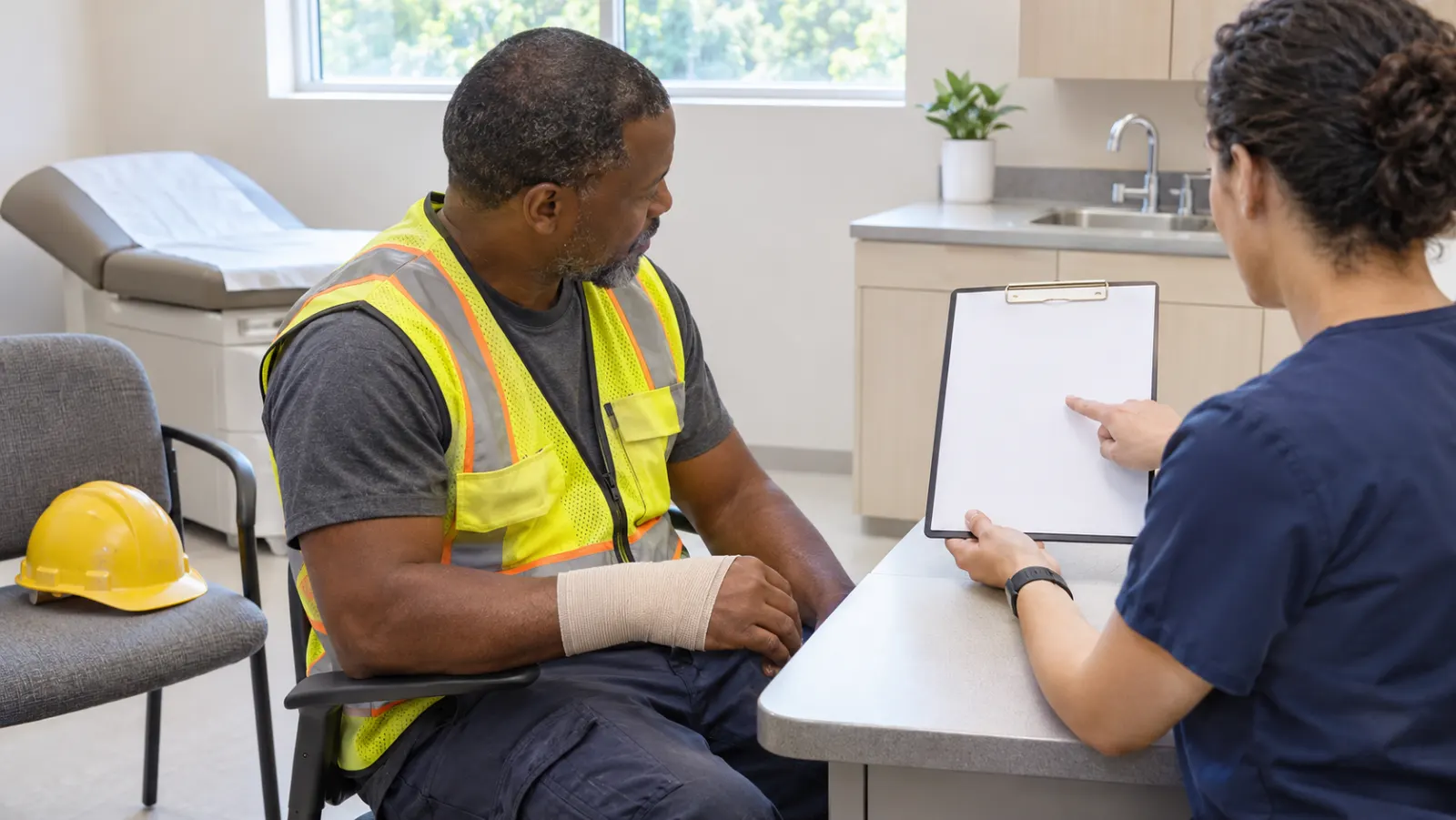
Workplace injuries rarely announce themselves. A box slips off a shelf in a distribution centre near the 401. A cook catches a hand on a hot pan during a Friday rush. A personal support worker feels something pull in her lower back while helping a client out of bed. Sometimes the injury is obvious. Often it is a twinge that feels manageable at the end of a shift and is much worse the next morning.
People who work in Scarborough do a huge range of jobs. There are warehouse and logistics staff, trades and construction crews, health care workers, cleaners, retail and restaurant employees, drivers, and office workers who spend long days at a keyboard. Many people are juggling more than one job, and some are newer to Canada and less familiar with how the workplace insurance system works. It is very common for someone to come into a walk-in clinic days after an injury, unsure whether they should have reported it, or worried that reporting it will cause trouble at work.
This article is meant to clear up some of that uncertainty. It covers what to do right after you are hurt, how the Workplace Safety and Insurance Board (WSIB) process generally works in Ontario, why documentation matters so much, and how a clinic like ours can help with assessment and return-to-work planning. It is general information, not legal advice. WSIB itself and your employer remain the official sources on your claim.
First things first: get the care you need
Before thinking about forms, think about your body.
Call 911 or go to the nearest emergency department if you or a co-worker has:
- A head injury with loss of consciousness, confusion, repeated vomiting, or a worsening headache
- Chest pain, trouble breathing, or signs of a serious allergic reaction
- Heavy bleeding that will not stop with firm pressure
- A suspected broken bone, especially with visible deformity
- A deep wound, a crush injury, or an injury to the eye
- A serious burn, chemical exposure, or electrical injury
- Numbness, weakness, or loss of bladder or bowel control after a back or neck injury
- A fall from a height
For injuries that are not emergencies but still need medical attention, such as a sprain, a strain, a cut that may need stitches, a minor burn, or new pain that is not settling, a walk-in clinic visit is appropriate. In Ontario, employers are generally responsible for arranging and paying for transportation to a hospital, a health professional, or home on the day of the injury if it is needed.
Report it, even if it seems minor
This is the step people skip most often, and it is the one they regret most.
Tell your supervisor or employer about the injury as soon as you can, ideally the same day. Do this even if you think you will be fine. Back strains, repetitive strain problems in the wrist or shoulder, and minor knee twists have a way of getting worse over days or weeks. If the injury was never reported, it can be much harder later to show that it happened at work.
A few practical habits help:
- Report it in writing if you can, even a short email or text to your supervisor, so there is a dated record.
- Note the details while they are fresh: the date, time, location, what you were doing, what happened, and the names of anyone who saw it.
- Take photos of the area where it happened, any equipment involved, and visible injuries, if it is safe and appropriate to do so.
- Keep copies of anything you sign or receive.
You also have the right to report a workplace injury. Ontario law protects workers from being punished for reporting an injury or filing a claim. If you feel pressure not to report, that is something you can raise with WSIB or seek advice about.
How the WSIB process generally works
WSIB is Ontario’s workplace insurance system. It is funded by employers and provides benefits such as health care coverage and loss-of-earnings support to eligible workers injured on the job. Not every employer in Ontario is required to have WSIB coverage, so it is worth knowing whether yours does. Most workers in industries like construction, manufacturing, warehousing, and health care are covered.
In broad strokes, three reports usually come together on a claim:
- The employer’s report. Once an employer learns that a worker needs health care beyond first aid, or misses time or earnings because of a work injury, they are required to report it to WSIB within a short time frame.
- The worker’s report. You can file your own report of the injury with WSIB. You may be contacted to provide details, and you can also start a claim yourself.
- The health professional’s report. When you see a doctor or nurse practitioner for a work-related injury, they complete a report for WSIB describing the injury, findings, and treatment plan. That is why it is important to tell the clinic at check-in that your visit is for a work injury.
There are deadlines for filing a claim, so do not put it off. WSIB staff, or the WSIB website, can confirm the current time limits and help you with your specific situation.
Tell us it is a work injury
When you check in at HealthSmart Medical, please mention right away that the injury happened at work. Bring your employer’s name, address, and phone number, and your WSIB claim number if you already have one. This allows the clinician to complete the correct paperwork and keeps your OHIP and WSIB records from getting mixed up. Our WSIB assessments page explains more about how we handle these visits.
What happens at the clinic visit
A visit for a workplace injury looks much like any careful injury assessment, with a little more attention to detail than usual.
Your clinician will want to know:
- Exactly how the injury happened, step by step
- What you felt in the moment, and what changed afterward
- Where the pain is, what makes it better or worse, and whether there is numbness, tingling, or weakness
- What your job involves physically: lifting, bending, standing, kneeling, reaching overhead, driving, typing, or operating machinery
- Any previous injuries to the same area
- Your medications and other health conditions
They will examine the injured area and may recommend X-rays or other imaging through diagnostic imaging referrals, wound care, a splint or support, or a referral to physiotherapy or a specialist. For cuts and scrapes, our minor wound care service may be all you need.
Why the details in your chart matter
Medical notes are part of what WSIB uses to understand your injury. Clear, consistent information from the start helps everyone. That does not mean exaggerating or downplaying anything; it simply means being specific. “My back hurts” is less useful than “I felt a sharp pull in my lower right back while lifting a 20-kilogram box from the floor to a waist-high cart, and by evening I could not bend to tie my shoes.”
If your symptoms change, such as pain spreading down a leg, new numbness, or a problem that is not improving as expected, return for reassessment so it is documented.
Common injuries we see
Every workplace is different, but some patterns come up often:
- Back and neck strains from lifting, twisting, repetitive bending, or long hours driving
- Shoulder injuries from overhead work, pushing carts, or repetitive reaching
- Wrist, hand, and elbow problems such as tendon irritation from repetitive tasks, typing, or tool use
- Cuts, punctures, and abrasions, especially in kitchens, trades, and warehouses
- Minor burns from cooking, cleaning chemicals, or hot equipment
- Slips, trips, and falls, which can cause sprains, bruising, or fractures, and are more common on icy loading docks and parking lots during Scarborough winters
- Needlestick or body fluid exposures among health care and cleaning staff, which need prompt assessment
Some conditions build slowly rather than happening in one moment. Repetitive strain, hearing loss from noise, and skin problems from chemical exposure can still be work-related. If you think your job is causing a gradual problem, bring it up.
Return-to-work planning
Getting back to work safely is a shared goal for you, your employer, WSIB, and your health care provider. In Ontario, employers and workers both have responsibilities to cooperate in early and safe return to work.
Modified duties
Very often, people do not need to stay completely off work. They may be able to return to modified duties: lighter lifting, shorter shifts, more frequent breaks, seated tasks, or avoiding a specific movement. Many employers use a form that asks a health professional to describe your functional abilities, meaning what you can and cannot do safely for now, rather than your diagnosis. Your private medical details generally do not need to be shared with your employer to make this work.
If your employer gives you this kind of form, bring it to your appointment. Your clinician can fill it in based on the assessment. It helps if you also bring a written description of your usual duties.
Gradual return
For more significant injuries, return to work may happen in stages: a few hours a day, then more, with restrictions loosened as you recover. Follow-up visits allow the plan to be updated as you improve. Our return-to-work assessments are designed for exactly this kind of planning.
When things are not going well
Sometimes recovery stalls. Pain persists, the modified job is not really modified, or you are struggling with sleep, mood, or worry about money and your job. All of that is worth raising with your clinician. Workplace injuries can affect mental health as well as physical health, and support is available. You can also contact WSIB directly about concerns with your claim, and there are free services in Ontario that offer advice to injured workers.
A quick checklist
If you have just been hurt at work, here is the short version:
- Get first aid or medical care, and call 911 for anything serious
- Tell your supervisor or employer as soon as possible, in writing if you can
- Write down what happened, when, where, and who saw it
- Tell the clinic at check-in that the injury is work-related
- Bring employer contact details and any claim number
- Keep copies of every form and receipt
- Follow up if symptoms change or do not improve
- Bring any functional abilities or return-to-work forms to your visit
Getting help with a work injury in Scarborough
Workplace injuries are stressful enough without confusion about what to do next. HealthSmart Medical provides walk-in and family medicine care in Scarborough, including injury assessments, wound care, WSIB documentation, and return-to-work planning. We are located at 2425 Eglinton Ave. East, Unit 12, close to the Eglinton corridor and easy to reach by TTC.
If you have been injured at work, call us at 416-757-7117 or book online. Mention that your visit is for a workplace injury, bring your employer’s details, and we will take it from there.
This article is for general information and is not a substitute for medical advice. If you have severe or worsening symptoms, call 911 or go to the nearest emergency department.