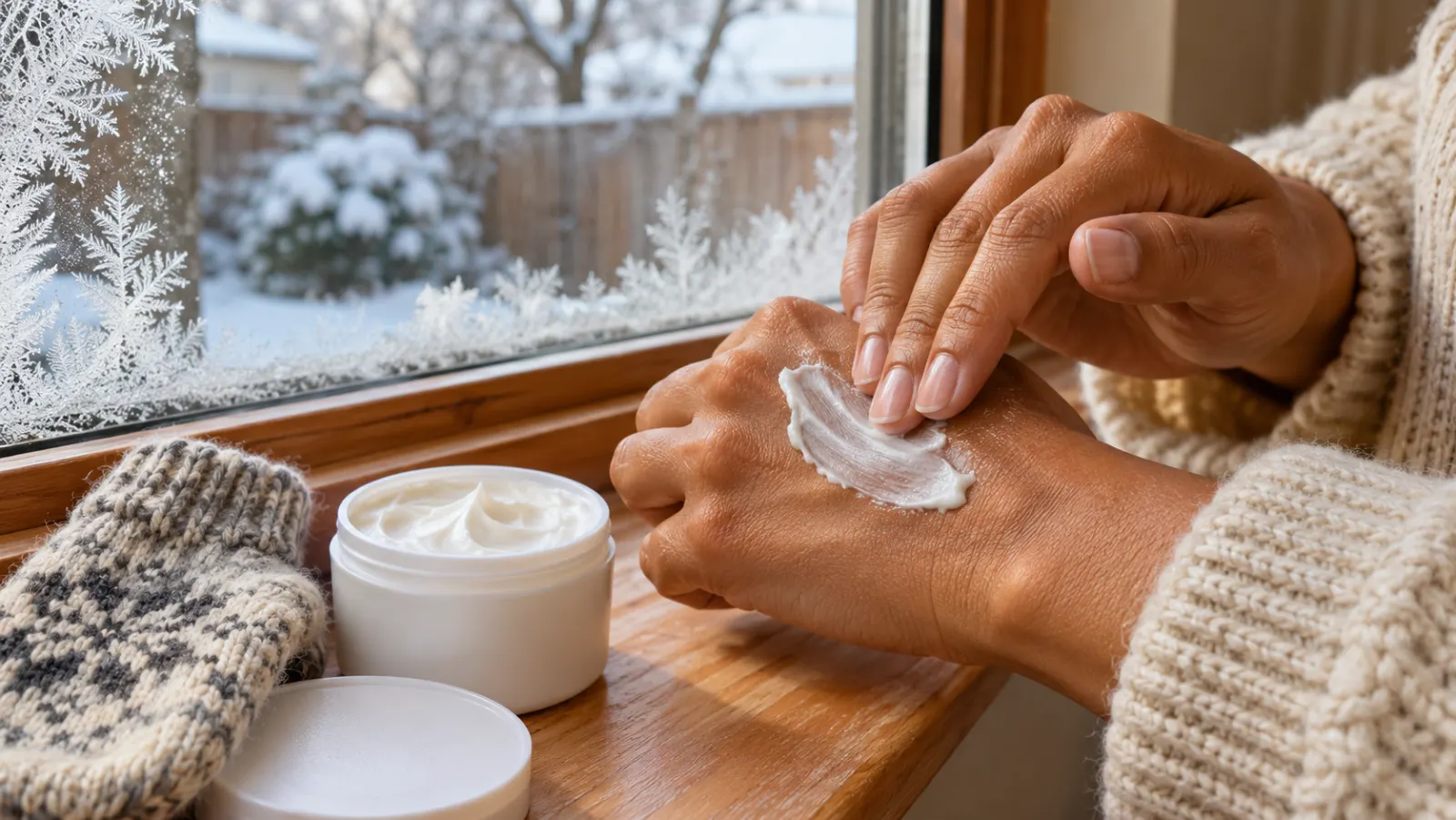
Somewhere around the end of December, a lot of people notice the same small misery. The knuckles look grey and chalky. A thin split opens on the side of a fingertip and stings every time it meets hand sanitizer or lemon juice. Shins itch under jeans, heels catch on socks, and lips peel no matter how much balm goes on. None of it is dramatic, but it is uncomfortable, and for some people it gets painful enough to interfere with work.
Winter dryness is one of the most common skin complaints in Canada, and it is largely predictable. Cold outdoor air holds very little moisture, indoor heating dries it further, and our habits during the colder months, such as long hot showers and constant hand-washing, strip away the oils that keep skin supple. The skin’s outer layer works a bit like a brick wall, with skin cells as bricks and natural fats as mortar. When that mortar is washed away faster than it can be replaced, the wall develops cracks, water escapes, and irritants get in.
The encouraging part is that most winter dry skin responds well to simple, consistent care. This guide covers what tends to work, what tends to make things worse, and the signs that suggest something more than ordinary dryness is going on. It is general information; if you have a diagnosed skin condition, follow the plan from your own clinician.
Why winter is so hard on skin
The air outside
In a Scarborough January, the air can be bitterly cold and very dry. Wind adds to the effect by pulling moisture from exposed skin on the face and hands. People who wait for buses on Eglinton or Lawrence, walk dogs early in the morning, or work outdoors, such as delivery drivers, construction crews and crossing guards, often notice their hands and cheeks take the worst of it.
The air inside
Once you step indoors, forced-air furnaces, baseboard heaters and space heaters warm the air but do not add moisture. Many homes, apartments and workplaces end up with very dry indoor air for months at a time. Some people notice their skin is worst first thing in the morning after sleeping in a warm, dry bedroom.
Water, soap and sanitizer
It sounds backwards, but water itself is drying when it evaporates from skin, especially hot water. Soap removes oils along with dirt. Alcohol-based sanitizer is very effective against germs but can sting and dry out hands that are already cracked. During cold and flu season, many of us wash and sanitize far more than we do in summer, which is the right thing to do for infection control, and it simply means hands need more care in return.
Who tends to struggle the most
- Health care workers, personal support workers, cleaners, cooks and hairdressers, whose hands are wet many times a day
- Parents of young children, with endless diaper changes, dishes and hand-washing
- Older adults, whose skin naturally produces less oil and repairs more slowly
- People with diabetes or thyroid conditions, which can contribute to dry skin
- Anyone with a history of eczema or psoriasis
A daily routine for dry winter skin
You do not need an expensive product lineup. What makes the difference is choosing the right type of moisturizer and using it at the right times, often.
Gentler washing
- Keep showers and baths short and warm rather than hot.
- Use a mild, fragrance-free cleanser or soap substitute, and only where you need it. Most of the body does not need to be lathered daily.
- Pat skin dry with a towel instead of rubbing.
- Apply moisturizer within a few minutes of getting out, while skin is still slightly damp. This helps trap water in the skin.
Choosing a moisturizer
Moisturizers range from thin lotions to thick ointments, and in winter, thicker is usually better.
- Lotions are light and pleasant to use, but they contain more water and often evaporate before they do much. They may be fine for mild dryness on the body.
- Creams are thicker and a good everyday choice for hands and the body. Look for fragrance-free options.
- Ointments, such as plain petroleum jelly, are greasy but very effective at sealing in moisture. They are excellent for cracked hands and heels at night.
Ingredients that often help include glycerin, ceramides, dimethicone and petrolatum. For very rough, thickened skin on heels or elbows, products with urea or lactic acid can soften buildup, though they may sting on open cracks. Fragrance, essential oils and botanical extracts may smell lovely but are common sources of irritation for sensitive skin.
Hands, specifically
Hands deserve their own plan in winter:
- Moisturize after every hand-wash, not just once a day. Keep a small tube of hand cream by every sink, in your coat pocket, in your bag and at your desk.
- Wear gloves or mittens outdoors, every time. Bare hands on a cold bus pole or snow shovel dry out fast.
- Wear rubber or nitrile gloves for dishes and household cleaning, ideally with thin cotton gloves underneath if your hands sweat.
- At bedtime, apply a thick layer of ointment and wear cotton gloves overnight. Many people find this one habit makes a visible difference within a few days.
- If you use sanitizer and your hands sting, moisturize afterwards once it dries. If your workplace allows it, a sanitizer with added moisturizers can be gentler.
Painful fingertip splits
Those deep little cracks along the fingertips and around the nails can be surprisingly sore. Keep them clean, apply ointment, and cover them with a small bandage during the day if needed. Some people use liquid bandage products designed for small cracks. Avoid picking at the edges.
Cracked heels
Heels take a beating in winter: dry indoor air, heavy boots, and sometimes walking barefoot on cold floors at home. The thick skin there can split into fissures that are painful and occasionally bleed.
- After a shower, gently smooth thickened skin with a pumice stone or foot file. Do not try to cut away hard skin with blades.
- Apply a thick cream, ideally one with urea, then put on cotton socks.
- Wear supportive footwear indoors instead of going barefoot or wearing open-backed slippers all day.
People with diabetes should be more careful. Reduced sensation and slower healing mean a small crack can turn into an infection or ulcer without much warning. Check your feet daily, and see your clinician about any crack that is open, red or not healing. Our diabetes management visits include attention to foot health.
Lips, face and shins
For lips, a plain, fragrance-free balm or petroleum jelly works well. Try to resist licking dry lips, which makes them worse. For the face, a gentle cleanser and a fragrance-free cream are usually enough; on very cold days, a scarf over the lower face helps. Shins are often the driest part of the body and can crack into a pattern that looks like a dried riverbed. Daily cream after showering usually helps.
Your home environment
A humidifier can make indoor air more comfortable during the coldest months, especially in bedrooms. Choose one that is easy to clean and clean it often, following the manufacturer’s directions, since a neglected humidifier can grow mould and bacteria. Aim for comfortable, moderate humidity rather than a damp room; if windows are dripping with condensation, it is probably too high. Turning the thermostat down a degree or two at night can also help.
Wool sweaters and rough fabrics can make dry skin itchier. A soft cotton layer underneath helps. Fragrance-free laundry detergent is worth trying if you notice itchiness where clothing touches.
When dryness is something more
Most winter dryness improves within a week or two of consistent moisturizing. If it does not, or if it looks different from ordinary dryness, it may be time for an assessment.
Eczema
Eczema, also called atopic dermatitis, causes itchy, inflamed patches that may be red, darker or greyish depending on skin tone. It often appears in the creases of the elbows and knees, on the hands, or on the face and neck. Winter is a common time for flares. If the itch is keeping you or your child awake, or patches are spreading, prescription treatment may help bring it under control.
Hand dermatitis
Some people develop dermatitis specifically on the hands, triggered by repeated wetting, cleaning products or something they are allergic to, such as certain rubber chemicals, preservatives or fragrances. If your hands are red, itchy and blistered, or the rash flares at work and improves on vacation, it is worth discussing with a clinician.
Psoriasis
Psoriasis tends to cause well-defined, thickened patches with a silvery or whitish scale, often on the elbows, knees, scalp or lower back. It can worsen in winter. It is a long-term condition that benefits from proper diagnosis and a treatment plan.
Infection
Cracked skin is an open door for bacteria. See a clinician promptly if you notice:
- Increasing redness, warmth or swelling around a crack
- Pus, honey-coloured crusting or weeping
- Red streaks spreading from the area
- Fever or feeling generally unwell
- Pain that is getting worse rather than better
Fungal infections can also cause scaling and cracking, especially between the toes and on the soles, and they need different treatment from simple dryness.
Other causes
Persistent, widespread dryness with fatigue, weight change or feeling cold all the time can sometimes be linked to thyroid problems. Itching all over without a visible rash, particularly if it is severe, should also be checked, because it can occasionally have causes beyond the skin.
When to get help
Book a visit if:
- Dryness and cracking have not improved after a couple of weeks of good care
- Cracks are deep, bleeding or very painful
- The itch is disrupting your sleep
- You see signs of infection
- You have diabetes and notice any open area on your feet
- A rash is spreading or you are not sure what it is
Seek emergency care for rapidly spreading redness with fever, a hot and swollen limb, or a rash with blistering and feeling very unwell. For general advice outside clinic hours, Health811 offers free access to a registered nurse.
At a visit, a clinician can look at the skin, ask about your routine, work and products, and suggest a treatment plan, which may include prescription creams if inflammation is part of the problem. For a cracked heel or fingertip that is infected or slow to heal, our minor wound care service can help, and a general medical consultation is a good starting point for rashes that do not behave like ordinary dryness.
Softer skin until spring in Scarborough
Dry winter skin in Scarborough is common, but it does not have to be something you simply put up with until April. Short, warm showers, a thick fragrance-free moisturizer used often, gloves outdoors and a little extra care at night will settle most cases. When it does not, or when something looks different, we are happy to take a look.
You can find HealthSmart Medical at 2425 Eglinton Ave. East, Unit 12, in Scarborough. Visit as a walk-in patient, call 416-757-7117, or book online.
This article is for general information and is not a substitute for medical advice. If you have severe or worsening symptoms, call 911 or go to the nearest emergency department.