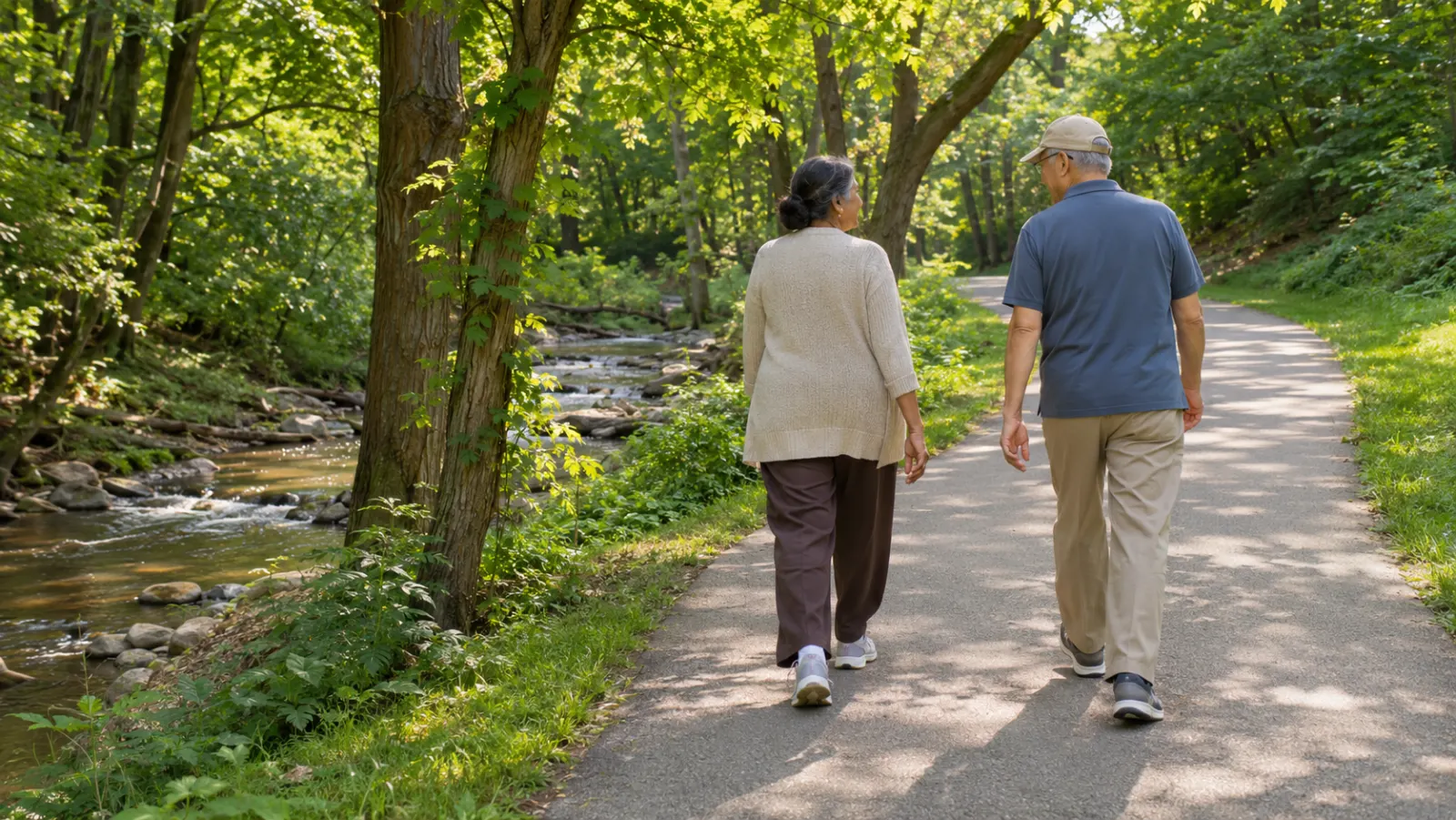
Ask a family doctor to name one habit that would improve almost every patient’s health, and walking is very likely near the top of the list. It costs nothing. It needs no special skill, no equipment beyond a decent pair of shoes, and no membership. You can do it alone with a podcast, with your spouse after dinner, with a stroller, or with a friend you have been meaning to catch up with.
It is also easy to underestimate. Because walking feels ordinary, people often assume it does not “count” as exercise. It does. Regular brisk walking can help lower blood pressure, improve blood sugar, lift mood, strengthen bones and help you sleep. For many adults, especially those who have been inactive for a while, it is the most realistic starting point and the one most likely to last.
Summer is a lovely time to build the habit in Scarborough, with long evenings and green ravines, though the heat calls for a little planning. This guide covers what walking does for your body, how to build a routine that sticks, places to walk across the area, footwear, and how to walk safely if you are living with a chronic condition.
What a regular walk does for your body
You do not need to walk for hours to see benefits. Small, steady amounts add up over weeks and months.
Heart and blood vessels
Walking makes the heart pump more efficiently and helps blood vessels stay flexible. Over time, regular walking can help lower blood pressure and improve cholesterol levels. If you are already being treated for high blood pressure, walking is one of the best things you can add alongside your medication, and your doctor can track the results during high blood pressure management visits.
Blood sugar and weight
Working muscles use glucose for fuel, so a walk helps bring blood sugar down. Even a short walk after a meal can soften the spike that follows eating. Walking also burns energy and helps with weight management, though it works best when paired with changes in eating habits.
Bones, joints and balance
Walking is weight-bearing, which helps maintain bone strength. Gentle, regular movement also keeps joints from stiffening, and walking on varied ground challenges balance, which becomes more important with age.
Mood, stress and sleep
Many people notice they feel calmer and clearer after a walk, particularly outdoors among trees. Regular physical activity is linked with lower rates of depression and anxiety, and people who move during the day often find it easier to sleep at night. A walk can also be a quiet break from a crowded home or a stressful workday.
How much is enough?
Canada’s physical activity guidelines suggest adults aim for at least 150 minutes of moderate-to-vigorous aerobic activity each week. That can be as simple as a brisk 30-minute walk on five days. Brisk means you are breathing harder and could talk, but would struggle to sing.
If that sounds like a lot right now, please do not be discouraged. Any amount of walking is better than none, and the biggest health gains often come when someone goes from doing very little to doing a little. Ten minutes, three times a day, counts. So does walking to the bus stop instead of getting a ride.
Building a walking routine that lasts
Plenty of people start walking with great enthusiasm, do too much in the first week, and quit by the third. A gentler approach tends to stick.
Start where you are
If you have been mostly sitting, begin with 10 to 15 minutes at a comfortable pace on most days. After a week or two, add five minutes. Once 30 minutes feels easy, start to pick up the pace for a few minutes at a time.
Tie it to something you already do
Habits stick when they have a cue. Try one of these:
- A 15-minute walk right after dinner, every evening
- Getting off the bus one stop early on the way home
- Walking laps of the parking lot or block during a lunch break
- A short loop with the dog first thing in the morning
- Walking a child to school or camp instead of driving
Make it social
Walking with someone makes you more likely to show up. Many Scarborough families already have a built-in walking group at home: an older parent who would love the company, a teenager who might actually talk while walking side by side, or a neighbour who also wants to get moving. Some community centres and faith groups organize walking groups too.
Track it loosely
A step counter on your phone or a simple calendar with checkmarks can be motivating. You do not need to hit a magic number of steps; aim to gradually increase your own average.
Plan for bad days
There will be days when it is too hot, too wet or you are too tired. Decide in advance what your backup is, even if it is just a 10-minute walk around the house or a mall. Keeping the habit alive matters more than any single walk.
Places to walk in Scarborough
One of the best things about living in Scarborough is how much green space is woven through the neighbourhoods. A few ideas to explore:
- Ravine trails. The Highland Creek valley and its many connected parks offer long, mostly flat paved paths under the trees, which are wonderfully shaded on a July morning. Morningside Park and Colonel Danforth Park are popular access points.
- Neighbourhood parks. Thomson Memorial Park and many smaller local parks have paths that work well for short daily loops.
- The waterfront. Bluffer’s Park offers lake views and fresh breezes, though some routes down to the water are steep, so choose your path based on your fitness and knees.
- Rouge National Urban Park. In the east end, the Rouge has trails ranging from easy to more challenging. Check the trail’s length and difficulty before you go, and bring water.
- Guild Park and Gardens. Gentle paths and a lot to look at make this a pleasant spot for a slower stroll.
Indoor options
On a scorching afternoon, during a heat warning, or later in the year when sidewalks turn icy, indoor walking is a good alternative. Large shopping centres such as Scarborough Town Centre offer long, climate-controlled corridors with benches along the way. Some malls have opened early for walkers in the past; ask at guest services about current arrangements. Community centres with indoor tracks are another option.
Safety on the route
- Walk facing traffic where there is no sidewalk, and use crosswalks.
- Wear something bright or reflective if you walk at dusk.
- Let someone know your route if you are heading onto a longer trail alone.
- Keep your phone charged, and do not have both earbuds in at busy crossings.
Walking in the summer heat
Hot, humid days in Toronto can be hard on the body, especially for older adults, young children, pregnant people and anyone with heart or lung disease. To walk safely in summer:
- Go early in the morning or in the evening, when it is cooler.
- Choose shaded routes, such as the ravines.
- Drink water before you go and bring a bottle with you.
- Wear light, loose clothing, a hat and sunscreen.
- Slow down or take the day indoors during heat warnings.
Stop and find a cool place if you feel dizzy, nauseated, have a headache or stop sweating. Confusion, fainting or a very high body temperature can mean heat stroke, which is an emergency: call 911.
Choosing the right shoes
You do not need expensive gear, but your shoes matter more than anything else.
- Choose shoes designed for walking or running, with a cushioned sole and good support.
- Make sure there is about a thumb’s width of space beyond your longest toe, and that your heel does not slip.
- Shop later in the day, when feet are slightly larger, and wear the socks you plan to walk in.
- Replace shoes when the soles look worn or the cushioning feels flat.
- Moisture-wicking socks help prevent blisters, especially in summer.
Sandals and flip-flops are not good walking shoes for longer distances; they offer little support and leave toes exposed. If you have ongoing foot or heel pain, have it checked before it puts you off walking altogether.
Walking with a chronic condition
For most people with long-term health conditions, walking is not only safe but strongly encouraged. A few extra precautions help.
Diabetes
Walking is excellent for blood sugar control. If you take insulin or certain diabetes pills, check with your doctor about the risk of low blood sugar during activity, carry a fast-acting sugar source, and know the signs, such as shakiness, sweating and confusion. Check your feet after each walk for blisters, redness or sores, because reduced sensation can let small injuries go unnoticed. Our diabetes management visits include help with fitting activity safely into your routine.
Heart disease and high blood pressure
Most people with stable heart conditions benefit from walking, but it is wise to talk to your doctor before starting or increasing activity. Build up gradually and include a slow warm-up and cool-down. Our clinicians offer heart health monitoring and can help you understand what level of activity is right for you.
Stop and call 911 if you have chest pain or pressure, pain spreading to the arm, jaw or back, severe shortness of breath, fainting, or a racing or irregular heartbeat that does not settle with rest.
Arthritis and joint pain
It may seem backwards, but walking often helps arthritic joints feel better over time. Choose flat, even surfaces, keep a comfortable pace and shorten your walks on flare days instead of stopping entirely. Some soreness is normal; sharp or worsening pain is a sign to ease off and check in with your doctor.
Lung conditions
People with COPD or asthma can usually walk safely and often find their breathing tolerance improves. Carry your reliever inhaler, slow down when you need to, and avoid walking outdoors on poor air quality days or in extreme heat.
Leg pain when you walk
Cramping or aching in the calves that comes on with walking and eases with rest can be a sign of narrowed arteries in the legs. It is worth mentioning to your doctor, because it is connected to heart health and there are good ways to manage it.
Getting started with your doctor’s help
If you have not been active for a long time, have several health conditions, or are not sure where to begin, a check-in with your doctor can give you confidence. An annual physical exam is a natural moment to talk about activity goals, review blood pressure and blood sugar, and set a plan that suits your body.
Your first walk starts this week
You do not need a perfect plan to begin. Pick a time, put on comfortable shoes, and head out for ten minutes. Notice how you feel afterwards. Then do it again tomorrow.
If you have questions about walking with a health condition, or want a starting point that fits your needs, the team at HealthSmart Medical is here to help. Visit us at 2425 Eglinton Ave. East, Unit 12, in Scarborough, call 416-757-7117, or book online. There are miles of shaded trails waiting for you in Scarborough, and every step is a step in the right direction.
This article is for general information and is not a substitute for medical advice. If you have severe or worsening symptoms, call 911 or go to the nearest emergency department.