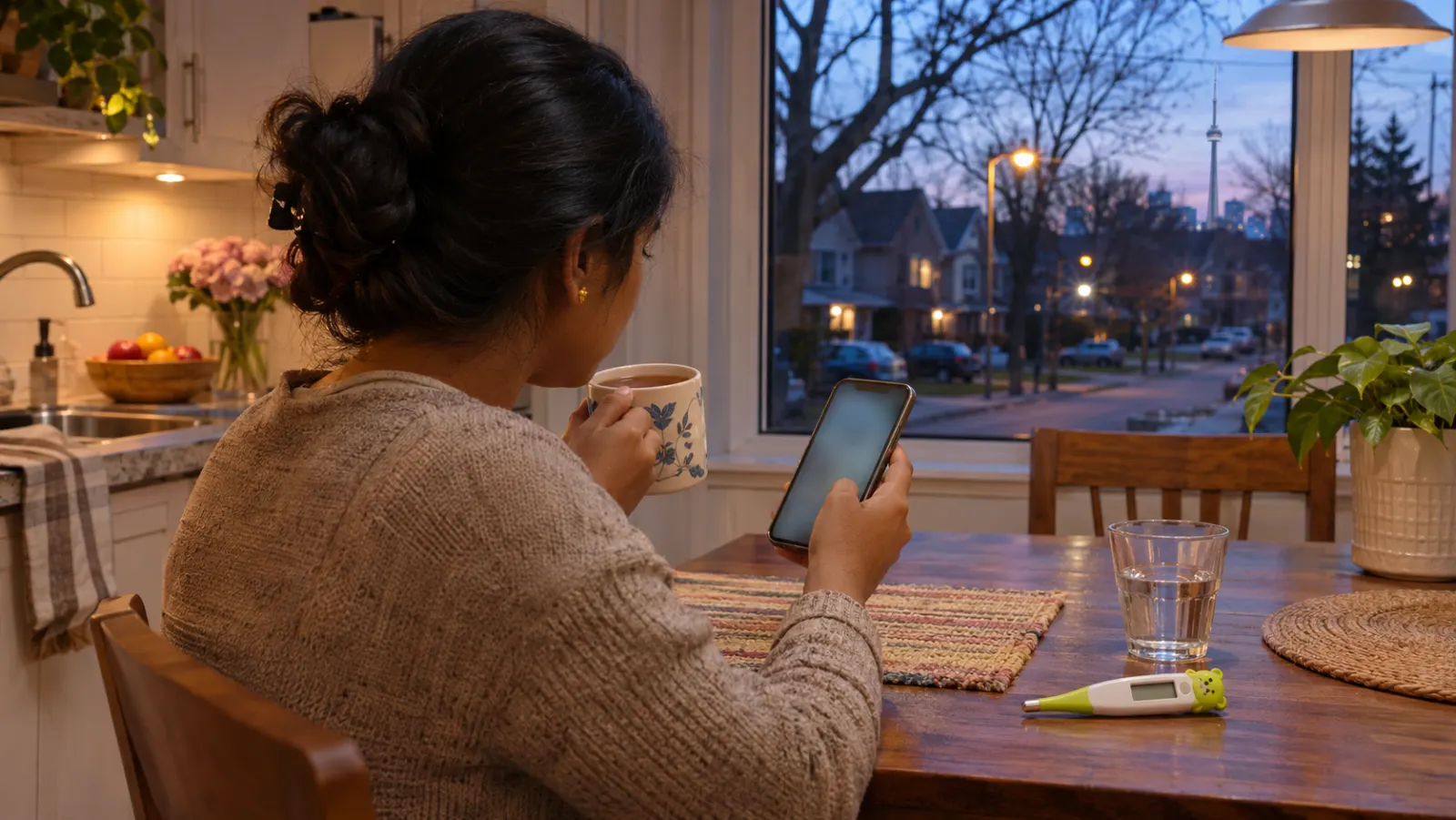
It is nine o’clock on a weeknight. Your son has had a fever since the afternoon, his ear hurts, and he is crying more than usual. Or maybe you twisted your ankle stepping off the bus at Eglinton and Warden, and now it is swollen and purple. The question that comes next is one almost every family in Scarborough has asked at some point: is this an emergency, or can it wait for a clinic?
Getting the answer right matters in both directions. Going to the emergency department for a problem a clinic could handle can mean many hours in a waiting room while staff rightly prioritize sicker patients. Waiting at home with a symptom that truly needs emergency care can be dangerous. Most people are not trying to “use the system wrong” — they simply are not sure where the line sits.
This guide is meant to make that line a little clearer. It is general information, not a substitute for your own judgment or for advice from a nurse or doctor who knows your situation. When in doubt about something that feels serious, the safest choice is always emergency care.
Start with the most important part: when to call 911
Before talking about clinics at all, it helps to know the symptoms that should never wait. Call 911 or go to the nearest emergency department right away for:
- Chest pain, pressure, or tightness, especially if it spreads to the arm, jaw, neck, or back, or comes with sweating, nausea, or shortness of breath
- Sudden weakness or numbness on one side of the body, a drooping face, slurred or confused speech, or sudden loss of vision — possible signs of a stroke
- Severe difficulty breathing, gasping, being unable to speak in full sentences, or lips turning blue or grey
- Heavy bleeding that does not slow with firm pressure
- A sudden, severe headache that feels like the worst of your life
- Fainting, seizures, or a person who is hard to wake up or newly confused
- Signs of a severe allergic reaction, such as swelling of the lips, tongue, or throat, trouble breathing, or widespread hives after a sting, food, or medication
- Serious injuries, including head injuries with vomiting or confusion, obvious broken bones with deformity, or deep wounds
- Thoughts of suicide or of harming someone else
- Possible poisoning or overdose
For babies, the threshold is lower. A fever in an infant under three months old, a baby who is unusually floppy or difficult to wake, or a child who is not drinking and has very few wet diapers should be assessed urgently.
If you are calling 911, do not drive yourself if you have chest pain or stroke symptoms. Paramedics can begin care on the way and alert the hospital ahead of time.
What a walk-in clinic is designed for
A walk-in clinic sits between “I can manage this at home” and “I need a hospital.” It is built for problems that need a medical assessment soon, often the same day, but are not immediately life-threatening. At HealthSmart Medical, our walk-in clinic sees patients for a wide range of these everyday concerns.
Typical walk-in problems include:
- Colds, coughs, and flu-like illness that are lingering or worsening
- Sore throats, ear pain, and sinus pressure
- Mild to moderate fevers in children and adults who are otherwise alert and drinking fluids
- Urinary symptoms such as burning or frequent urination
- Rashes, skin irritation, and minor skin infections
- Minor cuts, scrapes, and wounds that need cleaning or assessment
- Sprains and strains where you can still bear some weight
- Stomach upset, mild vomiting, or diarrhea without signs of dehydration
- Prescription renewals when you cannot reach your regular provider
- Sick notes and simple forms
For many of these, the clinic visit is about more than a prescription. A clinician can examine you, rule out something more serious, explain what to expect over the next few days, and tell you which changes should bring you back. Sometimes the most useful thing you leave with is a clear plan rather than a medication. If you need more detail on how we handle sudden illnesses, our page on acute illness treatment explains the approach.
The grey zone
Some situations do not fit neatly into either box, and that is normal. A few common examples:
Abdominal pain. Mild cramping with a stomach bug is often fine for a clinic. Severe pain that keeps getting worse, pain focused in the lower right side, pain with a rigid belly, or pain with fever and vomiting that will not stop should go to the emergency department.
Injuries. A sprained wrist that you can still move may be seen at a clinic. A limb that looks bent, an injury where you cannot put any weight on a leg, or a wound with bone or deep tissue visible needs hospital care, where X-rays and specialists are on site.
Breathing problems. A cough with mild shortness of breath when climbing stairs is worth a clinic visit soon. Shortness of breath at rest, struggling to speak, or an asthma attack that is not easing with your reliever inhaler is an emergency.
Headaches. A typical tension headache or a migraine that follows your usual pattern can be discussed at a clinic. A headache that is sudden and explosive, follows a head injury, or comes with a stiff neck, fever, confusion, or weakness belongs in the ER.
Fever. Most fevers in older children and adults are from viral infections and can be assessed at a clinic. A fever with a stiff neck, a purple rash that does not fade when pressed, extreme drowsiness, or difficulty breathing needs emergency care immediately.
If you find yourself reading these lists and still feeling unsure, there is a free option designed exactly for that moment.
Health811: a nurse on the line when you are not sure
Ontario’s Health811 service (formerly known as Telehealth Ontario) connects you with a registered nurse by phone, any time of day or night, at no cost. You can dial 811, or use the online chat. Nurses can ask about your symptoms, help you decide whether home care, a clinic visit, or the emergency department is the right next step, and answer general health questions.
Health811 is especially helpful:
- Late at night, when clinics are closed and you are trying to decide whether something can wait until morning
- When you are caring for a child or an older parent and want a second opinion
- When you have just arrived in Ontario and are still learning how the health system works
- When you would feel more comfortable asking questions in a language other than English — the service offers support in many languages
Health811 does not replace 911. If you are dealing with any of the emergency signs listed above, call 911 first.
Why the emergency department may not be the fastest route
People sometimes head to a hospital because they assume it will be quicker or more thorough. For non-urgent problems, that is often not the case. Emergency departments use a triage system, which means patients are seen in order of how sick they are, not when they arrived. Someone with a sore throat may wait a long time while patients with heart attacks, strokes, and serious injuries are cared for first. That is exactly how it should work.
A walk-in clinic, by contrast, is set up for the type of visit you need when the problem is common and stable. There is less waiting behind critically ill patients, and the visit is usually shorter. If the clinician finds something that does need hospital care, they will tell you directly and help you get there.
There is also a continuity benefit. Clinic visits can be connected to your ongoing care. If you have a family doctor at the same practice, they can see what happened at your walk-in visit and follow up. That is much harder when care is scattered across different hospitals and clinics.
A quick way to think it through
When something comes up suddenly, these questions can help you sort it out:
- Could this be life-threatening right now? Think chest pain, stroke signs, severe breathing trouble, heavy bleeding, or someone who is not responding normally. If yes, call 911.
- Is it getting rapidly worse? A problem that is clearly escalating over minutes or a few hours leans toward the emergency department.
- Does it need equipment only a hospital has? Obvious fractures, deep wounds, or possible internal injuries usually do.
- Is the person able to drink, talk, and move around reasonably well? If so, and nothing on the red-flag list applies, a clinic is often appropriate.
- Still unsure? Call Health811 and talk it through with a nurse.
None of these questions is a perfect test. Trust your instincts, too. Parents often know when a child “isn’t right” before any single symptom proves it, and that feeling deserves to be taken seriously.
Preparing for a walk-in visit
A little preparation makes a clinic visit smoother, whether you are walking over from a nearby street or coming across Scarborough on the Eglinton bus.
- Bring your OHIP card. If you are new to Ontario and do not yet have coverage, call ahead to ask about options.
- Bring a list of your medications, including over-the-counter products, vitamins, and herbal remedies. A photo of the labels on your phone works well.
- Know the timeline. When did the symptoms start? Have they changed? What have you already tried?
- Note any temperatures you have taken, along with the time and what medication was given.
- Bring someone along if it helps. For older relatives or anyone who prefers to discuss health in their first language, having a family member there can make the conversation easier.
- Check whether you can book ahead. Some same-day concerns can be scheduled online, which may shorten your wait. Our page on same-day medical appointments has more detail.
What about virtual care?
Some problems do not require you to leave home at all. A phone or video visit can work well for prescription renewals, reviewing test results, follow-up of a known condition, or some mild illnesses where a physical exam is less important. If the clinician feels an in-person exam is needed, they will ask you to come in.
Virtual visits are not suitable for emergencies. If anything on the red-flag list applies, skip the video call and get to the emergency department.
For newcomers to Scarborough
Many families in Scarborough have arrived in Canada recently, and the Ontario system can feel confusing at first. In some countries, people go directly to a hospital for every health concern, or see a specialist without a referral. Here, family doctors and walk-in clinics handle most day-to-day health problems, and hospitals focus on emergencies and specialized care.
A few things that often help newcomers:
- Apply for OHIP as soon as you are eligible, and keep your card with you
- Save 911 and 811 in your phone, and teach older children what each one is for
- Find a clinic close to home or work before you actually need one, so you are not searching while someone is sick
- Ask about finding a regular family doctor, because ongoing care is where prevention happens
Keeping minor problems minor
Many emergency visits start as small problems that grew because they were left too long. A urinary infection that turns into a kidney infection, a small cut that becomes infected, or a chest cold that develops into pneumonia are all examples. Getting a common problem checked early is often the simplest way to avoid a much bigger visit later.
The same applies to chronic conditions. Well-controlled blood pressure, diabetes, and asthma are far less likely to lead to sudden crises. Regular check-ins with a clinic are a quiet but powerful way to stay out of the emergency department.
We are here when it is not an emergency
HealthSmart Medical is a walk-in and family medicine clinic at 2425 Eglinton Ave. East, Unit 12, in Scarborough. If you are dealing with a fever, an infection, a minor injury, or a health worry that needs attention but is not an emergency, you can visit us, call 416-757-7117, or book online through our contact page. Directions are on our location page.
And if something feels truly serious, please do not wait for a clinic. Call 911. Getting the right care in the right place is what keeps everyone in Scarborough safer.
This article is for general information and is not a substitute for medical advice. If you have severe or worsening symptoms, call 911 or go to the nearest emergency department.