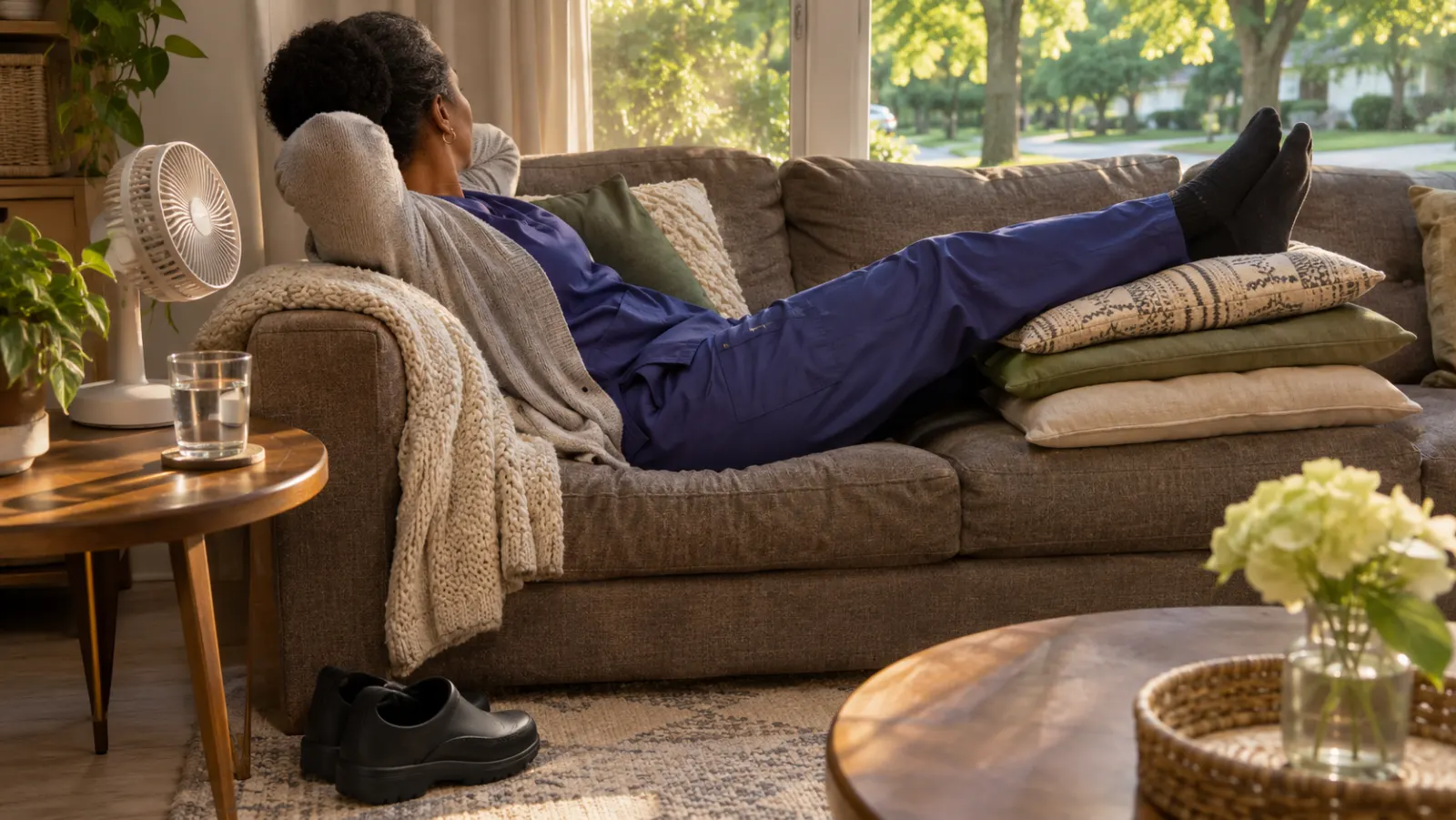
By the end of a ten-hour shift, a lot of people know the feeling: socks leaving deep grooves around the ankles, shoes that felt fine in the morning now pinching, calves that ache and feel heavy as wet sand. Then, at 3 a.m., a calf muscle seizes into a rock-hard knot and you are hopping around the bedroom trying to straighten your foot.
Tired, swollen legs are one of those everyday complaints that people rarely bring to a doctor. They feel too minor, or too much like an expected part of getting older, working hard, or being pregnant. And when summer arrives, with humid days and shorts weather, many people suddenly notice bulging blue veins they had been ignoring all winter.
Most of the time, these problems are uncomfortable rather than dangerous, and there is a lot you can do to feel better. But one kind of leg swelling is a genuine emergency, and knowing the difference is worth a few minutes of your time. This guide covers varicose veins, everyday leg swelling and night-time leg cramps, with practical advice for people in Scarborough who spend their days on their feet.
How leg veins are supposed to work
Your arteries carry blood down to your legs under pressure from the heart. Getting that blood back up to the heart is harder work. Leg veins rely on two things:
- One-way valves inside the veins that stop blood from sliding back down
- The calf muscle pump: each time you walk or flex your ankle, the calf muscles squeeze the deep veins and push blood upward
When the valves weaken or the calf pump is not used much, blood pools in the lower legs. Pressure in the veins rises, fluid seeps into the surrounding tissue, and veins near the surface can stretch, twist and bulge. Doctors call this chronic venous insufficiency, and it sits behind a lot of the heaviness, swelling and visible veins people notice.
Varicose veins and spider veins
Varicose veins are enlarged, twisted veins just under the skin, usually on the calves, behind the knees or along the inner thigh. They can look blue or purple and feel ropey. Spider veins are smaller clusters of thin red, blue or purple lines, often on the thighs and around the ankles. Spider veins are mostly a cosmetic concern; varicose veins can be cosmetic too, but they are more likely to cause symptoms.
Common symptoms
- Aching, heaviness or throbbing in the legs, especially late in the day
- Swelling around the ankles that improves overnight
- Itching over the veins
- Restless or crampy legs at night
- Symptoms that worsen in hot weather and ease when the legs are raised
Some people with very visible varicose veins have no symptoms at all, while others with modest veins feel quite uncomfortable.
Who is more likely to get them?
- People with a family history. Genes play a big role.
- Women, partly because of hormonal effects on vein walls
- People who are pregnant or have had several pregnancies
- Older adults, as vein valves wear over time
- People carrying extra weight
- People who stand or sit for long stretches. Think cashiers, retail and warehouse staff, cooks, personal support workers, nurses, hairdressers, security guards, factory workers, and anyone driving or desk-bound all day.
Many of those jobs are exactly what keeps households in Scarborough running, and they are rarely jobs where you can put your feet up whenever you like. That makes the practical strategies below all the more important.
Everyday leg swelling: the usual causes
Swelling in both legs, often called edema, usually builds through the day and settles overnight. Common, mostly harmless reasons include:
- Heat. Blood vessels widen in hot weather, and fluid leaks more easily into the tissues. A humid June or July afternoon can make ankles balloon.
- Standing or sitting still for long periods, including long flights or long drives
- Pregnancy, especially in later months
- Vein problems as described above
- Salty meals, which make the body hold on to water
- Medications, notably some blood pressure pills (particularly a group called calcium channel blockers), anti-inflammatory painkillers, steroids, some diabetes medications and hormone treatments
If you started a new blood pressure medication and your ankles began to swell, mention it at your next blood pressure follow-up. There are often alternatives. Do not stop the medication on your own.
When swelling points to something else
Swelling in both legs can also be a sign of a problem elsewhere in the body, such as:
- Heart failure, often with shortness of breath, especially when lying flat, and rapid weight gain
- Kidney disease, sometimes with puffiness around the eyes
- Liver disease
- An underactive thyroid
- Lymphedema, a build-up of lymph fluid that often feels firmer and may not improve overnight
Persistent swelling that does not go down overnight, or that keeps getting worse, deserves a check-up.
When swelling is serious: one leg is a warning
Here is the part to remember. Swelling in just one leg, especially if it is new, can be a sign of a deep vein thrombosis (DVT), a blood clot in a deep vein.
Signs of a possible DVT include:
- Swelling of one calf, ankle or whole leg
- Pain, tenderness or a cramping ache, often in the calf, that does not ease
- Warmth over the area
- Red or darker discolouration of the skin
Your risk is higher after surgery, a hospital stay, a long flight or drive, a leg injury or cast, during pregnancy and the weeks after giving birth, while taking estrogen-containing birth control or hormone therapy, with cancer, or with a previous clot.
A DVT needs same-day assessment, usually with an ultrasound, in an emergency department. A clinic visit later in the week is not the right choice for a suspected clot.
Call 911 immediately if leg swelling or pain comes with sudden shortness of breath, chest pain that is worse with breathing, coughing up blood, a racing heart, or fainting. These can be signs that a clot has travelled to the lungs, called a pulmonary embolism, which is life-threatening.
Other urgent leg problems
- Cellulitis: a skin infection that makes the leg red, hot, swollen and tender, sometimes with fever. It often spreads quickly and needs prompt treatment, the same day if it is spreading or you feel unwell.
- Sudden swelling in pregnancy, especially of the face and hands, with headache, vision changes or pain under the ribs, can be a sign of preeclampsia. Contact your pregnancy care provider or go to hospital right away.
- A bleeding varicose vein: lie down, raise the leg above the level of the heart and press firmly on the spot with a clean cloth. If bleeding does not stop with firm pressure, call 911.
- A cold, pale, painful leg or foot can signal a problem with an artery and is an emergency.
Night leg cramps
A night leg cramp is a sudden, painful, involuntary tightening of a muscle, usually the calf, sometimes the foot or thigh. It can last seconds to several minutes, and the muscle may feel sore the next day. Cramps are different from restless legs: a cramp is a hard, painful spasm, while restless legs is an uncomfortable urge to move.
Night cramps are very common, particularly in older adults and during pregnancy. Usually there is no serious cause, but they can be linked to:
- Tired muscles after a long day on your feet or unusual exercise
- Dehydration, especially in hot weather
- Sitting with your legs bent or pointed for long periods
- Some medications, such as certain water pills
- Pregnancy
- Less commonly, conditions such as diabetes, kidney disease, thyroid problems or nerve problems
What to do during a cramp
- Straighten your leg and pull your toes up toward your knee, or stand and put weight on the affected leg with your heel down
- Massage the muscle firmly
- Walk around for a minute
- Try a warm towel or shower afterward for lingering soreness
Preventing them
- Stretch your calves for a few minutes before bed. Stand facing a wall with one foot behind the other, back heel on the floor, and lean forward gently.
- Drink enough fluids through the day, especially on hot days and after sweating at work
- Keep bedding loose at the foot of the bed so your toes are not pointed all night
- Wear supportive shoes during long shifts
Quinine, once commonly used for night cramps, is no longer recommended for this purpose in Canada because of the risk of serious side effects. Ask your doctor before trying supplements or other remedies.
Practical relief for tired legs
These steps help most people with varicose veins, everyday swelling, or legs that feel heavy at the end of the day.
Keep the calf pump working
- Walk. Regular walking is one of the best things for leg veins. A loop around the neighbourhood or a stroll along a ravine trail on a mild summer evening counts.
- Move while you stand. If your job keeps you in one spot, rise up on your toes and lower your heels ten times every half hour, shift your weight, or march in place.
- Move while you sit. Point and flex your feet and circle your ankles during long drives, desk work or a long TTC ride.
- On flights, get up and walk the aisle when it is safe, and stay hydrated.
Raise your legs
Lying down with your legs propped on pillows above the level of your heart for 15 to 20 minutes, a few times a day, helps fluid drain back. Putting your feet up on a stool helps a little, but higher is better.
Compression stockings
Graduated compression stockings are tightest at the ankle and gradually looser up the leg, helping push blood upward. They can ease aching and swelling and are a mainstay of treatment for venous insufficiency.
- Put them on in the morning, before swelling builds. Rubber gloves can help with grip.
- Get the right size. Pharmacies and medical supply stores can measure your legs. Poorly fitting stockings can roll, dig in and cause problems.
- Ask about strength. Lighter compression is available over the counter; firmer grades are usually recommended by a doctor. Some workplace insurance plans cover stockings with a prescription, so check your benefits.
- Check with a doctor first if you have diabetes, numb feet, or poor circulation in your arteries, because compression is not safe for everyone.
Summer heat makes stockings less pleasant. Lighter fabrics, knee-high styles and putting them on in a cool room can help.
Other helpful habits
- Work toward a healthy weight if it applies
- Cut back on very salty foods
- Choose comfortable, supportive shoes, and avoid tight waistbands or garters
- Look after your skin: moisturize dry skin over the shins and treat any scratches or cuts promptly
When to see a doctor, and what we can do
Book a visit if:
- Your legs ache, swell or feel heavy most days
- Varicose veins are painful, itchy or getting worse
- The skin around your ankles is darkening, thickening or becoming itchy and scaly
- You have a sore near the ankle that is slow to heal
- Swelling does not go away overnight
- Night cramps are frequent or started after a new medication
A doctor can examine your legs, review your medications, check for other causes of swelling, and arrange tests. An ultrasound of the leg veins can show whether the valves are working, and we provide diagnostic imaging referrals for that. If treatment beyond compression is worthwhile, we can arrange specialist referrals to a vascular specialist, who may discuss options such as closing off faulty veins with heat, injections or surgery. Coverage for these procedures can vary, particularly when the reason is mainly cosmetic, so ask the specialist’s office what applies to you.
For slow-healing sores or skin breakdown on the lower leg, our minor wound care and dressing changes can help keep things clean and on track while the underlying vein problem is addressed.
Give your legs a break, in Scarborough
If your legs are telling you something at the end of each shift, it is worth listening. HealthSmart Medical, at 2425 Eglinton Ave. East, Unit 12, sees walk-in and booked patients for leg pain, swelling, varicose veins and night cramps. Call 416-757-7117 or book online. And remember, a newly swollen, painful leg on one side is an emergency department trip, not a wait-and-see.
This article is for general information and is not a substitute for medical advice. If you have severe or worsening symptoms, call 911 or go to the nearest emergency department.