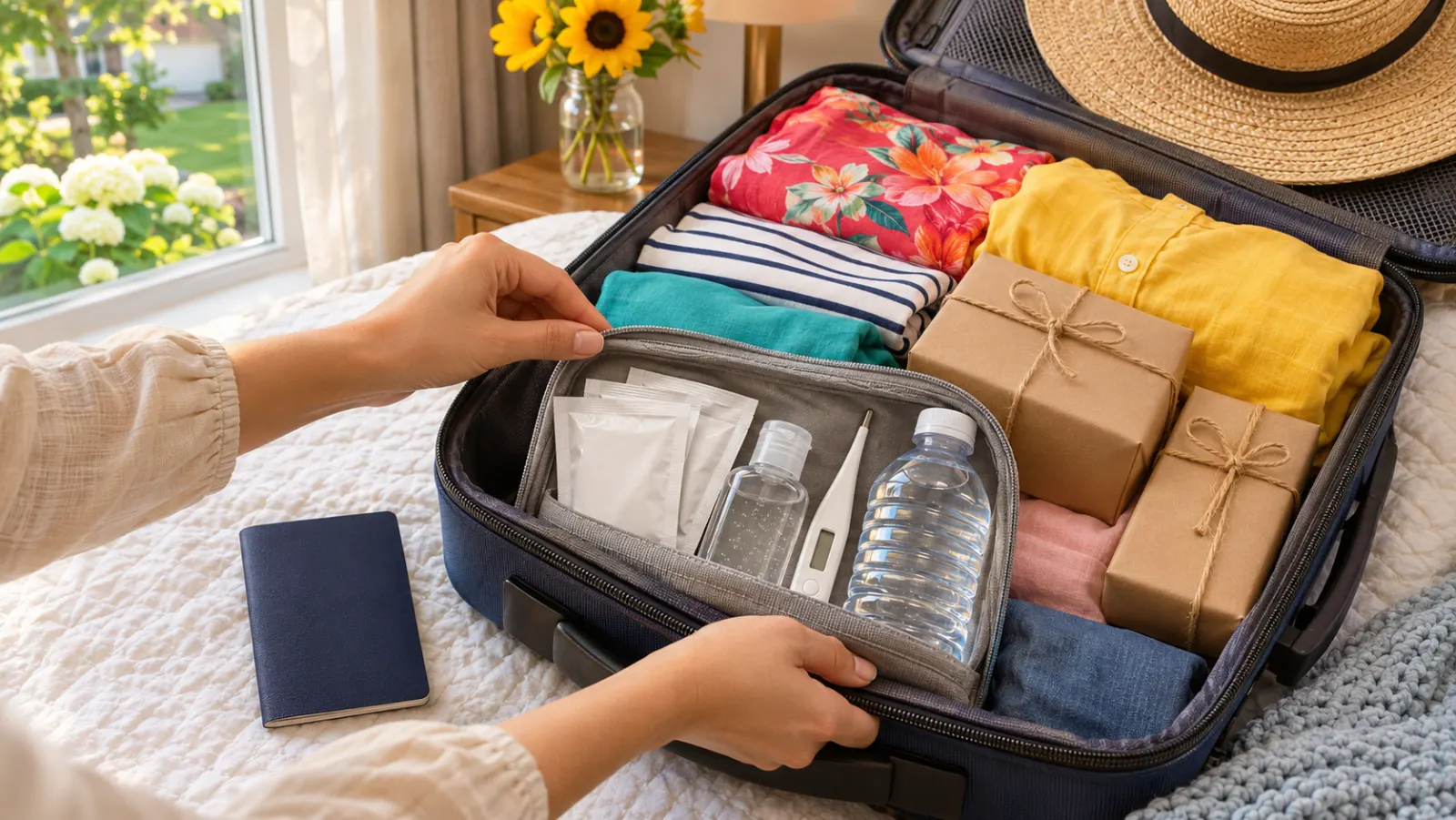
Summer is travel season for thousands of families in Scarborough. School is out, flights are booked months ahead, and suitcases are stuffed with gifts for grandparents, cousins and old neighbours in Chennai, Montego Bay, Manila, Accra, Karachi, Georgetown or Colombo. These trips are about reunions, weddings and long dinners, not sightseeing. And for a surprising number of travellers, at least one of those days ends up being spent close to the bathroom.
Travellers’ diarrhea is the most common illness people pick up abroad. It is usually short and mild, but it can ruin a wedding week, leave a young child or older parent dangerously dehydrated, and occasionally signal something more serious that follows you home on the plane.
People visiting family often assume they are at lower risk, especially if they grew up in the country they are visiting. In practice, the opposite is often true. This post explains why, what actually helps prevent it, how to treat it when it happens, when antibiotics come into the conversation, and which symptoms after you return to Toronto should be checked.
Why visiting family can mean higher risk
Tourists on a short resort holiday eat in hotels and restaurants that cater to visitors. People visiting relatives tend to:
- Stay longer, sometimes for weeks or months
- Eat home-cooked meals and street food with family, where refusing a dish feels rude
- Attend large gatherings where food sits out for hours in the heat
- Drink tap water or ice at home without thinking about it
- Travel to smaller towns and villages where water and sanitation may differ from big cities
- Skip a pre-travel visit because it feels like “going home” rather than a trip
Any immunity you may have had as a child also fades after years of living in Canada, and children born here have none. Your stomach does not remember where you grew up.
What causes it
Most travellers’ diarrhea comes from food or water contaminated with stool, often in tiny amounts that you would never notice. The most common culprits are bacteria, particularly types of E. coli, but viruses and parasites such as Giardia can also be responsible. Symptoms usually start within the first week or two of arriving, although they can appear at any time.
Typical symptoms include:
- Loose, watery stools, often three or more times a day
- Stomach cramps and bloating
- Nausea, sometimes vomiting
- Urgency, and a general feeling of being unwell
- A low-grade fever in some cases
Most cases settle on their own within three to five days. The main danger in the meantime is losing too much fluid.
Prevention: realistic habits, not perfection
The old travel advice, “boil it, cook it, peel it or forget it,” is a good starting point, even if nobody follows it perfectly. Small, consistent habits make the biggest difference.
Water and drinks
- Drink sealed bottled water, or water that has been boiled or properly treated
- Be cautious with ice, unless you know it was made from safe water
- Use safe water to brush your teeth, mix infant formula, and wash fruit
- Hot tea and coffee made with boiling water, and sealed bottled or canned drinks, are generally safer choices
- Be careful with fresh juices or sugarcane juice from roadside stalls, which may be mixed with untreated water or ice
Food
- Choose food that is freshly cooked and served steaming hot
- Be cautious with raw salads, chutneys, cut fruit you did not peel yourself, and anything that has been sitting out at room temperature
- Avoid unpasteurised milk, yogurt and cheese
- Take care with raw or undercooked seafood, meat and eggs
- At weddings and big family events, eat early, while dishes are fresh and hot
Hands
Wash your hands with soap and water before eating and after using the toilet, and carry an alcohol-based hand sanitiser for times when there is no sink. This matters most for children, who touch everything and then their mouths.
A word on politeness
Many travellers say the hardest part is not the food itself but turning down an aunt’s homemade lassi or a plate of cut mango. A gentle explanation that your doctor told you to be careful with your stomach is usually understood. Choosing the hot, cooked dishes and saying yes to tea can let you take part without taking unnecessary risks.
Medicines and vaccines
A few other options are sometimes discussed before travel. Bismuth subsalicylate tablets, available at pharmacies, can lower the risk of travellers’ diarrhea, but they are not suitable for children, during pregnancy, or for people who take blood thinners or are allergic to aspirin, and they can turn the tongue and stool black. There is also an oral vaccine that offers partial protection against some travellers’ diarrhea. Whether either makes sense depends on your trip, your health and your medications, so this is a good question for a pre-travel medical evaluation. Vaccines for illnesses like hepatitis A and typhoid, which also spread through food and water, are covered in our travel visits too.
Treating it: fluids come first
Oral rehydration
The most important treatment for diarrhea is replacing lost fluids and salts. For mild cases in adults, drinking plenty of safe fluids, such as water, broth and diluted juice, may be enough.
For more than mild diarrhea, and especially for children, older adults and anyone with a chronic illness, oral rehydration solution (ORS) is the gold standard. ORS packets contain a carefully balanced mix of salts and sugar that helps the gut absorb water. They are cheap, light and easy to pack, and also sold at pharmacies in many countries.
Some practical tips:
- Mix the packet exactly as directed, with the right amount of safe water. Too much or too little powder changes the balance.
- Take small, frequent sips if you feel nauseated. A spoonful every minute or two adds up.
- Keep going until the diarrhea slows and urine is pale and regular.
- Sports drinks and pop are not the same thing; they contain a lot of sugar and the wrong balance of salts, which can make diarrhea worse in children.
Eating
You do not need to starve yourself. Once you feel like eating, start with simple foods such as rice, bread, bananas, soups, crackers, potatoes and plain cooked dishes. Babies should keep breastfeeding or taking their usual formula, and children should be offered food as they are able to eat.
Anti-diarrheal medicine
Loperamide, sold over the counter, can reduce the number of trips to the bathroom for adults with watery diarrhea, which can be useful on a long bus ride or flight. It should not be used if you have blood in the stool or a high fever, and it is generally not recommended for young children. Stop taking it if your symptoms get worse, and follow the package directions or a pharmacist’s advice.
When antibiotics are discussed
Most travellers’ diarrhea gets better without antibiotics, and taking them when they are not needed can cause side effects and contribute to antibiotic resistance. But for moderate to severe illness, especially with fever, blood in the stool, or diarrhea that is disrupting essential plans, a short course of an antibiotic can shorten the illness.
Because you may not be near a doctor you trust when it happens, some travellers are prescribed a standby antibiotic before they leave, with clear instructions about when to start it. The right choice depends on where you are going, since resistance patterns vary from region to region, as well as your age, pregnancy status, allergies and other medications. This is something to plan in advance with a clinician who knows your destination, rather than buying whatever is available at a pharmacy abroad.
Get medical help right away, abroad or at home, if:
- There is blood or mucus in the stool
- There is a high fever or shaking chills
- Abdominal pain is severe or keeps getting worse
- Vomiting is so frequent that you cannot keep fluids down
- There are signs of dehydration: very little or dark urine, dizziness when standing, a dry mouth, unusual sleepiness, or, in babies, no wet diaper for several hours, a sunken soft spot or no tears when crying
- The person sick is an infant, a pregnant woman, an older adult or someone with a serious chronic condition, such as diabetes, kidney disease or a weakened immune system
- Symptoms last more than a few days without improving
Confusion, fainting, or extreme weakness are signs of severe dehydration and need emergency care. In Canada, call 911.
Back home in Scarborough: symptoms that need a check
The trip is over, the suitcases are unpacked, but your stomach has not quite settled. Here is what to watch for in the days and weeks after you return.
Fever after travel
Any fever after visiting an area where malaria is present needs prompt medical assessment, ideally the same day. Malaria can begin with fever, chills, headache and sometimes diarrhea, and it can become serious quickly. It may show up weeks, and occasionally months, after you return. Always tell the clinician where you travelled. If you were prescribed malaria prevention tablets, finish the full course after you get home as directed.
Fever with diarrhea after travel can also be caused by typhoid and other infections that need testing and specific treatment.
Diarrhea that will not quit
If loose stools continue for more than a couple of weeks after you get home, a parasite such as Giardia may be the cause, especially if you have a lot of gas, bloating, foul-smelling stools, or weight loss. A clinician may order stool tests through laboratory testing referrals to look for bacteria and parasites, and treatment depends on what is found.
Some people develop ongoing bowel changes after an episode of travellers’ diarrhea even after the infection has cleared. A temporary trouble digesting dairy is also common. These are worth discussing with a doctor rather than putting up with them for months.
After antibiotics
If you took antibiotics during your trip and then develop new watery diarrhea, especially with cramps or fever, let a clinician know. Antibiotics can occasionally lead to a different bowel infection that needs its own treatment.
Food handlers, health care workers and childcare staff
If you work with food, in health care or with young children and have had diarrhea after travel, check with your employer and doctor before returning to work. Public health rules may require certain infections to be cleared first.
Your travel health partner in Scarborough
The best time to think about travellers’ diarrhea is a few weeks before you fly, when there is still time to pack the right supplies, update vaccines and talk through a plan for your destination. At HealthSmart Medical, our travel clinic helps families prepare for visits abroad, and our gastrointestinal illness treatment care is here if your stomach is still unsettled after the trip.
Find us at 2425 Eglinton Ave. East, Unit 12, in Scarborough. Call 416-757-7117 or book online, and safe travels to you and your family.
This article is for general information and is not a substitute for medical advice. If you have severe or worsening symptoms, call 911 or go to the nearest emergency department.