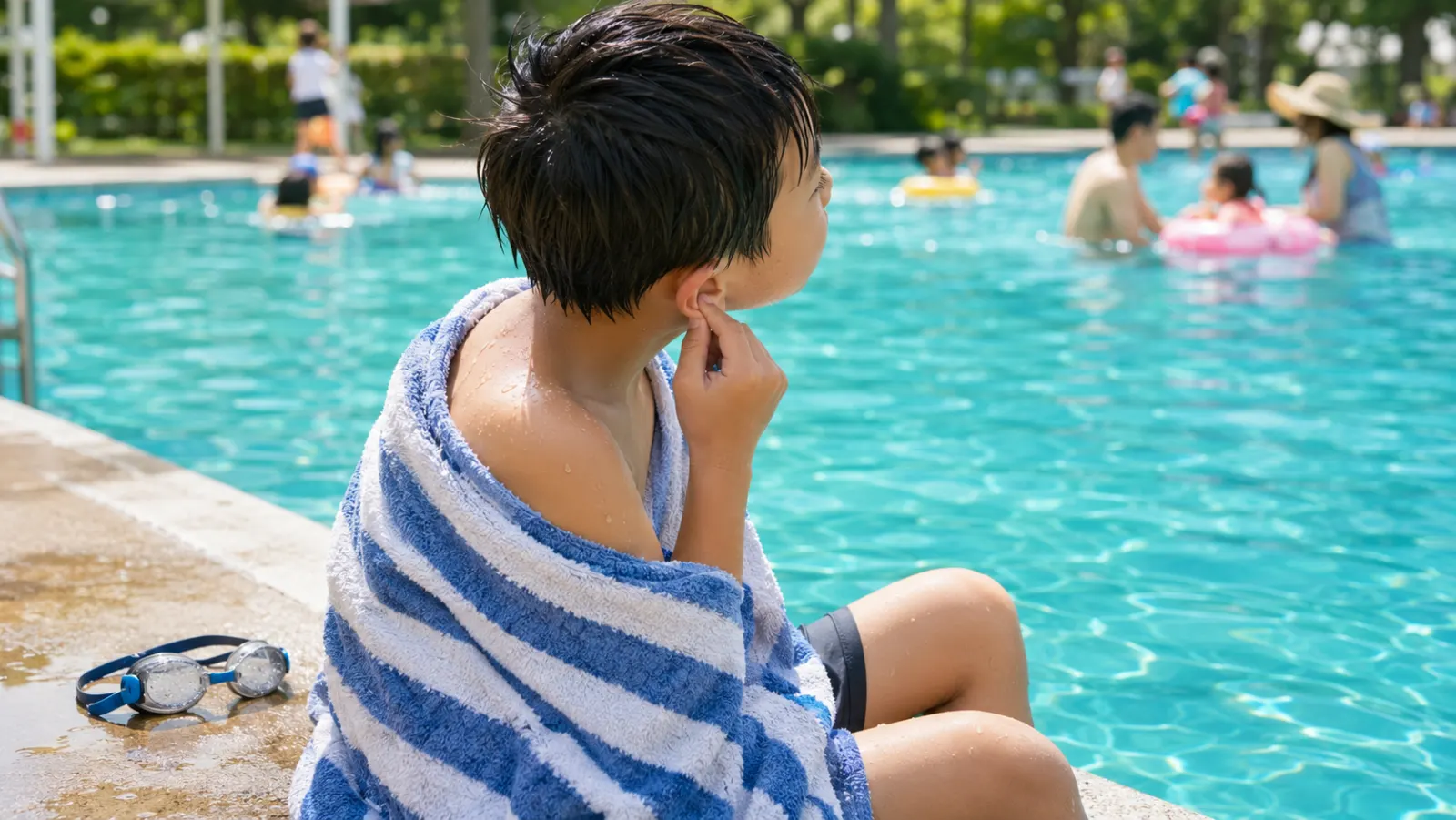
It tends to start a day or two after a great afternoon in the water. First there is an itch deep in the ear, then a feeling that the ear is plugged, and then, sometimes quite quickly, real pain. Chewing hurts. Lying on that side of the pillow hurts. Even touching the little flap of cartilage in front of the ear opening makes you wince.
That pattern is the classic story of swimmer’s ear, and summer is its high season. With city pools, splash pads, backyard pools, and Lake Ontario beaches all within easy reach, a lot of Scarborough kids and adults spend July and August with wet ears. Most never have a problem, but for some, all that moisture is enough to tip the delicate skin of the ear canal into an infection.
This article explains what swimmer’s ear is, why it is different from the middle ear infections many parents know from the winter months, how it is treated, and what you can do to keep it from coming back every time the pool opens.
What is swimmer’s ear?
Swimmer’s ear is the everyday name for otitis externa, an infection or inflammation of the outer ear canal. That is the tube that runs from the opening of your ear to the eardrum. It is lined with thin skin and protected by a layer of ear wax, which is slightly acidic, water-repellent, and better at its job than most people give it credit for.
When water sits in the canal for a long time, that protective layer breaks down. The skin softens, becomes waterlogged, and is easier for bacteria (and occasionally fungi) to invade. The result is a red, swollen, tender ear canal.
Despite the name, you do not have to be a swimmer to get it. Anything that damages the skin of the canal or strips away its protection can set it off, including:
- Frequent showering or bathing with water getting into the ears
- Cleaning ears with cotton swabs, fingernails, bobby pins, or keys
- Wearing earbuds, hearing aids, or earplugs for long periods, especially if they are not cleaned
- Skin conditions such as eczema or psoriasis affecting the ear
- Hair dye, shampoo, or hair products running into the ear
- Hot, humid weather, which keeps ears damp even out of the water
People with narrow ear canals, a lot of hair in the canal, or ear canals that tend to trap water are also more prone to it.
Symptoms to look for
Swimmer’s ear usually affects one ear, although both can be involved. Early on, symptoms can be mild:
- Itching inside the ear
- Mild redness at the ear opening
- A sense of fullness or blockage
- Slightly muffled hearing
- Clear, odourless fluid draining from the ear
As it progresses, the picture often becomes more obvious:
- Pain that gets worse when you pull on the outer ear or press on the small flap in front of the canal. This is one of the most telling signs.
- Pain with chewing or when lying on that side
- Swelling of the ear canal, sometimes enough to narrow it
- Yellowish or cloudy discharge, sometimes with an unpleasant smell
- More noticeable muffled hearing
- Tender, swollen lymph nodes in front of or behind the ear
In more severe cases, the pain can spread into the face, neck, or side of the head, the outer ear can become red and puffy, and there may be a fever.
Outer ear or middle ear? Telling them apart
Parents in Scarborough have usually seen at least one ear infection by the time a child starts school. Most of those are middle ear infections, or otitis media, which happen behind the eardrum. They are a different problem from swimmer’s ear, and they are treated differently, so it helps to know the clues.
A middle ear infection usually
- Follows a cold, a stuffy nose, or a sore throat
- Is more common in babies, toddlers, and young children
- Peaks in the colder months, when viruses are circulating
- Causes deep ear pain, sometimes with fever, crankiness, poor sleep, or tugging at the ear in young children
- Does not get much worse when you gently move the outer ear
- Is not caused by water getting into the ear from the outside
Swimmer’s ear usually
- Follows swimming, bathing, or something poking into the ear
- Can happen at any age, and is common in older kids, teens, and adults
- Peaks in summer
- Makes the outer ear very tender to touch or tug
- Often comes with itching and discharge from the canal
There is some overlap. A middle ear infection can sometimes cause the eardrum to develop a small tear, and pus can then drain into the canal, which looks a lot like swimmer’s ear. That is one of many reasons why an ear that is painful and draining should be examined rather than guessed at. The clinician will look into the canal with an otoscope to see the state of the skin and, if possible, the eardrum. Our team provides ear infection treatment for both types.
How swimmer’s ear is treated
The good news is that swimmer’s ear usually responds well to treatment and often starts to feel better within a couple of days.
Prescription ear drops
The mainstay of treatment is medicated ear drops, typically containing an antibiotic, and sometimes a steroid to bring down swelling. Unlike many other infections, oral antibiotics are usually not needed for uncomplicated swimmer’s ear; drops deliver the medicine right to where the infection is. Your clinician will choose drops based on what they see, including whether the eardrum appears intact, since some drops are not appropriate when there is a hole in the eardrum or ear tubes are in place.
Using the drops properly makes a real difference:
- Warm the bottle in your hands for a minute or two; cold drops can cause dizziness.
- Lie on your side with the affected ear facing up.
- Gently pull the outer ear up and back (for children, out and back) to straighten the canal.
- Put in the prescribed number of drops.
- Press gently on the flap in front of the ear a few times to help the drops move in.
- Stay lying down for a few minutes so the drops can soak in.
- Use them for the full length of time you were told, even if the ear feels better sooner.
It is often easier to have someone else put the drops in for you.
When the canal is very swollen
If the canal is so swollen that drops cannot get in, the clinician may gently clean out discharge and debris or place a small sponge-like wick in the canal that draws the medicine inward. This is something to discuss at the visit; if you are not sure whether we can do it on the day, call ahead.
Pain relief
Swimmer’s ear can be surprisingly painful. Acetaminophen or ibuprofen, used according to the package or your pharmacist’s advice, can help a lot in the first few days. A warm (not hot) cloth held against the outer ear may also be soothing.
Keep it dry while it heals
Water slows healing and can make the infection worse. While you are being treated:
- Skip swimming until your clinician says it is fine, often about a week to ten days, or until symptoms have fully settled
- When showering or washing hair, protect the ear with a cotton ball lightly coated in petroleum jelly at the opening (not pushed in)
- Avoid earbuds, earplugs, and hearing aids in the affected ear as much as you can until it heals, unless you have discussed it with your clinician
What not to do
- Do not put cotton swabs or anything else into the ear to “clean out” the discharge
- Do not use leftover drops from a previous infection, or someone else’s drops
- Do not use home remedies such as oils, garlic, or hydrogen peroxide in an ear that is infected without medical advice, especially if you are unsure about the eardrum
When swimmer’s ear needs prompt attention
See a clinician if you have ear pain, discharge, or swelling that suggests swimmer’s ear. Most cases are straightforward, but some need closer follow-up. Come in or get same-day care if:
- Pain is severe or getting worse despite treatment
- The swelling, redness, or pain has spread to the outer ear, the face, or the neck
- You have a fever
- Symptoms have not started improving within two or three days of using drops
- You have diabetes, a weakened immune system, or have had radiation treatment to the head or neck
That last point is important. In older adults with diabetes, and in people with weakened immunity, a rare but serious form of outer ear infection can spread into the surrounding bone. Warning signs include severe, persistent ear pain, often worse at night, along with drainage that will not clear up. If this sounds like you or an older relative, do not wait it out; get assessed promptly.
Go to the emergency department or call 911 if there is sudden facial weakness or drooping, severe headache with confusion or a stiff neck, or high fever with a very unwell appearance.
Keeping swimmer’s ear away all summer
Once someone has had swimmer’s ear, it often wants to come back. A few small habits make a big difference, especially for kids who spend whole summer days in the water.
After swimming or showering
- Tilt the head to each side and gently pull on the earlobe to help water drain out
- Dry the outer ear with a towel; do not dig inside the canal
- Use a hair dryer on the lowest, coolest setting, held at arm’s length, to dry the ear canal for a few seconds
Drying drops
Some people benefit from over-the-counter drying drops, often made with alcohol and sometimes with acetic acid, used after swimming. They help evaporate water and restore the acidic environment the canal prefers. These are not suitable for everyone. Do not use them if there is a hole in the eardrum, ear tubes, current ear pain or drainage, or recent ear surgery. Ask your clinician or pharmacist whether they are a good idea for you or your child.
Other prevention tips
- Leave ear wax alone. It protects the canal. If you feel blocked with wax, see our page on ear wax removal rather than reaching for a swab.
- Consider swim earplugs or a swim cap for people who get repeated infections. Well-fitted plugs keep water out; clean them regularly.
- Clean earbuds and hearing aids often, and give your ears breaks from them on hot days.
- Check water quality. During the summer, Toronto Public Health tests the water at city beaches, including Bluffer’s Park, and posts advisories when bacteria levels are high. It is worth checking before a beach day.
- Manage skin conditions. If eczema or psoriasis affects your ears, controlling it can lower the risk of infection.
For swimmers, families, and anyone with sore ears in Scarborough
From kids taking lessons at local community centre pools to adults doing laps before work, swimming is a big part of summer in Scarborough. A sore ear does not have to sideline you for long, but it does deserve a proper look, especially when the line between an outer and middle ear infection is not obvious from the outside.
At HealthSmart Medical, we see swimmer’s ear often during the warm months. We will examine the ear canal and eardrum, explain what is going on, and set you up with the right treatment and a plan to keep it from coming back. If your child has an ear that hurts after swimming, our childhood illness treatment team is used to gentle exams with nervous little patients.
Find us at 2425 Eglinton Ave. East, Unit 12, in Scarborough. Walk in, call 416-757-7117, or book online to get that ear checked and get back to the water.
This article is for general information and is not a substitute for medical advice. If you have severe or worsening symptoms, call 911 or go to the nearest emergency department.