You notice it first when you blink. A small, tender spot on the edge of your eyelid, a little puffy, a little pink. By the next morning there is a bump you can see in the mirror, and the whole lid feels heavy. It is not exactly painful, but it is impossible to stop thinking about, especially when you have a meeting, a family function, or a long day of staring at a screen ahead of you.
Eyelid bumps are among the most common reasons people pop into a walk-in clinic, and most of them turn out to be either a stye or a chalazion. Both are usually harmless and usually settle with simple home care. The trouble is that the instinct most of us have, to squeeze it like a pimple, is exactly the wrong move.
Here is a practical guide for anyone in Scarborough dealing with a sore, swollen eyelid: how to tell the common bumps apart, how to use warm compresses properly, why makeup and contact lens habits matter, and the specific signs that mean you should get checked rather than wait it out.
Two bumps, two different stories
Your eyelids are lined with tiny glands. Some sit at the base of the eyelashes. Others, called meibomian glands, run in a row inside the lid and release an oily layer that keeps your tears from evaporating too quickly. When one of these glands gets blocked or infected, a bump forms.
The stye
A stye (sometimes spelled “sty,” and called a hordeolum by doctors) is a small infection, usually from bacteria that normally live harmlessly on the skin. It often shows up:
- Right at the lash line, sometimes with a yellowish head like a pimple
- With noticeable tenderness, redness, and swelling
- Fairly quickly, over a day or two
Styes can also form on the inner side of the lid, where they cause more general swelling and soreness without an obvious head. Many drain on their own within several days and then heal.
The chalazion
A chalazion happens when an oil gland inside the lid gets blocked and the trapped oil causes a firm lump. Compared with a stye, a chalazion tends to:
- Sit a little further back from the lash line
- Feel firm and rubbery, like a small pea under the skin
- Be less painful, or painless, once the early tenderness passes
- Grow more slowly and hang around longer, sometimes for weeks
A stye can sometimes leave a chalazion behind after the infection settles. The two are related, and the first steps of home care are the same, so you do not need to be certain which one you have before you start.
Why some people get them again and again
Anyone can get a stye, but some people seem to collect them. Common contributing factors include:
- Blepharitis. Ongoing inflammation of the lid margins, often with crusting, flaking, or greasy-looking lashes. It is one of the most common reasons for repeat styes and chalazia.
- Rosacea and oily skin. Skin conditions that affect the face often affect the eyelids too.
- Eye rubbing. Late May is peak pollen season in Scarborough, and itchy, allergic eyes get rubbed a lot. Every rub moves bacteria from fingers to lids.
- Old or shared makeup. Mascara and eyeliner can harbour bacteria over time.
- Contact lens habits. Handling lenses with unwashed hands, sleeping in lenses not designed for it, or stretching their wear time.
- Not removing eye makeup before bed.
- Stress and poor sleep, which many people notice seem to line up with flare-ups, though the link is not fully understood.
If you are getting bumps repeatedly, it is worth looking at this list honestly. Often one small change, like replacing old mascara or starting a daily lid-cleaning routine, makes a big difference.
Warm compresses: the main treatment, done properly
For both styes and chalazia, warmth is the cornerstone of home care. Heat softens the thickened oil in the blocked gland, encourages drainage, and eases discomfort. Most people do not do it long enough or often enough, so here is the detail.
How to do it
- Wash your hands with soap and water.
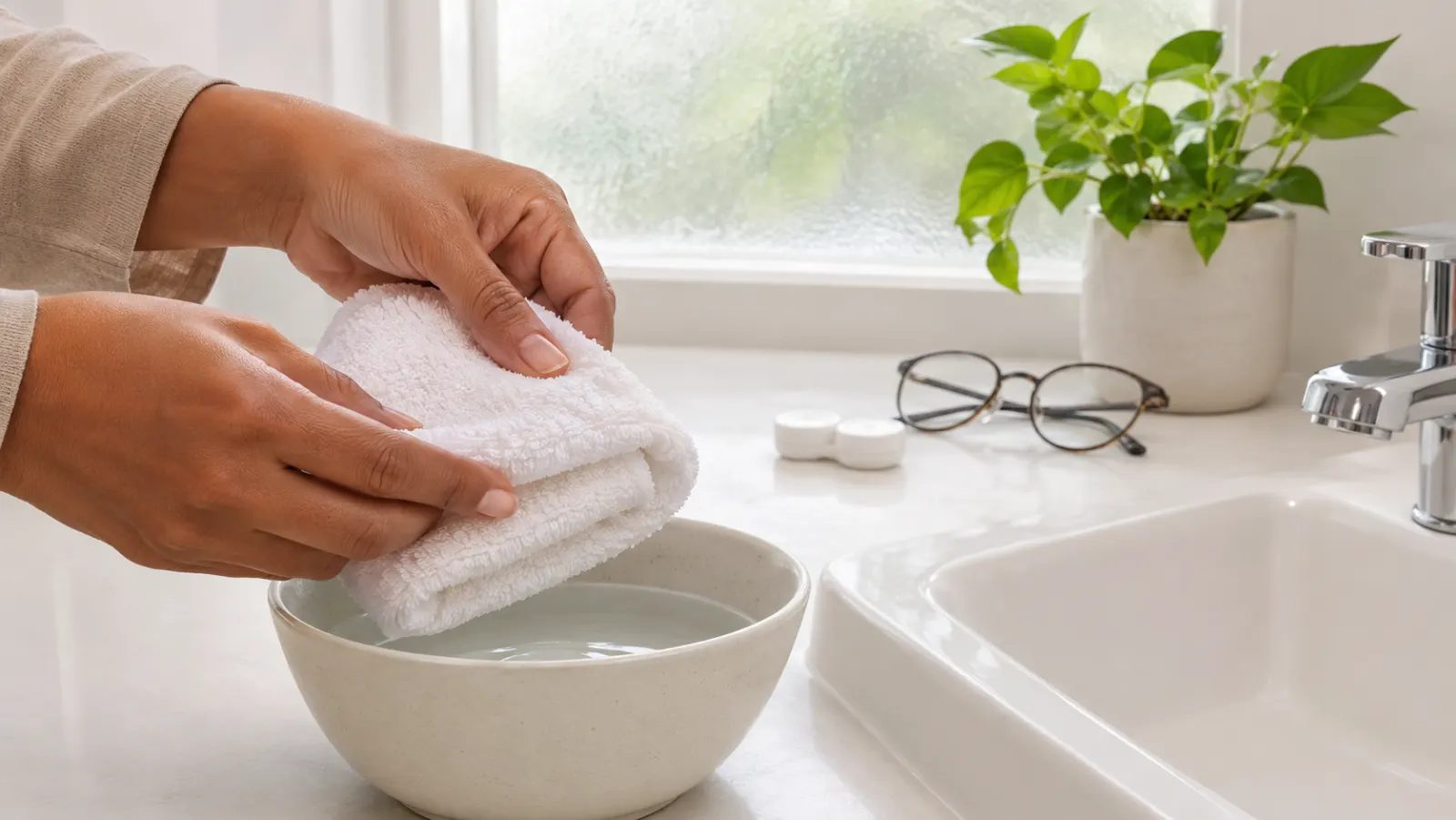
- Soak a clean facecloth in warm water. It should feel comfortably warm on the inside of your wrist, never hot. The skin on the eyelid is thin and burns easily.
- Wring it out and hold it gently against your closed eye.
- Keep it there for about 10 to 15 minutes, re-warming the cloth as it cools.
- Repeat three or four times a day until the bump settles.
After the compress, some doctors suggest gently massaging the lid with a clean fingertip, using small circular motions or light strokes toward the lash line, to help the gland drain. Keep the pressure light. This is a gentle nudge, not a squeeze.
Tips that make it easier
- Use a fresh, clean cloth each day and wash it in hot water afterward. Do not share it with others in the household.
- Reusable heated eye masks sold at pharmacies hold warmth longer than a facecloth. Follow the package directions and test the temperature first.
- Never microwave a damp cloth or wet compress, as it can heat unevenly and burn. Never heat anything until it steams.
- Build compresses into your routine: one in the morning, one at lunch, one while you watch TV, one before bed.
A stye often improves within a few days of regular compresses. A chalazion can take longer, sometimes a few weeks, and needs patience.
Hands off: why squeezing makes things worse
It is tempting. The bump looks like a pimple and you just want it gone before the weekend. But squeezing or poking an eyelid bump can:
- Push the infection deeper into the eyelid tissues
- Spread it to the surrounding skin
- Make swelling and pain worse
- Cause scarring or damage to the delicate lid structures
Likewise, do not try to pop it with a needle or pin. If a stye drains by itself, gently clean the area with a clean, warm cloth and wash your hands.
Makeup and contact lens hygiene
While you have a bump
- Skip eye makeup until the stye or chalazion has healed. Makeup can irritate the area and trap bacteria.
- Switch to glasses and leave contact lenses out until the eye is fully better.
- Avoid rubbing your eyes. If allergies are making them itch, a cool compress (separately from your warm compress routine) or a talk with your pharmacist about allergy options may help. Our page on allergy treatment covers ongoing seasonal symptoms.
After it heals
- Throw out the eye makeup you were using around the time of the infection, especially mascara and liquid liner. It may be carrying the bacteria.
- Replace mascara regularly. Many eye-care professionals suggest about every three months.
- Never share eye makeup, including testers at the store. That includes the borrowed eyeliner at a wedding or family celebration.
- Remove all eye makeup before bed, gently, without scrubbing.
- For contact lens wearers: wash and dry your hands before touching lenses, never use tap water or saliva on them, use fresh solution every time, replace your lens case regularly, and stick to the replacement schedule. Do not sleep in lenses unless your eye-care provider has said they are designed for it.
A daily lid routine for repeat offenders
If you have blepharitis or keep getting bumps, a short daily routine can help keep glands clear:
- A warm compress for a few minutes
- Gentle cleaning of the lash line with a clean cloth or a lid-cleaning product from the pharmacy
- Consistency, even on days when your eyes feel fine
Think of it like brushing your teeth: it works because you do it every day, not just when there is a problem.
When a bump on the eyelid needs a doctor
Most styes and chalazia are handled at home. But some situations call for a proper look, and a few are urgent.
Book a visit if:
- The bump has not improved after about a week or two of regular warm compresses
- A chalazion keeps getting bigger or is pressing on your eye and blurring your vision
- You keep getting styes or chalazia, especially in the same spot
- Your lid margins are chronically red, crusty, or irritated
- You are unsure whether it is a stye or something else
- A bump on a child’s eyelid is not settling
A clinician can examine the lid and confirm what it is. Antibiotic drops or ointment are sometimes used, for example when there is infection spreading on the lid surface, but they are not needed for every stye. A chalazion that does not respond to home care may be referred for a small procedure to drain it, or for other treatment, usually with an eye specialist. Your family doctor can coordinate specialist referrals when needed.
A lump on the eyelid that keeps coming back in the same place, bleeds, causes eyelashes to fall out, or changes the shape of the lid edge should always be examined. Rarely, a growth on the eyelid can look like a chalazion, and a doctor will want to rule that out.
Seek same-day care if:
- Redness and swelling spread beyond the bump to the whole eyelid or the skin around the eye
- The eyelid is so swollen you cannot open your eye
- You have a fever along with eyelid swelling
- The eye itself (not just the lid) is red and painful
- Your vision changes
Go to the emergency department if:
- The eye bulges forward, or moving your eye is painful or limited
- You have double vision or significant vision loss
- You have a high fever, feel very unwell, or are confused
- A young child has rapidly spreading eyelid swelling and redness with fever
These can be signs of an infection spreading into the tissues around or behind the eye, which needs urgent treatment.
What about children?
Kids get styes too, often because little hands rub tired or itchy eyes all day. The same home care applies: warm (not hot) compresses, clean hands, no squeezing. Younger children may tolerate a compress better while watching a favourite show or during a bedtime story. Teach older children to wash their hands before touching their faces, a habit that also helps cut down on colds.
Because eyelid swelling in children can occasionally be a sign of a deeper infection, a bump with spreading redness, fever, or a swollen, shut eye should be seen promptly rather than watched at home. Our children’s health services include assessment for everyday concerns like this.
Quick questions people ask
Is a stye contagious? Not in the way a cold is, but the bacteria can spread through shared towels, cloths, and makeup. Keep your items to yourself until it heals.
Can I go to work or school? Generally yes. A stye is not a reason to stay home on its own, as long as you avoid touching it and wash your hands.
Is this pink eye? Pink eye (conjunctivitis) affects the white of the eye and inner lids, often with discharge, rather than causing a single lump. They can occur together, and if you are not sure, a clinician can tell them apart quickly.
Will it come back? It might, especially if there is an underlying lid condition. A daily lid routine and good makeup and lens habits are the best defence.
Let us take a look
An eyelid bump is rarely serious, but it can be uncomfortable, and it is reassuring to know exactly what you are dealing with. If yours is not getting better, keeps coming back, or is causing spreading redness, HealthSmart Medical can help. Our family doctors and walk-in clinic team see everyday eye and eyelid concerns for patients of all ages.
Find us at 2425 Eglinton Ave. East, Unit 12, in Scarborough. Call 416-757-7117 or book online, and keep that warm compress going in the meantime.
This article is for general information and is not a substitute for medical advice. If you have severe or worsening symptoms, call 911 or go to the nearest emergency department.