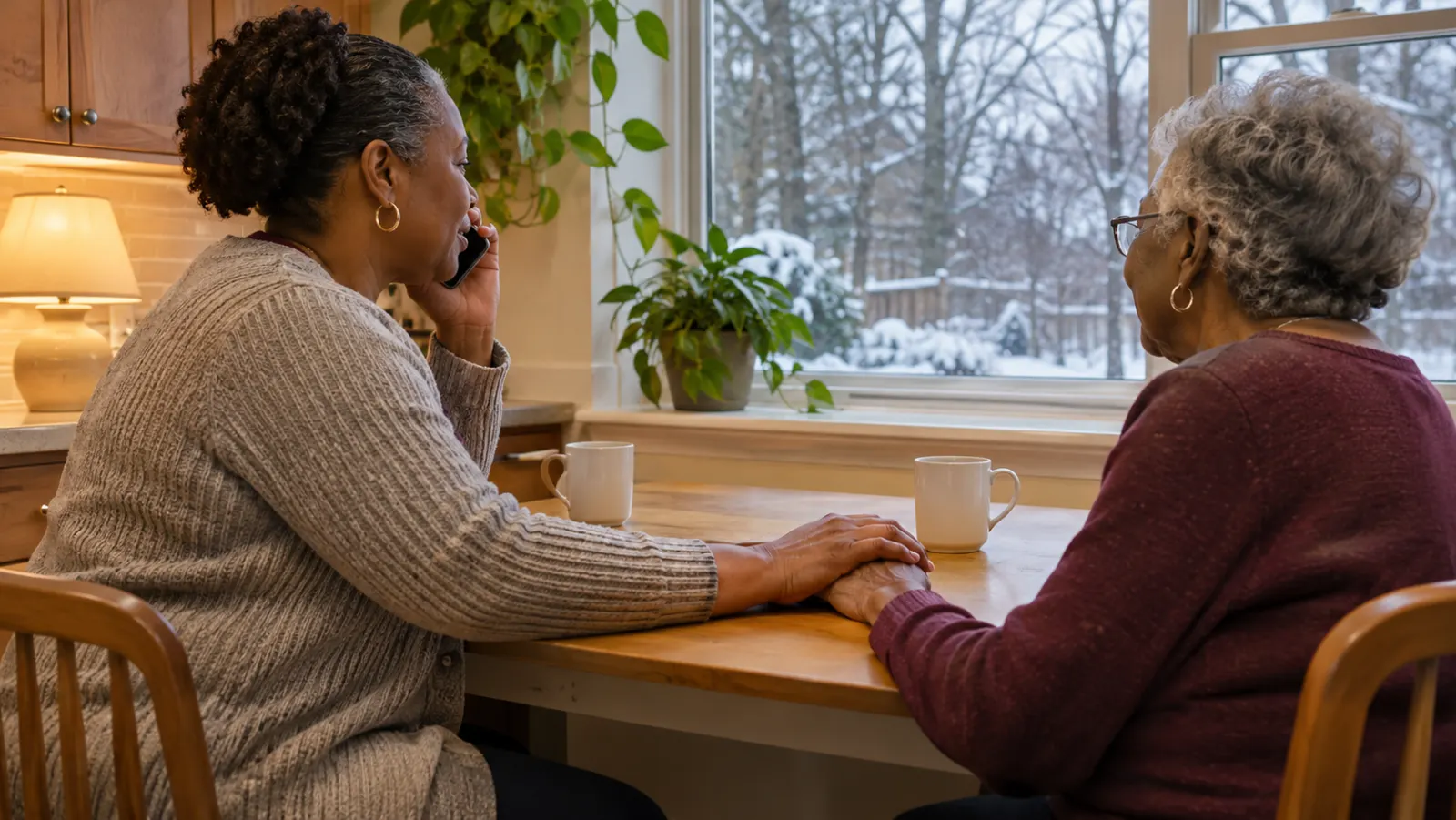
A stroke does not usually hurt. That is one of the reasons people wait. Someone’s words come out jumbled at dinner, or a hand drops a cup, and the family decides to see how things look in the morning. By morning, a window for treatment may have closed.
Every minute during a stroke, brain cells that are cut off from blood flow are being lost. Modern stroke care can sometimes dissolve or remove the clot that is causing the damage, but these treatments work only within a limited time after symptoms start. The single most powerful thing an ordinary person can do is recognize the signs and call 911 straight away.
This article is written for anyone in Scarborough who might one day be the person in the room when it happens: a spouse, an adult child, a co-worker, a neighbour on the same floor of an apartment building. It covers the FAST signs, what a “mini-stroke” really is, the risk factors that drive most strokes, and the everyday steps that lower your chances.
The FAST test
Heart & Stroke in Canada teaches four letters. They are worth memorizing and teaching to children and older relatives alike.
- F — Face. Is one side of the face drooping? Ask the person to smile. Is the smile uneven?
- A — Arms. Can they raise both arms and hold them there? Does one arm drift down or feel weak or numb?
- S — Speech. Is their speech slurred, jumbled, or strange? Can they repeat a simple sentence? Do they understand you?
- T — Time. Time to call 911 right away. Note the time you first noticed the symptoms.
Any one of these signs is enough. You do not need all four.
Other warning signs
Strokes do not always fit neatly into FAST. Also call 911 for sudden:
- Loss of vision in one or both eyes, or double vision
- Severe dizziness, loss of balance, or trouble walking, especially with other symptoms
- Numbness or weakness in a leg, or on one whole side of the body
- Confusion or difficulty understanding what others are saying
- Severe headache unlike any before, sometimes described as “the worst headache of my life”
The key word in all of these is sudden. A stroke tends to arrive within seconds or minutes, not slowly over weeks.
Why calling 911 beats driving to the hospital
It can feel faster to bundle someone into the car and drive to the nearest emergency department. In most cases, it is not the better choice. Here is why:
- Paramedics start assessing on the way. They check blood sugar (low blood sugar can mimic a stroke), monitor vital signs, and identify likely stroke symptoms.
- They take the patient to the right hospital. Not every hospital offers every stroke treatment. Ontario’s emergency services direct suspected stroke patients to centres equipped to treat them, which may not be the closest one.
- They call ahead. The stroke team can be waiting when the ambulance arrives, which can shave precious minutes off the time to a brain scan.
- Nobody is distracted behind the wheel. If the person’s condition changes, trained help is right there.
While waiting for paramedics:
- Note the time symptoms started, or the last time the person was seen well. This is one of the most important facts the hospital team will ask for.
- Do not give food, drink, or medication, including Aspirin. Some strokes are caused by bleeding, and swallowing may be impaired.
- Keep the person comfortable and safe. If they are drowsy or vomiting, help them onto their side.
- Gather their medication list or pill bottles, and their health card if it is handy.
- Unlock the door and, in an apartment building, send someone to meet the paramedics at the lobby or elevator.
If English is not the first language for the person having symptoms, a family member who can explain what happened and when is invaluable at the hospital. Go with them if you can.
Mini-strokes: the warning that disappears
A transient ischemic attack (TIA), often called a mini-stroke, causes stroke symptoms that go away on their own, usually within minutes. Someone’s arm goes weak for ten minutes and then feels fine. Their speech is muddled during a phone call, then clears up before they hang up.
Because the symptoms vanish, people often shrug them off. That is a serious mistake. A TIA is a warning that a full stroke may follow, and the risk is highest in the hours and days right afterward. The causes of a TIA are the same as those of a stroke: a clot or narrowed artery temporarily cutting off blood flow to part of the brain.
Treat a suspected TIA as an emergency. Call 911 or go to the emergency department, even if the symptoms have already resolved. Do not book a routine appointment and wait. Fast assessment and treatment after a TIA can significantly lower the chance of a major stroke.
After a TIA, it is common for people to be started on new medications and to be referred for imaging of the neck arteries and the heart, as well as a heart rhythm check. Your family doctor then helps keep this plan on track.
What actually causes a stroke
There are two main types.
Ischemic stroke
Most strokes are ischemic, meaning a blood vessel to the brain is blocked. The blockage might be a clot that formed in a narrowed, hardened artery in the neck or brain, or a clot that travelled from elsewhere, often from the heart. An irregular heart rhythm called atrial fibrillation is a well-known source of these travelling clots.
Hemorrhagic stroke
A smaller share of strokes are caused by bleeding into or around the brain, often from a weakened blood vessel that bursts. Long-standing high blood pressure is a major contributor. These strokes may start with a sudden, severe headache.
You cannot tell the type from the outside. Only a brain scan at the hospital can show which kind of stroke is happening, and treatment depends on it. That is another reason not to give Aspirin at home.
Risk factors you can actually do something about
Some risk factors are fixed: getting older, having a family history of stroke, and having had a previous stroke or TIA. Your ancestry can also play a role. Many families in Scarborough have South Asian, African, or Caribbean roots, and these communities face higher rates of high blood pressure and diabetes, which are both major drivers of stroke.
The good news is that a large share of stroke risk comes from things that can be measured and managed.
High blood pressure
This is the leading modifiable risk factor for stroke. It rarely causes symptoms, so the only way to know is to measure it. If your readings are high, lifestyle changes and medication can bring them down. Our high blood pressure management service focuses on accurate readings and medication follow-up.
Diabetes
High blood sugar damages blood vessels throughout the body, including in the brain. Keeping blood sugar, blood pressure, and cholesterol in range together makes a real difference. See our page on diabetes management for how ongoing care is organized.
Cholesterol
High LDL cholesterol contributes to the build-up of plaque in arteries, including the carotid arteries in the neck. A simple blood test, interpreted in the context of your overall risk, guides whether treatment makes sense. Learn more about cholesterol monitoring.
Irregular heart rhythm
Atrial fibrillation is a common, and often silent, cause of stroke in older adults. If you notice an irregular pulse, or a smartwatch flags one, mention it to your doctor. When AFib is found, blood thinners can greatly reduce stroke risk.
Smoking and vaping
Smoking damages blood vessels, makes blood more likely to clot, and raises blood pressure. Stopping lowers stroke risk, and the benefits begin soon after quitting. Counselling and stop-smoking medications make quitting more likely to stick.
Alcohol, weight, activity, and sleep
Heavy drinking raises blood pressure and the risk of both types of stroke. Carrying extra weight, being inactive, and untreated sleep apnea all add to the load. None of these need to be fixed perfectly. Steady, realistic improvements count.
Prevention that fits a Scarborough winter
Advice about walking thirty minutes a day can feel far away when the sidewalks along Kennedy Road are slush and the wind off the lake is biting. Some practical ideas:
- Move indoors when the weather fights you. Malls, community centres, and indoor tracks are good options for steady walking from December to March. Even taking the stairs in your apartment building adds up.
- Cook familiar food with less salt. Much of the salt in our diets comes from packaged and restaurant foods, pickles, sauces, and seasoning cubes. Spices, herbs, citrus, garlic, and ginger can keep traditional dishes flavourful with less sodium.
- Take medications every day, not just when you feel unwell. Blood pressure and cholesterol pills protect you precisely because they work quietly in the background. If side effects bother you, talk to your doctor instead of stopping on your own.
- Check your blood pressure at home. A validated home cuff, used properly, gives a far clearer picture than a single clinic reading. Bring your log to appointments.
- Plan for travel. If you are visiting family overseas this winter, pack enough medication for the whole trip, plus extra in case of delays.
After a stroke: the role of family medicine
Stroke recovery often continues long after a hospital stay. Rehabilitation, physiotherapy, speech therapy, and occupational therapy may all be involved, and progress can continue for months. Families often become caregivers almost overnight, which is physically and emotionally demanding.
A family doctor helps by:
- Reviewing hospital discharge plans and making sure prescriptions are understood and filled
- Monitoring blood pressure, blood sugar, cholesterol, and medication side effects
- Watching for low mood, which is common after a stroke and treatable
- Completing forms related to work, driving, or disability
- Coordinating specialist referrals when new concerns arise
Driving after a stroke or TIA is something to discuss directly with your doctor, as there are medical standards that apply in Ontario. Do not assume you can return to driving right away.
Teaching the signs at home
In many households here, three generations share a roof. Grandparents may be home alone during the day while adults commute and children are at school. That makes it important for everyone, including teenagers, to know what a stroke looks like and what to do.
A few ideas:
- Post a simple FAST card on the fridge, in the languages your family reads.
- Make sure older relatives know how to call 911 from a mobile phone, and that interpretation is available on emergency calls.
- Keep an up-to-date medication list somewhere easy to find.
- Practise: ask your child, “If Nani’s face looked droopy and she couldn’t lift her arm, what would you do?”
These conversations are not morbid. They are a form of care.
Book a check-up before there is a crisis
The best stroke is the one that never happens. If you have not had your blood pressure, blood sugar, or cholesterol checked recently, or if you are not sure your current treatment is working, HealthSmart Medical can help you get a clear picture and a plan.
We are at 2425 Eglinton Ave. East, Unit 12, in Scarborough. Call 416-757-7117 or book online for a visit. And if you ever see a drooping face, a weak arm, or slurred speech, even for a few minutes, do not call us. Call 911.
This article is for general information and is not a substitute for medical advice. If you have severe or worsening symptoms, call 911 or go to the nearest emergency department.