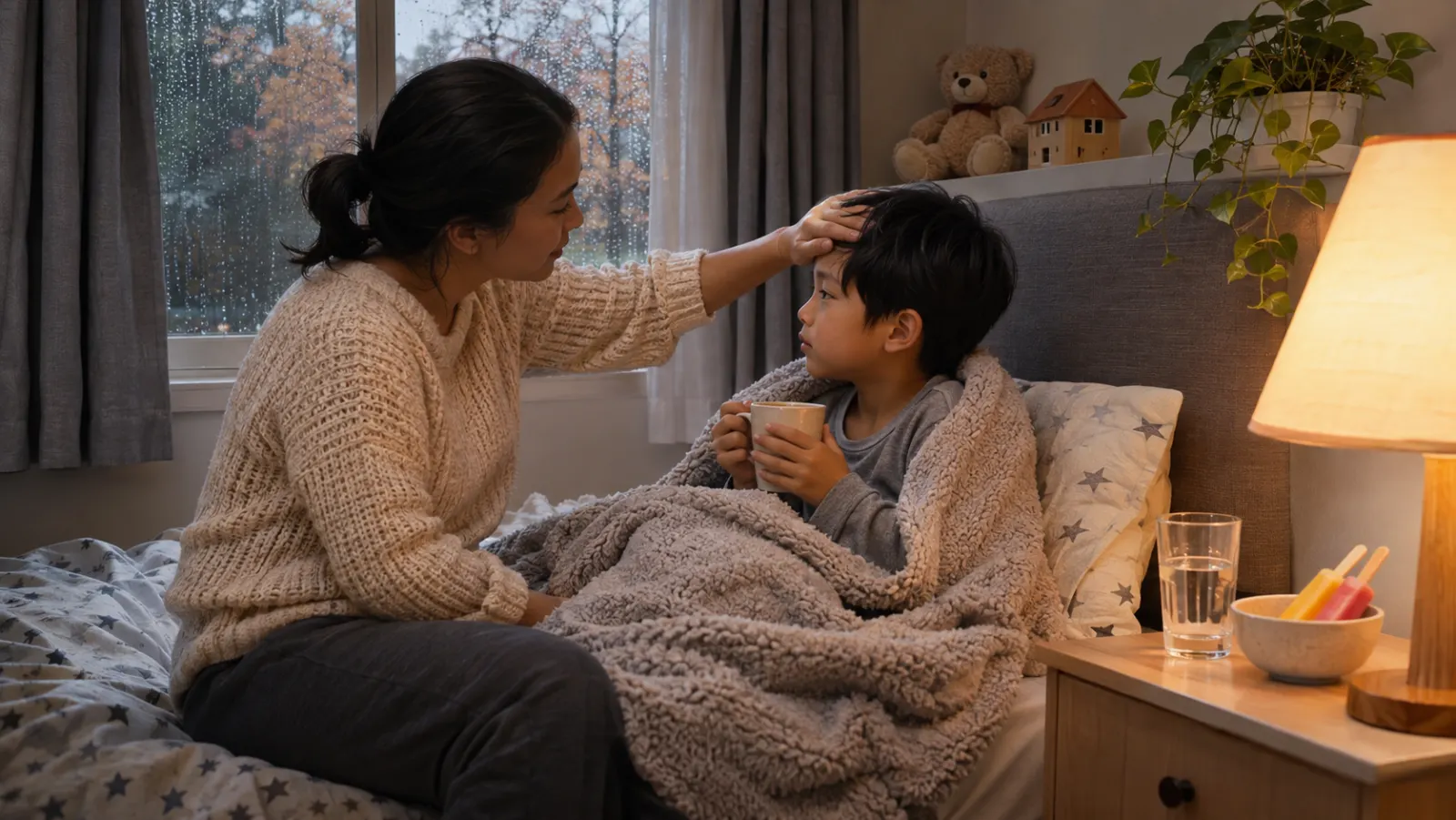
“My throat is killing me. Do I have strep?” It is a question clinicians hear constantly once school is back in session and the weather turns cold. A child comes home from class barely able to swallow, or an adult wakes up feeling like they swallowed broken glass, and the worry immediately jumps to strep throat.
Sometimes that worry is right. Much more often, though, a sore throat is caused by a virus, the same kind of germ behind ordinary colds, and it will improve by itself in a few days. Strep throat is a bacterial infection that does benefit from antibiotics, and it is important to catch, especially in school-aged children. The tricky part is that the two can feel very similar, and you cannot reliably tell them apart just by looking in a mirror.
This guide explains the most common causes of a sore throat, the clues that point toward strep, how testing works, what treatment looks like, and the warning signs in both children and adults that mean you should get help quickly.
The many causes of a sore throat
A sore throat is a symptom, not a diagnosis. Several very different things can cause it.
Viral infections
These are by far the most common cause. Cold viruses, influenza, COVID-19, and many other respiratory viruses can all inflame the throat. Viral sore throats usually come with other cold-type symptoms, such as a runny nose, cough, sneezing, a hoarse voice, or red, watery eyes. Antibiotics do not help viral infections.
Strep throat
Strep throat is caused by group A streptococcus bacteria. It is most common in children and teens of school age, though adults can get it too, particularly parents of young children and people who work with kids. It is less common in children under about three years old.
Mononucleosis
Often called “mono,” this viral infection is especially common in teens and young adults. It can cause a very sore throat, swollen glands in the neck, fever, and deep, lingering fatigue that can last weeks. It is spread through saliva, which is why it is sometimes called the kissing disease.
Non-infectious causes
Not every sore throat is an infection. Other possibilities include:
- Dry indoor air, particularly from winter heating and mouth breathing at night
- Post-nasal drip from allergies or sinus congestion
- Acid reflux, which can irritate the throat, often worse in the morning
- Smoking, vaping, or second-hand smoke
- Shouting, singing or talking a lot, which strains the voice and throat
A sore throat that keeps coming back or never fully goes away, especially in an adult who smokes or drinks alcohol regularly, should be checked by a clinician, even if it is not very painful.
Clues that point toward strep
No single symptom confirms strep throat, but certain patterns make it more or less likely.
Signs that make strep more likely
- A sore throat that comes on quickly
- Pain with swallowing
- Fever
- Red, swollen tonsils, sometimes with white patches or streaks of pus
- Tender, swollen glands at the front of the neck
- Tiny red spots on the roof of the mouth
- Headache, stomach ache, nausea or vomiting, especially in children
- No cough
Signs that make a virus more likely
- Cough
- Runny or stuffy nose
- Hoarse voice
- Red, watery eyes
- Mouth sores or ulcers
That last list is useful. A child with a sore throat, a runny nose and a hacking cough most likely has a cold. A child with a sudden sore throat, fever, swollen neck glands, and no cough at all is a better candidate for a strep test.
Scarlet fever
Some people with strep throat develop a rash called scarlet fever. The rash typically feels rough, like sandpaper, and often starts on the neck and chest before spreading. The tongue may look red and bumpy, sometimes described as a strawberry tongue. Scarlet fever is treated the same way as strep throat, and it is a good reason to see a clinician.
How strep throat is tested
Because symptoms overlap so much, testing is the reliable way to confirm strep. Clinicians generally decide whether to test based on your symptoms, age and exam. If your symptoms strongly suggest a virus, testing may not be needed at all.
The throat swab
If a test is recommended, the clinician will use a long cotton swab to gently wipe the back of your throat and tonsils. It takes only a few seconds. It may trigger a gag reflex for a moment, but it is not painful. For children, it helps to explain what will happen in advance and to have them sit on a parent’s lap.
Depending on the setting, the sample may be tested with a rapid test or sent to a lab for a throat culture. Lab results usually take a little longer. Your clinician will explain which test is being used and how you will get the result.
Why not just treat everyone?
Giving antibiotics to everyone with a sore throat would mean many people taking medication that does nothing for their viral illness, while exposing them to side effects like diarrhea, rashes, and allergic reactions. It would also contribute to antibiotic resistance. Testing helps make sure antibiotics go to the people who actually benefit.
Treatment for strep throat
If strep is confirmed, antibiotics are usually prescribed. Penicillin or amoxicillin is a common choice, and other options are available for people with a penicillin allergy. Be sure to tell your clinician about any medication allergies.
Why finishing the course matters
Most people start to feel better within a day or two of starting antibiotics. It is still important to take the full course exactly as prescribed, even after you feel fine. Treating strep properly helps clear the infection and lowers the risk of complications, including rare but serious ones such as rheumatic fever, which can affect the heart.
When can my child go back to school?
People with strep throat are generally considered much less contagious once they have been on antibiotics for at least a full day and no longer have a fever. Your clinician can give you specific advice, and some schools and child care centres have their own policies. Meanwhile, replace toothbrushes once you are feeling better, and avoid sharing cups, cutlery or water bottles at home.
Soothing any sore throat at home
Whether your sore throat is viral or bacterial, comfort measures can help you feel better while your body recovers:
- Warm drinks, such as tea with honey or warm broth. Honey should never be given to babies under one year old.
- Cold options, like ice chips, popsicles, or cold water, which some people find more soothing than warm drinks.
- Salt-water gargles for older children and adults who can gargle without swallowing.
- Lozenges or hard candies for adults and older children. These are a choking risk for young children.
- A humidifier in the bedroom, kept clean, to counter dry winter air.
- Pain and fever relievers such as acetaminophen or ibuprofen, used according to package directions and in age-appropriate doses for children.
- Rest and fluids, even when swallowing hurts. Small sips often are easier than large gulps.
Many homes in Scarborough have older relatives or babies living alongside school-aged kids. Washing hands frequently, covering coughs, and keeping the sick person’s dishes and towels separate can help limit spread within the family.
Red flags in children
Most children with sore throats recover without any problems. Seek emergency care right away, or call 911, if your child:
- Is drooling because they cannot swallow their own saliva
- Has trouble breathing, noisy breathing, or is leaning forward to breathe
- Cannot open their mouth fully
- Has a muffled or “hot potato” voice
- Has swelling in the neck, or a stiff neck
- Is very drowsy, hard to wake, or confused
- Shows signs of dehydration, such as very little urine, a dry mouth, or no tears when crying
Book a prompt visit if your child has a sore throat with fever and no cold symptoms, has a new rash, has been in contact with someone who has strep, refuses to drink, or is not improving after a few days. Very young children who cannot describe a sore throat may instead seem irritable, refuse food, or drool more than usual. For general guidance on children’s illnesses, our childhood illness treatment page may help.
Red flags in adults
Adults should get urgent care for:
- Difficulty breathing or swallowing, including trouble swallowing saliva
- Severe pain on one side of the throat, especially with a muffled voice or difficulty opening the mouth, which can signal an abscess near the tonsil
- Swelling in the neck or face
- A high fever that is not responding to treatment
- Signs of a serious allergic reaction, such as swelling of the lips, tongue or throat
Book a regular visit if your sore throat lasts more than about a week, keeps returning, comes with a lump in the neck, or is accompanied by hoarseness that does not go away. These symptoms are not usually serious, but they deserve a proper look.
If you are unsure how urgent your symptoms are, Health811 is available any time to speak with a registered nurse.
Common questions from Scarborough families
Can adults get strep throat?
Yes. It is more common in kids, but adults can get it, particularly parents and caregivers of young children, teachers, and child care workers.
My child had strep last month. Could it be back?
It is possible to get strep more than once. Sometimes a family member can carry the bacteria and pass it around. If your child has repeated sore throats, mention the pattern to your clinician.
Should I ask for antibiotics just in case?
It is better to be assessed and tested when appropriate. If the test is negative and the illness is viral, antibiotics will not help and may cause side effects.
Getting a sore throat checked in Scarborough
A sore throat can be anything from a minor irritation to a bacterial infection that needs treatment, and most of the time it is easy to sort out with a quick assessment. At HealthSmart Medical, our sore throat treatment visits look at your symptoms and history and decide whether testing makes sense. We also care for children through our pediatric care services, and if a fever is the main concern, our fever assessment visits can help.
Come see us at 2425 Eglinton Ave. East, Unit 12, in Scarborough. Call 416-757-7117 or book online when a sore throat is keeping you or your child from eating, sleeping, or getting back to school and work.
This article is for general information and is not a substitute for medical advice. If you have severe or worsening symptoms, call 911 or go to the nearest emergency department.