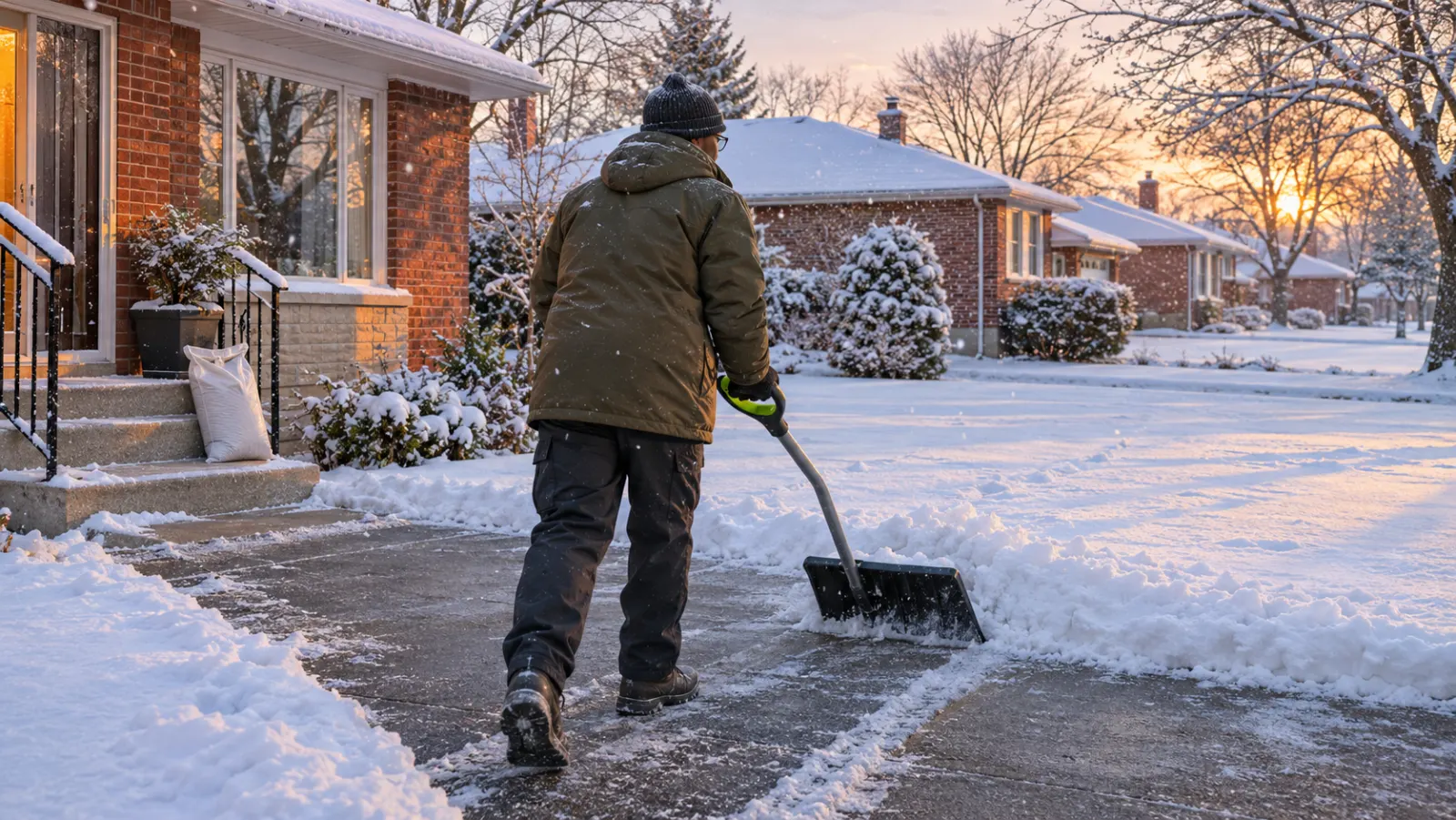
The forecast says fifteen centimetres overnight. By morning the street is quiet and white, the plows have left a ridge of packed slush at the end of every driveway, and up and down the block, people are stepping out with shovels before work. It feels like a chore, and it is one. It is also one of the more physically demanding things many adults do all year, often done in a hurry, in the cold, first thing in the morning, by people who do not exercise much the rest of the week.
Most people who clear their driveways in Scarborough finish with nothing worse than sore shoulders. But shovelling deserves more respect than it gets. Heavy, wet snow puts real strain on the heart, particularly for older adults and anyone with heart disease or risk factors they may not even know about. It is also a classic way to hurt your lower back, and icy surfaces add the risk of a fall.
This guide explains why shovelling is harder on the body than it looks, how to do it more safely, the warning signs that mean you should stop immediately and call 911, and how to decide when it is time to hand the shovel to someone else. It is general information; if you have a heart condition, your own doctor’s advice about exertion comes first.
Why a driveway can be a heart test
Plenty of people walk, garden or climb stairs without any trouble and assume shovelling is in the same category. It often is not. Several things happen at once when you shovel snow, and together they push the heart harder than most everyday activities.
Cold air tightens blood vessels
When you step into freezing air, the blood vessels in your skin narrow to conserve heat. That raises blood pressure and makes the heart work harder to pump blood around the body. In people with narrowed coronary arteries, cold can also reduce blood flow to the heart muscle itself.
Arm work is more demanding than leg work
Lifting and throwing with the arms and upper body raises heart rate and blood pressure more than walking at a similar effort, because smaller muscles are doing heavy work. Each scoop of wet snow is a lift, a twist and a throw, repeated dozens or hundreds of times.
Holding your breath
Many people instinctively hold their breath and strain as they lift a heavy load. That strain briefly spikes the pressure in the chest and can stress the heart and circulation.
Sudden effort from a standing start
A lot of us go from a warm bed to heavy labour in a matter of minutes, without any warm-up, sometimes before breakfast or after a big meal. Blood pressure also tends to be naturally higher in the morning. The sudden jump from rest to strenuous effort is part of what makes shovelling risky.
Who should be most careful
Talk to your doctor before shovelling heavy snow if you:
- Have had a heart attack, angina, a stent, bypass surgery, or heart failure
- Have high blood pressure, diabetes, high cholesterol or kidney disease
- Smoke or have recently quit
- Are older, or are middle-aged and not regularly active
- Have a family history of early heart disease
- Have ever had chest discomfort or unusual breathlessness with exertion
- Have lung disease such as COPD or asthma that cold air aggravates
For some people, the advice will be not to shovel at all. For others, it might be to shovel lightly and slowly, or only fresh, powdery snow. If you have not had a check-up in a while and you are in one of these groups, the start of winter is a sensible time for one. A heart health monitoring visit or annual physical can review your blood pressure, cholesterol and overall risk, and an ECG may be part of that assessment when your clinician thinks it is useful.
Getting ready before you step outside
Dress for the job
- Layers you can adjust. A breathable base layer, a warm middle layer and a wind-resistant shell. You will heat up as you work, and being soaked in sweat makes you colder later.
- Hat, scarf and gloves or mittens. A scarf or neck warmer loosely over the mouth and nose warms the air before you breathe it, which is gentler on the heart and lungs.
- Boots with real grip. Treaded, insulated winter boots are your first defence against slipping. Ice cleats that slip over boots are worth considering if your driveway or walkway tends to glaze over.
Choose your timing
- Avoid shovelling right after a heavy meal, when blood flow is busy with digestion.
- Skip alcohol and cigarettes before and during shovelling. Alcohol can make you underestimate the cold and the strain, and nicotine narrows blood vessels.
- Give yourself time. Rushing to clear a long driveway before the morning commute is exactly the scenario to avoid. If a storm is forecast, plan to leave earlier or work in shorter bursts.
- Shovel early and often during a long snowfall. A few centimetres of fresh, fluffy snow every couple of hours is far easier to move than one heavy, packed load at the end, especially after the plow has gone by.
Warm up
Spend five minutes walking around the house, marching on the spot, swinging your arms and gently stretching your back, shoulders and hamstrings. It sounds unnecessary for a chore, but it gives your heart and muscles a chance to adjust.
Technique that spares your back
The lower back takes the worst of bad shovelling technique. A few habits make a big difference.
Pick the right tool
A lighter shovel with a smaller blade means smaller, more manageable loads. Ergonomic shovels with a bent or adjustable shaft can reduce how far you bend. A wide pusher-style shovel works well for moving light snow without lifting at all. Spraying the blade with a little cooking spray can stop wet snow from sticking.
Push whenever you can
Pushing snow to the side of the driveway is much easier on the heart and back than lifting it. Save lifting for when you have no other option.
When you have to lift
- Stand with feet hip-width apart and face the snow you are moving.
- Bend at the hips and knees, not the waist. Keep your back straight and your chest up.
- Keep one hand close to the blade for leverage, and keep the load close to your body.
- Take small scoops. Lift less snow, more often.
- Turn your whole body. Step and pivot with your feet to face where the snow is going. Do not twist from the waist, and do not toss snow over your shoulder.
- Breathe out as you lift. Avoid holding your breath.
Pace yourself
Take a short break every 10 minutes or so, or sooner if you feel tired. Go inside, warm up, drink some water and check in with how you feel. If the job is big, it is fine to do the walkway now and the rest of the driveway later.
That ridge at the end of the driveway
The plow ridge left at the foot of the driveway is often the heaviest, densest snow you will move all winter, packed with slush and chunks of ice. It is a common point where people overdo it. Break it into small pieces, push rather than lift where you can, and consider leaving it for someone younger and fitter if it is particularly heavy.
Ice, slips and snowblowers
Under your feet
Fresh snow often hides a layer of ice. Walk slowly with short steps, keep your weight over your feet, and keep your hands free rather than in your pockets. Spread ice melt or sand on the walkway and the steps, especially before older family members or visitors arrive. If you do fall, take a moment before getting up to check for injury. Head injuries, wrist fractures and hip fractures are all common after slips on ice, and anyone who hits their head and feels unwell afterwards should be assessed.
If you use a snowblower
A snowblower reduces the heart strain of lifting, but it brings its own hazards.
- Never clear a jammed chute or auger with your hands, even with the engine off. Stored tension in the blades can cause serious hand injuries. Use the clearing tool or a broom handle, with the machine fully shut off.
- Never run a gas snowblower in a closed garage or shed. Exhaust contains carbon monoxide, which you cannot see or smell.
- Keep children and pets well away while it is running.
- Wear hearing and eye protection, and keep scarves and loose drawstrings tucked away from moving parts.
- Refuel outdoors with the engine off and cool.
Warning signs: stop, and call 911
This is the most important part of the article. Stop shovelling immediately and call 911 if you notice:
- Chest discomfort, which may feel like pressure, squeezing, tightness, heaviness, burning or aching
- Discomfort spreading to the arms, shoulders, neck, jaw or back
- Shortness of breath that is out of proportion to what you are doing
- Sweating, especially a cold sweat
- Nausea, vomiting or indigestion-like discomfort
- Lightheadedness, dizziness, or feeling faint
- A racing or irregular heartbeat with any of the above
Symptoms do not have to be dramatic. Many heart attacks start slowly, with mild discomfort that comes and goes. Women, older adults and people with diabetes are more likely to have less typical symptoms such as unusual fatigue, breathlessness, nausea or back or jaw pain, without obvious chest pain.
What to do
- Stop and rest. Do not “push through” to finish the job.
- Call 911. Do not drive yourself to the hospital, and do not have a family member drive you unless emergency services tell you to. Paramedics can begin treatment on the way.
- Follow the dispatcher’s instructions. They may ask whether you can chew aspirin. Only do so if you are not allergic and have not been told by your doctor to avoid it.
- If you have prescribed nitroglycerin, use it as your doctor has instructed.
- If someone collapses and is not breathing normally, call 911, start chest compressions, and send someone to find an AED if one is nearby.
It is far better to call and have it turn out to be nothing than to wait. Emergency teams would much rather see you early.
Signs of a stroke
Cold and exertion can also be a factor in strokes. Remember FAST: Face drooping, Arm weakness, Speech difficulty, Time to call 911.
After the shovel goes back in the garage
Some muscle soreness in the shoulders, arms and back over the next day or two is normal, especially after the first big storm of the season. Gentle movement, a warm shower and over-the-counter pain relievers, if they are safe for you, usually help. Staying active tends to help a sore back recover faster than lying in bed.
See a clinician if back pain is severe, getting worse, or not improving after a week or so. Seek emergency care for back pain with numbness in the groin or inner thighs, new trouble controlling your bladder or bowels, or weakness in the legs.
Book a visit too if you noticed anything during shovelling that worried you, even if it went away when you rested, such as chest tightness, unusual breathlessness, or palpitations. Symptoms that come on with exertion and settle with rest are exactly the kind your doctor wants to hear about.
Knowing when to pass the shovel
There is no prize for clearing the driveway yourself. In many Scarborough families, three generations share one house, and it is worth deciding together, before the first storm, who does the heavy work. Some other options:
- Ask a neighbour or a teenager on the street. Many young people are happy to earn some money clearing driveways, and neighbours often help one another after a big storm.
- Hire a snow removal service for the season, if that is an option for your household.
- Look into community programs. The City of Toronto has offered snow clearing assistance for some eligible older adults and people with disabilities. Call 311 to ask what is available in your area this winter.
- Check on neighbours who live alone, particularly older adults. A quick knock after a storm can make a real difference.
If you have been advised not to shovel, it is worth taking that advice seriously, even when it feels frustrating to watch someone else do it.
Getting winter-ready in Scarborough
Snow is part of life in Scarborough, and clearing it does not have to be dangerous. Know your own heart risk, dress warmly, push instead of lifting, take breaks, and stop the moment something feels wrong. If you are not sure whether shovelling is safe for you, ask before the snow falls rather than after.
HealthSmart Medical is at 2425 Eglinton Ave. East, Unit 12, in Scarborough. If you would like your blood pressure, heart risk or back pain looked at this winter, visit as a walk-in patient, call 416-757-7117, or book online.
This article is for general information and is not a substitute for medical advice. If you have severe or worsening symptoms, call 911 or go to the nearest emergency department.