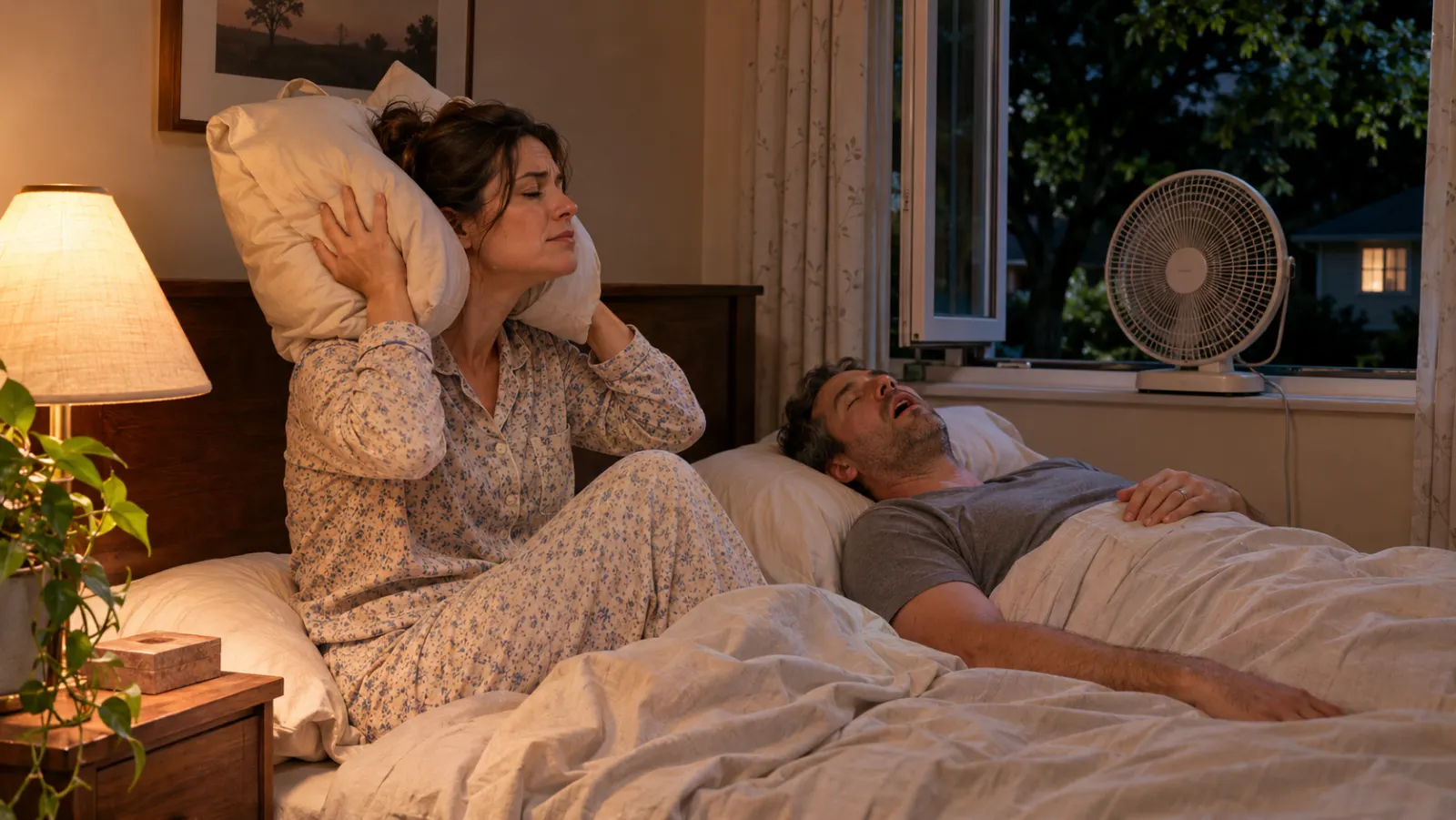
Ask around any family gathering and someone will have a snoring story. The uncle whose snoring rattles the bunk beds at the cottage. The husband sent to the couch three nights a week. The grandmother whose snores carry through the walls of a busy semi-detached house where three generations share one floor. Snoring is often treated as a running joke, but for the people lying awake next to it, it is not very funny at 2 a.m.
Summer tends to bring snoring into the open. Windows are open, air conditioners hum, families share rooms on road trips and at camp, and patio evenings often include a drink or two later than usual. For many households in Scarborough, June is when someone finally says, “This can’t go on.”
The reassuring news is that most snoring is harmless and much of it can be reduced with a few practical changes. The less reassuring news is that a small but important share of loud snoring is a sign of a breathing problem during sleep that affects the heart, the brain and daytime safety. This article explains why people snore, what tends to help, and which snoring patterns deserve a proper medical look.
What snoring actually is
When you fall asleep, the muscles in your throat, tongue and soft palate relax. For most people, the airway stays open enough for air to move quietly. In people who snore, the airway narrows, and air rushing through the tighter space makes the soft tissues at the back of the throat vibrate, a little like a flag flapping in a strong wind.
The louder and more frequent the snoring, the narrower the airway tends to be. Anything that relaxes those tissues further, adds bulk around the airway, or blocks the nose so you breathe through your mouth will usually make snoring worse.
Who snores?
Almost anyone can snore occasionally, especially with a cold. Regular snoring is more common:
- In men, though women snore too, and snoring often increases in women around and after menopause
- As people get older and muscle tone in the throat decreases
- In people carrying extra weight, particularly around the neck
- During pregnancy, when nasal passages swell and weight increases
- In people with a narrow jaw, a large tongue, large tonsils or a long soft palate
- In children with enlarged tonsils or adenoids
The usual culprits
Sleeping on your back
Lying flat on your back lets gravity pull the tongue and soft palate backward toward the throat. Many people snore loudly on their back and quietly, or not at all, on their side. A bed partner will often tell you this before you figure it out yourself.
Alcohol and sedating medications
Alcohol relaxes the muscles that hold the airway open. Even people who barely snore on a normal night may snore heavily after a few drinks, and the effect is strongest when drinking happens close to bedtime. Sleeping pills, some anxiety medications, certain antihistamines and opioid pain medicines can do the same. If you are on any of these and your snoring has worsened, mention it to your doctor rather than stopping a prescription on your own.
A blocked nose
If air cannot pass easily through the nose, you breathe through your mouth, and mouth breathing during sleep is a reliable recipe for snoring. Common causes include:
- Seasonal allergies. Here in Scarborough, tree and grass pollen seasons run through spring and early summer, and ragweed follows in late summer. Congestion often peaks at night.
- Colds and sinus infections, which usually produce short-term snoring that settles once they clear.
- A deviated septum, where the wall between the nostrils is off-centre.
- Nasal polyps, soft growths inside the nose that can block airflow and dull the sense of smell.
- Overuse of decongestant sprays, which can cause rebound congestion that is worse than the original problem.
Treating the nose properly can make a surprising difference. Our doctors can assess and treat allergies and sinus infections, and refer to an ear, nose and throat specialist when a structural problem is suspected.
Weight
Extra weight around the neck and upper body narrows the airway and makes it more likely to collapse during sleep. Many people notice their snoring got louder as their weight crept up, and quieter when they lost some. Even modest weight loss can help, though thin people snore too, so weight is only one piece.
Smoking
Smoke irritates and inflames the lining of the nose and throat, causing swelling and extra mucus. People who smoke tend to snore more, and second-hand smoke can increase snoring in others in the house, including children.
Being overtired
A long week of overtime, a night shift followed by a short day sleep, or a new baby in the house can all lead to deeper, heavier sleep when you finally get it, with more relaxed throat muscles and louder snoring.
Practical things to try at home
Most of these are low-cost and low-risk, and it is worth trying a few together for two or three weeks. Ask your bed partner to be your judge.
- Train yourself to sleep on your side. A body pillow behind your back can help. Some people sew a tennis ball into a pocket on the back of a t-shirt, or use a small backpack with something soft inside, so lying on the back becomes uncomfortable.
- Raise the head of the bed a little. Extra pillows can bend the neck awkwardly; a wedge pillow or raising the head end of the bed frame often works better.
- Keep alcohol away from bedtime. Try stopping at least three to four hours before sleep, or skip it on nights when a good sleep matters.
- Clear your nose before bed. A saline rinse or spray is gentle and safe for most people. If allergies are a factor, ask about allergy treatment that suits you.
- Try external nasal strips. These adhesive strips gently open the nostrils and help some people whose snoring starts in the nose.
- Work on weight gradually, if it applies, through changes you can actually keep up.
- Stay hydrated. A dry throat and thick mucus can make tissues stickier.
- Keep a regular sleep schedule so you are not catching up with very long, very deep sleeps.
- If you smoke, consider quitting. Your airway, and the people who share your room, will thank you.
About gadgets and online cures
Search “snoring” and you will find chin straps, mouth tape, throat sprays, smart pillows and rings that promise silence. A few people find something that helps; many do not. Be especially cautious with taping your mouth shut, which is not safe for everyone, particularly anyone with a blocked nose. If a product seems to “cure” your snoring, it is still worth checking with a doctor that the snoring was not hiding a more important problem.
Treatments beyond home remedies
If lifestyle changes are not enough, there are further options, depending on the cause.
- Oral appliances. A dentist can fit a custom mouthguard-style device that holds the lower jaw slightly forward during sleep, opening the airway. These are more effective than generic store-bought versions and are usually arranged after a medical assessment.
- Treating nasal problems. Prescription nasal sprays, or procedures for a deviated septum or polyps, may help when the nose is the main issue.
- Throat surgery. Surgery on the tonsils, soft palate or other structures is sometimes offered, particularly for children with large tonsils, but it is not a first step for most adults.
- Treatment of an underlying sleep breathing disorder, if testing shows one.
Your doctor can help sort out which of these makes sense and arrange specialist referrals when needed.
When snoring is a warning sign
Here is where snoring stops being just a nuisance. Loud, habitual snoring is the most common sign of obstructive sleep apnea, a condition in which the airway repeatedly closes during sleep and breathing stops for short periods. It is under-recognized and worth knowing about, because it is linked to high blood pressure, heart rhythm problems and drowsy driving. A sleep study is how it is diagnosed.
See a doctor if snoring comes with any of the following:
- Pauses in breathing that someone else notices, often followed by a gasp, snort or choking sound
- Waking up choking or short of breath
- Feeling unrefreshed after a full night in bed
- Daytime sleepiness, dozing off while reading, watching TV, or sitting as a passenger on the TTC
- Nodding off while driving, or near-misses from drowsiness
- Morning headaches or a very dry mouth on waking
- Getting up several times a night to pee
- High blood pressure, especially if it is hard to control
- Poor concentration, memory lapses or irritability
- Snoring that has become much louder or more frequent recently
Drowsy driving is dangerous. If you are falling asleep behind the wheel, stop driving until you have been assessed. Pull over and rest if you feel yourself drifting. If anyone ever has severe breathing difficulty, chest pain or confusion, call 911.
A word about the “silent” partner
Plenty of snorers in Scarborough households have no idea how loud they are, or that they stop breathing at night. Bed partners, roommates and adult children are often the ones who notice. If you are the person lying awake, consider recording a minute or two of the snoring on your phone, especially any pauses or gasps. It can be genuinely useful for the doctor, and it often ends the “I don’t snore” debate quickly.
Snoring in children
Children snore occasionally with colds, and that is usually nothing to worry about. Regular snoring, most nights of the week, is different and worth mentioning to your child’s doctor, especially with:
- Pauses, gasps or laboured breathing during sleep
- Mouth breathing day and night
- Very restless sleep or unusual sleeping positions, such as the neck stretched back
- Bedwetting in a child who was previously dry
- Daytime tiredness, or the opposite: hyperactivity, trouble focusing or behaviour problems at school
Enlarged tonsils and adenoids are a common cause in children and can be treated. Our team provides children’s health care and can assess and refer if needed.
What happens at a visit
When you see a doctor about snoring, expect questions about how loud it is, whether anyone has noticed pauses, how you feel during the day, your alcohol and medication use, your nose and allergies, and your general health. It helps a lot if your bed partner can come along, or at least send their observations with you.
The doctor will usually check your blood pressure, weight and neck, and look in your nose and throat. Depending on what they find, next steps may include treating congestion, adjusting medications, practical lifestyle advice, a referral to an ear, nose and throat specialist, or a referral for a sleep study. If you do not have a family doctor, a general medical consultation at a walk-in clinic is a reasonable place to start.
Quieter nights for the whole house
Snoring affects everyone under the roof, and in many Scarborough homes that is a lot of people. If you or someone you love snores loudly most nights, especially with pauses, gasps or daytime sleepiness, it is worth a conversation. HealthSmart Medical is at 2425 Eglinton Ave. East, Unit 12. Walk in, call 416-757-7117, or book online, and bring your bed partner’s honest report with you.
This article is for general information and is not a substitute for medical advice. If you have severe or worsening symptoms, call 911 or go to the nearest emergency department.