Imagine holding your breath for twenty seconds, then gasping, then doing it again, dozens or even hundreds of times a night, without ever fully waking up. That is roughly what happens to someone with obstructive sleep apnea. They rarely remember any of it. What they notice instead is the fallout: waking up feeling as if they never slept, needing a third coffee before noon, drifting off in front of the TV, or catching their head bobbing on the bus along Eglinton.
Sleep apnea is common, and it is badly under-diagnosed. Many people live with it for years, blaming their tiredness on work, children, age or stress. Others only find out because a spouse, a grown child or a roommate finally says, “You stop breathing at night, and it scares me.”
This article walks through what sleep apnea is, the signs that point to it, why it matters for your heart and your safety on the road, how testing works in Ontario, and the treatment options, including CPAP, in plain terms. If you are reading this because someone has been nudging you to get checked, they may well be right.
What is going on during the night
There are two main types of sleep apnea.
Obstructive sleep apnea (OSA) is by far the more common. During sleep, the muscles that hold the throat open relax. In people with OSA, the airway narrows or collapses completely, so air cannot get through even though the chest and belly keep trying to breathe. Oxygen levels dip, the brain senses trouble, and it jolts the body into a brief, partial awakening to reopen the airway, often with a snort or gasp. Then the person falls back asleep and the cycle repeats.
Central sleep apnea is less common. Here, the airway is open but the brain briefly stops sending the signal to breathe. It is more often seen in people with heart failure, after a stroke, at high altitude, or with certain medications such as opioids. It is managed differently, which is one reason a proper sleep study matters.
Those repeated drops in oxygen and constant mini-awakenings are what make sleep apnea more than a sleep problem. Your sleep is broken into fragments you cannot remember, and your heart and blood vessels are put under stress, night after night.
Signs that point toward sleep apnea
What others notice
- Loud, regular snoring, often worse on the back
- Silent pauses in breathing, followed by a choke, gasp or loud snort
- Restless, thrashing sleep
What you notice
- Waking up unrefreshed, even after a full night in bed
- Heavy daytime sleepiness, or nodding off when you sit still
- Morning headaches
- A dry mouth or sore throat on waking
- Waking up gasping or with your heart pounding
- Getting up to pee several times a night
- Trouble concentrating, poor memory, irritability or low mood
- Lower interest in sex, or erectile problems
Not everyone with sleep apnea snores loudly or feels sleepy. Women in particular are more likely to describe fatigue, insomnia, morning headaches or low mood than classic loud snoring, and their symptoms are more easily brushed off. Sleep apnea becomes more common in women after menopause.
Who is at higher risk?
- People carrying extra weight, particularly around the neck and waist
- Men, though women are far from immune
- Older adults
- People with a narrow airway, large tonsils, a small or set-back jaw, or chronic nasal blockage
- Those with a family history of sleep apnea
- People who drink alcohol in the evening or use sedating medications
- People who smoke
- People living with high blood pressure, type 2 diabetes, atrial fibrillation, heart failure or a previous stroke
Some research suggests people of East Asian background can develop sleep apnea at lower body weights, partly because of differences in facial and jaw structure. In a community as diverse as Scarborough, that is a reminder not to rule it out just because someone is slim.
Why it matters
Your heart and blood vessels
Each time breathing stops, oxygen falls and the body releases stress hormones that push blood pressure and heart rate up. Over years, untreated sleep apnea is associated with:
- High blood pressure, especially blood pressure that stays high despite several medications
- Irregular heart rhythms, including atrial fibrillation
- Heart attack and heart failure
- Stroke
- Harder-to-control blood sugar in people with diabetes
If you are already working with a doctor on high blood pressure management or diabetes management and things are not improving as expected, it is worth asking whether sleep apnea could be part of the picture.
Driving and work safety
People with untreated sleep apnea are more likely to be involved in motor vehicle crashes, because the sleepiness can be profound and sometimes sneaks up without warning. A brief “microsleep” of a few seconds at highway speed on the 401 is enough to cause a serious collision.
If you drive for work, operate machinery, or work in a safety-sensitive job, this matters even more. In Ontario, doctors have a legal duty to report certain medical conditions that may make it unsafe to drive, and severe, untreated sleepiness can fall into that category. That can sound frightening, but in practice the goal is to get people treated, and most people with sleep apnea who use their treatment continue to drive safely. Commercial drivers may need specific documentation; if you need a driver’s medical exam, let us know about any sleep apnea diagnosis and treatment.
If you are struggling to stay awake at the wheel, stop driving until you have been assessed. That is not a judgement. It protects you, your passengers and everyone else on the road.
Mood, memory and daily life
Chronic poor sleep affects concentration, patience and mood. People with untreated sleep apnea often describe feeling foggy, short-tempered or low. Many say, after starting treatment, that they had forgotten what it felt like to wake up rested.
Getting a diagnosis
Starting with your doctor
The first step is a conversation with a family doctor or a walk-in physician. Plenty of people in Scarborough do not yet have a regular family doctor, and a walk-in visit is a perfectly good place to start. Expect questions about your sleep, snoring, daytime sleepiness, alcohol, medications and medical history. Your doctor may use a short questionnaire to gauge how sleepy you are during the day and how likely sleep apnea is. They will usually check your blood pressure, weight and neck size and look at your nose, mouth and throat.
It helps to bring:
- A bed partner, or a written note of what they have noticed
- A short phone recording of your snoring and any pauses
- A list of your medications and supplements
- Your recent blood pressure readings if you check at home
Your doctor may also order blood work to look for other causes of fatigue, such as an underactive thyroid or anemia.
The sleep study
Sleep apnea is diagnosed with a sleep study. Your doctor will arrange a referral to a sleep clinic or sleep specialist through our specialist referral service. Depending on your situation, the study may be:
- An overnight study in a sleep lab. You sleep in a private room while sensors record your breathing, oxygen levels, heart rhythm, brain waves and leg movements. It sounds uncomfortable, but most people do sleep well enough for useful results.
- A home sleep apnea test. You take a simpler device home and wear it overnight in your own bed. It measures breathing, airflow and oxygen. This suits many people with a high likelihood of obstructive sleep apnea and no major heart or lung problems.
Wait times, coverage and costs vary between sleep clinics and test types, so ask the clinic to explain what applies to you when they contact you.
The results usually describe how many times per hour your breathing stopped or became shallow, and how low your oxygen dropped. Your results will be rated as mild, moderate or severe, which helps guide treatment.
Treatment options
CPAP
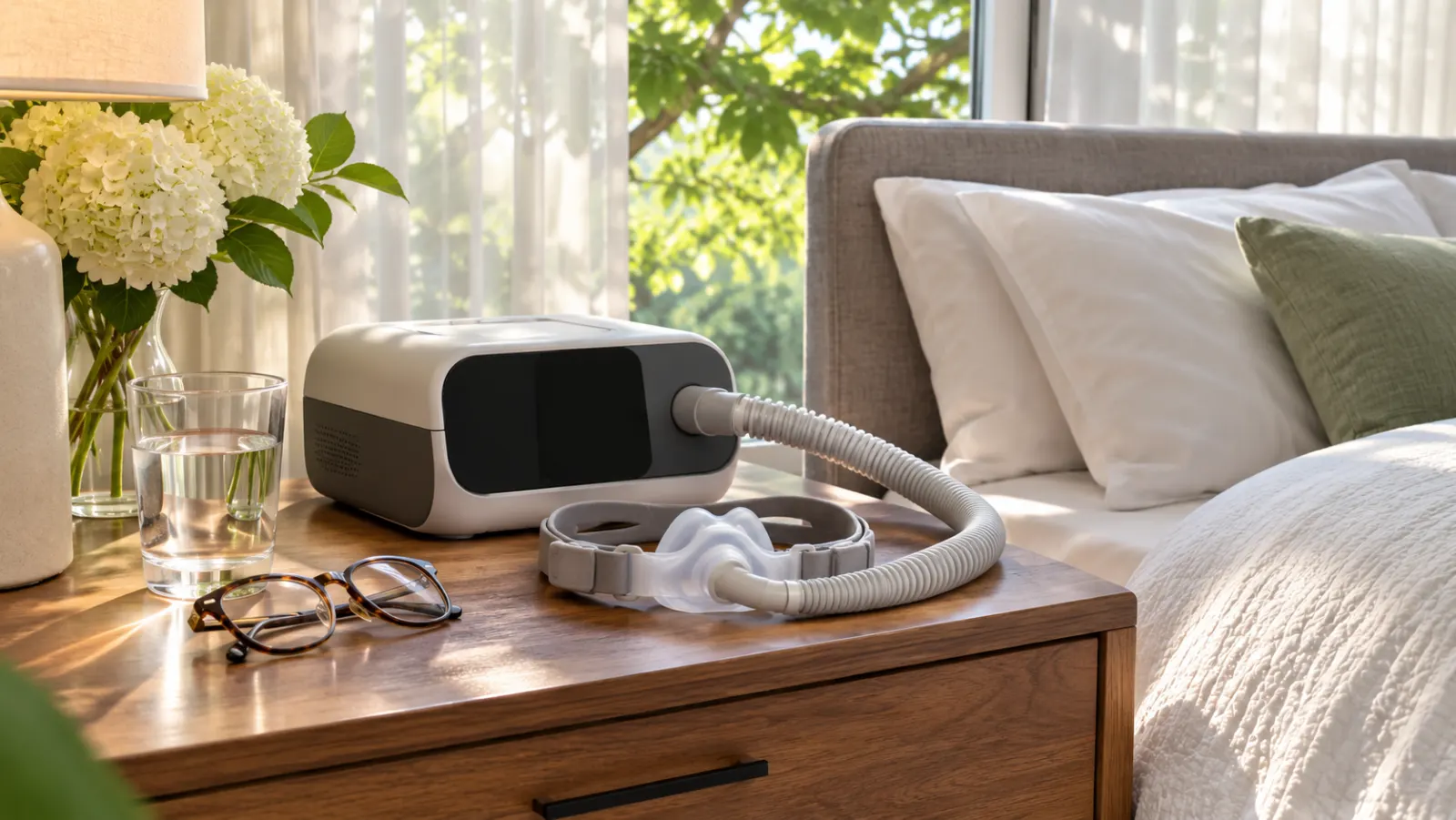
Continuous positive airway pressure, or CPAP, is the most effective treatment for moderate to severe obstructive sleep apnea. A small bedside machine gently blows air through a mask, keeping the airway open like an air splint. When used consistently, it can stop the breathing pauses, reduce snoring and, for many people, transform how they feel during the day.
A few honest points about CPAP:
- The first weeks are an adjustment. Most people need time to get used to the mask and the airflow. That is normal.
- Mask fit is everything. There are nasal pillows, nasal masks and full face masks. If one leaks, irritates your skin or feels claustrophobic, ask your equipment provider about trying another.
- Dry mouth and a stuffy nose are common and often helped by the machine’s humidifier or by treating nasal congestion.
- It only works when you wear it. The benefits come with nightly use, including naps and travel.
- Cost help may be available. Ontario’s Assistive Devices Program may help cover part of the cost for eligible people. The sleep clinic or equipment provider can explain how it works.
Summer travel is no reason to take a break. Most machines are compact enough for a carry-on bag, and it is worth checking ahead whether a cottage or campsite has reliable power.
Other options
CPAP is not the only path, especially for milder apnea or for people who cannot tolerate it.
- Oral appliances. A custom device made by a dentist holds the lower jaw forward during sleep. These can work well for mild to moderate obstructive sleep apnea.
- Positional therapy. Some people only have significant apnea while lying on their back. Devices or simple techniques that keep them on their side can help.
- Weight loss. For people carrying extra weight, losing some can reduce the severity of sleep apnea, and occasionally resolve it. It is a powerful support alongside other treatment, though rarely a quick fix on its own.
- Avoiding alcohol and sedatives near bedtime, and reviewing medications that relax the airway.
- Treating nasal blockage, which can make CPAP more comfortable as well.
- Surgery. Procedures on the nose, throat, tonsils or jaw are options in selected cases, often after other treatments have been tried. Newer implanted devices that stimulate the tongue muscles are used for some carefully chosen patients.
Your doctor and the sleep specialist can help decide which approach fits your results, your anatomy and your life.
Living well with sleep apnea
Treatment works best with a few supporting habits:
- Keep a regular bedtime and wake time
- Limit alcohol, especially in the evening
- Stay active; even regular walks around the neighbourhood or through a local ravine trail help sleep and heart health
- If you smoke, ask for support to quit
- Keep up with follow-up on blood pressure, blood sugar and cholesterol
- Tell any surgeon or anaesthetist about your diagnosis before a procedure, and bring your CPAP to hospital if you are staying overnight
Many patients find their blood pressure, mood and energy improve noticeably once their sleep apnea is under control. Regular heart health monitoring helps track those gains.
When to seek urgent care
Sleep apnea itself is usually assessed in a regular appointment, not an emergency. But call 911 or go to the nearest emergency department for chest pain, severe shortness of breath, signs of a stroke such as face drooping, arm weakness or slurred speech, or fainting. And if you have fallen asleep while driving or had a near-miss, do not wait months for an appointment: stop driving and get seen soon.
Book a sleep conversation in Scarborough
If you or someone you love snores loudly, stops breathing at night, or never wakes up rested, sleep apnea is worth ruling in or out. Our doctors in Scarborough can start the assessment, arrange a sleep study referral and help you follow through with treatment. Visit HealthSmart Medical at 2425 Eglinton Ave. East, Unit 12, call 416-757-7117, or book online. Better mornings are a very realistic goal.
This article is for general information and is not a substitute for medical advice. If you have severe or worsening symptoms, call 911 or go to the nearest emergency department.