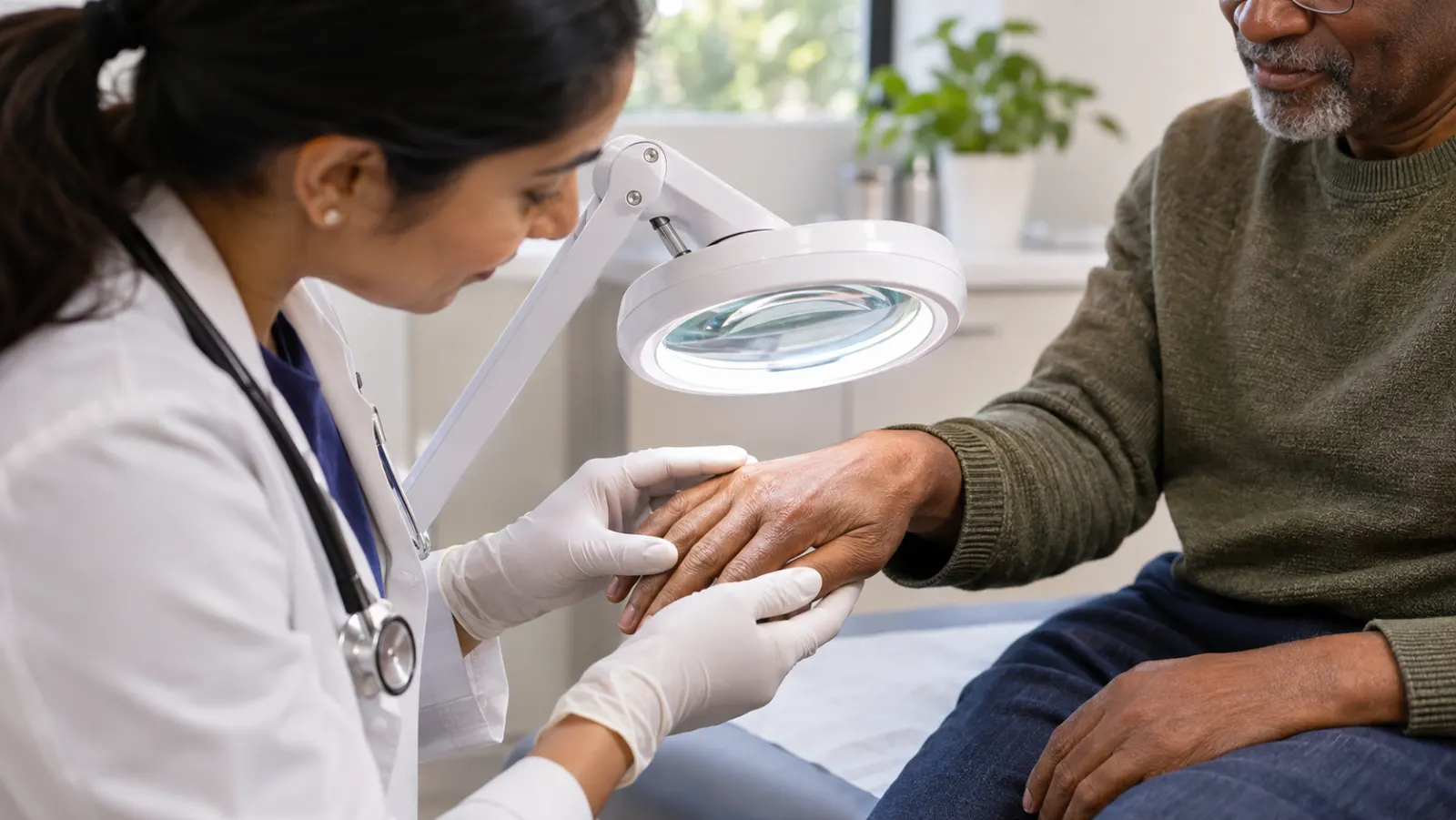
Nobody books a doctor’s appointment because they are excited to talk about the little flap of skin on their neck that keeps catching on their collar, or the rough bump on their thumb that will not go away. These are the kinds of things people put up with for months, sometimes years, before deciding they have had enough. And by then, many have already tried something they read about online: dental floss, nail clippers, a freezing kit from the pharmacy, or a dab of something that promised quick results.
Skin tags and warts are among the most common skin growths clinicians see in Scarborough, as they are everywhere. They are usually harmless, and they are very treatable. But “usually harmless” is not the same as “always harmless,” and the way you deal with them matters.
Here is a plain-language look at what these growths are, how they are treated in a clinic, why home removal can go wrong, and the signs that a skin spot deserves a proper look. If you have been living with something like this in Scarborough and wondering whether it is worth a visit, this should help you decide.
Two different growths, two different causes
Skin tags and warts are often lumped together, but they are quite different.
Skin tags
A skin tag is a small, soft, harmless growth of skin. It usually hangs off the body on a thin stalk and is the same colour as the surrounding skin or a little darker. Skin tags often appear where skin rubs against skin or clothing:
- Neck and collar line
- Underarms
- Eyelids
- Under the breasts
- Groin and inner thighs
- Along bra straps or waistbands
They are not contagious and are not caused by an infection. They become more common with age, and they show up more often in people who carry extra weight, people with diabetes or insulin resistance, and during pregnancy. Some families seem prone to them as well, so it is not unusual for several generations in the same household to have them.
Warts
Warts are caused by certain types of human papillomavirus (HPV). They are contagious through direct contact and can spread from one part of the body to another, or between people. Shared surfaces where people walk barefoot, such as pool decks, change rooms, and gym showers, are a common source.
There are several types:
- Common warts are rough, raised, and often found on fingers and hands
- Plantar warts grow on the soles of the feet and can feel like walking on a small stone; they often have tiny black dots in them
- Flat warts are small and smooth, often on the face, legs, or hands, and can appear in groups
- Periungual warts grow around fingernails or toenails and can be stubborn to treat
Children and teens get warts often, partly because their immune systems have not yet encountered as many HPV types. Some warts disappear on their own over months to a couple of years. Others linger, spread, or become painful.
Genital warts are also caused by HPV but are a separate topic and need their own medical assessment. They should not be treated with over-the-counter wart products.
Do they need treatment at all?
Not always. A small skin tag that does not bother you can safely be left alone. A wart that is not painful or spreading may go away on its own.
People usually seek treatment when a growth:
- Catches on jewellery, zippers, seatbelts, or clothing
- Bleeds or becomes irritated from rubbing or shaving
- Hurts, especially plantar warts during long days on your feet
- Spreads or multiplies
- Affects how they feel about their appearance
- Gets in the way of work, sport, or daily tasks
Whatever the reason, the first step is always making sure the growth is what you think it is.
How a clinic treats skin tags
A skin tag removal visit begins with a look at the growth to confirm it is a skin tag and not something else. If removal is appropriate, a clinician will choose a method based on the size, location, and your health history.
Common approaches include:
- Snipping the tag off at its base with sterile instruments, often after numbing the area for larger tags
- Freezing the tag so it falls off over the following days
- Cautery, which uses heat to remove the tag and seal small blood vessels
Small tags often come off quickly with minimal discomfort. You may have a small scab or mark that fades as it heals. Your clinician will give you aftercare instructions, which usually include keeping the area clean and watching for signs of infection.
Skin tags near the eye are a special case. The skin there is delicate, and these may need a referral rather than routine removal.
Because skin tag removal is often done for comfort or appearance, ask when booking whether there are any costs for your situation. Coverage can depend on the reason for removal.
How a clinic treats warts
There is no single treatment that works for every wart, and stubborn warts sometimes need several rounds. During a wart treatment visit, a clinician will look at the type, size, and location of the wart, and ask what you have already tried.
Options may include:
- Cryotherapy (freezing) with a very cold liquid applied to the wart. It can sting for a short time and may cause a blister that heals over the following days. Repeat sessions a few weeks apart are common.
- Paring down thick skin over the wart, which can relieve pain from plantar warts and help other treatments work better.
- Topical treatments such as salicylic acid preparations, used at home under guidance, often combined with paring or filing.
- Referral for warts that do not respond, are in sensitive areas, or are unusually large or numerous.
Patience is part of the process. Warts can take weeks to months to clear, even with good treatment. It helps to know that going in.
Why you should not remove them yourself
It is tempting. Skin tags look like they would come off with a quick snip, and pharmacy shelves are full of wart products. But do-it-yourself removal can cause real problems.
You might be treating the wrong thing
This is the biggest risk. Some skin cancers, including certain types of melanoma and basal cell carcinoma, can look like an ordinary bump, a tag, or a wart to an untrained eye. Removing or burning off a spot at home destroys the evidence a doctor would need to examine it, and may delay a diagnosis that matters.
Bleeding and infection
Even small skin tags have a blood supply. Cutting one off with household scissors or clippers can bleed more than expected and introduces bacteria from unsterile tools. Tying string or floss around a tag can lead to pain, swelling, and infection.
Scarring and skin damage
Strong acids, home freezing kits used too long, or harsh remedies can burn healthy skin around a growth. This can leave a scar or a light or dark patch. People with deeper skin tones, who make up a large part of Scarborough’s communities, can be more prone to colour changes and raised scars after skin injury, so gentle and appropriate treatment matters.
Special risks for some people
If you have diabetes, poor circulation, or numbness in your feet, do not use over-the-counter wart products or try to cut warts on your feet. A small wound on the foot can turn into a serious problem. The same caution applies to anyone with a weakened immune system. Talk to a clinician first.
Never use wart products on the face, genitals, or near the eyes unless a doctor has specifically told you to.
When a skin spot needs checking
Skin tags and warts are common, but it is worth knowing the warning signs of something more serious. Many doctors teach the ABCDE approach for moles and pigmented spots:
- A – Asymmetry: one half does not match the other
- B – Border: edges are ragged, notched, or blurred
- C – Colour: uneven shades of brown, black, red, white, or blue
- D – Diameter: larger than a pencil eraser, though smaller spots can still be concerning
- E – Evolving: changing in size, shape, colour, height, or symptoms
Beyond that list, book a visit if a skin spot:
- Is new and looks different from your other spots
- Bleeds without being injured, or will not heal
- Crusts, oozes, or becomes a sore that keeps coming back
- Itches, hurts, or feels tender for no clear reason
- Grows quickly
- Appears under a nail as a dark streak that was not caused by an injury
Skin cancer can occur in people of all skin colours. In darker skin, it may show up in less sun-exposed places such as the palms, soles of the feet, under the nails, or inside the mouth, so do not ignore spots in those areas.
A clinician may watch a spot over time, take a closer look with magnification, or arrange a referral to a dermatologist or for a biopsy if something looks concerning. Our specialist referrals page explains how that process works.
Preventing warts and new skin tags
You cannot always prevent these growths, but a few habits help.
For warts
- Wear sandals or flip-flops in public pools, change rooms, and gym showers
- Keep feet clean and dry, and change damp socks
- Do not pick at or bite warts, which can spread them to other fingers or around the nails
- Use your own towel, nail clippers, and pumice stone
- Cover warts with a bandage during sports or swimming
For skin tags
- Reduce friction where possible, such as choosing softer collars and well-fitting bras
- Keep skin folds clean and dry
- Talk to your doctor about blood sugar if you are developing many new skin tags, since this can sometimes be linked to insulin resistance
Have it looked at by HealthSmart Medical
If a skin tag is catching on your clothing, a wart has outstayed its welcome, or you simply want peace of mind about a spot you have been watching, our clinicians can take a look. HealthSmart Medical offers skin growth assessments and selected minor procedures at our clinic in Scarborough, with referral when a specialist opinion is the better route.
Call 416-757-7117 or book online to arrange a visit. Bring a list of any treatments you have already tried, and point out any other spots you have been wondering about while you are there.
This article is for general information and is not a substitute for medical advice. If you have severe or worsening symptoms, call 911 or go to the nearest emergency department.