Every family has its own picture of how a baby should sleep. For some, it is a wooden cradle that rocked three generations. For others, it is a baby tucked between parents on a big bed, or curled on a grandmother’s lap during an afternoon nap, or wrapped tightly in a cloth the way it has always been done back home. These traditions come from love, and from a deep wish to keep babies close and comfortable.
Safe sleep advice in Canada asks families to keep that closeness while changing a few specific details. The details matter because sleep-related infant deaths, including sudden infant death syndrome (SIDS) and accidental suffocation, happen most often in the first months of life, usually without any warning. Most of the risk factors are things parents can control with simple, low-cost steps.
This article walks through those steps in plain language. It is written for parents, grandparents, aunties and anyone else in Scarborough who puts a baby down to sleep, whether that is in a new crib in a townhouse near Eglinton or a borrowed bassinet in a grandparent’s apartment.
The core message in one sentence
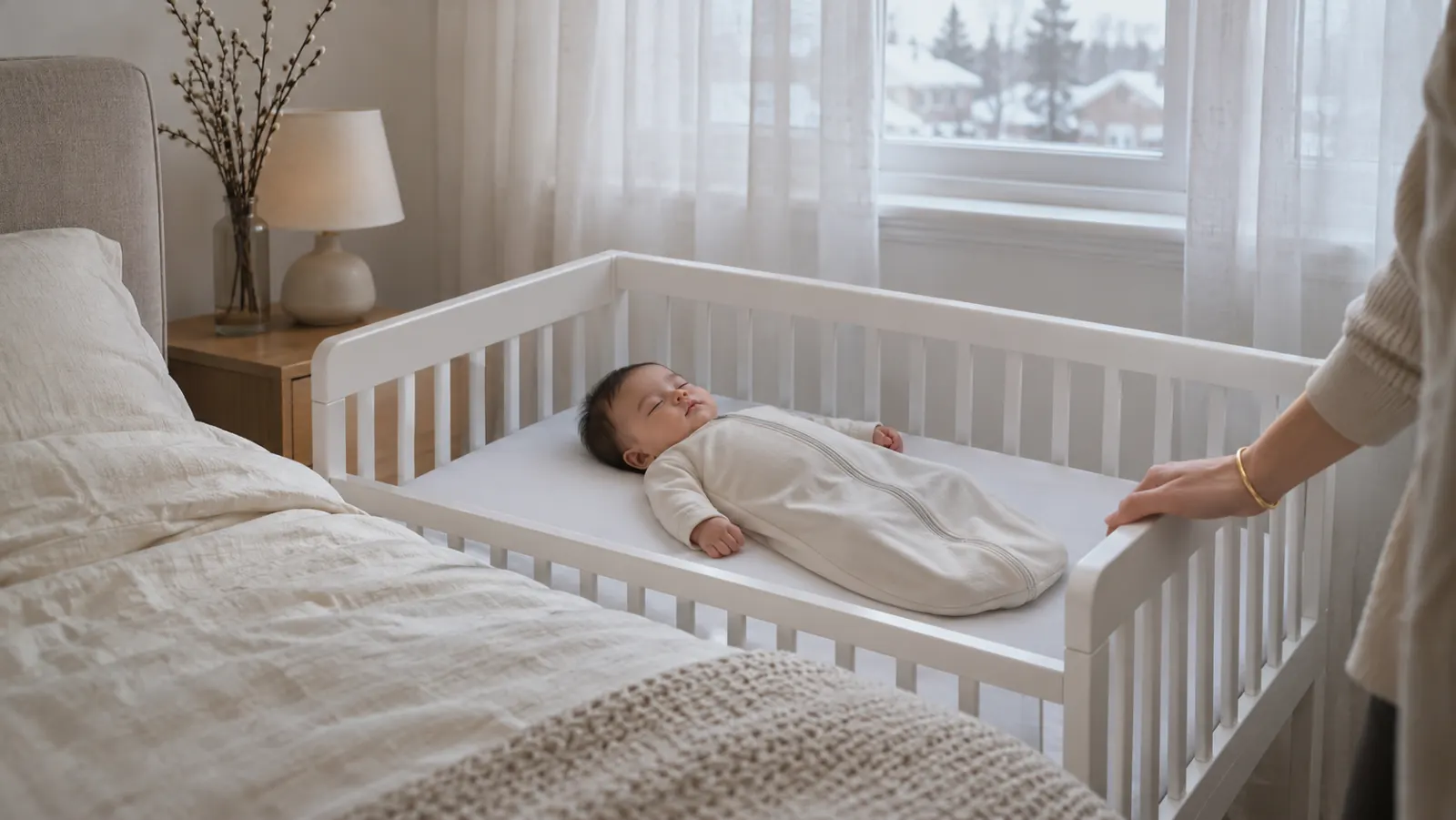
If you remember nothing else, remember this: babies sleep safest on their back, alone, on a firm and flat surface with nothing else in the sleep space, in the same room as a parent or caregiver.
Each part of that sentence has a reason behind it, and the rest of this article unpacks them.
Back to sleep, every sleep
Placing a baby on their back for every sleep, including naps, is the single most important habit. Since back sleeping became standard advice in Canada and around the world, sleep-related infant deaths have dropped substantially.
Parents and grandparents often have understandable worries about this:
- “Won’t my baby choke if they spit up?” Healthy babies have protective reflexes that help them swallow or clear spit-up while on their back. Babies placed on their tummies may actually have a harder time clearing their airway.
- “My mother put all of us on our tummies and we were fine.” Advice was different a generation ago. Most babies did survive tummy sleeping, but the risk was meaningfully higher, and families had no way of knowing which babies were vulnerable.
- “My baby sleeps better on their tummy.” That deeper sleep and lower arousal is part of what researchers believe makes tummy sleeping riskier.
Side sleeping is not a safe middle ground, because a baby on their side can roll onto their tummy. Once your baby can roll both ways on their own, usually somewhere in the middle of the first year, you can still place them on their back and let them find their own position.
What about tummy time?
Tummy time is for awake, supervised play, not sleep. It helps strengthen the neck and shoulders and can reduce flattening at the back of the head. A few short sessions a day on a clean blanket on the floor, with an adult right there, is a good start. Your clinician can discuss flat spots and head shape at well-baby visits.
A firm, flat, bare sleep surface
The safest place for a baby to sleep is a crib, cradle or bassinet that meets current Canadian safety regulations. In Canada, cribs made before the mid-1980s do not meet current standards, and drop-side cribs are no longer allowed to be sold. If you are using a hand-me-down or a second-hand crib from a marketplace listing, check the label for the manufacturing date and look carefully for loose or missing hardware.
What belongs in the crib
- A firm, flat mattress that fits snugly, with no gap large enough to fit more than two fingers between mattress and frame
- A fitted sheet made for that mattress
- Your baby
What does not belong
- Pillows, quilts, duvets and thick blankets
- Bumper pads, even the thin or breathable kinds
- Stuffed toys and sleep positioners or wedges
- Mattress toppers or extra padding to make the bed “softer”
Parents sometimes worry that a bare crib looks cold or uncomfortable. Babies do not need softness the way adults do, and a firm surface is exactly what keeps their airway clear if their face turns into the mattress.
Car seats, swings and slings
Car seats, strollers, bouncers, swings and slings are not designed for routine sleep. When a baby sleeps semi-upright, their heavy head can fall forward and narrow the airway. If your baby falls asleep in the car seat on the drive home along Kingston Road, that is fine while you are travelling and supervising, but move them to a flat crib or bassinet once you arrive. Inclined sleepers have been recalled in Canada for this reason.
Room-sharing versus bed-sharing
This is the part of safe sleep advice that touches family traditions most closely, and it deserves a respectful and honest conversation.
Canadian guidance recommends room-sharing: having your baby sleep in their own crib or bassinet in the same room as you, ideally for at least the first six months. Room-sharing keeps your baby close, makes night feeds easier, and is associated with a lower risk of sleep-related death.
Bed-sharing, meaning the baby sleeps on the same adult bed, sofa or mattress as an adult, is not recommended in Canadian public health advice. Adult beds are usually soft, have pillows and heavy bedding, and have gaps against walls and headboards where a baby can become trapped. An adult who is deeply asleep may also roll toward the baby.
Higher-risk situations to avoid completely
The risk rises sharply when a baby sleeps with an adult who:
- Smokes, or when the baby has been exposed to smoke before or after birth
- Has had alcohol, cannabis, or medications or substances that cause drowsiness
- Is extremely tired, as many new parents are
The risk is also much higher on a sofa, recliner or armchair. Dozing off on the couch with a baby on your chest is one of the most dangerous sleep situations, because a baby can slip into the cushions or become wedged against an adult. If you feel yourself getting sleepy while feeding on the couch, move to the bed to feed with no pillows or blankets near the baby, or put the baby down in their crib before you close your eyes.
Being honest about the 3 a.m. reality
Many parents never plan to bed-share and still end up doing it, because they fall asleep while feeding. Rather than feel ashamed, it helps to plan for that possibility. Keep pillows and heavy blankets away from where the baby would lie, make sure the baby is on their back and on a firm surface, never let a baby sleep between two adults or next to an older child or pet, and talk openly with your doctor or public health nurse about your situation. You will get better, more practical advice when you share what really happens at night.
Swaddling: a tradition with some updated rules
Swaddling has been part of baby care in many cultures for centuries, and many newborns find it calming. It can be done safely if you follow a few guidelines:
- Use a thin, breathable cloth and keep the swaddle snug around the arms but loose around the hips, so the legs can bend up and out. Tight leg wrapping can affect hip development.
- Always place a swaddled baby on their back. A swaddled baby on their tummy or side is at higher risk.
- Stop swaddling once your baby shows signs of starting to roll, often somewhere around two to four months. A swaddled baby who rolls face-down may not be able to push up.
- Do not overheat. Watch for sweating, a hot chest or flushed cheeks.
Once swaddling stops, a wearable blanket or sleep sack that fits well at the neck and arms is a good alternative to loose blankets.
Temperature and clothing in a Scarborough winter
Early March in Scarborough can still bring cold snaps and grey, damp days, and the instinct to bundle a baby is strong, especially in families from warmer climates experiencing their first Canadian winter. But overheating is itself linked to sleep-related deaths.
A simple guide is to dress your baby in about one more layer than an adult would be comfortable wearing in the same room. Keep the room at a comfortable temperature for a lightly dressed adult. Hats are for outdoors and should come off indoors for sleep. Feel the back of the neck or the chest, rather than hands and feet, which often feel cool even when baby is warm enough.
Other habits that lower the risk
Several other factors are associated with safer infant sleep:
- A smoke-free home and car. This includes cigarettes, cigars, hookah and vaping, and smoke clinging to clothing matters too. If anyone in your household wants help quitting, ask your doctor.
- Breastfeeding, in whatever amount works for your family, is linked to a lower risk.
- Offering a pacifier at sleep time, once breastfeeding is established, may help. If it falls out after your baby is asleep, you do not need to put it back in.
- Keeping up with routine vaccines. Immunized babies have been shown to have a lower risk of SIDS. You can learn more about children’s vaccinations at our clinic.
- Never leaving a baby to sleep unsupervised on an adult bed, sofa or high surface, even for a “quick” nap.
Bringing grandparents and caregivers on board
In many Scarborough homes, the person putting a baby down for a nap is not a parent. It might be a grandmother who arrived from Sri Lanka, Jamaica, the Philippines or Pakistan to help after the birth, an uncle who works nights and covers afternoons, or a babysitter down the hall. They may have raised many children with different methods and may feel, quite reasonably, that their experience counts.
These conversations go better when they start from respect. A few ideas:
- Acknowledge their experience. “You know so much about babies, and the advice has changed in some ways since you raised us.”
- Explain the reason, not just the rule. “Babies on their backs can clear spit-up better, and soft bedding can block their breathing.”
- Find what you agree on. Keeping the baby close, comforting them when they cry and feeding on demand are values most families share.
- Bring them to an appointment. Hearing the advice directly from a clinician, sometimes in a language they prefer, can carry more weight than a parent’s word. Ask whether interpretation support is available when you book.
Cultural traditions can often be adapted rather than abandoned. A beloved family cradle may be safe if it meets current standards. A traditional wrap may be used for awake time and carrying, while sleep happens in a bare crib. The goal is closeness without risk.
When to call for help
Safe sleep is about prevention, but it is also wise to know warning signs when something is wrong. Call 911 immediately if your baby:
- Is not breathing, is turning blue or grey, or is limp and unresponsive
- Has long pauses in breathing or is struggling to breathe
- Cannot be woken
Learning infant CPR is a worthwhile investment for parents and grandparents, and community courses are offered across Toronto. For non-urgent questions any time of day or night, Health811 connects you with a registered nurse.
Book a visit with a doctor if your baby snores loudly, seems to breathe noisily during sleep, has a persistently flat area on the head, or if you are struggling to make safe sleep work in your space, for example in a crowded apartment or a shared bedroom.
Sleep support for families in Scarborough
Safe sleep conversations are a routine and welcome part of baby care at HealthSmart Medical. Whether you are expecting your first child, welcoming a newborn into a busy multigenerational home, or have questions about a hand-me-down crib, our team can talk it through without judgement and with respect for your family’s traditions. We provide paediatric care for babies and young children and can help families who are new to Ontario get connected with ongoing family medicine.
Visit us at 2425 Eglinton Ave. East, Unit 12, in Scarborough, call 416-757-7117, or book online. Bring your questions, and bring the grandparents too.
This article is for general information and is not a substitute for medical advice. If you have severe or worsening symptoms, call 911 or go to the nearest emergency department.