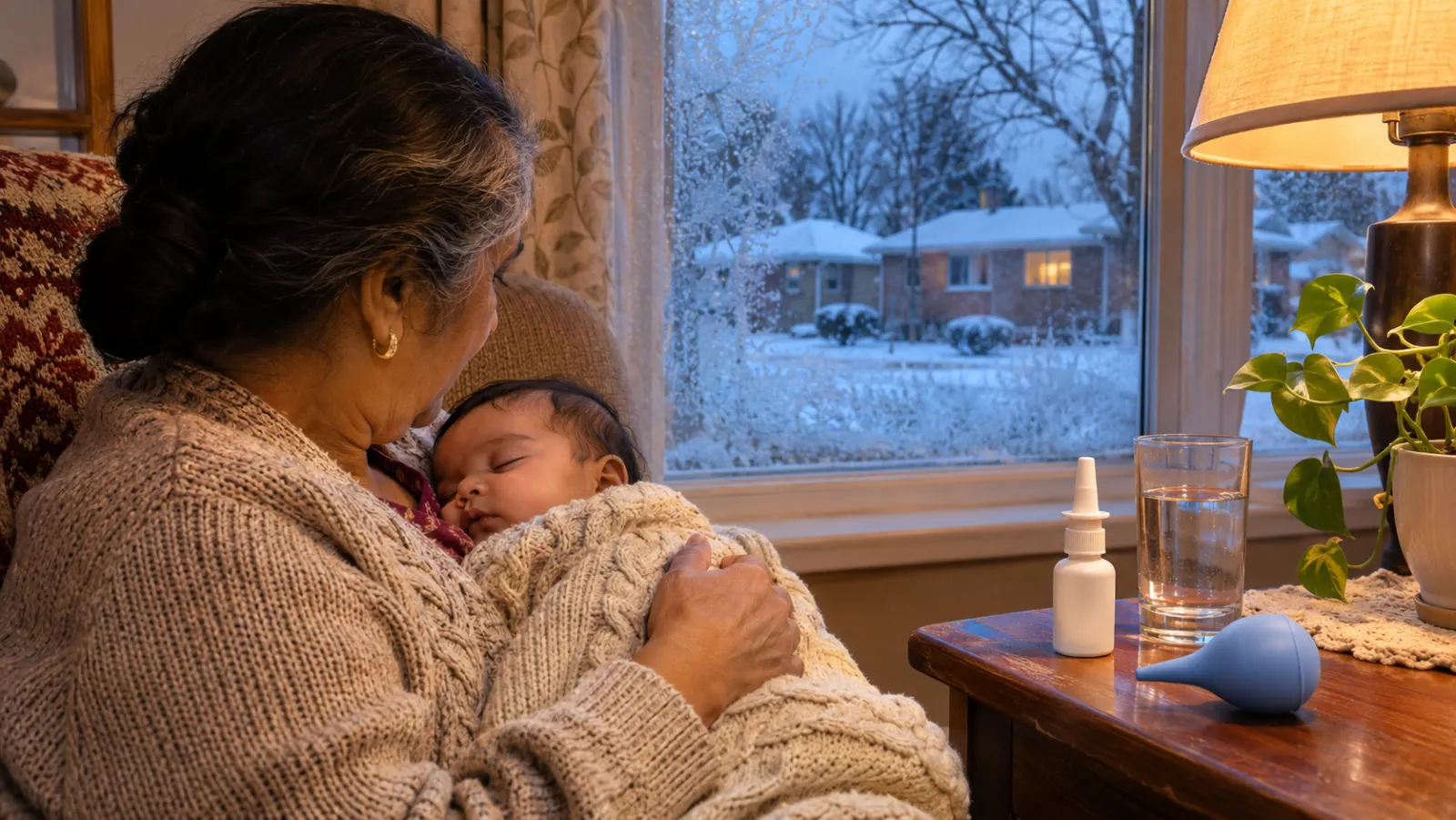
Most of us have had RSV more than once without ever knowing its name. In a healthy school-aged child or a working adult, respiratory syncytial virus usually looks like an ordinary winter cold: a runny nose, a scratchy throat, a cough that hangs around for a week or two. You blow your nose, you carry on, and you probably pass it to someone at home without a second thought.
The trouble is who that someone might be. In a two-month-old baby, the same virus can inflame the tiny airways deep in the lungs and make every breath a chore. In an 80-year-old grandfather with heart failure or COPD, it can tip a stable situation into a hospital stay. RSV is one of the main reasons babies are admitted to hospital in Canadian winters, and it is a significant and often overlooked cause of serious illness in older adults.
That split, mild for most and serious for a few, is exactly why it matters so much in Scarborough, where so many households have a newborn and a grandparent under the same roof. This guide explains who is most vulnerable, what RSV looks like at different ages, how to care for someone at home, the breathing signs that mean you should not wait, and the prevention options that now exist for infants, pregnant people and older adults.
What RSV is and how it moves through a household
RSV is a common respiratory virus that circulates every year, typically building in late fall and peaking through the winter months, though the timing shifts from season to season. Nearly every child has been infected at least once by the age of two. Having had it before does not give lasting immunity, so people catch it again and again over a lifetime, usually with milder symptoms each time.
It spreads through droplets when someone coughs or sneezes, and, importantly, through hands and surfaces. The virus can survive for hours on hard surfaces like counters, crib rails, door handles and phones. A toddler wipes a runny nose, grabs a toy, the baby mouths the toy, and that is often all it takes.
People are usually contagious for several days, and young babies and anyone with a weakened immune system can shed the virus for much longer, sometimes for weeks. Symptoms tend to appear a few days after exposure.
Why babies get hit hardest
An infant’s airways are extremely narrow. A small amount of swelling and mucus in those little tubes, the bronchioles, makes a big difference to how easily air can move. This is called bronchiolitis, and RSV is its most common cause.
Babies who face a higher risk of a serious RSV illness include:
- Infants under six months, especially those in their first RSV season
- Babies born prematurely
- Children with certain heart or lung conditions present from birth
- Children with weakened immune systems or some neuromuscular conditions
That said, most babies admitted to hospital with RSV were previously healthy, full-term infants. Being born healthy does not rule out a rough course.
Why older adults are also at risk
As we age, the immune system responds less briskly to infections. Add in common conditions like heart disease, COPD, asthma, diabetes or kidney disease, and a respiratory virus has more room to cause damage. In older adults, RSV can lead to pneumonia, worsen heart failure, or trigger a serious flare of an existing lung condition. Adults living in long-term care, or those who are frail, are at particular risk.
What RSV looks like at different ages
In babies and toddlers
RSV usually starts like a cold. For the first couple of days you may see:
- A runny or stuffy nose
- A mild cough
- Reduced appetite
- Fever, which may be low-grade or absent
In infants who develop bronchiolitis, the cough often becomes wetter and more frequent around days three to five, and breathing can become faster or noisier. Many babies wheeze. Young babies may not cough much at all and instead show irritability, poor feeding, or unusual sleepiness. In the very youngest infants, RSV can occasionally cause pauses in breathing.
A pattern many parents find surprising: bronchiolitis often gets worse for the first few days before it gets better. The cough itself can linger for two to three weeks after the worst has passed.
In older children and healthy adults
Expect cold symptoms: congestion, sore throat, cough, maybe a headache or mild fever. Most people recover in a week or two without any special treatment.
In older adults
Symptoms may look like a heavy cold or flu, with cough, congestion, fatigue and sometimes fever. Watch for anything beyond that: increasing shortness of breath, new wheezing, confusion, or a person with heart failure noticing swollen ankles or needing more pillows to breathe at night. In older adults, a change in alertness or a sudden loss of appetite and energy can be the clearest signal that an infection is more serious than it looks.
Caring for someone with RSV at home
There is no specific medicine that cures RSV in most cases. Antibiotics do not work against viruses, so they will not help unless a bacterial complication develops. Care focuses on comfort, fluids and close observation.
For babies
Clear the nose before feeds and sleep. Babies breathe mainly through their noses, so a blocked nose makes feeding hard. A few saline drops in each nostril, followed by gentle suction with a bulb syringe or nasal aspirator, can make a real difference. Don’t overdo the suction; a few times a day, mainly before feeds, is enough, as frequent suctioning can irritate the lining.
Offer smaller, more frequent feeds. A baby working hard to breathe tires easily at the breast or bottle. Shorter feeds more often help keep fluids up.
Keep track of wet diapers. This is your best home measure of hydration. A noticeable drop is a reason to call.
Treat fever for comfort. Acetaminophen can be used in babies, and ibuprofen in babies over six months, at the dose your pharmacist or clinician recommends for their weight. Check with a clinician before giving any medicine to a baby under three months, and before that, call about the fever itself.
Skip the cough and cold syrups. Over-the-counter cough and cold medicines are not recommended for young children and do not help bronchiolitis.
Keep the air smoke-free. Exposure to tobacco or cannabis smoke, including on clothing, makes airway illnesses worse in babies.
For older adults
- Rest and drink fluids steadily through the day.
- Keep taking regular medications unless a clinician advises otherwise. For people with COPD or asthma, follow the action plan you were given.
- Use acetaminophen for fever or aches if it is safe for you.
- If someone lives alone, arrange for a family member or neighbour to check in at least once a day. RSV can make a person too tired to recognize that they are getting worse.
Breathing warning signs: when to get help
This is the most important section of this article. Read it now, before anyone in your home is sick, so that you recognize these signs at 3 a.m. without needing to look them up.
Call 911 or go to the nearest emergency department if
- A baby or child is struggling to breathe: the skin pulls in between or below the ribs or at the base of the throat with each breath, the nostrils flare, or the head bobs with breathing
- Lips, tongue or face look blue or grey
- A baby has pauses in breathing, or seems to stop breathing for several seconds
- A child or adult is very drowsy, difficult to wake, limp or confused
- An adult is so short of breath they cannot finish a sentence, or has chest pain
- There are signs of serious dehydration: no wet diaper in many hours, a very dry mouth, no tears, or a sunken soft spot on a baby’s head
Get same-day medical advice if
- A baby under three months has a fever (38.0°C or higher rectally)
- Breathing is faster than usual even when the person is calm or asleep
- A baby is feeding much less than normal, roughly half their usual amount or less
- Symptoms are getting worse after the first several days rather than settling
- Fever lasts more than three days or returns after going away
- An older adult or someone with heart or lung disease is becoming more short of breath, wheezy or unusually tired
- Ear pain develops, or a cough becomes chesty with a high fever, which may suggest a secondary infection
If you are unsure, you can call Health811 at any hour to speak with a registered nurse. Trust your instincts too. Parents and caregivers are often the first to sense that something is wrong, and that feeling deserves a proper look.
Prevention: the options available now
For years, the only real prevention for RSV was hand washing and keeping babies away from sick people. That has changed. There are now several tools, and in Ontario some of them are publicly funded for specific groups. Eligibility rules, timing and funding can change from one season to the next, so please confirm the current details with your clinician, pharmacist or public health unit rather than relying on any blog, this one included.
For infants
A long-acting antibody is now available for babies. It is not a vaccine in the usual sense; instead of teaching the immune system to make its own antibodies, it gives the baby ready-made antibodies that protect through the RSV season. It is generally offered to babies born during or entering their first RSV season, and to some higher-risk children going into their second season. Ask about it at your baby’s checkups, or at the hospital if your baby is born in the fall or winter. Our well-baby visits are a good time to raise it.
During pregnancy
An RSV vaccine given in the later part of pregnancy allows the pregnant person to pass protective antibodies across the placenta, so the baby is born with some protection already in place. Typically, an infant is protected by either the maternal vaccine or the infant antibody, not usually both, so it is worth talking through which approach makes sense for your family and your due date. Your prenatal care provider can walk you through the current recommendations.
For older adults
RSV vaccines for older adults are now available in Canada. Recommendations focus on older age groups and on adults with chronic medical conditions or who live in long-term care. Who qualifies for a publicly funded dose in Ontario has been defined by age and risk factors, and these criteria have been updated over time. If you or your parents are in an older age group, or live with heart or lung disease, ask whether an RSV vaccine is right for you. Our page on adult vaccinations has more on how we can help.
Everyday habits that still work
- Wash hands with soap and water before picking up or feeding a baby, and ask visitors to do the same.
- Keep anyone with a cold, including well-meaning relatives, from kissing a baby’s face or hands.
- Clean frequently touched surfaces, especially toys and phones, during the winter months.
- Keep sick children home from school or daycare when they have a fever or are clearly unwell.
- Avoid smoking indoors or in the car, and change clothes after smoking before holding a baby.
- Stay up to date on flu shots and COVID-19 vaccines too. Preventing one virus will not stop RSV, but it lowers the chance of a vulnerable person facing two infections at once.
A note for multigenerational homes
Many families in Scarborough live in a way that is wonderful for children and grandparents alike: a newborn upstairs, grandparents in the basement suite, cousins dropping by after school. It is also a setup that lets winter viruses travel quickly from the youngest school-goer to the oldest and youngest family members.
A few practical ideas can lower the risk without disrupting family life:
- Designate a hand-washing routine at the door, especially for kids coming home from school or anyone arriving after a crowded TTC commute.
- When an older sibling has a cold, have a healthy adult handle the baby’s feeds and bedtime where possible.
- Think about prevention planning together. If a baby is due in the fall and a grandparent with heart disease lives at home, both may be eligible for RSV protection. One conversation with your family doctor can cover the whole household.
- Keep an up-to-date list of every family member’s medications and health conditions somewhere easy to find. In an emergency, it saves time.
How HealthSmart Medical can help
RSV is common and usually mild, but it deserves respect when babies and older adults are involved. If someone in your household has cold symptoms that are not following the usual path, our clinicians can assess breathing, hydration and lung sounds, and help you decide whether home care is still the right plan. We see patients of every age for respiratory infection treatment, and we are happy to talk about prevention options for infants, pregnant patients and older adults.
HealthSmart Medical is located at 2425 Eglinton Ave. East, Unit 12, in Scarborough. Walk in, call us at 416-757-7117, or book online. And remember: if anyone is struggling to breathe, call 911 rather than coming to the clinic.
This article is for general information and is not a substitute for medical advice. If you have severe or worsening symptoms, call 911 or go to the nearest emergency department.