You step off a crowded bus on a warm June afternoon, and within minutes your cheeks are burning. A coworker asks if you have been running. A friend at dinner jokes that one glass of wine has gone straight to your face. The redness fades, eventually, but each time it seems to take a little longer, and lately small red bumps have started showing up across your nose and cheeks.
That pattern is typical of rosacea, a long-term skin condition that affects the central face. It is common, it is not contagious, and it is not caused by poor hygiene. It is also frequently mistaken for acne, sunburn, an allergy, or simply “having a ruddy complexion.” Many people live with it for years before anyone gives it a name.
With summer arriving in Scarborough, rosacea tends to make itself known. Heat, sun, humidity and barbecue season all bring on flares. This guide explains what rosacea looks like, why it can be harder to spot on brown and Black skin, how to identify your own triggers, and what treatment can do.
What rosacea is (and what it is not)
Rosacea is a chronic inflammatory condition of the facial skin. Researchers believe several things are involved: blood vessels in the face that dilate too easily, an overactive immune response in the skin, a weakened skin barrier, and possibly a reaction to tiny mites that normally live on everyone’s face. Genetics seem to play a role too, as it often runs in families.
It usually appears in adulthood, often from the thirties onward, and can affect anyone. It tends to come and go in flares, with calmer stretches in between.
Things rosacea is not:
- It is not acne, although one form looks similar. Rosacea usually lacks the blackheads and whiteheads that are typical of acne.
- It is not a sign of drinking too much. Alcohol can trigger flushing, but many people with rosacea rarely drink.
- It is not caused by being dirty, and scrubbing makes it worse.
Recognising the signs
Rosacea can look different from one person to the next. The main features include:
- Flushing: sudden waves of redness and warmth across the cheeks, nose, chin or forehead, sometimes spreading to the neck
- Persistent redness: a background redness in the centre of the face that does not fully go away between flares
- Visible blood vessels: fine, thread-like vessels on the cheeks and nose
- Bumps and pimples: small red bumps or pus-filled spots, often mistaken for adult acne
- Sensitive skin: stinging or burning with products that never bothered you before, plus dryness or a rough texture
- Thickened skin: in some people, especially men, the skin on the nose can gradually thicken and become bumpy over years
Most people have a mix of these rather than every one.
Rosacea on darker skin tones
Much of the information about rosacea was built around lighter skin, where the redness is easy to see. On brown and Black skin, the same inflammation may show up as a darker, dusky, or purplish tone rather than obvious pink, and visible blood vessels can be much harder to see. Flushing may be felt more than seen, as heat, tightness, or a burning sensation.
As a result, rosacea in people of South Asian, African, Caribbean, Middle Eastern, and Latin American heritage is often missed or misdiagnosed as acne, eczema, or a reaction to skin products. Scarborough is home to all of these communities, so it is worth saying plainly: if you have recurring warmth, stinging, bumps on the central face, or skin that reacts to almost everything, rosacea is worth considering no matter your skin tone. Mention the burning and heat to your clinician, not just what you see in the mirror.
Eye rosacea: the part people overlook
Rosacea does not always stay on the skin. Many people with rosacea also have symptoms in their eyes, called ocular rosacea, and some notice eye symptoms before skin changes. These can include:
- Dry, gritty, or burning eyes
- Red, irritated eyelid margins, sometimes with crusting
- Watery eyes or a feeling that something is in the eye
- Recurring styes or small bumps on the eyelids
- Sensitivity to light
Mild eye rosacea is often managed with warm compresses, gentle eyelid cleaning, and lubricating eye drops, sometimes with prescription treatment as well. It is worth mentioning to your doctor even if it seems minor, because untreated inflammation can affect the surface of the eye over time.
Seek urgent care the same day if you have eye pain (not just irritation), a sudden change in vision, strong sensitivity to light, or a very red eye with blurred vision. These need prompt assessment, which may mean an emergency department or an eye doctor rather than a routine visit.
Common triggers, and how a Scarborough summer stacks them up
Rosacea triggers vary a lot between people, but some show up again and again:
- Sun exposure, one of the most frequently reported triggers
- Heat, including hot weather, hot showers, saunas, a stuffy kitchen, or a warm car
- Hot drinks, where the temperature, not necessarily the caffeine, seems to matter for many
- Spicy foods, such as chili-heavy curries, hot sauces, and peppery dishes
- Alcohol, especially red wine for some people
- Strenuous exercise, particularly in the heat
- Emotional stress, embarrassment, or anxiety
- Wind and cold, which matter more in winter but can sting at any time
- Certain skin products, especially ones with fragrance, alcohol, menthol, witch hazel, or harsh exfoliants
- Some medications, including steroid creams applied to the face
Summer in Scarborough tends to bring several of these together at once. A sunny afternoon at a family barbecue in a backyard or at Thomson Memorial Park might involve heat, sun, grilled food with spice, a cold drink with alcohol, and a hot tea afterward. That does not mean giving all of it up. It means knowing which items matter most for you.
Keeping a trigger diary
A simple way to find your personal triggers is to keep notes for a few weeks. Each time you flare, jot down what you ate and drank, the weather, what you were doing, and any products you used. Patterns often appear quickly. Many people find they can still enjoy their favourite foods by eating them a little cooler, a little milder, or in smaller amounts.
Everyday care that calms rosacea
Good daily habits make a real difference, and they work best alongside any treatment your doctor prescribes.
Gentle skin care
- Wash with lukewarm water and a mild, fragrance-free cleanser, using your fingertips
- Pat dry; do not rub
- Use a simple moisturiser to support the skin barrier
- Introduce new products one at a time and test them on a small area first
- Avoid scrubs, toners with alcohol, and strong acids unless your clinician recommends them
- Do not put steroid creams on your face unless a doctor specifically tells you to, since they can make rosacea worse, especially when stopped
Sun protection
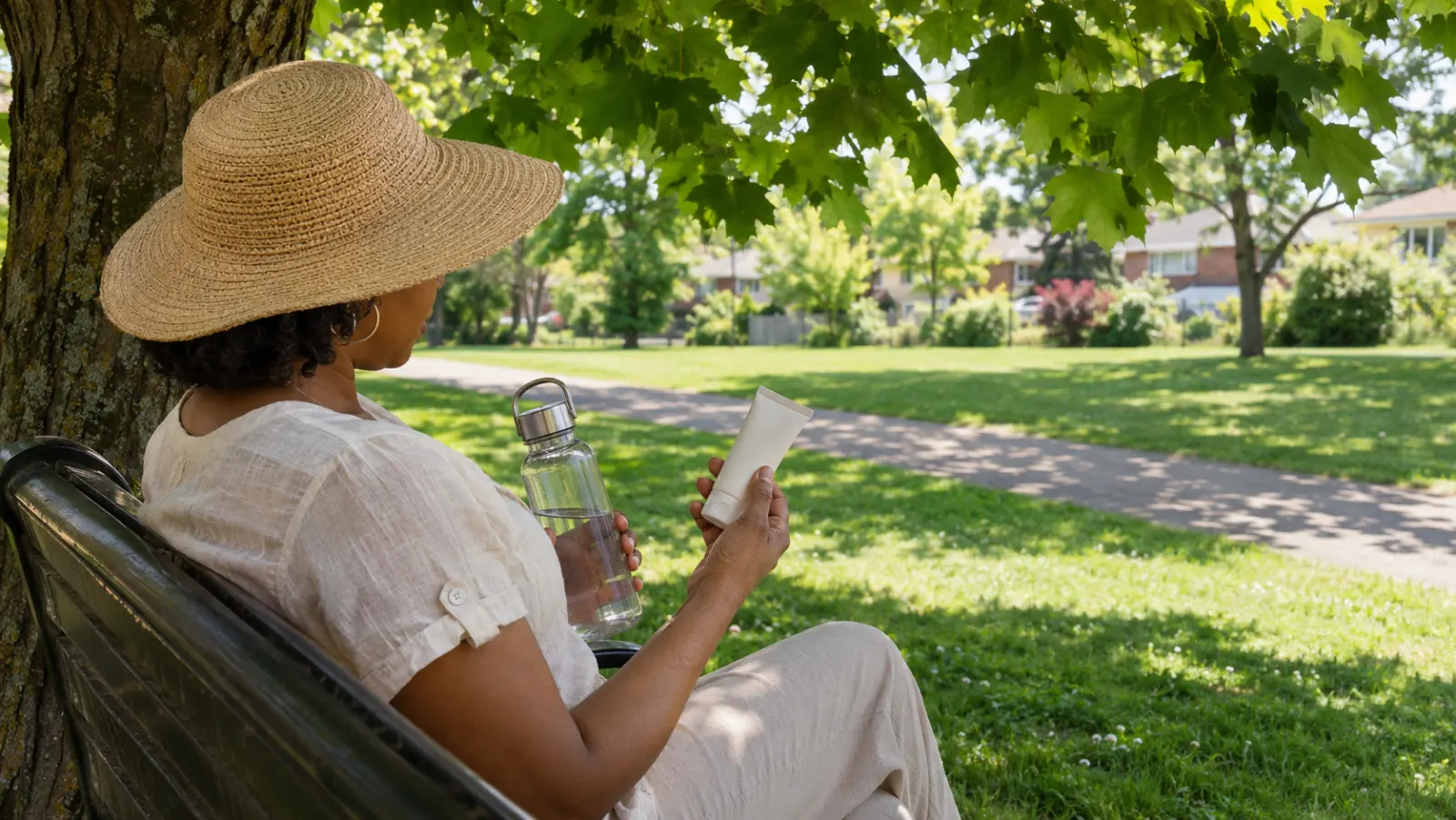
Daily sun protection is one of the most helpful steps. Use a broad-spectrum sunscreen of SPF 30 or higher every day. Many people with rosacea tolerate mineral sunscreens (with zinc oxide or titanium dioxide) better than chemical ones. A wide-brimmed hat and seeking shade during the strongest midday sun help even more. On darker skin, some mineral sunscreens leave a white cast, so a tinted formula may be easier to wear.
Keeping cool
- Carry water and sip cool drinks on hot days
- Exercise in the cooler morning or evening, or indoors with air conditioning
- Take shorter, cooler showers
- A cool, damp cloth on the cheeks can settle a flush
- On a crowded TTC bus or a sweaty commute, a small handheld fan can genuinely help
Makeup
Makeup is fine for most people with rosacea and can help with confidence. Choose fragrance-free, non-comedogenic products, and remove them gently at night. Green-tinted primers are sometimes used to neutralise redness on lighter skin.
Treatment a family doctor can offer
Rosacea cannot be cured, but it can usually be controlled well. Your clinician will look at your skin, ask about your symptoms and triggers, and tailor treatment to which features you have. Options may include:
- Prescription creams or gels that reduce bumps and inflammation, such as metronidazole, azelaic acid, or ivermectin
- Topical treatments for persistent redness that temporarily narrow the blood vessels; these can help with redness but do not treat the bumps
- Oral medications for moderate to severe bumps and pimples, sometimes including certain antibiotics used at low doses for their anti-inflammatory effect
- Treatment for eye symptoms, such as eyelid hygiene advice and drops, and referral to an eye specialist if needed
Improvement usually takes several weeks, so it is important to give a treatment a fair chance before deciding it is not working. Some people need long-term maintenance to keep flares away.
Procedures such as laser or light treatments can reduce visible blood vessels and persistent redness. These are usually offered by dermatologists or cosmetic providers and are often not covered by OHIP. Thickened skin on the nose may need specialist treatment.
If you are pregnant, breastfeeding, or planning a pregnancy, tell your clinician, because some rosacea medications are not suitable.
When a referral makes sense
Your family doctor can arrange a specialist referral to a dermatologist if the diagnosis is unclear, if first-line treatments have not helped, if the skin on the nose is thickening, or if your eyes are significantly affected. Several other conditions can look like rosacea, including seborrheic dermatitis, lupus, contact dermatitis, and a reaction to steroid creams, so a careful assessment matters.
Rosacea and how you feel
Constant redness and flushing can take a toll. Some people avoid social events, meetings, or photos because they worry about how they look or about being asked if they are embarrassed. Stress can, in turn, trigger more flushing, creating a frustrating cycle. If rosacea is affecting your mood, confidence, or daily life, please tell us. That is part of your health too.
When to get checked
Book a visit if you notice:
- Redness, flushing, or burning on the central face that keeps coming back
- Bumps that do not respond to typical acne products, or that get worse with them
- Gritty, sore, or red eyes along with skin symptoms
- Skin that suddenly reacts to products you have used for years
- A rash on the face along with joint pain, fatigue, fever, or mouth sores, which may point to another condition
Call 911 or go to the nearest emergency department if facial swelling or redness comes with swelling of the lips, tongue or throat, trouble breathing, or feeling faint, as this could be a severe allergic reaction rather than rosacea.
Getting your rosacea under control in Scarborough
Rosacea is very manageable once it has been properly identified. Before your visit, it helps to note your main triggers, the products you use on your face, and any treatments you have tried. Photos taken during a flare can be useful, especially if your skin looks calmer on the day of your appointment.
You can see one of our clinicians through a general medical consultation, and some follow-up questions about how a treatment is going may suit a virtual care appointment. HealthSmart Medical is at 2425 Eglinton Ave. East, Unit 12. Call 416-757-7117 or book online to get started. A calmer, more comfortable face this summer is a realistic goal.
This article is for general information and is not a substitute for medical advice. If you have severe or worsening symptoms, call 911 or go to the nearest emergency department.