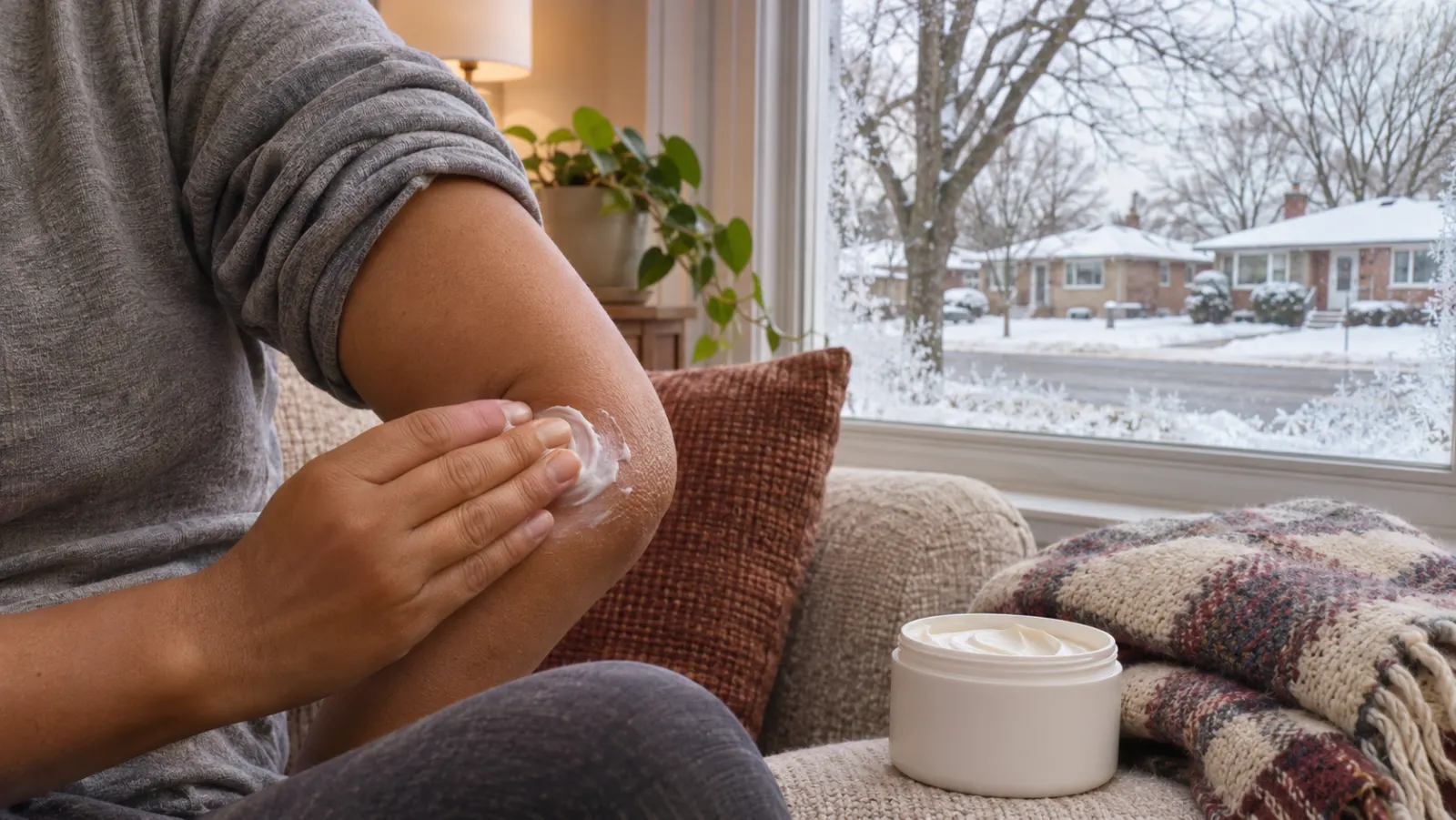
Someone notices a rough, raised patch on an elbow in early December and assumes it is just the furnace drying everything out. They buy a bigger tub of hand cream. By January the patch has spread to the other elbow, there is a stubborn line of flakes along the hairline, and a fingernail has developed odd little pits. That is a very common way for psoriasis to introduce itself.
Psoriasis is a long-term condition in which the immune system speeds up the turnover of skin cells. Skin that would normally renew itself over several weeks builds up in days, producing thick, scaly patches called plaques. It is not contagious, it is not caused by poor hygiene, and it is not simply a case of dry skin. It also tends to run in families, so a parent or grandparent with “bad skin” may be part of the story.
The good news is that psoriasis is very treatable. It rarely disappears for good, but most people can get it under good control and keep it there. This guide walks through what psoriasis looks like, why our winters can stir it up, the parts of the body it likes to hide in, and the signs that it may be affecting more than skin.
What a psoriasis plaque actually looks like
The classic plaque is a well-defined, raised patch covered with silvery-white scale. The edges are usually sharp, as if someone drew a border around it. Plaques can be as small as a coin or as large as a hand, and they often appear symmetrically, on both elbows or both knees.
Favourite spots include:
- The outer elbows and the fronts of the knees
- The scalp, especially along the hairline and behind the ears
- The lower back and the area just above the buttocks
- The belly button
- Hands, feet and nails
Plaques can itch, burn or feel tight, and when the scale is picked off, tiny bleeding points may appear underneath. Some people barely notice their plaques; others find the itch keeps them up at night.
Other forms you may hear about
Plaque psoriasis is by far the most common, but there are others. Guttate psoriasis shows up as many small, drop-shaped spots across the trunk and limbs, often a couple of weeks after a strep throat, and is more common in children and young adults. Inverse psoriasis affects skin folds such as the armpits, groin and under the breasts, where it looks smooth and shiny rather than scaly. Pustular and erythrodermic psoriasis are rare, more serious forms that need urgent attention, which we cover further down.
Psoriasis on brown and Black skin
Textbook photos often show bright pink plaques. On darker skin, which describes a large share of patients in Scarborough, psoriasis may look violet, dark brown or greyish, and the scale can appear thicker and more grey than silver. Because the colour contrast is less obvious, it is sometimes mistaken for eczema, fungal infection or simple dryness, and diagnosis can be delayed.
After plaques settle, darker skin often keeps a patch of lighter or darker colour for months. This is not scarring and usually fades slowly, but it can be distressing, especially on the face or hands. Getting the inflammation under control early is the best way to limit these marks.
Psoriasis or eczema?
Both cause itchy, inflamed patches, and both can flare in winter, so they get confused often. A few general differences help, though only an examination can sort it out properly:
- Location. Psoriasis prefers the outer surfaces, like the backs of the elbows and fronts of the knees. Eczema tends to sit in the creases, like the insides of the elbows and backs of the knees.
- Edges. Psoriasis plaques usually have crisp borders. Eczema patches tend to blur into the surrounding skin.
- Scale. Psoriasis often has thick, layered scale. Eczema is more likely to look dry, rough, weepy or crusted.
- Itch. Both can itch, but eczema is usually the itchier of the two.
- Age of onset. Eczema very often starts in babies and young children. Psoriasis more commonly begins in teens or adults, though children can get it.
Some people have features of both, and some have scalp involvement that looks like stubborn dandruff. If your rash does not fit neatly into either box, that is a good reason to have it looked at rather than trying one cream after another.
Why December can make things worse
Many people with psoriasis find late autumn and winter are their roughest months. Several things pile up at once:
- Less sunlight. Natural ultraviolet light tends to calm psoriasis, and by December the days are short and most of us are bundled up.
- Dry air. Cold outdoor air holds little moisture, and forced-air heating dries indoor air even more. Dry skin cracks more easily, and injured skin can grow new plaques, a pattern called the Koebner response.
- Infections. Colds, flu and especially strep throat can trigger flares or a first episode of guttate psoriasis.
- Stress and the holidays. Year-end deadlines, travel, family gatherings and disrupted sleep are well-known triggers.
- Alcohol and smoking. Both are linked to more severe psoriasis, and holiday season tends to bring more of the former.
Some medications can also worsen psoriasis in certain people, including some blood pressure medicines, lithium and certain antimalarials. Never stop a prescribed medication on your own, but do mention your psoriasis to whoever prescribes for you.
Winter habits that help
- Moisturize at least twice a day with a thick, fragrance-free cream or ointment, and right after bathing
- Keep showers warm rather than hot, and short
- Run a humidifier in the bedroom if indoor air feels parched, and clean it regularly
- Wear soft layers next to the skin, and gloves outside to prevent cracks on the hands
- Treat sore throats and infections promptly, and see a clinician if a sore throat comes with fever
- Protect skin from scrapes, tight waistbands and scratching, since injuries can seed new plaques
The scalp and the nails
Scalp psoriasis
The scalp is one of the most common places for psoriasis to appear, and sometimes the only place. It can range from fine flaking to thick, crusted plaques that extend past the hairline onto the forehead, neck and around the ears. It can be very itchy, and flakes on dark clothing can be embarrassing.
Medicated shampoos containing coal tar, salicylic acid or ketoconazole are available at pharmacies and help some people. For thicker scale, a clinician may suggest a scale-softening product left on for a period before washing, along with prescription scalp solutions, foams or gels. If you oil your hair or scalp for cultural or styling reasons, let your clinician know, because some treatments can be adapted to fit your routine and wash schedule.
Picking or combing off scale aggressively can make things worse and, rarely, contribute to temporary hair shedding. Gentle is better.
Nail psoriasis
Nails are affected in many people with psoriasis, and nail changes can be an important clue. Look for:
- Tiny pits or dents on the nail surface
- Yellow-brown discolouration, sometimes called “oil drop” spots
- The nail lifting away from the nail bed
- Thickening, crumbling or ridging
These changes are often mistaken for fungal infection, and the two can even coexist. A clinician may suggest testing a nail clipping before starting antifungal treatment. Nail psoriasis is also linked with a higher chance of joint involvement, which is one more reason to mention it.
When the joints join in: psoriatic arthritis
Psoriatic arthritis is an inflammatory joint condition that affects some people with psoriasis. It usually appears years after the skin disease starts, but occasionally it comes first. Left untreated, it can cause permanent joint damage, so early recognition matters.
Warning signs include:
- Joint pain, swelling or warmth, especially in the fingers, toes, wrists, knees or ankles
- Morning stiffness lasting more than about half an hour
- A whole finger or toe swelling up like a sausage
- Pain at the back of the heel or the bottom of the foot, where tendons attach to bone
- Lower back or buttock pain that is worse with rest and better with movement
- Fatigue that seems out of proportion
It is easy to blame stiff hands on the cold or a sore heel on winter boots. If you have psoriasis and any of these sound familiar, book a visit. Your clinician can examine you, may order blood work or X-rays, and can arrange a rheumatology referral if needed.
More than skin deep
Psoriasis is now understood as an inflammatory condition that can affect the whole body. People with moderate to severe psoriasis have higher rates of heart disease, high blood pressure, type 2 diabetes, high cholesterol and fatty liver. This does not mean those problems are inevitable, but it does make regular checkups worthwhile. Keeping an eye on blood pressure, blood sugar, cholesterol and weight is part of good psoriasis care, and our chronic disease management visits are a natural place to do that.
Psoriasis can also weigh on mood. Visible plaques, constant itch and the hassle of daily treatment can lead to anxiety, low mood or avoiding social situations. That is worth raising with your clinician just as much as a new patch.
How psoriasis is treated
Treatment depends on how much skin is involved, where it is, how much it affects your life, and whether joints are involved. Broadly, it falls into a few tiers.
Treatments applied to the skin
For mild to moderate psoriasis, prescription creams, ointments, foams and scalp solutions are usually the first step. These commonly include topical corticosteroids, vitamin D-based products, and combinations of the two. Other non-steroid options are used for the face and folds where skin is thinner. Scale-softening products help treatments penetrate thick plaques.
Topical treatments work well when used consistently, but the routine can be tedious. It helps to know exactly how much to apply, how often, for how long, and when to step down. Ask for a written plan if that would help.
Light therapy
Controlled ultraviolet light treatment, called phototherapy, is delivered in specialized centres a few times a week over a course of treatment. It can help when psoriasis covers larger areas. Tanning beds are not a substitute and carry their own risks.
Pills and injections
When psoriasis is more widespread, stubborn, or accompanied by psoriatic arthritis, a dermatologist or rheumatologist may recommend oral medications or injectable treatments, including biologics that target specific parts of the immune system. These have transformed care for many people. They require monitoring, often including blood tests, and some may affect how you respond to infections or vaccines, so ongoing follow-up with your family doctor and specialist is important.
What does not help
Be cautious with miracle cures sold online, strict elimination diets with no medical basis, or creams of unknown origin bought abroad, which occasionally contain undeclared strong steroids. If you are using a traditional or herbal remedy, mention it so it can be considered alongside your other treatments.
Urgent warning signs
Most psoriasis flares can wait for a regular appointment. Seek same-day care, or go to the emergency department, if you notice:
- Redness and scaling suddenly spreading over most of the body
- Widespread small pus-filled bumps, especially with fever or chills
- Feeling very unwell, shivery, or unable to keep warm, along with a widespread rash
- Signs of skin infection, such as spreading redness, warmth, pus or fever
- A single hot, very swollen, very painful joint with fever
These can signal rare but serious forms of psoriasis or an infection that needs prompt treatment.
When to book, and when a dermatologist helps
Make an appointment if you have a scaly rash you have not had diagnosed, if over-the-counter products are not working, if psoriasis is affecting your sleep, work or confidence, or if you have any joint symptoms. A clinician can confirm the diagnosis, start treatment, and check for related health issues.
A referral to a dermatologist is usually considered when psoriasis covers a large area, involves the face, hands, feet or genitals and is not responding, when topical treatment has not been enough, or when stronger therapies may be needed. Wait times for dermatology vary, so it helps to start the conversation early and keep using your treatment in the meantime. Taking photos during flares can help any doctor see what your skin looks like at its worst.
Psoriasis care in Scarborough at HealthSmart Medical
Living with psoriasis in Scarborough through the dark months takes some planning, but it does not have to mean hiding your elbows under sweaters until April. With the right diagnosis, a treatment routine that fits your life, and an eye on your joints and overall health, most people find a steady, manageable rhythm.
HealthSmart Medical sees patients with skin concerns through our general medical consultations, and we can help with follow-up and referrals as needed. Visit us at 2425 Eglinton Ave. East, Unit 12, in Scarborough, call 416-757-7117, or book online. Bring any creams and shampoos you have tried, and photos of your worst flares if your skin happens to be calm on the day of your visit.
This article is for general information and is not a substitute for medical advice. If you have severe or worsening symptoms, call 911 or go to the nearest emergency department.