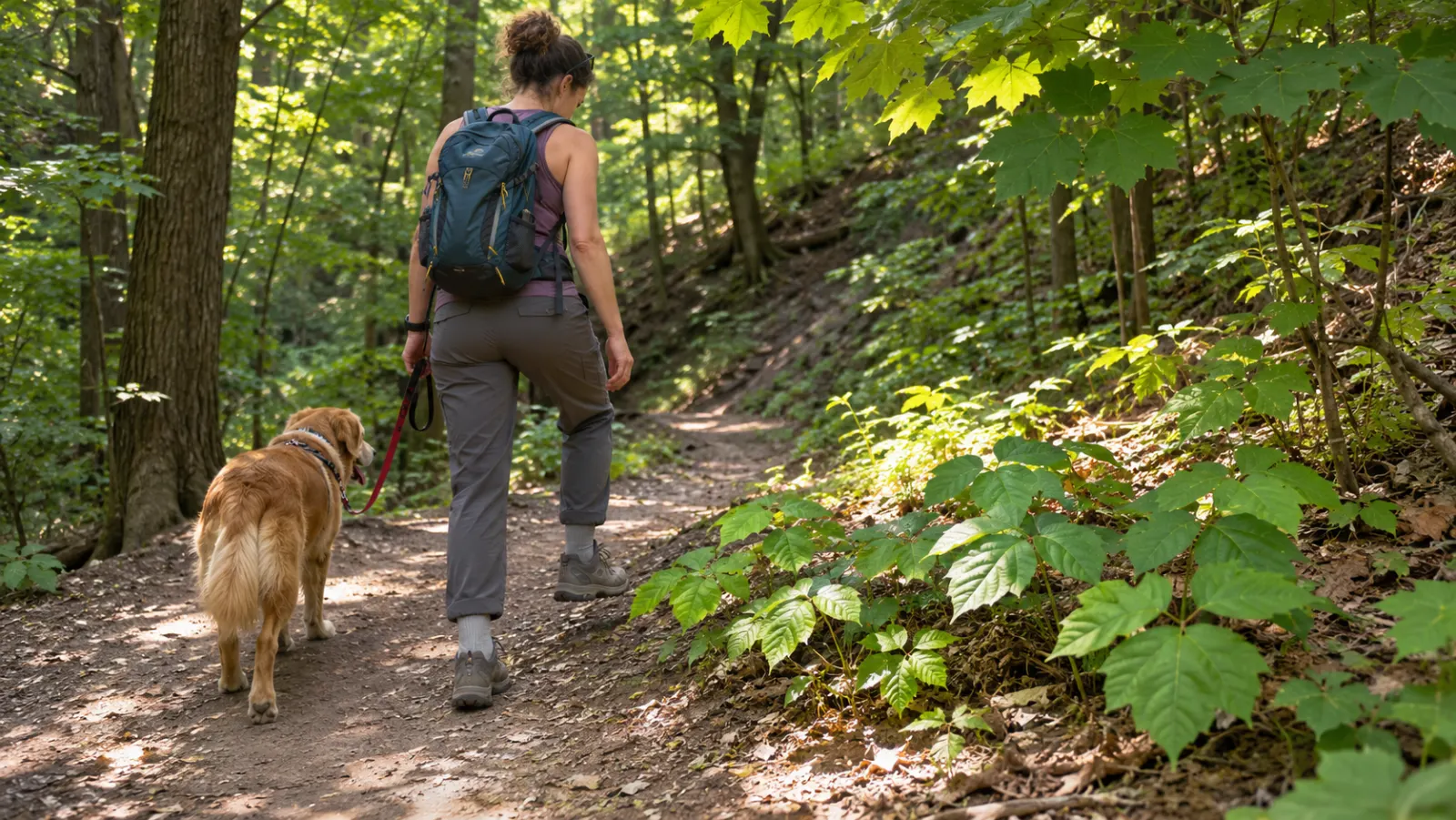
You took the dog down into the ravine behind the plaza, or spent a Saturday morning on the Vista Trail in Rouge National Urban Park. Everything felt fine. Then, two days later, a strip of itchy red bumps appears along your ankle, followed by a line of blisters on your forearm that you cannot stop touching. Welcome to one of the least loved parts of an Ontario summer.
Poison ivy is common in parks and ravines in Scarborough. It thrives along the edges of trails, in the sunny gaps of the Highland Creek and Morningside valleys, on the slopes near the Bluffs and in the overgrown corners of backyards that back onto parkland. It does not look dramatic. In fact, its ordinary appearance is exactly why so many people walk straight through it.
The good news is that the rash, while miserable, is almost always manageable at home, and a few habits can prevent most cases altogether. This guide explains how to recognise the plant, what to do in the first hour after contact, how to get through the itchy weeks that follow, and when the rash deserves a visit to a clinician.
Why this plant causes so much trouble
The culprit is not the leaf itself but an oily resin called urushiol, found in the leaves, stems, roots and berries. A tiny amount is enough to cause a reaction. When urushiol touches the skin, it soaks in quickly. In people who have become sensitised, the immune system treats it as an invader and launches an inflammatory response, which is what produces the redness, swelling, itch and blisters.
That means the rash is a type of allergic contact dermatitis, not a burn and not an infection. It also explains a few things that confuse people:
- The rash is delayed. It usually shows up somewhere between 12 hours and 3 days after contact. If it is your first ever exposure, it can take a week or longer, because the immune system has to learn to react.
- Not everyone reacts. Most people do become sensitive at some point, but some react much more strongly than others, and sensitivity can change over a lifetime.
- The oil lingers on objects. Urushiol can stay active on gloves, shoes, garden tools, bike handles, camping gear and a dog’s coat for a long time, sometimes months to years if it is not washed off. People often get “mystery” rashes this way.
- It is not contagious. Once the oil has been washed off the skin, the rash cannot spread from person to person, and the fluid in the blisters does not contain urushiol. If new patches keep appearing over several days, it is usually because thinner skin reacts sooner and thicker skin reacts later, or because you are touching something that still has oil on it.
Recognising poison ivy before you touch it
“Leaves of three, let it be” is a useful rhyme, but it is not the whole picture. Plenty of harmless plants have three leaflets, and poison ivy does not always look the same.
What to look for
- Three leaflets on each stem. The middle leaflet sits on a longer stalk than the two side leaflets, which attach more closely.
- Leaf edges can be smooth, slightly toothed, or have a few irregular notches. They are not as consistently saw-toothed as some look-alikes.
- Shine varies. Leaves are often glossy, especially when young, but older leaves or plants in shade can look dull.
- Colour changes with the seasons. New spring leaves may have a reddish tint, summer leaves are green, and by September and October the leaves turn bright red, orange or yellow.
- Clusters of small greenish-white or cream berries may appear in late summer and stay into winter.
Different growth forms
In southern Ontario, poison ivy can grow as a low ground cover that carpets the forest floor, as a small upright shrub about knee-high, or as a climbing vine with hairy-looking aerial roots clinging to tree trunks and fences. The ground-cover form is the one that most often catches people on trail edges, where it mixes in with grasses and wildflowers.
Look-alike problems worth knowing
Two other plants found around Toronto cause rashes that people often blame on poison ivy. Wild parsnip, with its flat-topped yellow flower clusters, and giant hogweed, a very tall plant with large white umbrella-like flowers, contain sap that makes skin react to sunlight. The result can look like a burn, sometimes with blisters in streaks or odd shapes, followed by dark marks that last for months. If you have had contact with either of these, cover the area from the sun, wash it, and seek medical advice, especially if the sap got near your eyes.
The first hour after contact matters most
If you know or suspect you have brushed against poison ivy, act quickly. Urushiol starts binding to the skin within minutes, but washing even an hour or two later can still remove oil sitting on the surface and reduce how much spreads to other areas.
- Wash the skin with soap and plenty of cool or lukewarm water. Ordinary dish soap or hand soap works. Scrub gently but thoroughly, and pay attention to the spaces between fingers and under fingernails, where oil hides and later gets smeared onto the face.
- Avoid very hot water at this stage, since it can make the skin more irritated.
- Do not touch your face, eyes or genitals until your hands are clean.
- Bag your clothes and shoes, then wash the clothing on its own in a regular hot cycle. Handle laces and boots with gloves and wipe them down with soapy water.
- Clean anything that touched the plant: garden tools, gloves, strollers, bikes, backpacks and phone cases.
- Bathe the dog if it ran through the brush. Wear gloves while you do it. Pets rarely react themselves, but their fur carries the oil straight into your lap and onto the couch.
If you are out on a long hike in the Rouge with no sink nearby, rinsing with plenty of water from a bottle is better than nothing, and some people carry pre-moistened cleansing wipes for this purpose.
Getting through the rash
Once the rash appears, it tends to run its course over about one to three weeks. The first few days are usually the worst. Treatment is mostly about keeping you comfortable, protecting the skin, and stopping infection.
Soothing the itch
- Cool compresses for 15 to 30 minutes several times a day can calm both itch and heat.
- Cool or lukewarm baths, with or without colloidal oatmeal, are especially helpful before bed.
- Calamine lotion can dry out weeping blisters and ease itch.
- Over-the-counter hydrocortisone cream may help for small, mild patches, though it is often too weak for a well-established rash. Follow the label, and avoid using it on the face for long periods without advice.
- Oral antihistamines do not do much for the itch itself, because this rash is not mainly driven by histamine, but a drowsy antihistamine at night can help some adults sleep. A pharmacist can tell you which product is suitable, especially for children, older adults or anyone taking other medications.
What to skip
Some products can make things worse. Antihistamine creams, and “numbing” creams that contain benzocaine, can themselves cause allergic skin reactions, so they are generally best avoided on a poison ivy rash. Bleach, rubbing alcohol and home remedies that sting are not helpful either. And although it is tempting, popping blisters only opens the door for bacteria.
Protecting the skin
Keep fingernails short, especially for kids. Loose cotton clothing is more comfortable than anything tight or synthetic. If blisters break, wash gently with soap and water and cover them loosely with a non-stick dressing if they are rubbing on clothing.
On darker skin tones
Many guides describe the rash as red, but on brown and Black skin it may look darker brown, purple or greyish, and the redness can be hard to see. Raised bumps, streaks, blisters and intense itch are better clues. After the rash settles, dark marks (post-inflammatory hyperpigmentation) can linger for weeks or months. Sun protection on the healing area helps them fade, and a clinician can talk about options if they persist.
When to see a doctor
Most poison ivy rashes can be handled at home, but some situations call for prescription treatment or an exam. Consider booking a visit if:
- The rash covers a large part of the body
- It is on the face, eyelids, lips or genitals
- Swelling is significant, for example an eye puffing shut or a hand so swollen you cannot make a fist
- The itch is so intense that you cannot sleep or work, despite home care
- The rash is not improving after a week or so, or is still going strong after three weeks
- You are not sure it is poison ivy at all
For more severe reactions, a clinician may suggest a stronger prescription steroid cream or, for widespread or facial rashes, a course of steroid tablets. Steroid tablets for poison ivy are usually given over a couple of weeks rather than a few days, because a very short course can let the rash flare back up when it stops. This is a decision to make with a doctor who has looked at the rash.
Signs of infection
Scratched blisters can become infected. See a clinician if you notice increasing pain, warmth or swelling after the first few days, yellow crusts or pus, red streaks spreading outward, or a fever. These are signs that bacteria may have moved in, which is a different problem from the original allergic rash.
When it is an emergency
Call 911 or go to the nearest emergency department if you have trouble breathing or swallowing, or major swelling of the face, throat or tongue. This can happen if someone breathes in smoke from burning poison ivy, which carries urushiol into the airways and lungs. Never burn brush or yard waste that might contain the plant, and stay upwind of anyone else’s bonfire if you are not sure what is in it.
Mangoes, cashews and other surprises
Urushiol has chemical cousins in a few foods that are common in many Scarborough kitchens. Mango skin and the sap near the stem contain related compounds, and raw cashew shells do as well. Some people who are very sensitive to poison ivy notice an itchy rash around the mouth or on the hands after peeling mangoes. Eating the flesh of the fruit is usually fine for most, but if you have reacted this way, let someone else peel the mango, or wear gloves. Commercially sold cashews have been processed to remove the irritating shell oils.
Keeping it off your skin in the first place
Prevention is mostly about covering up and knowing your trails.
- Stay on marked paths. Poison ivy loves the sunny edges where the trail meets the brush.
- Wear long pants, socks and closed shoes on ravine and park hikes, even on hot August days. Tucking pant legs into socks looks silly but works.
- Use gloves for yard work, especially when clearing the back fence line or pulling vines off a tree. Heavy vinyl or rubber gloves are better than thin cotton ones, which oil can soak through.
- Teach children to recognise it. Point it out on walks. Kids who know what it looks like are less likely to grab a handful while chasing a ball.
- Think about the dog’s route. If your dog loves crashing through the undergrowth along the creek, consider a quick bath after those walks during summer.
- Remove it carefully from your own yard. Pull small plants while wearing protective gloves and clothing, bag them, and do not compost or burn them. For large patches, a landscaping professional may be the safer choice.
Barrier creams sold for outdoor workers may offer some protection when applied before exposure, but they are not a substitute for covering up and washing afterwards.
Help with skin rashes in Scarborough
An itchy rash in the middle of summer can wreck your sleep and your patience, and it is not always easy to tell poison ivy from eczema, hives, a bite reaction or an infection. If yours is spreading, near your eyes, or simply not settling, our team can take a look. HealthSmart Medical offers walk-in visits and same-day appointments for rashes and other everyday problems, along with allergy treatment when reactions keep coming back. For a quick question about whether a rash needs to be seen, a virtual care visit can sometimes be a good starting point, though many rashes are easier to assess in person.
You will find us at 2425 Eglinton Ave. East, Unit 12, in Scarborough. Call 416-757-7117 or book online and we will help you get comfortable again, so you can get back out on the trails.
This article is for general information and is not a substitute for medical advice. If you have severe or worsening symptoms, call 911 or go to the nearest emergency department.