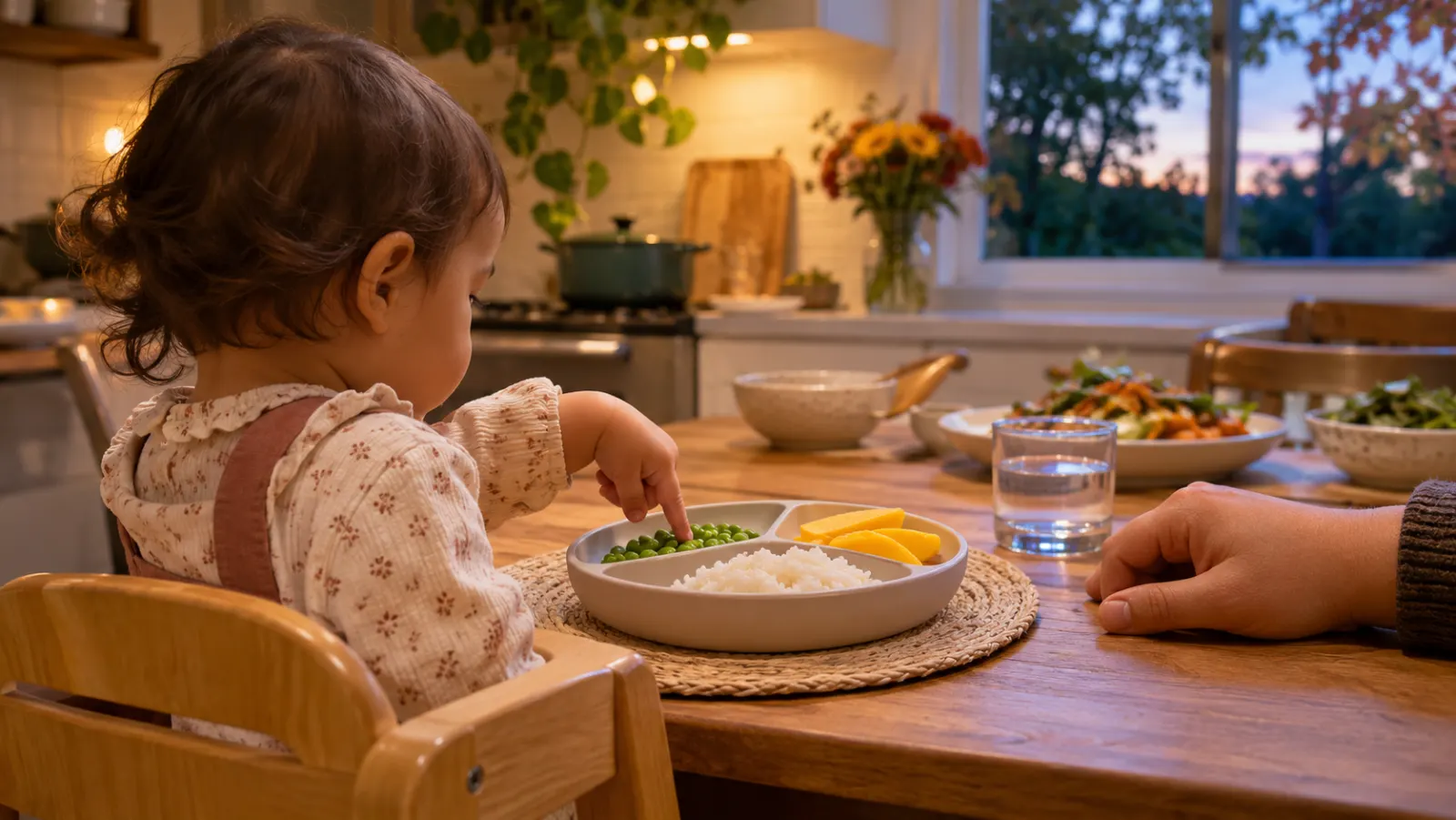
There is a particular kind of despair that comes from watching a toddler push away a plate of food you spent forty minutes cooking. Last week she loved dal. Today she looks at it as if you had served her something dangerous, then asks for crackers. Meanwhile, your mother is telling you that you never refused food at that age, and your sister’s child apparently eats everything, including broccoli.
Picky eating is one of the most common concerns parents bring to toddler checkups, and one of the most stressful. Food is tied up with love, culture, and family pride, especially in households where feeding children well is how care is shown. When a toddler refuses to eat, it can feel personal, and it can feel frightening.
The reassuring truth is that for most toddlers, picky eating is a normal developmental stage that eases with time, patience, and a low-pressure approach. A smaller number of children have feeding difficulties that need more help, and part of this guide explains how to tell the difference. Written for families in Scarborough, it covers why toddlers get fussy, what actually helps, why milk and iron deserve special attention, and when to bring your concerns to a doctor.
Why toddlers become fussy eaters
Most parents notice picky eating somewhere between the first and second birthday, and it often peaks in the preschool years. Several things are going on at once.
Growth slows down
Babies grow incredibly fast in their first year. After that, growth slows considerably, and so does appetite. A toddler who eats a big lunch and almost nothing at dinner, or who seems to live on air for a few days and then eats everything in sight, is often perfectly normal. Toddler appetites vary a lot from meal to meal and day to day, and tend to balance out over a week.
A natural wariness of new foods
Many young children go through a phase of being cautious about unfamiliar foods. Some experts think this once protected wandering toddlers from eating something harmful. Whatever the reason, it is normal for a child to need to see, smell, touch, and taste a new food many times, sometimes ten or fifteen exposures or more, before accepting it.
Independence and control
Toddlers are discovering that they are separate people with their own opinions. “No” is a powerful new word, and mealtimes are one of the few areas where they genuinely have control. The more adults push, the more some toddlers dig in.
Texture, colour, and “touching” foods
Toddlers often have strong opinions about texture, mixed dishes, sauces, and foods touching each other on the plate. A child who happily eats plain rice and plain chicken may reject the same ingredients combined in biryani. That is frustrating for families whose cooking is built on mixed dishes, but it is very common.
The approach that works best: divide the jobs
Many paediatric dietitians and doctors recommend an approach called the division of responsibility in feeding. It is simple to describe and harder to practise, but it takes a great deal of pressure off everyone.
The parent’s jobs:
- Decide what foods are offered
- Decide when meals and snacks happen
- Decide where eating happens, ideally at a table without screens
- Make mealtimes pleasant
The child’s jobs:
- Decide whether to eat
- Decide how much to eat from what is offered
That is it. You do not need to coax, bribe, praise every bite, or hide vegetables. Your job ends when the food is on the table. Your child’s job is to listen to their own hunger and fullness. Most children who are given this trust gradually eat a wider range of foods, because eating stops being a battle.
What this looks like day to day
- Set a rhythm. Offer three meals and two or three planned snacks at roughly the same times each day. Avoid grazing between them, so your child arrives at meals with an appetite.
- Include at least one safe food. Put something your child usually eats on the table at every meal, such as rice, roti, bread, or fruit, alongside family foods. They can fill up on that if they choose.
- Serve small portions. A tablespoon of a new food is less intimidating than a pile. They can always ask for more.
- Eat together. Children learn by watching. Seeing you, older siblings, and grandparents enjoy a variety of foods is one of the strongest influences there is.
- Keep it neutral. Avoid “good job eating your peas” and “you have to finish that.” Both turn eating into a performance.
- No short-order cooking. You can adapt family meals so there is something accessible, but avoid cooking a separate custom meal every time your child refuses.
- End the meal calmly. If your child is not eating, let them leave the table after a reasonable time. The next meal or snack will come.
Making family food toddler-friendly
You do not have to give up your family’s cooking. A few small adjustments help:
- Set aside a small portion before adding the heat, or serve spicy sauces on the side.
- Deconstruct dishes for a while: rice, a few pieces of vegetable, a bit of chicken or paneer, each in its own spot.
- Offer dips. Yogurt, raita, hummus, or a mild sauce can make a new food more appealing.
- Let toddlers feed themselves with fingers or a spoon, even if it is messy. Self-feeding builds confidence.
- Involve them. Toddlers can wash produce, tear lettuce, stir batter, or help choose apples at the grocery store or a fall farmers’ market.
Keeping meals safe
Toddlers are still learning to chew and swallow. Always supervise eating, keep children seated, and modify common choking hazards: cut grapes, cherry tomatoes, and hot dogs lengthwise into small pieces, avoid whole nuts, popcorn, and hard candies, and spread nut butters thinly rather than offering spoonfuls.
Milk, iron, and the “milk-filled toddler”
One of the most common causes of poor appetite in toddlers is surprisingly simple: too much milk.
Cow’s milk is a good food for toddlers, but it is filling. A child who drinks large amounts of milk throughout the day, especially from a bottle or a sippy cup they carry around, may have little room left for solid food. Milk is also low in iron, and drinking a lot of it can interfere with how the body absorbs iron from food. Over time, this can lead to iron deficiency, which can cause tiredness, irritability, pale skin, and effects on development.
General guidance suggests that toddlers usually need no more than about two cups (500 mL) of milk a day. Your doctor can tell you what fits your child.
Practical milk tips
- Offer milk in an open cup with meals and snacks rather than all day long.
- Plan to move away from bottles around the first birthday, and gradually phase them out over the following months. Bedtime bottles in particular can fill a child up and harm teeth.
- Offer water between meals when your child is thirsty.
- Limit juice. Whole fruit is a better choice.
Iron-rich foods toddlers often accept
- Lentils and dal, chickpeas, and beans
- Eggs
- Meat, chicken, and fish, finely chopped or shredded
- Tofu
- Iron-fortified infant cereal, which many toddlers still enjoy, mixed into porridge or pancakes
Pairing iron-rich foods with foods high in vitamin C, such as oranges, strawberries, tomatoes, or peppers, helps the body absorb iron from plant sources.
Supplements, smoothies, and other workarounds
Parents often ask whether a multivitamin will fill the gaps. Some children do benefit from a supplement, and vitamin D is a common recommendation for young children in Canada during our long, dark months. But supplements should not replace food, and some, including iron, can be dangerous in large doses. Talk to your doctor or pharmacist before starting one, and keep all vitamins out of reach.
Smoothies and “hidden vegetable” recipes are fine as one part of a varied diet, but children also need to see and experience whole foods in order to learn to accept them.
When picky eating is more than a phase
Most picky eaters grow steadily, have plenty of energy, and gradually expand what they eat. Some children, however, have feeding difficulties that need professional support. These can be related to medical problems, oral motor skills, sensory sensitivities, developmental differences, or a condition called avoidant/restrictive food intake disorder (ARFID), where eating is limited enough to affect health.
Book an appointment if your toddler:
- Is losing weight, not gaining weight, or dropping across lines on the growth chart
- Eats a very short list of foods, and is dropping foods from that list without adding new ones
- Refuses entire food groups, such as all fruits and vegetables or all protein foods
- Gags, chokes, coughs, or vomits often during meals
- Has pain with eating or swallowing, frequent vomiting, ongoing diarrhea, or significant constipation
- Becomes extremely distressed or panicked around new foods
- Takes a very long time to eat most meals
- Seems unusually tired, pale, or irritable
- Still relies mainly on bottles or purées well past the age when most children have moved on
- Has delays in speech, motor, or social development as well
A clinician can review your child’s growth, ask about what and how they eat, check for medical issues, and arrange tests such as blood work for iron if it is needed. A growth and development assessment can look at the bigger picture, and if more help is needed, your doctor can refer you to a paediatrician, dietitian, or feeding therapist through our specialist referrals process.
Seek emergency care
Call 911 if a child is choking and cannot breathe, cough, or cry, and start first aid if you are trained. Go to the emergency department for signs of dehydration, such as very few wet diapers, a dry mouth, no tears, unusual sleepiness, or a toddler who is limp or very hard to wake, or for repeated vomiting that will not settle.
Looking after yourself through the picky phase
Feeding a fussy toddler is exhausting, and the advice can feel like it was written for families with unlimited time. Be gentle with yourself. Not every meal will go well, and some days your child will eat crackers and bananas and nothing else. Look at the whole week rather than one meal.
If relatives are adding pressure, it can help to explain the approach you are using, or to have a clinician explain it. Many grandparents raised children with very different feeding traditions, and they often relax once they see that the child is growing well. Their cooking, their stories at the table, and their delight in feeding the next generation can still be a big part of meals.
Getting support for picky eating in Scarborough
Most picky eaters become more adventurous with time, especially when mealtimes are relaxed, predictable, and shared. If you are worried about your toddler’s growth, iron, or eating patterns, or simply want reassurance, our team is happy to help.
HealthSmart Medical provides paediatric care for babies, toddlers, and children in Scarborough. Visit us at 2425 Eglinton Ave. East, Unit 12, call 416-757-7117, or book online. A short food diary and a list of your child’s favourite and refused foods will make the visit even more useful.
This article is for general information and is not a substitute for medical advice. If you have severe or worsening symptoms, call 911 or go to the nearest emergency department.