A grandmother reaches up to a high kitchen shelf and feels a sharp pain in her back. A retired bus driver slips on a patch of black ice outside a plaza on Lawrence Avenue and puts out a hand to catch himself. Neither fall seemed dramatic. Yet one ends with a compression fracture in the spine and the other with a broken wrist, and in both cases the X-ray shows the same underlying story: bones that had been quietly thinning for years.
Osteoporosis is often called a silent disease because it causes no pain or symptoms until a bone breaks. Many people only find out they have it after a fracture, sometimes a minor one from a fall that should not have caused any damage. By then, the goal shifts from prevention to stopping the next break.
The encouraging part is that bone health is something you can influence at almost any age. This guide explains who is at risk, how bone density is tested, what really helps (and what is overhyped), and how to make your home and routine safer. As always, it is general information; your own plan should come from a conversation with your doctor.
Bones are alive, and they change over a lifetime
It is easy to think of bones as solid and fixed, like the frame of a house. In fact, bone is living tissue that is constantly being broken down and rebuilt. In childhood and the teen years, building outpaces breakdown, and most people reach their peak bone mass by around their late twenties or early thirties.
After that, the balance slowly tips. Bone is lost a little faster than it is replaced. For women, the drop in estrogen at menopause speeds this up considerably for several years. Men lose bone too, just more gradually, which is why osteoporosis in men is often overlooked.
Osteoporosis means bones have become porous and fragile enough that they break more easily. Osteopenia (sometimes called low bone mass) is a milder thinning that is not yet in the osteoporosis range. Neither diagnosis guarantees a fracture, and neither is a reason for panic. They are signals to take a closer look at your risk.
Who is more likely to develop osteoporosis?
Some risk factors cannot be changed, but knowing them helps you and your clinician decide when to test and how seriously to act.
Factors you cannot change
- Age: risk rises steadily after 50
- Sex: women are at higher risk, especially after menopause
- Early menopause, including surgical removal of the ovaries
- Family history, particularly a parent who broke a hip
- Body frame: smaller, thinner people have less bone reserve
- A previous fracture from a minor fall after age 40, which is one of the strongest predictors of another
Medical conditions and medications
Several health problems and treatments affect bones:
- Long-term use of steroid pills such as prednisone
- Rheumatoid arthritis
- Overactive thyroid, or taking more thyroid hormone than needed
- Conditions that affect absorption, such as celiac disease or inflammatory bowel disease
- Some breast and prostate cancer treatments that lower hormone levels
- Certain seizure medications
- Type 1 diabetes and, to a lesser extent, type 2 diabetes
- Low testosterone in men
If any of these apply, mention it. Many people do not realize that a medication they have taken for years may be affecting their bones.
Habits that matter
- Smoking
- Drinking more than a couple of alcoholic drinks a day
- Very low body weight or a history of eating disorders
- Low calcium intake and low vitamin D
- Being inactive for long periods
Getting tested: the bone density scan
The standard test for osteoporosis is a bone mineral density (BMD) test, usually a DXA scan. It is quick and painless. You lie on a padded table while a scanner arm passes over your hip and lower spine. It uses a very small amount of radiation, and you stay dressed in most cases, though you may be asked to remove clothing with metal zippers or buttons.
Results are reported as a T-score, comparing your bone density with that of a healthy young adult:
- Around 0 or above: normal bone density
- Moderately below 0: low bone mass (osteopenia)
- Well below that: in the osteoporosis range
The number itself is only part of the picture. Clinicians in Canada usually combine your BMD with other factors, such as age, sex, previous fractures, and steroid use, to estimate your 10-year fracture risk. That overall risk, not the T-score alone, guides whether medication makes sense.
When should you be tested?
Canadian guidance generally recommends bone density testing for everyone from a certain older age, and earlier for people with risk factors such as a fragility fracture, long-term steroid use, early menopause, or conditions that weaken bones. Your doctor can confirm current Ontario recommendations and whether a scan is right for you now. If one is needed, it can be arranged through a diagnostic imaging referral.
Your clinician may also suggest blood work, for example checking calcium, vitamin D, kidney function, or thyroid levels, to look for other causes of bone loss.
Clues worth mentioning even without a scan
- You have lost height. Losing a few centimetres over the years can be a sign of spinal compression fractures.
- Your upper back has started to curve forward.
- You have sudden back pain after a minor strain, lift, or even a hard cough.
Food first: calcium and vitamin D
Calcium is the main mineral in bone, and vitamin D helps your body absorb it. Most people can get much of their calcium from food, and that is generally preferred over high-dose supplements.
Osteoporosis Canada’s general guidance for adults over 50 is around 1,200 mg of calcium per day from all sources combined, ideally mostly from food. Your clinician can tell you if your own needs differ.
Calcium-rich foods across Scarborough kitchens
Calcium is not only about a glass of milk. Many traditional foods enjoyed in Scarborough homes are excellent sources:
- Milk, yogurt, kefir, paneer, and cheese
- Calcium-fortified soy, almond, or oat beverages (shake the carton well)
- Tofu set with calcium (check the label)
- Canned salmon or sardines with the soft bones
- Leafy greens such as bok choy, gai lan, kale, and collards
- Beans, lentils, and chickpeas
- Almonds and sesame seeds or tahini
If you are counting, tally a typical day. Many people find they are getting less than they thought, while others discover they do not need the supplement they have been taking.
Vitamin D in a Canadian climate
Our skin makes vitamin D from sunlight, but in Ontario, the sun is too weak to do this effectively for a good part of the year. People with darker skin, those who cover most of their skin, and older adults who spend more time indoors make even less. For this reason, a daily vitamin D supplement is commonly recommended for adults over 50 in Canada. Ask your doctor what dose suits you; more is not always better.
About supplements
If your diet falls short, a calcium supplement can fill the gap, but taking more than you need does not build extra bone and may cause constipation or contribute to kidney stones in some people. Take calcium carbonate with food, split doses if you take more than a few hundred milligrams at once, and keep calcium away from certain medications, such as thyroid pills and some antibiotics, by a few hours. Your pharmacist can help with timing.
Movement that builds and protects bone
Bones respond to load. When muscles pull on them and the body bears weight, bones get the signal to stay strong. The most useful kinds of exercise for bone health include:
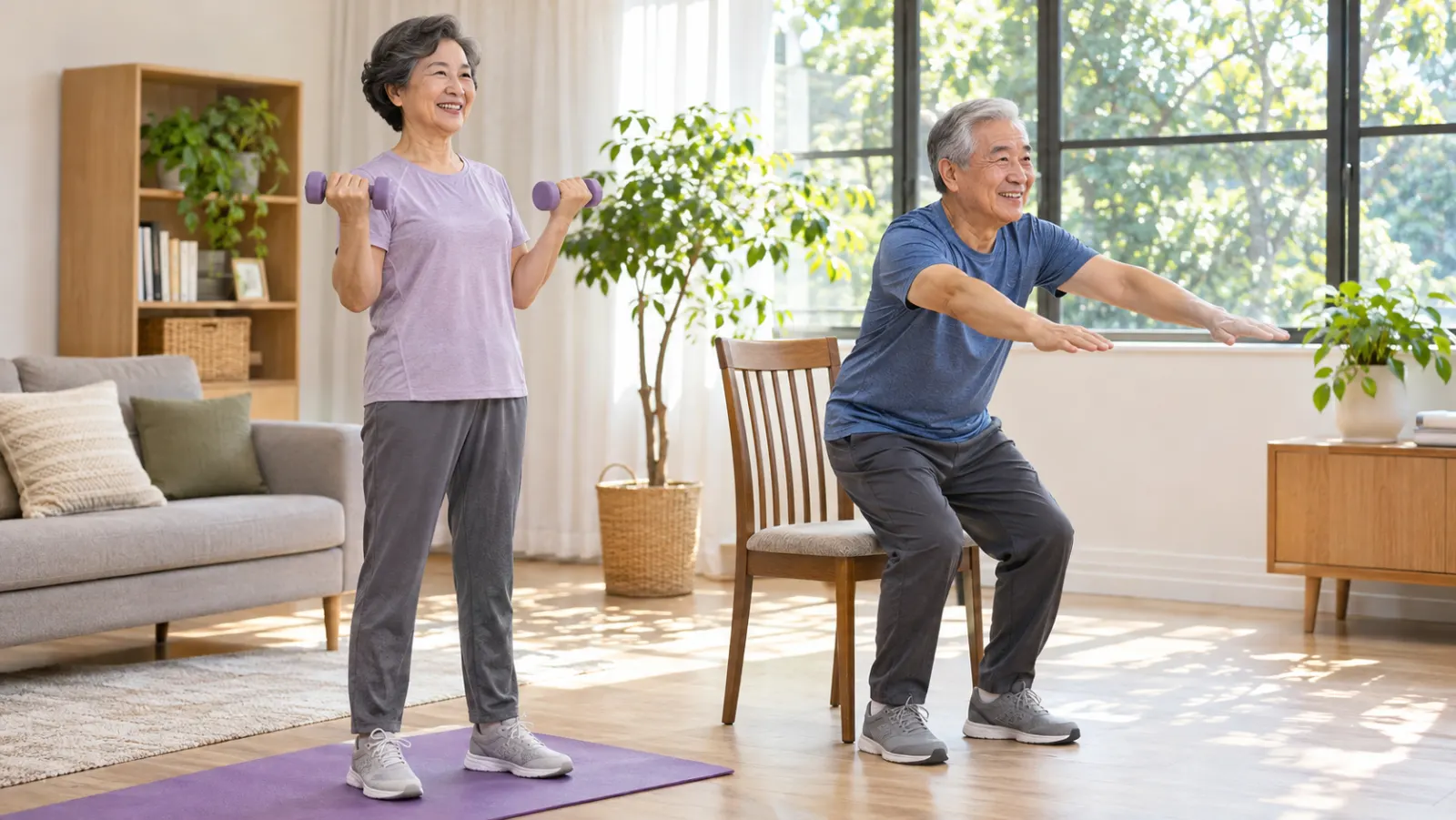
- Strength training two or more days a week, using weights, resistance bands, or body weight (sit-to-stand from a chair, wall push-ups)
- Weight-bearing activity such as brisk walking, stair climbing, or dancing
- Balance training, such as tai chi, standing on one foot while holding the counter, or heel-to-toe walking
Swimming and cycling are wonderful for the heart but do less for bones on their own, so pair them with some strength work.
If you already have osteoporosis or a spinal fracture, some movements, such as deep forward bending, twisting toward the floor, or sit-ups, may not be safe. A physiotherapist or your clinician can suggest bone-safe alternatives.
Long Scarborough winters can make it harder to stay active. Mall walking, community centre programs, and exercise videos at home are all good ways to keep going until the sidewalks clear.
Preventing falls is preventing fractures
Most fractures in older adults happen because of a fall. Making falls less likely is one of the most effective things you can do, and it costs little:
- Remove loose rugs and clutter from walkways
- Add night lights between the bedroom and bathroom
- Install grab bars by the toilet and in the shower or tub
- Use handrails on both sides of stairs if possible
- Wear supportive, non-slip shoes indoors rather than socks or loose slippers
- Keep items you use often within easy reach, so you are not climbing on stools
- Have your eyes checked regularly and wear your correct glasses
- Use ice cleats or grippers on winter boots, and sprinkle salt or sand on steps and driveways
Ask your doctor or pharmacist to review your medications, too. Sleeping pills, some blood pressure drugs, and medicines that cause dizziness can raise the risk of falling.
When medication is recommended
For people at higher fracture risk, lifestyle steps alone may not be enough. Several types of prescription medication can slow bone loss or help rebuild bone, and they can significantly lower the chance of fractures. The most commonly prescribed are taken by mouth weekly or monthly, while others are given by injection or infusion at longer intervals.
Each has its own instructions, possible side effects, and length of treatment. Some people have heard frightening stories about rare jaw or thigh bone problems. These complications are uncommon, and for people at high risk, the benefit of preventing fractures usually outweighs the risk, but it is a fair thing to discuss. Tell your dentist if you are on bone medication, and do not stop any prescription without talking to your doctor first. Our chronic disease management visits can help keep long-term treatment on track.
Signs that need urgent care
Go to the emergency department or call 911 if, after a fall or injury, you:
- Cannot get up or cannot put weight on a leg
- Have severe hip, groin, or back pain, or a leg that looks shortened or turned outward
- Have new numbness, weakness, or loss of bladder or bowel control with back pain
- Hit your head, especially if you take a blood thinner
For a fall without these signs but with lingering pain, book a visit so it can be assessed.
Talk to us about your bones in Scarborough
Bone health is easy to put off because nothing hurts until something breaks. If you are approaching or past menopause, have had a fracture from a minor fall, take long-term steroids, or simply want to know where you stand, it is worth bringing up at your next annual physical. Women working through midlife changes can also discuss bone protection as part of menopause management.
HealthSmart Medical is at 2425 Eglinton Ave. East, Unit 12. Call 416-757-7117 or book online to start the conversation about bone health in Scarborough, before a fracture forces it.
This article is for general information and is not a substitute for medical advice. If you have severe or worsening symptoms, call 911 or go to the nearest emergency department.