When most people hear the word “overdose,” they picture someone very different from themselves or their family. The reality is broader than that. An overdose can happen to a grandmother who took an extra pain pill because her back was bad, to a man recovering from surgery who also had a few drinks, to a curious teenager who found tablets in a medicine cabinet, or to someone who bought what they thought was a different drug and did not know it contained fentanyl.
Opioids are powerful medicines. Used carefully, under a doctor’s guidance, they can relieve severe pain after surgery or an injury, and they have a place in cancer and end-of-life care. Used without enough caution, or bought from an unregulated supply, they can slow breathing to the point that it stops. Ontario, including communities across Scarborough, has felt the effects of the toxic drug crisis, and many families have lost someone.
This article is for everyone: people taking a prescribed opioid, the people who live with them, and anyone who wants to be ready to help a stranger. It covers practical safety at home, how to recognize an overdose, and how to use naloxone, a medicine that can temporarily reverse an opioid overdose. No judgement, just information that might save a life.
What counts as an opioid?
Opioids are a family of drugs that act on receptors in the brain and body to reduce pain. They also cause drowsiness and, at higher doses, slow breathing. Common examples include:
- Prescription medicines such as morphine, hydromorphone, oxycodone, codeine (including some combination products), tramadol, tapentadol and fentanyl patches
- Medications used to treat opioid use disorder, such as methadone and buprenorphine, which are safe and effective when taken as prescribed
- Unregulated, illegal opioids such as heroin and illicitly made fentanyl
Some people do not realize that a cough syrup or a pain tablet they have used for years contains an opioid. If you are unsure, your pharmacist can tell you in a few seconds.
If you have been prescribed an opioid
Many people in Scarborough leave a hospital or a dental office with a short opioid prescription after a procedure. Others take one longer term for chronic pain. Either way, a few habits make a big difference.
Take it exactly as directed
- Use the lowest dose for the shortest time that controls your pain.
- Do not take an extra dose because the last one “isn’t working yet.” Call your pharmacist or doctor instead.
- Never crush, chew or split long-acting tablets unless you are told it is safe; this can release the whole dose at once.
- Do not share your medicine, even with a family member who has the same kind of pain.
Be careful with combinations
The risk of a dangerous slowdown in breathing rises sharply when opioids are combined with:
- Alcohol
- Sleeping pills and anti-anxiety medicines, especially benzodiazepines
- Some muscle relaxants, seizure medicines and older antihistamines
- Cannabis or other sedating substances
Make sure every doctor and pharmacist you see has a complete, current list of everything you take, including over-the-counter and herbal products.
Who is at higher risk
Some people need extra caution and closer follow-up. That includes older adults, people with sleep apnea or lung disease such as COPD, people with kidney or liver problems, and anyone who has recently stopped taking opioids for a while. After a break, whether from a hospital stay, a period of recovery, or time in custody, the body’s tolerance drops quickly. Going back to a previous dose can then be dangerous.
Plan your pain care
If you are on opioids for more than a short time, regular check-ins with your doctor matter. Together you can review whether the medicine is still helping, watch for side effects such as constipation, drowsiness or low mood, and talk about other ways to manage pain. If you do not have a regular clinician, our family doctor page explains how ongoing care works at our clinic, and follow-up appointments are a good fit for medication reviews.
Do not stop a long-term opioid suddenly without advice. Withdrawal can be very unpleasant, and a doctor can help you taper safely.
Storing opioids safely at home
In busy Scarborough households, where grandparents, parents, teenagers and visiting relatives often share one roof, medicine cabinets are not as private as we think. Prescription opioids that are misused often come from a family member’s or friend’s supply, and young children can be seriously harmed by a single tablet or a used fentanyl patch.
- Keep opioids in a locked box or cabinet, not on the kitchen counter, in a purse or on the bedside table.
- Store them in their original labelled containers.
- Count your pills now and then, so you would notice if some went missing.
- Do not tell visitors or younger relatives which medicines you take or where you keep them.
- Fold used fentanyl patches in half, sticky sides together, and return them to the pharmacy. Never toss them loose in the garbage where a child or pet could find them.
Summer adds a few extra considerations. Medications should not be left in a hot car, and if you are travelling, keep them in your carry-on, in original packaging, with only the amount you need.
Disposing of leftover medicine
Once your pain has settled, there will often be pills left over. It is tempting to keep them “just in case,” but leftover opioids are one of the most common sources of accidental poisonings and misuse.
The safest option is to take unused or expired medicines back to a pharmacy. Most community pharmacies in Ontario accept returned medications at no charge and dispose of them properly. Please do not flush them or put them in household garbage or recycling. If you are not sure whether your local pharmacy takes returns, simply ask at the counter.
Recognizing an opioid overdose
An overdose happens when opioids slow breathing so much that the brain and body do not get enough oxygen. It can happen within minutes or more gradually, especially with long-acting tablets or patches.
Signs to look for
- The person cannot be woken, or will not respond to their name or to a firm rub on the breastbone
- Breathing is very slow, shallow, irregular or has stopped
- Snoring, gurgling or choking sounds
- Lips and fingertips turning blue or grey
- Very small, pinpoint pupils
- Skin that is cold and clammy
- Limp body
Someone who is very drowsy, “nodding off” mid-sentence or hard to keep awake after taking an opioid is also in danger and should not be left alone.
How to respond: step by step
If you suspect an opioid overdose, act quickly. You do not need to be sure it is an opioid; naloxone will not harm someone who has not taken one.
- Shout and shake. Say their name loudly and squeeze their shoulders. If there is no response, move to the next steps right away.
- Call 911. Tell the dispatcher the person is not breathing or is unresponsive. Put the phone on speaker so you can follow instructions.
- Give naloxone. For the nasal spray, tilt the head back, insert the nozzle into one nostril and press the plunger firmly. For an injectable kit, follow the instructions in the kit, injecting into a large muscle such as the thigh or upper arm.
- Support breathing. If you are trained, give rescue breaths or start CPR. If you are not, the 911 dispatcher will coach you.
- Give another dose if needed. If there is no improvement after about two to three minutes, give a second dose.
- Stay with them. If they start breathing on their own, roll them onto their side in the recovery position so they will not choke if they vomit.
Why you must stay, even after they wake up
Naloxone works for a shorter time than many opioids. It can wear off while the opioid is still in the body, and the person can slip back into an overdose. Stay with them until paramedics arrive, and encourage them to get checked even if they feel better. People waking from naloxone may feel sick, shaky or upset because they are in sudden withdrawal. Speak calmly and reassure them.
Some overdoses are not just opioids
The unregulated drug supply often contains other substances, such as sedatives, mixed in with fentanyl. Naloxone may only partly help in those cases, which is one more reason calling 911 and supporting breathing are so important. Never assume naloxone alone is enough.
Fear of calling 911
Some people hesitate to call for help because they are worried about police. Canada has a law, the Good Samaritan Drug Overdose Act, that offers some legal protections to people who seek emergency help during an overdose. It does not cover everything, but the most important message is this: calling 911 saves lives.
Getting a free naloxone kit
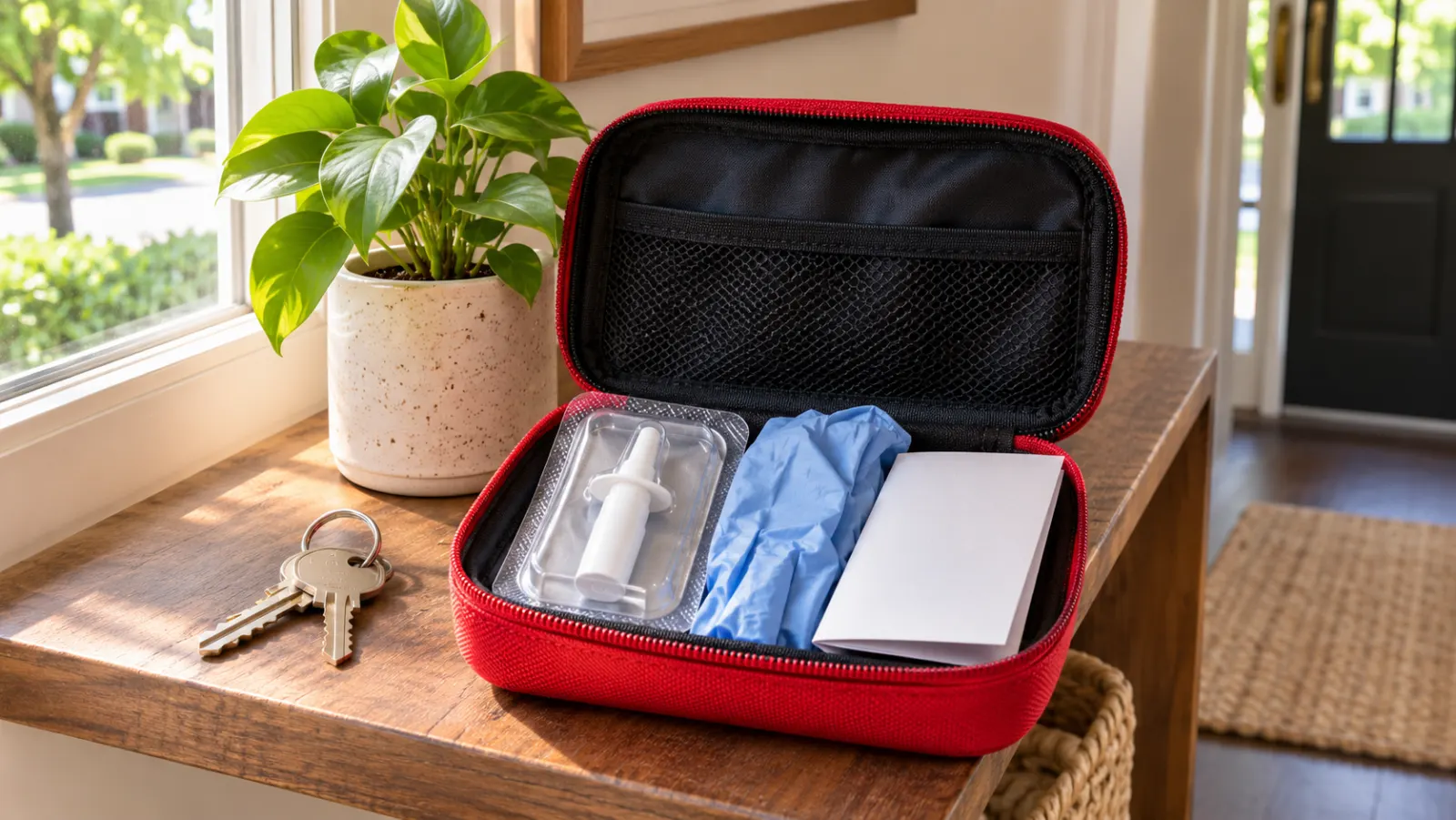
Naloxone kits are available free of charge at many pharmacies across Ontario, and through a number of community health and harm reduction programs. Most pharmacies offer the nasal spray version, which is easy to use. The pharmacist can show you how it works, and in many cases you can pick one up without a prescription. Bringing your OHIP card may help, but ask your pharmacy about current requirements.
Consider carrying one if:
- You or someone in your home takes a prescription opioid
- A family member or friend uses drugs, including occasionally or recreationally
- You work in a setting where you might witness an overdose
- You simply want to be prepared to help someone in your community
Store the kit at room temperature where you and your family can find it quickly, check the expiry date now and then, and replace it after use.
Help for opioid use disorder
If you or someone you love is struggling with opioid use, please know that opioid use disorder is a medical condition and it is treatable. Effective treatments include medications such as buprenorphine and methadone, which reduce cravings and withdrawal and lower the risk of overdose, along with counselling and support.
Asking for help is hard, and shame keeps many people silent. Our clinicians are here to listen without judgement, talk through options and, where appropriate, arrange a specialist referral to an addiction medicine program. If coming to the clinic feels like too big a first step, a virtual care visit may be easier.
If you or someone you know is thinking about suicide, call or text 988 at any time. For health advice when clinics are closed, Health811 is available across Ontario.
Supporting family members
Living with or loving someone who uses opioids can be exhausting and frightening. A few things can help:
- Learn the signs of overdose and keep naloxone at home.
- Try to talk when the person is not intoxicated, using “I’m worried about you” rather than blame.
- Ask them not to use alone, and to start with a small amount if they do use.
- Look after your own health and sleep, and consider family support groups.
Talk with a Scarborough doctor about opioid safety
Whether you are about to fill a prescription after surgery, want to review a long-term pain plan, or are worried about someone you love, HealthSmart Medical is a confidential place to start. Our clinic is at 2425 Eglinton Ave. East, Unit 12, in Scarborough.
Call 416-757-7117 or book online. Pick up a naloxone kit from your pharmacy this week, tuck it somewhere easy to reach, and tell your family where it is. It is a small step that could make all the difference in Scarborough homes this summer.
This article is for general information and is not a substitute for medical advice. If you have severe or worsening symptoms, call 911 or go to the nearest emergency department.