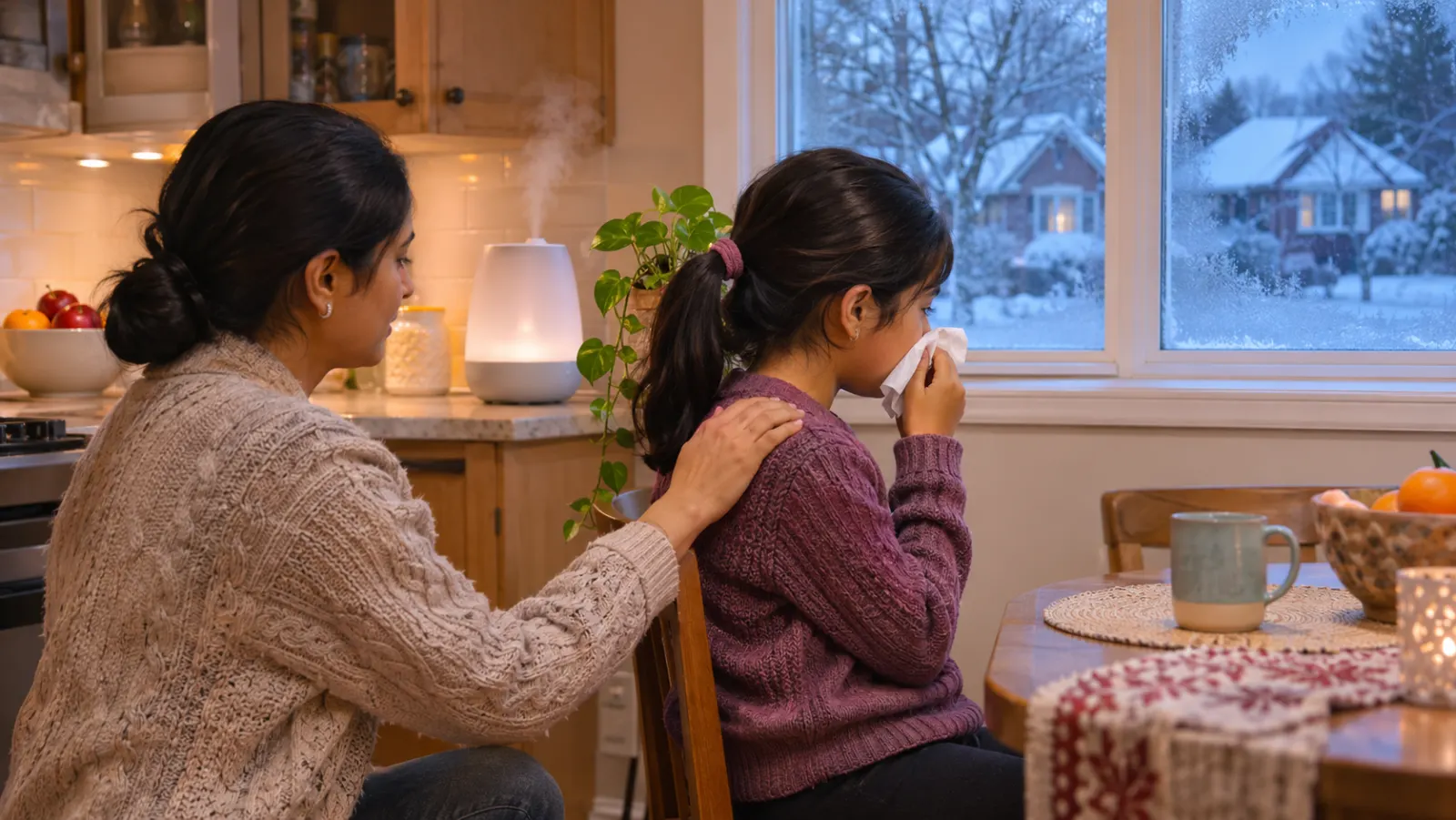
It usually happens at the worst possible moment. A child wakes up with blood on the pillowcase. A teenager is in the middle of a math test. A grandfather is reading the paper after dinner when a red drip lands on the page. Nosebleeds look alarming because a little blood spreads a long way on a tissue or a white shirt, and almost everyone has been taught at some point to tip the head back, which turns out to be exactly the wrong move.
The good news is that the vast majority of nosebleeds are minor, start at the front of the nose, and stop with simple pressure applied the right way. They are also far more common in the colder months. Between the furnace running day and night and the sharp, dry air outside, the thin lining inside the nose dries out, cracks and bleeds easily. Many families in Scarborough notice the pattern every December: the heat comes on, and so do the nosebleeds.
This article walks through correct first aid, why winter makes noses bleed, how to protect the lining of the nose, what to do about children who pick, and what changes if you take a blood thinner. It also lists the situations where a nosebleed is no longer a home problem. As always, this is general information, not a substitute for an assessment of your own situation.
Where the blood is coming from
Just inside each nostril, on the wall that divides the nose in two (the septum), there is a small area packed with tiny blood vessels sitting very close to the surface. Doctors sometimes call it Little’s area. It is the spot that dries first, takes the brunt of a fingernail, and gets rubbed raw when you blow your nose repeatedly during a cold. Most nosebleeds, often called anterior nosebleeds, come from here. They can look dramatic, but they are usually easy to control because the bleeding point is right where your fingers can press on it.
A much smaller number of nosebleeds start further back in the nose, from larger vessels. These posterior nosebleeds are more common in older adults, people with high blood pressure, and those taking blood thinners. They tend to be heavier, may pour down the back of the throat even when you lean forward, and often do not respond to pinching. They need medical care.
Common triggers
- Dry indoor air from forced-air heating, baseboard heaters and space heaters
- Picking, rubbing or scratching inside the nose
- Colds, sinus infections and allergies, with lots of forceful blowing
- Overuse of decongestant nasal sprays, or steroid sprays aimed at the septum instead of the side wall
- A knock to the nose, whether from a ball, a hockey stick or a slip on the ice
- Blood-thinning medications, including some over-the-counter pain relievers
- Less often, bleeding disorders, abnormal blood vessels, or growths in the nose
First aid that actually works
If you remember only one section of this article, make it this one. Good technique stops most nosebleeds within 10 to 15 minutes.
- Sit up and lean forward. Keep the head slightly tilted down, chin toward the chest. This lets blood drain out of the nose instead of down the throat, where it can cause coughing, gagging or vomiting.
- Pinch the soft part of the nose. Use your thumb and index finger to squeeze both nostrils closed just below the hard, bony bridge. Pinching the bone does nothing; the pressure needs to land on the soft, fleshy part, where the bleeding vessels are.
- Hold firmly for 10 to 15 minutes without letting go. Use a clock or a phone timer. The most common mistake is releasing every minute or two to “check.” Each peek lets the fragile clot break and the timer effectively restarts.
- Breathe through your mouth and spit out any blood that reaches the mouth rather than swallowing it.
- Optional: a cold pack or a bag of frozen vegetables wrapped in a cloth, held on the bridge of the nose or the back of the neck, feels soothing for some people. It is a comfort measure; the pinching is what does the work.
If the bleeding is still going after 15 minutes of steady pressure, try one more full round of 15 minutes. If it continues after that, it is time to get medical help (more on that below).
What not to do
- Do not tilt the head back or lie flat. You will not see the blood, but it is still flowing, now down the throat.
- Do not stuff tissue or cotton deep into the nostril. When you pull it out, it often tears the clot away.
- Do not blow your nose while it is actively bleeding.
The next 24 hours
Once the bleeding stops, the clot is delicate. For the rest of the day and into the next:
- Avoid blowing your nose. If you must sneeze, try to do it with your mouth open.
- Skip heavy lifting, strenuous exercise and bending over for long periods.
- Choose lukewarm rather than very hot drinks and showers for a few hours.
- Keep fingers, tissues and cotton swabs away from the inside of the nose.
Why winter makes it worse, and what to do about the air
In a Scarborough winter, cold outdoor air holds very little moisture. Bring that air indoors and heat it, and the relative humidity drops even further. Apartment towers with radiators that cannot be turned down, bungalows with older forced-air furnaces, and long commutes on overheated buses all add up. The nasal lining is designed to warm and moisten every breath you take, and when the air is this dry, it simply cannot keep up. It becomes crusty, itchy and fragile, which invites picking, which invites bleeding.
Adding moisture back
- A humidifier in the bedroom often helps the most, because you breathe that air for eight hours straight. Clean it often according to the manufacturer’s instructions, since a neglected humidifier can grow mould and bacteria. Aim for comfortable air, not a damp room; streaming condensation on windows is a sign the humidity is too high.
- Saline nasal spray or drops from the pharmacy moisten the lining safely and can be used several times a day. They are simply salt water and are fine for most children and adults.
- Saline gel or a thin layer of petroleum jelly applied just inside the nostril, on the septum, with a clean fingertip or a cotton swab, helps the lining hold on to moisture overnight. Use only a small amount at the very entrance of the nose; do not push anything deep inside.
- Drink enough fluids, especially if you are also fighting a cold.
Nasal sprays: helpful or harmful?
If you use a steroid nasal spray for allergies, technique matters. Aim the nozzle toward the outer wall of the nostril, away from the septum. A common tip is to use the right hand for the left nostril and the left hand for the right. If you notice crusting or bleeding on the same side each time, mention it to your doctor or pharmacist.
Decongestant sprays sold for colds are meant for a few days only. Used longer, they can cause rebound congestion and irritate the lining. If you have high blood pressure or heart disease, ask a pharmacist before using any decongestant.
Kids, fingers and nosebleeds
School-aged children get nosebleeds more often than almost anyone, and picking is the main reason. Winter crusts are itchy, kids scratch, and the cycle repeats every few days. Many parents in Scarborough end up washing pillowcases in cold water more often than they would like.
A few things that tend to help:
- Trim fingernails short and file the edges smooth.
- Use saline spray or gel at bedtime so there are fewer dry crusts to scratch at in the first place.
- Keep a bedroom humidifier running during the heating season.
- Teach the first aid steps. Older children can learn to lean forward and pinch for themselves, which takes away a lot of the fear. Practising when the nose is not bleeding makes it easier when it is.
- Stay calm and matter-of-fact. Children take their cues from the adults around them. A calm parent, a towel and a timer go a long way.
- Let the school know if your child gets frequent nosebleeds, so staff can respond quickly without panic.
When a child’s nosebleeds need a closer look
Book a visit if your child:
- Has nosebleeds very often, or they are getting heavier
- Is under 2 years old, since nosebleeds are unusual at that age
- Also bruises easily, has bleeding gums, or has tiny red or purple dots on the skin
- Seems to have something stuck in the nose, or has a foul-smelling discharge from one side, which can mean a small object (a bead, a bit of eraser, a peanut) has been pushed inside
- Has a blocked nose on one side along with repeated bleeds from that side, especially in a teenage boy
Our childhood illness treatment visits are a good place to start for these concerns.
Blood thinners and nosebleeds
Many older adults in Scarborough’s multigenerational households take a medication that affects clotting. This includes prescription anticoagulants such as warfarin, apixaban, rivaroxaban or dabigatran, antiplatelet medicines such as clopidogrel or ticagrelor, and daily low-dose aspirin. Anti-inflammatory pain relievers like ibuprofen and naproxen, and some supplements, can also make bleeding a bit more likely.
If you take one of these:
- Do not stop or skip your medication because of a nosebleed unless a doctor tells you to. These medicines usually protect against stroke, heart attack or dangerous clots, and stopping them can carry real risk.
- Use the same first aid, but be prepared to hold pressure for the full time, and possibly a second round.
- Seek care sooner. If a nosebleed on a blood thinner does not stop with 15 to 20 minutes of good pressure, go to the emergency department.
- Mention frequent nosebleeds at your next visit. If you take warfarin, it may be worth checking your blood test results; for other medications, your doctor may review the dose, other medicines that interact, or kidney function. Our blood work requisitions service can arrange lab testing when it is needed.
What about blood pressure?
People often ask whether high blood pressure causes nosebleeds. The relationship is not straightforward. Blood pressure frequently reads high during a nosebleed simply because the person is anxious. That said, uncontrolled high blood pressure is associated with heavier, harder-to-stop bleeds, particularly in older adults. If your readings are often high, it is worth having them reviewed through our high blood pressure management care, separate from the nosebleed itself.
When a nosebleed is an emergency
Call 911 or go to the nearest emergency department if:
- The bleeding has not stopped after 20 to 30 minutes of firm, continuous pressure applied correctly
- The bleeding is very heavy, pouring rather than dripping, or you are filling cloth after cloth
- Blood is running heavily down the back of the throat despite leaning forward, or the person is vomiting blood
- The person feels dizzy, faint, very pale, sweaty, confused or short of breath
- The nosebleed followed a hard blow to the head or face, a fall, or a car accident, especially if the nose looks crooked or there is clear, watery fluid coming from the nose
- The person takes a blood thinner and the bleeding is not settling
- There is any difficulty breathing
Do not drive yourself if you feel lightheaded. Keep leaning forward and keep pinching on the way.
For questions that are not urgent, Health811 offers free advice from a registered nurse by phone, any time.
Repeated nosebleeds: what a visit can offer
If nosebleeds keep coming back despite humidity, saline and careful habits, it is worth an assessment. A clinician will ask how often the bleeds happen, which side they come from, how long they last, and what medications and supplements you take. They will look inside the nose with a light, check your blood pressure, and look for signs of easy bruising or bleeding elsewhere.
Depending on what they find, next steps might include:
- Advice on moisturizing and treating any underlying allergy or sinus problem
- Blood tests to check blood counts, clotting, or iron levels if there has been a lot of blood loss
- A review of medications that may contribute
- A referral to an ear, nose and throat specialist, through our specialist referrals service, for bleeds that keep recurring from one spot, or for anything unusual seen inside the nose. A specialist can seal a troublesome vessel if needed.
A calmer winter for noses in Scarborough
Nosebleeds in Scarborough tend to cluster when the furnace runs hardest, and most of them are a nuisance rather than a danger. Lean forward, pinch the soft part, hold it for a full 15 minutes, and keep the inside of the nose moist with a humidifier and saline. Know the warning signs, especially if you or a family member takes a blood thinner, and do not hesitate to get help when bleeding will not stop.
If nosebleeds keep interrupting your family’s nights, we are happy to take a look. HealthSmart Medical is at 2425 Eglinton Ave. East, Unit 12, in Scarborough. Come in as a walk-in patient, call 416-757-7117, or book online.
This article is for general information and is not a substitute for medical advice. If you have severe or worsening symptoms, call 911 or go to the nearest emergency department.