Ask ten households how to treat a burn and you may get ten different answers. Butter. Toothpaste. Ice cubes. Egg white. Mustard oil, ghee, a slice of raw potato, a smear of whatever cream happens to be in the bathroom cabinet. These remedies are passed down with love, and most of them do more harm than good.
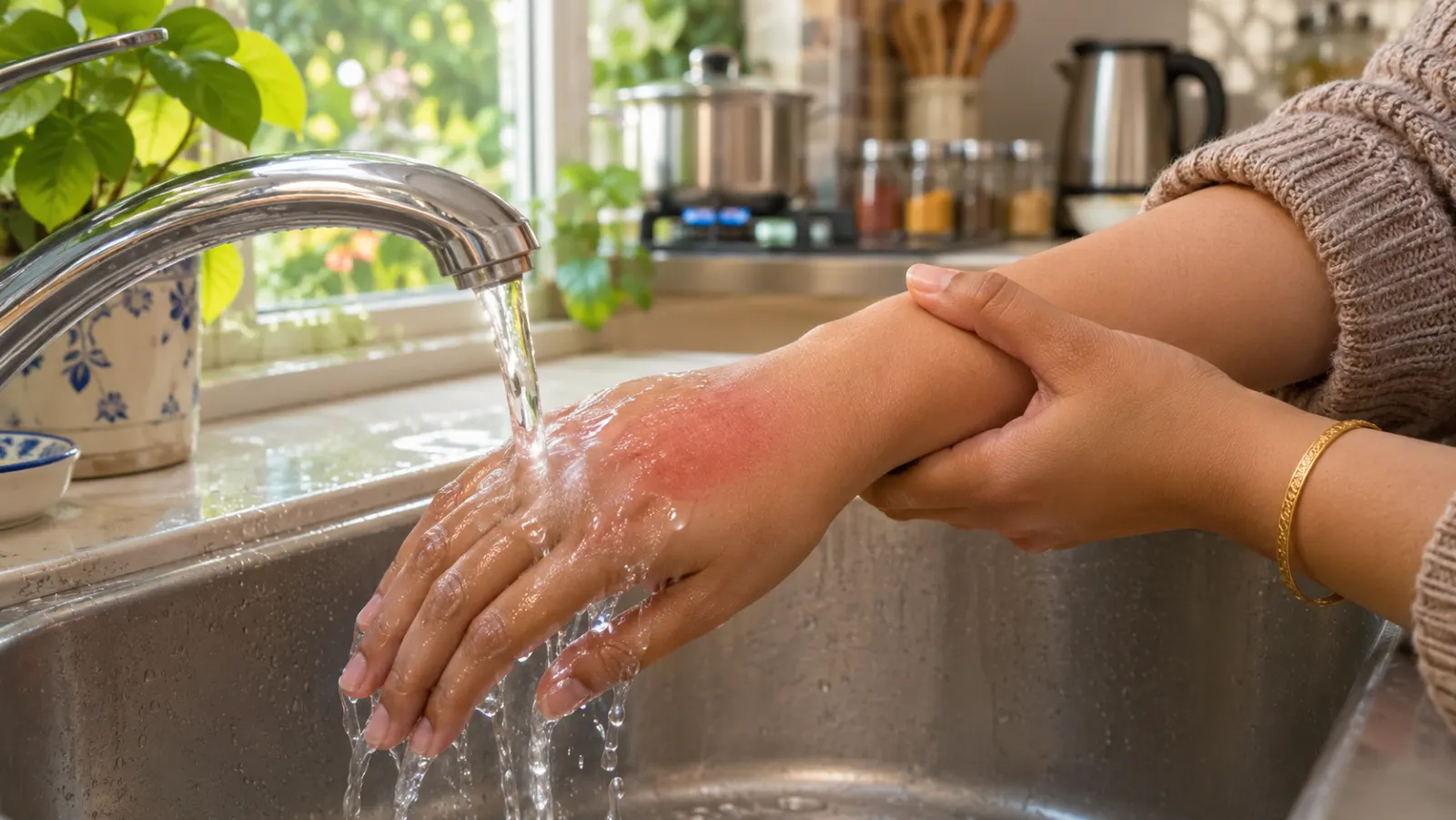
The right answer is much less exciting: cool running water, and plenty of it. Getting that first step right, in the first few minutes after a burn, can make a real difference to how deep the injury becomes, how much it hurts, and how well it heals.
Summer brings its own burn season in Scarborough. Backyard barbecues and balcony grills, campfires at the cottage, sparklers on long weekends, hot car seat buckles, and kitchens that never stop cooking, especially when the whole family is visiting. This guide covers what to do in the first minutes, how to care for a minor burn over the following days, which home remedies to leave in the cupboard, and the burns that always need emergency care.
Step one: cool the burn properly
The single most effective first-aid step for a burn is to cool it with cool running water. Not ice. Not iced water. Ordinary cool tap water.
- Get away from the heat source. Turn off the stove or grill, move away from the fire, or unplug the appliance.
- Run cool water over the burn for 20 minutes. It feels like a long time, and most people stop far too early. Set a timer if you need to. Cooling still helps if you start a little late, so don’t skip it just because some time has passed.
- Remove rings, watches, bracelets and tight clothing near the burned area as soon as you can, before swelling sets in. If clothing is stuck to the skin, leave it and cut around it.
- Keep the rest of the person warm. Cooling a burn shouldn’t make someone shiver, especially small children. Wrap them in a towel or blanket while you cool only the injured area.
Why not ice?
Ice and ice water can damage already injured skin further by restricting blood flow, and can cause a cold injury on top of the burn. Cool, not cold, is the goal.
What if there’s no tap nearby?
At a park, campsite or beach, use any clean, cool water you have: a water bottle, a cooler of drinks (not the ice) or a garden hose. Keep pouring slowly over the burn rather than just dabbing it.
Leave these in the cupboard
The urge to put something on a burn is strong, but most household remedies trap heat, irritate the skin, or introduce bacteria:
- Butter, ghee, cooking oil or mustard oil hold heat in the skin and can make the burn deeper
- Toothpaste can irritate the skin and has no proven healing effect
- Egg white, flour or raw potato can contaminate the wound
- Ice can cause further tissue damage
- Fluffy cotton balls or tissue leave fibres stuck in the wound
- Strong perfumed lotions or random creams can sting and irritate damaged skin
If your mother or grandmother swears by one of these, you’re in good company. Many families in Scarborough grew up with these remedies in many different countries. But cool water works better, and it’s free.
Once the burn has been well cooled, a plain, fragrance-free moisturiser or pure aloe vera gel can soothe a very superficial burn, like a red patch with no blisters. Petroleum jelly under a non-stick dressing is a simple choice for a small blistered burn.
How deep is it?
Burns are described by how many layers of skin are affected. It isn’t always easy to tell at first, and burns can look different over the first day or two. Burns on darker skin can also look different; redness may be harder to see, and the skin may look darker or lighter than usual.
Superficial burns
The top layer of skin only. The area is red or darker, dry, painful and tender, without blisters. A mild scald from a splash of tea or a quick touch of a hot pan often looks like this. These usually heal within about a week without scarring.
Partial-thickness burns
Deeper damage. These are very painful and usually blister, either right away or within hours. The skin underneath may look moist, pink or red. Small partial-thickness burns can often be managed with good wound care, but larger ones, or those in sensitive areas, need medical attention. Deeper partial-thickness burns can take weeks to heal and may scar.
Full-thickness burns
Damage through all the layers of skin. The area may look white, waxy, leathery, brown or charred. Surprisingly, it may not hurt much because nerve endings have been destroyed. These always need emergency care.
Kitchen and barbecue burns
Most of the burns we see in summer come from cooking.
Hot oil and spatter
Deep frying samosas, pakoras, fish or chicken is a common source of burns, as is water hitting hot oil and making it spit. Keep a lid nearby to cover a pan rather than carrying it across the room, dry food before it goes into oil, and never throw water on a grease fire.
Steam
Steam burns are easy to underestimate. Opening a pressure cooker before the pressure is fully released, lifting the lid on a pot of rice, or opening a microwaved bag of popcorn can all cause painful burns to the hands, wrists and face.
The grill
Barbecue burns happen when grabbing a hot lid or grate, leaning over the flames, or trying to relight a grill. Use long-handled tools and heat-resistant gloves, keep the grill on a stable surface away from walls and railings, and never use gasoline or extra lighter fluid to speed things up. Follow your building’s rules about balcony grills.
Hot drinks and young children
Scalds from hot drinks are one of the most common burns in toddlers. A cup of tea or coffee left on the edge of a table, a tablecloth pulled by a curious hand, or a kettle cord within reach can cause a serious burn in seconds. Children’s skin is thinner than adults’, so the same liquid burns them more deeply.
A few habits help a lot:
- Never hold a hot drink while holding a baby
- Keep hot drinks, kettles and pot handles well back from the edge of counters and tables
- Use the back burners when you can, and turn pot handles inward
- Keep children out of the kitchen while frying
- Set your hot water heater to a safer temperature to prevent bath scalds, and always test bath water before a child gets in
Any scald in a baby or toddler beyond a very small red patch should be seen by a doctor.
Other summer burns
Metal seat belt buckles and dark car seats can burn small legs after a car has been parked in the sun. Playground slides can heat up on sunny afternoons too. Sparklers burn far hotter than most people expect, so supervise children closely and keep a bucket of water nearby. Sunburn is its own topic: cooling, moisturising and protecting the skin help, and widespread blistering, fever or feeling unwell after sun exposure should be seen.
Caring for a minor burn over the next few days
After cooling, cover a minor burn loosely with a sterile, non-stick dressing or clean plastic cling film laid over the top (not wrapped tightly around a limb). This protects it and can reduce pain by keeping air off the area.
Blisters
It’s tempting to pop them, but intact blisters act as a natural, sterile bandage. Leave them alone. If a blister breaks on its own:
- Wash gently with mild soap and water
- Leave the loose skin flap in place if it’s clean, as it helps protect the area underneath
- Apply a thin layer of petroleum jelly
- Cover with a non-stick dressing
Large or tense blisters, or blisters in awkward places such as on a hand, may need to be dealt with by a clinician.
Day-to-day care
- Change the dressing daily, or sooner if it becomes wet or dirty
- Keep the burn clean and avoid soaking it in a bath or pool until it’s healed
- Take acetaminophen or ibuprofen for pain if they’re safe for you
- Expect itching as it heals, and try not to scratch
- Wear loose clothing over the area
If you’d like help with the dressing, or want a clinician to check how it’s healing, minor wound care and dressing changes are both available at our clinic.
Signs of infection
Seek care if you notice increasing redness spreading around the burn, more swelling or pain after the first couple of days, pus or a bad smell, red streaks, or fever. Burns that haven’t healed within about two weeks should also be checked.
Tetanus
Burns can be a route for tetanus bacteria, like other wounds. If you aren’t sure when your last tetanus shot was, ask. Keeping your adult vaccinations current covers this.
Burns that need emergency care
Call 911 or go to the nearest emergency department if:
- The burn is larger than the palm of the injured person’s hand and has blisters or is deeper
- The burn looks white, leathery, brown or charred, even if it doesn’t hurt much
- It involves the face, eyes, ears, hands, feet, genitals, buttocks or a major joint
- It goes all the way around an arm, leg, finger or the chest
- It was caused by electricity, including a low-voltage household shock, or by lightning
- It was caused by chemicals, such as drain cleaner, strong bleach or industrial products (rinse with large amounts of running water while you seek help)
- The person breathed in smoke or hot air, or has a hoarse voice, coughing, singed nose hairs, soot around the mouth or difficulty breathing
- The person is a baby, a young child, an older adult, or has diabetes or a weakened immune system, and the burn is more than very minor
- The person seems confused, drowsy or faint
- You suspect a child’s burn may not have been accidental
For any of these, keep cooling with water while you wait for help, unless the burn is very large, in which case focus on keeping the person warm.
After it heals
New skin over a healed burn is delicate and can darken or lighten with sun exposure. This is especially noticeable on medium and darker skin tones, where changes in colour can last for months. Protect healed burns from the sun with clothing or sunscreen for at least a year. Moisturise regularly to ease tightness and itching. If a scar becomes raised, thick or tight, especially over a joint, mention it to a doctor.
When to come in
Not every burn needs a clinic visit, but if you’re unsure how deep it is, if a blister is large or broken, if you need help with dressings, or if it isn’t healing the way it should, we can take a look.
HealthSmart Medical is located at 2425 Eglinton Ave. East, Unit 12, in Scarborough. Call 416-757-7117 or book online. For anything on the emergency list above, don’t wait for an appointment; go to the nearest emergency department or call 911.
This article is for general information and is not a substitute for medical advice. If you have severe or worsening symptoms, call 911 or go to the nearest emergency department.