A type 2 diabetes diagnosis rarely arrives with drama. More often it shows up as a line on a lab report after a routine physical, or as an explanation for months of thirst, tiredness, and getting up at night to use the washroom. Many people leave that appointment with a prescription, a pamphlet, and a lot of questions they did not think to ask in the moment.
The good news is that type 2 diabetes is a condition people live with well for decades. It is not managed in a single visit or by a single pill. It is managed in kitchens, on walks to the bus stop, in pharmacy line-ups, and in the steady rhythm of follow-up appointments. What you do on an ordinary Tuesday matters more than what you do the week before a blood test.
This article walks through the practical side of living with type 2 diabetes in Scarborough: the daily habits that make a difference, how to think about food when your family’s cooking comes from Tamil, Filipino, Caribbean, Chinese, Afghan, or Somali traditions (or all of the above), what your A1C number actually means, and why your feet and eyes deserve more attention than most people give them. It is general education, not a substitute for advice from your own clinician.
What is actually happening in type 2 diabetes
In type 2 diabetes, the body either does not respond well to insulin, does not make enough of it, or both. Insulin is the hormone that helps move sugar (glucose) from the blood into the cells that use it for energy. When that system is not working smoothly, glucose builds up in the bloodstream.
Over time, persistently high blood sugar can damage small and large blood vessels and nerves. That is why diabetes care is about much more than one number. The goal is to protect the heart, kidneys, eyes, nerves, and feet over the long term, while helping you feel well day to day.
Type 2 diabetes is strongly influenced by genetics and family history, and it is more common in some communities, including people of South Asian, African, Caribbean, East Asian, and Hispanic descent. In a neighbourhood as diverse as ours, many families have several relatives living with it. That shared experience can be a real strength: grandparents, parents, and adult children can support each other’s habits rather than each person managing alone.
Daily habits that carry the most weight
Movement that fits your real life
Physical activity helps muscles use glucose more effectively, and the benefit starts with the very first walk. You do not need a gym membership. A brisk 10 to 15 minute walk after meals can noticeably help with blood sugar after eating. Some practical ways people in Scarborough fit movement in:
- Getting off the bus a stop early on Eglinton or Kennedy and walking the rest of the way
- Walking laps inside a shopping mall during icy January weeks, when sidewalks are treacherous
- Using the trails along the Bluffs, Highland Creek, or a local park in spring and fall
- Doing simple strength exercises at home, such as sit-to-stand from a chair, wall push-ups, or light resistance bands
- Taking the stairs at work or at the TTC station when it feels safe to do so
Most guidelines encourage a combination of aerobic activity spread through the week and some strength training. If you have heart disease, foot problems, or have been inactive for a long time, talk with your clinician before starting something new.
Sleep, stress, and the hidden influences
Poor sleep and ongoing stress can push blood sugar up through hormones such as cortisol. Shift work, long commutes, caring for children and aging parents, and financial pressure are common realities. You cannot always remove these, but it helps to recognise them. Loud snoring with daytime sleepiness can also be a sign of sleep apnea, which is linked to diabetes and worth mentioning at your next visit.
Taking medication consistently
Many people with type 2 diabetes take metformin, and others take newer medicines that also protect the heart or kidneys. Some need insulin. Whatever you are prescribed, consistency matters. If side effects such as stomach upset make it hard to keep taking a medication, tell your clinician rather than quietly stopping. There are often alternatives or ways to adjust the dose. Bring all of your medication bottles, including supplements and herbal remedies, to appointments so they can be reviewed together.
Checking your blood sugar at home
Not everyone with type 2 diabetes needs to check their blood sugar daily. It depends on which medications you take, especially insulin or medications that can cause low blood sugar. Your clinician can tell you whether home testing makes sense for you, how often, and what numbers to aim for. If you do check, writing results down (or using a meter that stores them) makes your follow-up visits far more useful.
Food: working with your culture, not against it
Food advice for diabetes is sometimes delivered as if everyone eats the same bland, Western-style plate. That approach does not work for most families in Scarborough, and it does not need to. The principles of healthy eating with diabetes can be applied to almost any cuisine.
The plate method, adapted
A simple starting point is to picture your plate in sections:
- About half the plate: non-starchy vegetables, such as leafy greens, okra, eggplant, bitter melon, bok choy, cabbage, green beans, or salad
- About a quarter: protein, such as fish, chicken, eggs, tofu, paneer, lentils, chickpeas, or beans
- About a quarter: starch or grains, such as rice, roti, bread, plantain, cassava, noodles, or potatoes
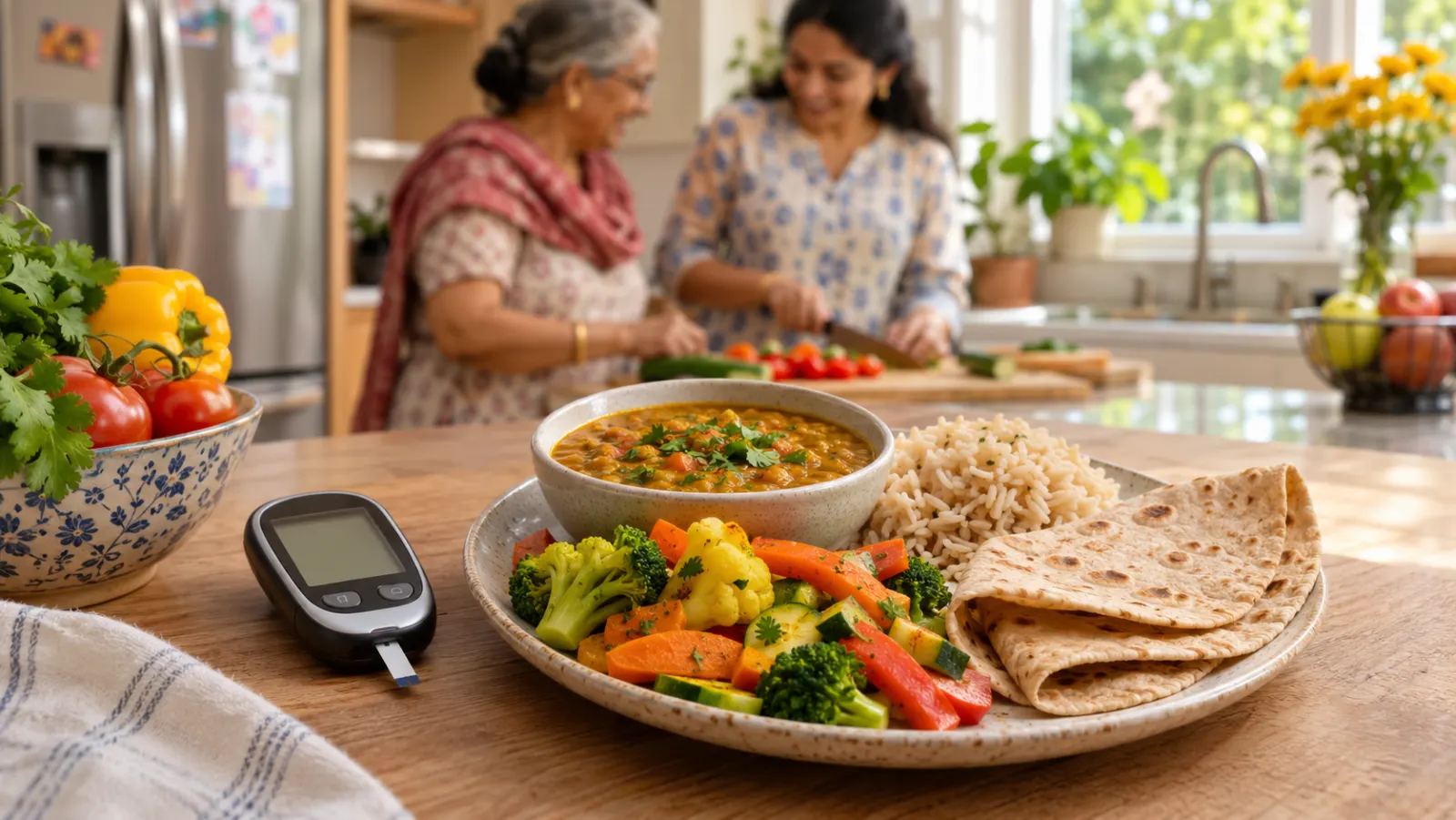
For many traditional meals, the biggest change is not removing rice or roti, but adjusting the proportion. A plate that is mostly rice with a small amount of curry can become a plate with a moderate scoop of rice, a generous portion of vegetable curry, and a side of dal or grilled fish.
Practical swaps that keep meals familiar
Some ideas that people from different backgrounds have found useful:
- Mixing brown rice or parboiled rice with white rice, or trying smaller portions of white rice alongside more vegetables
- Making roti with part whole wheat or adding besan (chickpea flour) for extra fibre and protein
- Choosing boiled or roasted plantain or cassava instead of fried, and keeping portions modest
- Replacing sweetened tea or coffee with less sugar, gradually, so the taste adjusts
- Being mindful with sweet festival foods during Diwali, Eid, Lunar New Year, Christmas, or Pongal, rather than avoiding celebrations entirely
- Watching sugary drinks, including fruit juices, sodas, sweetened malt drinks, and bubble tea, which can raise blood sugar quickly
Lentils, beans, and chickpeas deserve special mention. They are central to many South Asian, Middle Eastern, Caribbean, and African cuisines, and they provide fibre and protein that help slow the rise in blood sugar after eating.
Eating with family
In multigenerational households, one person often cooks for everyone. That can make change feel difficult, but it is also an opportunity. Diabetes-friendly cooking (more vegetables, less oil and sugar, sensible portions) tends to be healthier for the whole family, including children and relatives who may be at risk themselves. If it helps, bring the family member who does most of the cooking to an appointment, or ask about a referral to a dietitian who understands your cuisine.
Understanding your A1C and other numbers
What A1C measures
The A1C (sometimes written HbA1c) is a blood test that reflects your average blood sugar over roughly the past two to three months. It is one of the main tools your clinician uses to see how your diabetes is trending. Unlike a single finger-prick reading, it is not affected much by what you ate yesterday.
Many adults with type 2 diabetes have a target A1C around 7 percent or lower, but targets are individualised. An older adult with other health conditions or a history of low blood sugar episodes may have a different goal than a younger, otherwise healthy person. Ask your clinician what your personal target is and why.
Other tests that are part of diabetes care
Diabetes follow-up usually includes more than A1C. Depending on your situation, your clinician may check:
- Blood pressure at visits, because high blood pressure and diabetes together raise heart and kidney risk
- Cholesterol levels
- Kidney function through a blood test and a urine test for protein
- Weight and waist measurement
- Medication side effects and any episodes of low blood sugar
These tests are typically arranged with a lab requisition and done at a community lab. HealthSmart Medical can help with blood work requisitions and review results with you, and we also offer cholesterol monitoring and high blood pressure management as part of ongoing care.
How often to follow up
How often you are seen depends on how stable things are. When diabetes is newly diagnosed or medications are being changed, visits tend to be more frequent. Once things are steady, A1C is often checked a few times a year. Your clinician will set a schedule that fits you. The most important thing is not to let follow-up drift. Many people feel fine with high blood sugar, which is exactly why regular checks matter.
Protecting your feet
Diabetes can reduce sensation in the feet (neuropathy) and slow blood flow, which means a small blister or cut can go unnoticed and heal slowly. Foot problems are one of the most preventable complications of diabetes. A few minutes of attention each day go a long way.
A simple daily foot routine
- Look at both feet every day, including between the toes and the soles. A mirror or a family member can help.
- Wash and dry feet carefully, especially between the toes.
- Moisturise dry skin on the heels, but not between the toes.
- Wear well-fitting shoes and clean socks. Avoid walking barefoot, even at home.
- Cut toenails straight across, or ask for help if you cannot see or reach them well.
Scarborough winters add their own challenges. Cold, wet boots, salt, and slush can cause cracked skin and blisters. Choose warm, dry, properly fitted winter footwear, and change out of damp socks promptly. In summer, sandals and hot pavement bring different risks.
Book a visit promptly if you notice a sore that is not healing, a blister, an ingrown toenail, redness, swelling, warmth, drainage, or a change in the colour of a toe. Your feet should also be examined during regular diabetes checkups.
Caring for your eyes
Diabetes can affect the small blood vessels at the back of the eye (diabetic retinopathy), often without any early symptoms. By the time vision changes are noticeable, damage may already be significant. That is why regular eye exams with an optometrist or ophthalmologist are recommended for people with diabetes, even if your vision seems fine. In Ontario, OHIP generally covers eye exams for people with diabetes; your optometrist can confirm current coverage and how often you should go.
Seek urgent care for sudden vision loss, a curtain or shadow across your vision, a sudden shower of floaters, or flashes of light.
When blood sugar needs urgent attention
Most diabetes care happens in routine visits, but some situations should not wait.
Low blood sugar
If you take insulin or certain diabetes pills, your blood sugar can drop too low. Symptoms can include shakiness, sweating, a racing heart, hunger, confusion, irritability, or headache. Follow the plan your clinician has given you for treating lows, which usually involves fast-acting sugar followed by rechecking. If someone with diabetes is very confused, unable to swallow safely, or unconscious, call 911.
High blood sugar and serious illness
Very high blood sugar with extreme thirst, frequent urination, vomiting, abdominal pain, rapid breathing, confusion, or drowsiness needs emergency care. Call 911 or go to the nearest emergency department. Also seek urgent help for chest pain, shortness of breath, sudden weakness or numbness on one side, trouble speaking, or a foot wound with spreading redness and fever.
When you are sick with a cold, flu, or stomach bug, blood sugar often rises, and some medications may need to be paused temporarily. Ask your clinician for “sick day” guidance in advance so you know what to do. Staying current with adult vaccinations, including the seasonal flu shot, is especially worthwhile for people with diabetes.
Making the most of each appointment
People get more out of diabetes visits when they come prepared. Before your appointment, consider bringing:
- Your medication bottles or an up-to-date list
- Your blood sugar log or meter, if you test at home
- A short list of questions or concerns, written down so they are not forgotten
- Notes on any low blood sugar episodes, foot problems, or vision changes
- A family member or interpreter if it helps you understand and remember the plan
It is completely reasonable to ask your clinician to explain things again or in simpler terms. Diabetes care works best as a partnership, and understanding the “why” behind each recommendation makes it easier to stick with.
Ongoing diabetes care at HealthSmart Medical in Scarborough
HealthSmart Medical is a walk-in and family medicine clinic at 2425 Eglinton Ave. East, Unit 12, in Scarborough. Our team supports patients with diabetes management, including medication review, lab requisitions, result discussions, and follow-up planning. If you have recently been diagnosed, have fallen behind on checkups, or simply want a clearer plan, we can help you take the next step.
Call us at 416-757-7117 or book online to arrange a visit. Small, steady changes in Scarborough kitchens and on Scarborough sidewalks really do add up, and you do not have to figure them out alone.
This article is for general information and is not a substitute for medical advice. If you have severe or worsening symptoms, call 911 or go to the nearest emergency department.