Picture a weekday afternoon in a Scarborough townhouse. The grandchildren are at school, the adult children are at work or stuck in traffic on the 401, and the grandmother who moved here to help raise the family is home alone. She does not drive. The bus route confuses her. The neighbours are friendly, but she speaks only a little English, and they do not speak her language. By the time everyone comes home she has spent most of the day without a real conversation.
Versions of that afternoon play out across the city. A widower whose friends have mostly passed away. A retired factory worker whose days used to be shaped by his shifts and his coworkers. A woman who stopped going to her place of worship after her knees made the stairs too hard. None of them would necessarily call themselves lonely, and none would think to mention it at a doctor’s appointment. Yet loneliness and social isolation are increasingly recognized as real health concerns, not just personal sadness.
This article looks at what loneliness does to the body and mind, why some older adults are especially at risk, and the practical steps that families, friends, and health care providers can take. It is meant for seniors themselves and for the people who love them.
Loneliness and isolation are not quite the same
The two words are often used together, but they describe different things.
Social isolation is about circumstances: living alone, having few regular contacts, rarely leaving the house. It can be counted, at least roughly.
Loneliness is a feeling: the painful sense that your connections are not as close or as many as you need. Someone can live in a busy multigenerational household and still feel deeply lonely, especially if no one in the house has time to really talk, or if they feel like a burden. Another person can live alone, see few people, and feel content.
Both matter, and they often overlap. A doctor or family member may notice isolation first, while loneliness is usually only revealed when someone asks the right question and listens.
What loneliness does to health
Research over many years has linked chronic loneliness and social isolation in older adults to a range of health problems. Researchers are still sorting out cause and effect, but the patterns are consistent enough that health organizations around the world now treat social connection as part of healthy aging.
Loneliness and isolation have been associated with:
- Heart disease and stroke, possibly through ongoing stress, higher blood pressure, and less healthy routines
- Depression and anxiety, which can in turn make people withdraw further
- Cognitive decline and dementia, since conversation and social activity give the brain regular exercise
- Poorer sleep
- Weaker management of chronic conditions, because no one notices missed pills, skipped meals, or worsening symptoms
- Falls and frailty, as people who rarely go out lose strength and stamina
- More emergency visits and hospital stays, sometimes because problems are not caught early
There is also a practical safety side. A senior who lives alone and has a stroke, a fall, or a bad reaction to a medication may not be found quickly if no one checks in regularly.
Who is most at risk in Scarborough
Anyone can become isolated, but certain situations make it more likely.
Language and newcomer barriers
Scarborough is home to many older adults who arrived later in life, often sponsored by their children. They may have left behind lifelong friends, siblings, and a community where they knew everyone. Here, they may not speak English well enough to chat with neighbours, follow a community program, or handle a phone call on their own. Their days can revolve almost entirely around the household. Families sometimes assume that being surrounded by grandchildren means a parent is never lonely, but many of these seniors describe feeling invisible.
Loss of a spouse or friends
The death of a partner removes not only a loved one but often a whole social routine: shared meals, visits, someone to talk to before bed. Friends move away, move into care, or pass away, and circles slowly shrink.
Mobility, transportation, and winter
Giving up driving is a turning point for many seniors. Scarborough’s suburban layout means that a grocery store, place of worship, or friend’s home may be a long walk or a bus transfer away. Long winters make it worse: icy sidewalks and early darkness keep many older adults indoors from December to March. Now that May has arrived and the weather has turned, it is a good moment to rebuild routines that slipped over the winter.
Health changes that quietly shrink a life
Hearing loss makes group conversations exhausting, so people stop going. Vision changes make reading, crossing streets, or recognizing faces harder. Incontinence, chronic pain, and memory problems can all lead someone to stay home out of embarrassment. If hearing is part of the problem, a check-up is worthwhile, since sometimes something as simple as ear wax buildup is playing a role.
Caregiving and retirement
Older adults caring for an ill spouse can become cut off from everyone else. Retirement can also remove daily contact with coworkers, especially for people whose friendships were mostly built at work.
Signs someone may be lonely
Older adults rarely announce that they are lonely. Families can watch for quieter clues:
- Talking much more than usual when someone does visit or call, or not wanting a call to end
- Losing interest in activities, clothing, cooking, or the home
- Sleeping a lot during the day
- Frequent, vague physical complaints, or many calls about small concerns
- Saying things like “Nobody needs me anymore” or “I’m just waiting”
- Weight loss or an emptier fridge than usual
- Increased reliance on television or radio for company
- Mood changes, irritability, or tearfulness
Several of these overlap with depression, memory changes, or other medical problems, which is another reason a visit to the doctor is worthwhile.
What families can do
Families do not need to fix loneliness in one grand gesture. Small, regular contact often matters more.
Build connection into the week
- Schedule regular calls or video chats at a predictable time, so there is something to look forward to.
- Give a real role. Ask a grandparent to teach a recipe, help with homework in their first language, tell family stories, or tend a balcony garden. Feeling useful is a powerful antidote to loneliness.
- Include them in outings that already happen, such as grocery runs, the kids’ soccer games, or a walk in the park.
- Eat together when possible, even if it is just one family meal on the weekend.
Remove barriers to getting out
- Help them learn a bus route, or travel it with them the first few times. Many seniors are anxious about getting lost or not understanding announcements.
- Look into transportation options for older adults and people with mobility challenges.
- Set up a simple phone or tablet with large icons, and practise video calling together. Many seniors enjoy messaging groups with relatives overseas once they get comfortable.
- Make sure they have the glasses, hearing aids, walking aid, and footwear they need to get out safely.
Help them find their people
Many community centres, libraries, places of worship, seniors’ associations, and cultural organizations across Scarborough offer programs for older adults, including some run in languages other than English. Options in the community often include:
- Seniors’ clubs and drop-in social programs
- Gentle exercise classes, walking groups, chair yoga, and tai chi in the park when the weather is warm
- Conversation circles and English as a second language classes for older newcomers
- Faith-based groups and cultural associations
- Volunteer opportunities, which give a sense of purpose as well as company
- Friendly visiting or telephone check-in programs
Offerings change over time, so it is worth calling your local community centre or library branch to ask what is currently running. Health811, Ontario’s free health advice line, can also help point families toward community services. Going along to the first session can make a big difference for someone who is shy or unsure.
How a doctor can help
Loneliness is not a diagnosis that a pill can cure, but a family doctor can play a meaningful role.
Looking for medical contributors
A clinician can check for conditions that may be driving isolation or that loneliness may be masking: depression, anxiety, memory changes, hearing or vision problems, pain, incontinence, or side effects from medications. Treating these can make it much easier for someone to get back out into the world. Regular chronic disease management visits also give a natural opportunity for a doctor to ask how life is going outside of the numbers.
Asking the question
Simply asking, “How often do you get to see or talk to people you care about?” can open an important conversation. Many seniors are relieved to be asked. If you are bringing a parent to an appointment, you can mention your concern to the clinician, and it can be helpful to give your parent some time alone with the doctor as well.
Connecting to support
Doctors can suggest community resources, refer to counselling or mental health supports where appropriate, and arrange referrals to services such as physiotherapy to help with mobility. For seniors who find it hard to travel, virtual care visits by phone or video can help keep up regular contact with a clinician, though some concerns still need an in-person examination.
Language support
If your parent is more comfortable in another language, ask the clinic in advance whether interpretation can be arranged, or bring a trusted adult family member to help. Being able to speak openly with a doctor is part of feeling heard. Young children should not be asked to interpret sensitive health conversations.
For older adults reading this
If you have been feeling lonely, you are not alone in that, and it is not a weakness or a failure. Loneliness is common at many stages of life, and especially after big changes like moving countries, losing a partner, or leaving work. A few ideas that others have found helpful:
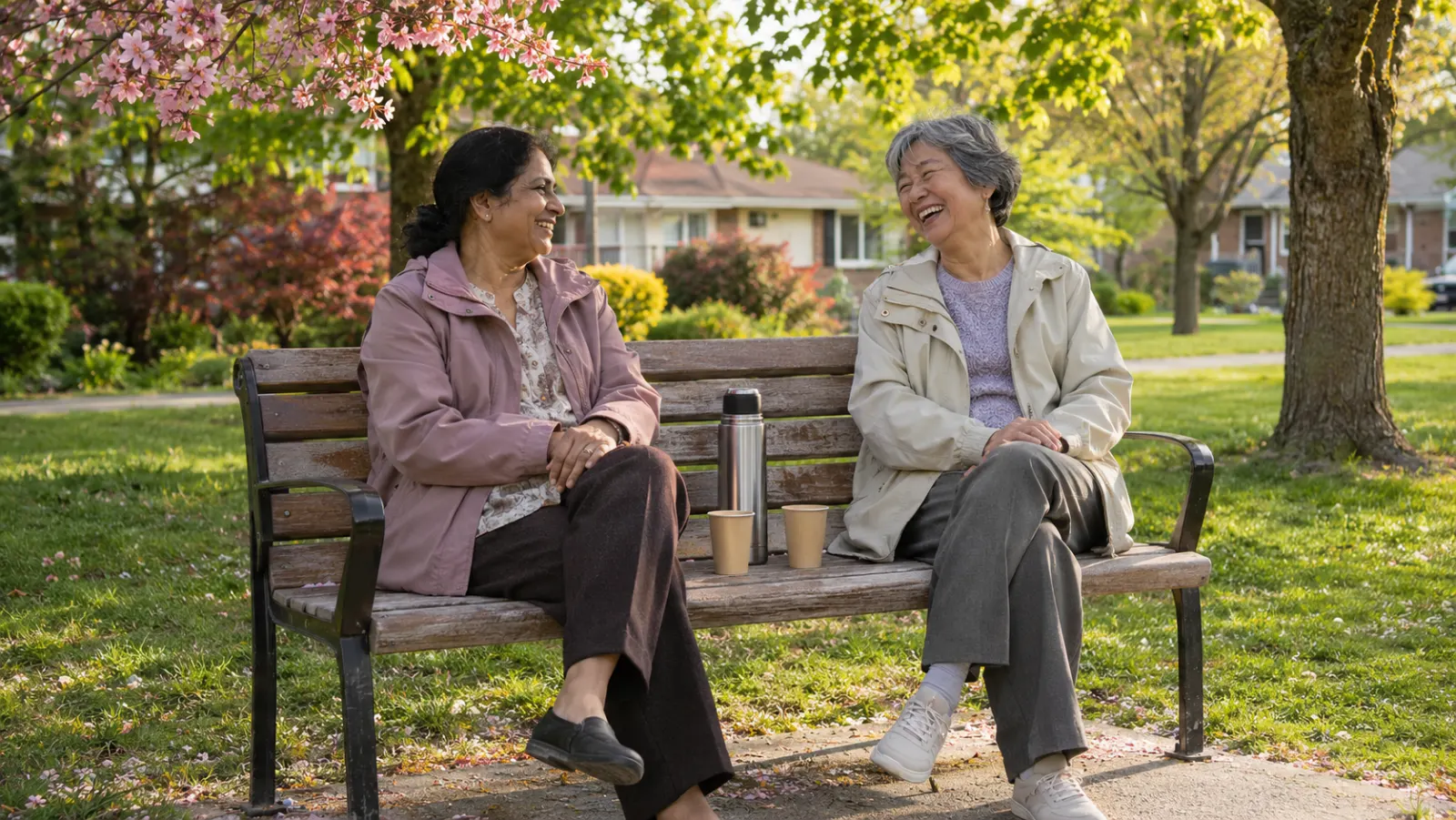
- Pick one small step this week, such as calling an old friend, visiting the library, or sitting on a park bench where neighbours walk by.
- Say yes to invitations, even when it feels easier to stay home.
- Tell your family how you feel. Many children and grandchildren have no idea and would want to help.
- Mention it to your doctor. It is a real part of your health.
When to seek urgent help
Loneliness can sometimes slide into depression or thoughts that life is not worth living. If you or an older adult you care about is having thoughts of suicide, call or text 988, the Suicide Crisis Helpline, at any time. If someone is in immediate danger, or you find a senior who is confused, unable to get up, or seriously unwell, call 911.
Staying connected with HealthSmart Medical in Scarborough
At HealthSmart Medical, 2425 Eglinton Ave. East, Unit 12, our clinicians see many older adults and their families. We can look at the health problems that make it harder to stay social, talk through mood and memory concerns, and help families find a path forward. An annual physical exam is also a good time to raise questions about loneliness, mobility, and day-to-day life, along with the usual checks.
Call 416-757-7117 or book online. For seniors in Scarborough, staying connected is not a luxury. It is one of the quiet foundations of a long and healthy life.
This article is for general information and is not a substitute for medical advice. If you have severe or worsening symptoms, call 911 or go to the nearest emergency department.