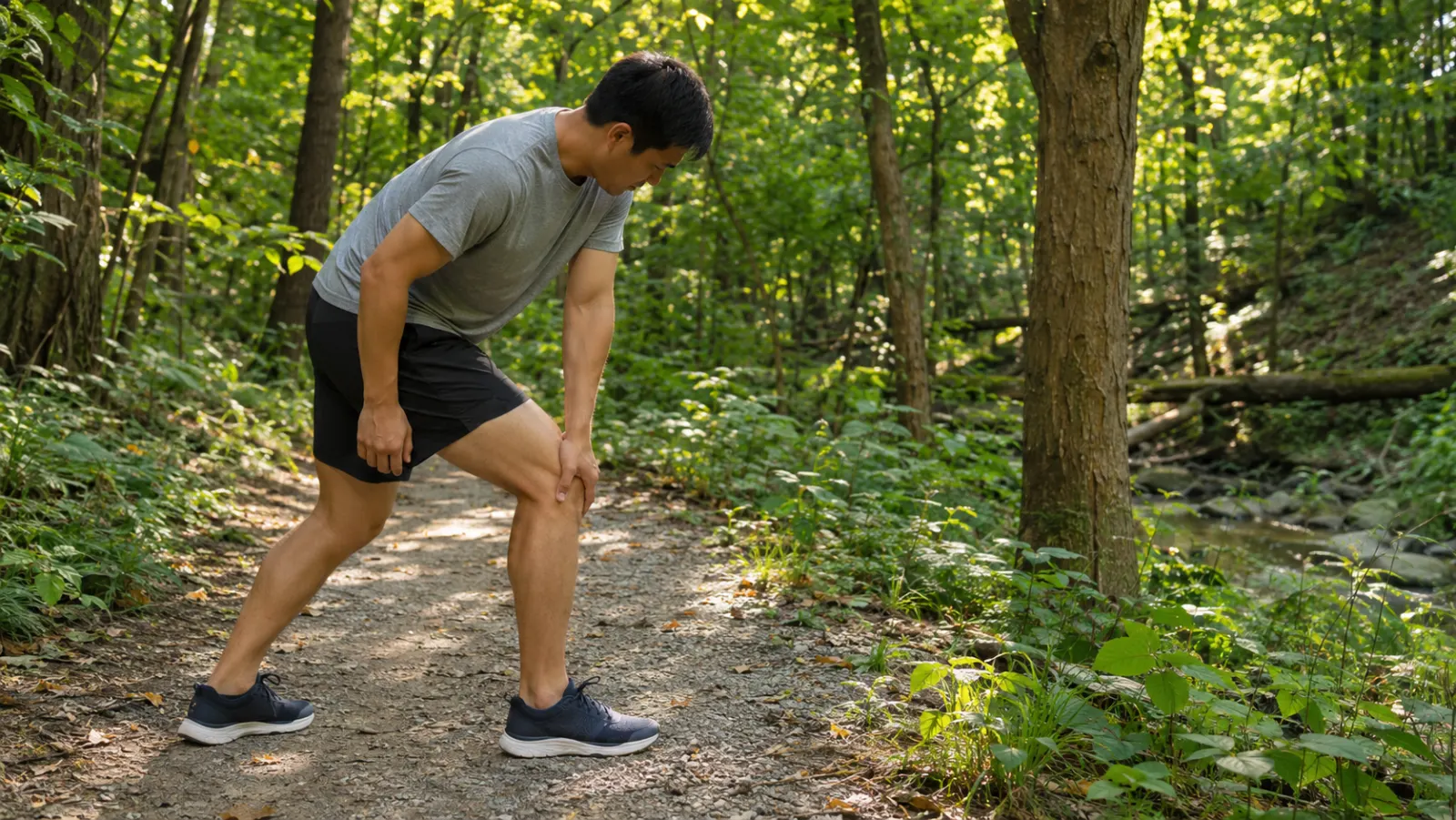
Knees do not get much thanks until they start complaining. Then they seem to have opinions about everything: the steep path down to the lake, the stairs to a third-floor walk-up, the last kilometre of a Sunday run, kneeling to scrub a floor, or standing up after a long movie. One day the joint you never think about becomes the joint you think about constantly.
Knee pain is one of the most common reasons people of all ages see a doctor, and it has a wide range of causes. A teenager’s sore knee after basketball season, a new runner’s ache behind the kneecap, a tile setter’s swollen knee after a week on the floor and a grandparent’s stiff knee in the morning are usually very different problems with very different solutions. The good news is that many of them respond well to simple, practical changes.
Late summer is peak season for knee complaints in our clinic. People have been more active, running and cycling along the waterfront and through the ravines, playing in summer leagues, tackling home projects before the weather turns, and in some cases doing far more than their knees were prepared for. This guide is organized around the situations we see most often in Scarborough, followed by what to do about swelling, which injuries need a closer look, and when to get help urgently.
A little anatomy goes a long way
The knee is a hinge joint where the thigh bone meets the shin bone, with the kneecap gliding in a groove at the front. Two rubbery, C-shaped cushions called the menisci sit between the bones and absorb load. Four main ligaments hold the joint together: two on the sides and two crossing in the middle, including the well-known anterior cruciate ligament (ACL). Powerful muscles, especially the quadriceps at the front of the thigh, control and protect the knee, and small fluid-filled sacs called bursae reduce friction around it.
Where the pain sits often gives a clue to what is involved:
- Front of the knee, around or behind the kneecap: often related to the kneecap joint or the tendon below it
- Inner or outer side: may involve a ligament, a meniscus, or arthritis in that part of the joint
- Behind the knee: sometimes a fluid-filled swelling called a Baker’s cyst, or a hamstring or calf strain
- Over the front of the kneecap, with a soft swelling: often bursitis
If you run or play sports
Runner’s knee
Patellofemoral pain, often called runner’s knee, is one of the most common causes of knee pain in active people, particularly teens and younger adults. It causes a dull ache around or behind the kneecap that is typically worse with running, squatting, going down stairs or hills, or sitting for a long time with the knees bent (sometimes called the “movie-goer’s sign”).
It usually reflects the kneecap joint being loaded more than it can currently tolerate, rather than damage. Common triggers include ramping up mileage too quickly, adding hills, switching to a new training program, or returning to sport after a break. Weak hip and thigh muscles are often part of the picture.
What helps:
- Reduce, rather than stop, the aggravating activity; for example, shorter or flatter runs, or cycling and swimming for a while
- Strengthen the quadriceps and the muscles around the hip, gradually over weeks
- Increase training slowly once pain settles, rather than jumping back to your previous distance
- Check your shoes, and consider whether they are worn out
Pain on the outer side: the IT band
Runners and cyclists sometimes develop pain on the outside of the knee that starts at a predictable point in a run and gets sharper with each kilometre. This is often iliotibial band syndrome. It also tends to respond to load management, hip strengthening and a gradual return, and downhill running is a common trigger.
Tendon pain below the kneecap
Jumping sports such as basketball and volleyball can irritate the patellar tendon, causing pain just below the kneecap. Growing children and teens who play a lot of sport may develop a tender bump just below the knee, called Osgood-Schlatter disease, which is related to growth and usually settles as they mature. A sports physical before a new season is a good time to raise any recurring aches in young athletes.
If you kneel for work, worship or chores
Flooring installers, tile setters, plumbers, cleaners, gardeners, mechanics and childcare workers spend long hours on their knees. So do many people at home: scrubbing floors, playing with toddlers on the carpet, or kneeling or sitting on the floor for prayer or family meals, as is common in many of the cultures that make Scarborough home.
Kneecap bursitis
Repeated pressure on the front of the knee can irritate the bursa that sits over the kneecap, causing a soft, sometimes squishy swelling right on the front of the knee. It has the old-fashioned name “housemaid’s knee.” The knee often still bends reasonably well, but kneeling becomes uncomfortable.
Most cases settle with avoiding direct pressure, ice, and protecting the knee. However, if the swelling becomes hot, red and very tender, especially with fever or a break in the skin over the knee, the bursa may be infected and you should be seen promptly.
Protecting your knees when you kneel
- Use good-quality knee pads or a thick kneeling cushion, and replace them when they flatten
- Take breaks and change position frequently rather than kneeling for long stretches
- Use a low stool or a long-handled tool where possible
- Kneel on one knee at a time and alternate sides
If your knee pain is related to your job, mention it to your employer, and talk to your doctor about modified duties. Our WSIB assessments can help document a work-related injury.
If you twisted it or took a hit
Sudden knee injuries are common in soccer, basketball, cricket, skiing and even everyday slips, such as stepping awkwardly off a curb.
Ligament injuries
A sudden change of direction or awkward landing can sprain or tear a ligament. With an ACL injury, people often describe a “pop,” followed by swelling within a few hours and a feeling that the knee is unstable or gives way. Side ligament sprains, often from a blow to the outside of the knee, cause pain on the inner or outer side.
Meniscus tears
A twist with the foot planted can tear a meniscus in younger people. In older adults, the meniscus can tear with very little force, such as getting up from a squat. Symptoms include pain on one side of the joint, swelling that develops more slowly over a day or so, and sometimes catching or locking, where the knee gets stuck and will not straighten fully.
First steps after a knee injury
For the first couple of days:
- Protect the knee and avoid activities that cause sharp pain, but keep gentle movement going
- Use ice wrapped in a cloth for about 15 to 20 minutes at a time, several times a day
- A compression sleeve and keeping the leg elevated can help control swelling
- Use crutches if it is too painful to walk normally, and get assessed
Getting a significant knee injury assessed early matters, because some ligament and meniscus injuries do better with timely specialist input.
Does it need an X-ray?
Not every injured knee needs an X-ray. Doctors use well-established guidelines to decide, considering things like age, whether you could take a few steps right after the injury and in the clinic, whether you can bend the knee, and where the bone is tender. Our clinic does not do imaging on site, but if your clinician feels it is needed, we can arrange a diagnostic imaging referral. An MRI is sometimes useful for suspected ligament or meniscus injuries, usually when the result would change the treatment plan.
If your knees are stiff and achy with age
Osteoarthritis of the knee is extremely common as we age, and is a frequent cause of pain on stairs, stiffness after rest and swelling after a busy day. We have covered arthritis in more depth elsewhere on our blog, so here is the headline: regular exercise, especially strengthening the thigh muscles, is one of the most effective treatments, and losing even a modest amount of weight, if you carry extra, can noticeably reduce knee load. Your family doctor can help with a long-term plan.
Making sense of a swollen knee
A swollen knee always deserves attention, but the speed and pattern of swelling help sort out the cause.
- Swelling within minutes to a few hours of an injury suggests bleeding into the joint, which can happen with an ACL tear or fracture. Get assessed soon.
- Swelling that builds over a day or so after a twist is more typical of a meniscus injury.
- Swelling after activity that comes and goes is common with osteoarthritis.
- A soft swelling on the front of the kneecap is often bursitis.
- A swelling behind the knee may be a Baker’s cyst, usually linked to another knee problem. If it bursts, it can cause calf pain and swelling that looks very similar to a blood clot, so it needs to be checked.
- A hot, red, very painful swollen knee with no injury may be gout, pseudogout or a joint infection. A joint infection is an emergency.
When knee pain needs urgent care
Go to the nearest emergency department, or call 911 when appropriate, if you have:
- A hot, red, swollen, very painful knee, especially with fever or feeling unwell. A joint infection can damage the knee quickly.
- An obvious deformity, a kneecap that has moved out of place and stayed there, or an inability to bear any weight after an injury
- A knee that is locked and cannot be straightened
- Calf pain, swelling, warmth or redness in the leg, particularly after a long flight, surgery or a period of immobility. This can be a blood clot (deep vein thrombosis). Sudden shortness of breath or chest pain along with these signs needs a 911 call.
- Numbness, coldness or a pale or bluish foot after a knee injury
When to book a regular visit
See a doctor if:
- Knee pain has not improved after two or three weeks of sensible home care
- Your knee gives way, catches or feels unstable
- Swelling keeps coming back
- Pain is waking you at night or interfering with work or daily activities
- You are an older adult with new knee pain after a fall
At the appointment, your clinician will ask how the pain started, what makes it better or worse, and about your activities and work. They will examine both knees, checking movement, swelling, the ligaments and menisci, and your hips, since hip problems can cause pain felt in the knee. Many people leave with a home exercise plan, advice on activity changes and, where appropriate, a recommendation for physiotherapy. If an injury looks significant or pain is not improving, your doctor may suggest a specialist referral.
Keeping your knees going this fall in Scarborough
Knee pain can make you nervous about moving, but in most cases, the right kind of movement is exactly what helps. Build activity gradually, strengthen the muscles that protect the joint, protect your knees if you kneel a lot, and take injuries and swelling seriously.
If your knee is sore, swollen or not behaving the way it should, HealthSmart Medical can help you figure out why and plan your next steps, whether you live, work or run in Scarborough. Visit our walk-in clinic at 2425 Eglinton Ave. East, Unit 12, call 416-757-7117, or book online for an appointment.
This article is for general information and is not a substitute for medical advice. If you have severe or worsening symptoms, call 911 or go to the nearest emergency department.