“I’m just tired.” It might be the most common phrase in any family doctor’s office, and it is easy to see why. Between long shifts, kids, a commute across the city, and caring for older parents, almost everyone in Scarborough has a reason to feel worn out. So when the exhaustion goes on for months, many people shrug it off as just life.
Sometimes, though, tiredness has a specific, measurable, and very fixable cause. Iron deficiency is one of the most common nutritional problems in the world, and in Canada it is especially common in women with periods, during pregnancy, in young children, and in people who eat little or no meat. Left alone, it can progress to iron deficiency anemia, which leaves the body short of oxygen-carrying red blood cells.
This article explains what iron does, how to recognize when you might be low, how it is diagnosed, and how to take iron supplements in a way that works and does not upset your stomach. It is general information. If you suspect low iron, please get tested rather than starting high-dose supplements on your own.
Iron, hemoglobin, and anemia: sorting out the terms
Iron is a mineral your body uses to make hemoglobin, the protein in red blood cells that carries oxygen from your lungs to the rest of your body. The body also stores iron, mainly as a protein called ferritin.
These terms are easy to mix up, so here is the simple version:
- Iron deficiency means your iron stores are running low. Your hemoglobin may still be normal at this stage, but you can already have symptoms.
- Anemia means your hemoglobin or red blood cell count is below normal. There are many causes of anemia, and iron deficiency is the most common.
- Iron deficiency anemia is when low iron has gone on long enough that hemoglobin has dropped.
The distinction matters because some people are told their blood count is “fine” when their iron stores are actually depleted.
Signs you might be running low
Low iron often develops slowly, so the body adjusts and symptoms creep up unnoticed. Common signs include:
- Tiredness that does not improve with rest
- Feeling short of breath or noticing your heart pounding with activity that used to be easy, such as the stairs at a subway station
- Looking paler than usual, including inside the lower eyelids
- Headaches, dizziness, or light-headedness
- Feeling cold, particularly in the hands and feet
- Brittle or spoon-shaped nails
- Hair shedding more than usual
- Restless legs, especially in the evening
- Trouble concentrating, irritability, or low mood
- Cravings for ice, clay, starch, or other non-food items, called pica
Ice craving in particular is a surprisingly specific clue. If you find yourself chewing through a tray of ice cubes every day, mention it.
In children, low iron can show up as fussiness, poor appetite, slow weight gain, or delays in development. Toddlers who drink a lot of cow’s milk are a classic example, because milk is low in iron and can fill them up so they eat less iron-rich food.
Why does it happen?
Iron deficiency comes down to one of three things: not taking in enough, not absorbing enough, or losing more than you take in. Often it is a combination.
Heavy periods
This is the most common cause in people of reproductive age. Many people do not realize their periods are heavier than average, because heavy has always been normal for them. Signs that bleeding may be heavy include soaking through a pad or tampon every hour or two, needing to change overnight, passing large clots, bleeding for more than about seven days, or bleeding through clothes.
Heavy periods can have treatable causes, such as fibroids or hormone imbalances, and there are effective treatments. Correcting iron without addressing the bleeding is like filling a leaky bucket. Our women’s health visits can look at both.
Pregnancy
During pregnancy, the body’s iron needs rise sharply to support the growing baby and the increase in blood volume. Prenatal vitamins contain iron, but some people still need more. Iron levels are usually checked as part of early pregnancy blood work. If you are pregnant or planning a pregnancy, ask about this as part of prenatal care.
Vegetarian and vegan diets
Many families in Scarborough follow vegetarian diets for religious, cultural, or personal reasons, and a plant-based diet can be perfectly healthy. The catch is that iron from plants (non-heme iron) is less easily absorbed than iron from meat, fish, and poultry (heme iron). Tea with meals, which is common in many households, can reduce absorption further.
This does not mean vegetarians must be iron deficient. It just means planning matters more. We will come back to that below.
Blood loss you cannot see
Slow bleeding from the stomach or bowel can drain iron over months without obvious signs. Causes range from stomach ulcers and regular use of anti-inflammatory painkillers such as ibuprofen or naproxen, to polyps and, less commonly, bowel cancer. This is why iron deficiency in men, and in women after menopause, always needs to be investigated, often with further tests or a referral, rather than simply treated with pills.
Problems with absorption
Conditions such as celiac disease, previous weight-loss surgery, and long-term use of some stomach acid medications can reduce how much iron your body absorbs.
Frequent blood donation and endurance sport
Regular blood donors and long-distance runners can also become low over time. Blood donor services typically check hemoglobin before each donation, but ferritin can still be low.
How low iron is diagnosed
A simple blood test is the starting point. Depending on your symptoms, your clinician may order:
- Complete blood count (CBC): measures hemoglobin and the size of your red blood cells. In iron deficiency, cells are often smaller and paler than normal.
- Ferritin: reflects your iron stores. It is the most useful single test for iron deficiency. One caution: ferritin can be falsely normal or high during infection or inflammation.
- Other iron studies, such as transferrin saturation, when the picture is unclear.
- Tests for other causes, such as vitamin B12, folate, kidney function, thyroid function, or celiac screening.
We can arrange this through blood work requisitions. Most iron tests do not require fasting, but follow any instructions on your requisition.
Depending on your age, sex, and results, your clinician may also recommend checking for hidden bleeding, for instance with a stool test or a referral for further investigation.
Getting iron from food
For mild deficiency or prevention, food is a great foundation. Good sources include:
Heme iron (best absorbed)
- Beef, lamb, and goat
- Chicken and turkey, especially dark meat
- Fish and shellfish, including clams, mussels, and sardines
- Liver (limit if pregnant, as it is very high in vitamin A)
Non-heme iron (plant sources)
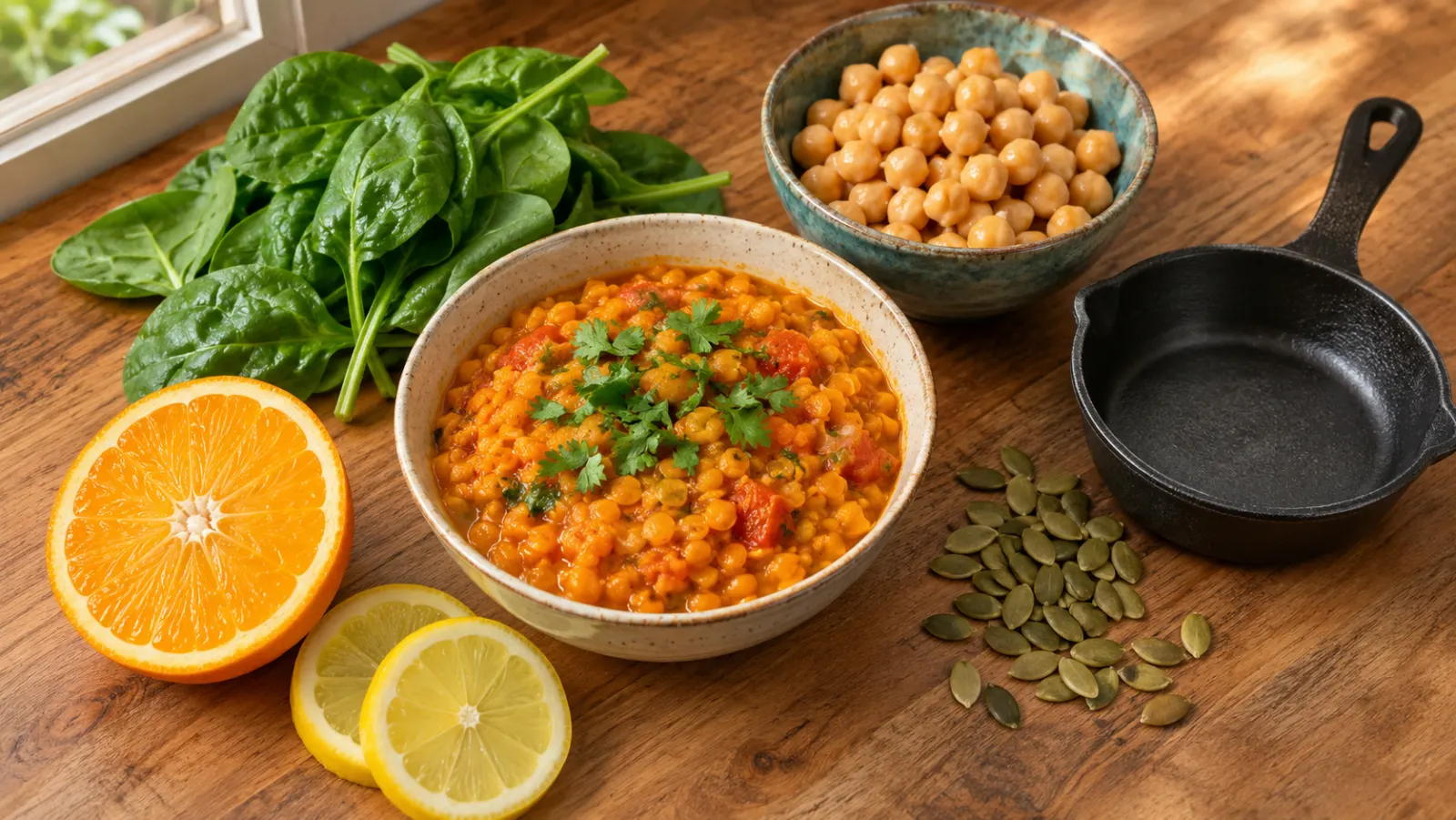
- Lentils, chickpeas, kidney beans, and black beans (think dal, chana, rajma, or Caribbean rice and peas)
- Tofu and tempeh
- Spinach, amaranth leaves, and other dark leafy greens
- Iron-fortified breakfast cereals and infant cereals
- Pumpkin seeds, sesame seeds, and cashews
- Dried apricots and raisins
Tricks that help absorption
- Pair plant iron with vitamin C. A squeeze of lemon on dal, tomatoes in a curry, peppers in a stir-fry, or an orange after a meal can significantly boost absorption.
- Move tea and coffee away from meals. Try having chai an hour or so before or after eating rather than with the meal.
- Separate calcium from iron-rich meals where practical, as calcium can compete with iron.
- Cooking in a cast iron pan may add small amounts of iron to food.
For many people with established deficiency, though, diet alone will not refill stores fast enough. That is where supplements come in.
Taking iron supplements the right way
Iron pills are inexpensive and effective, but they have a reputation for causing stomach trouble, and many people quit after a week. A few adjustments make a big difference.
What to expect
Common side effects include:
- Dark green or black stools. This is harmless and expected, though stools that are tarry, sticky, and foul-smelling are different and need attention (see the warning signs below).
- Constipation
- Nausea or stomach cramps
- A metallic taste
Tips for success
- Ask about every-other-day dosing. Some evidence suggests the body absorbs iron better when it is not given every single day, and it may cause fewer side effects. Your clinician will tell you which schedule suits you.
- Take it on an empty stomach if you can, with water or a little orange juice. If that causes nausea, taking it with a small amount of food is better than not taking it at all.
- Avoid taking iron with tea, coffee, milk, or antacids.
- Keep it apart from certain medications such as thyroid pills and some antibiotics. Your pharmacist can help with timing.
- Manage constipation with fluids, fibre, and movement, and ask your pharmacist about a gentle stool softener if needed.
- Try a different form if one does not agree with you. Several types of iron are available, and some people tolerate one better than another.
How long does it take?
Many people start to feel better within a few weeks, and hemoglobin usually begins to rise within a month or so. Refilling your stores takes longer, often a few months, so do not stop as soon as you feel better. Your clinician will usually recheck your blood work to confirm things are moving in the right direction.
If pills do not work, are not tolerated, or the deficiency is severe, intravenous iron may be considered. This is given in a hospital or specialized clinic, and your doctor can discuss whether a referral is appropriate.
A safety warning for families
Iron supplements are one of the most dangerous medications for small children if swallowed accidentally. Adult iron tablets can look like candy. Store them up high in a child-resistant container, and if a child swallows any, call the Ontario Poison Centre or 911 right away, even if they seem fine.
When to seek urgent care
Call 911 or go to the emergency department if you have:
- Chest pain or pressure
- Severe shortness of breath, or fainting
- Vomiting blood or material that looks like coffee grounds
- Black, tarry stools or a large amount of blood in the stool
- Very heavy vaginal bleeding with dizziness or a racing heart
Book a prompt appointment if you notice unexplained weight loss, a change in bowel habits, ongoing abdominal pain, or difficulty swallowing alongside signs of low iron.
Find out what is behind your fatigue in Scarborough
Feeling tired all the time is not something you simply have to accept. A conversation and a simple blood test can often tell you whether low iron is part of the story, and if it is, the fix is usually straightforward. HealthSmart Medical is at 2425 Eglinton Ave. East, Unit 12, and our clinicians can review your symptoms, order the right tests, and follow up on your results. Call 416-757-7117 or book online to get your energy back on track in Scarborough.
This article is for general information and is not a substitute for medical advice. If you have severe or worsening symptoms, call 911 or go to the nearest emergency department.