It usually starts with a twinge. You notice that the side of your big toe feels tender when you pull on a shoe, or that the bedsheet pressing on it at night is oddly uncomfortable. A few days later the skin along the nail is red and puffy, and every step in your work boots makes you wince. By the time some people come in to see a doctor, they have been limping for weeks.
An ingrown toenail is one of those problems that sounds small until you have one. It happens when the edge of a nail, most often on the big toe, curves or grows into the soft skin beside it. The skin reacts with pain, swelling and redness, and if bacteria get in, it can become infected. The good news is that most ingrown toenails can be treated, and many can be prevented with a few simple habits.
Early summer is a common time for them to flare up. Sandals and bare feet expose toes to stubbing, sports and day camps keep feet sweaty in sneakers, and people tend to trim their nails more aggressively before showing them off. Here is what families in Scarborough should know about why ingrown toenails happen, what you can safely do at home, when to see a doctor, and why people with diabetes need to take extra care.
How an ingrown toenail develops
Your toenail grows forward from a hidden area at its base called the nail matrix. Normally, the edges of the nail grow straight out alongside the skin folds on either side. When the edge digs into that skin fold instead, the body treats it like a splinter. The area becomes inflamed, and over time extra swollen, tender tissue can build up over the nail edge.
Doctors often think of ingrown toenails in stages:
- Mild: redness, slight swelling and tenderness along the side of the nail
- Moderate: more swelling, pain with walking, and sometimes a little drainage or pus, suggesting infection
- Advanced: ongoing infection, a lump of raw, overgrown tissue at the edge of the nail, and pain that is affecting daily life
The earlier you catch it, the simpler the treatment usually is.
Common causes
Many people who get one ingrown toenail go on to get another, so knowing the cause helps prevent a repeat.
Cutting nails the wrong way
This is the most common culprit. Cutting toenails too short, or rounding the corners down into the skin, leaves a sharp spike of nail that can grow into the side. Picking or tearing nails rather than cutting them does the same.
Tight or narrow footwear
Shoes that squeeze the toes together press the skin against the nail edge. Pointed dress shoes, tight safety boots and children’s shoes that have quietly become too small are frequent offenders.
Injury
Stubbing a toe, dropping something heavy on it, or repeated pressure from running, soccer, dance or basketball can all damage the nail and change how it grows.
Nail shape and family history
Some people simply have nails that curve more sharply at the edges, and this often runs in families. Thickened nails from ageing or fungal infection can also press into the skin.
Sweaty feet
Feet that stay damp for long hours, as is common for teenagers in sports, warehouse workers in boots and anyone on long summer days, have softer skin that is easier for a nail edge to pierce.
What you can do at home for a mild ingrown toenail
If the toe is only mildly red and sore, without signs of infection, and you do not have diabetes or circulation problems, these steps often help.
Soak the foot
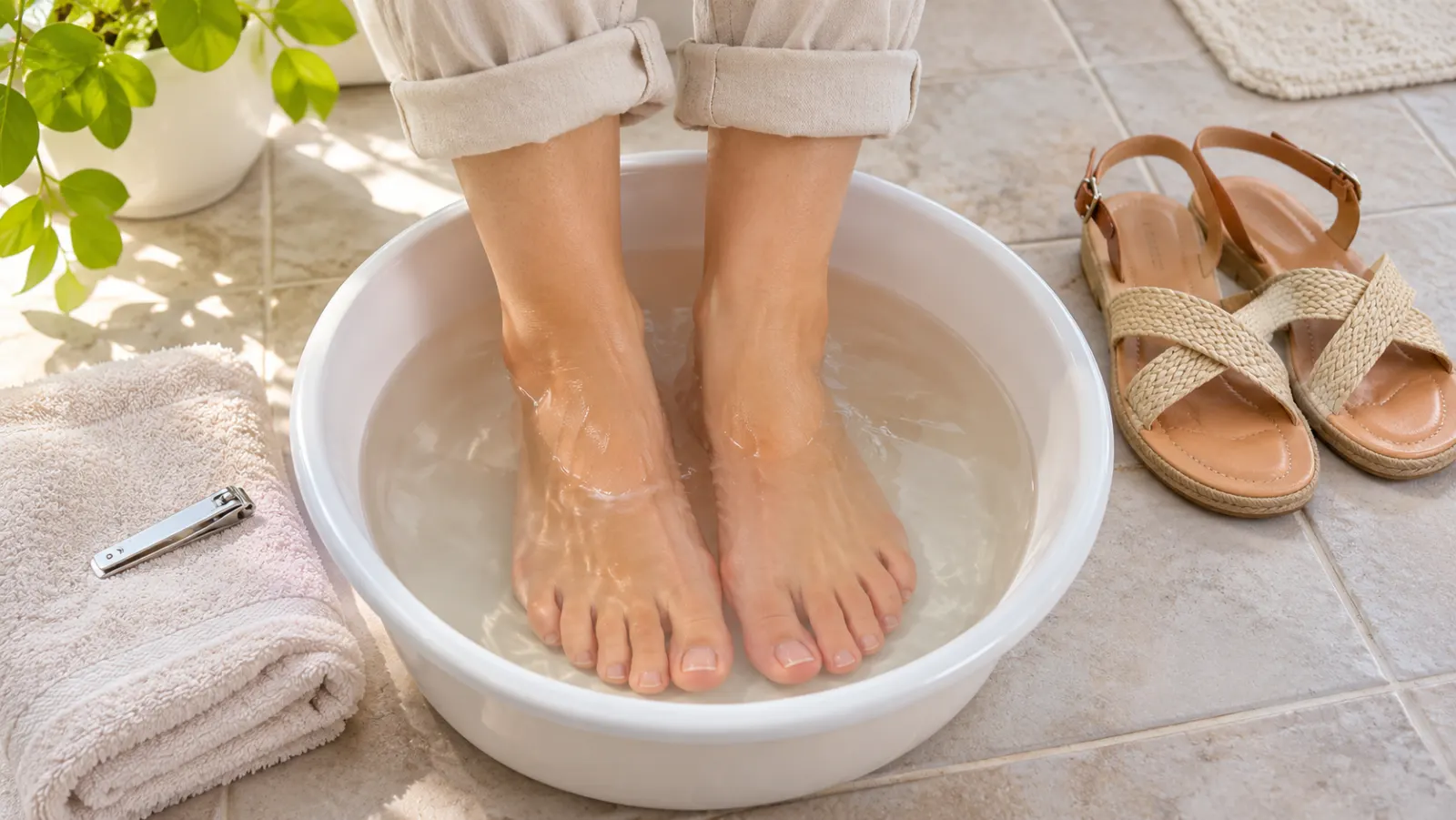
Soak the foot in warm water for 15 to 20 minutes, two or three times a day. This softens the skin and nail and eases discomfort. Some people add a little plain salt. Dry the foot thoroughly afterwards, including between the toes.
Gently lift the nail edge
After soaking, when the nail is soft, some people find it helps to slip a tiny wisp of clean cotton or a piece of dental floss under the corner of the nail to lift it slightly away from the skin. Change it daily. If this is very painful, stop and have it looked at instead.
Give the toe room
- Wear open-toed sandals or roomy shoes while it heals.
- Avoid tight socks and stockings.
- Take a break from activities that put pressure on the toe, such as running or kicking sports.
Ease the pain
Over-the-counter pain relievers can help. Check with your pharmacist that they are safe with your other medications and health conditions.
What not to do
It is tempting to grab the clippers and dig out the offending piece of nail, sometimes called “bathroom surgery.” Please do not. Cutting deep into the corner often leaves another sharp edge, can push bacteria into the skin, and frequently makes the problem worse. Avoid cutting a “V” into the middle of the nail too; this old remedy does not work.
If a mild ingrown toenail is not clearly improving after a few days of home care, it is time to have it checked.
Signs of infection
An infected ingrown toenail needs medical attention. See a doctor if you notice:
- Increasing redness or swelling spreading away from the nail
- Pus or cloudy drainage
- Warmth and throbbing pain
- A raw, shiny lump of tissue growing over the nail edge
- An unpleasant smell
Seek urgent care or go to the emergency department if you have red streaks running up the foot or leg, fever or chills, rapidly spreading redness, or if the toe turns pale, blue or black. These can be signs of a spreading infection or poor blood supply.
If you have diabetes or circulation problems
This is the most important section for many readers. If you live with diabetes, peripheral artery disease or another condition that affects circulation or nerve sensation in your feet, an ingrown toenail is not a minor problem.
Reduced sensation means you may not feel how bad the toe has become, and reduced blood flow makes healing slower and infection more dangerous. A small break in the skin can turn into a foot ulcer or a serious infection surprisingly quickly.
If you have diabetes:
- Do not soak your feet for long periods, cut into the nail corners, or use over-the-counter corn or wart products on your toes without advice.
- See a doctor promptly, even if the toe only looks a little red.
- Check your feet every day, including between the toes and the sides of each nail. A mirror or a family member can help.
- Keep nails trimmed straight across, and if you have trouble seeing or reaching your feet, ask about professional foot care.
Regular foot checks are part of good diabetes management, and our clinicians can look at your feet at your next visit. The same caution applies if you have a weakened immune system, are on medications that suppress immunity, or have had poor wound healing in the past.
Ingrown toenails in children and teens
Kids and teenagers get ingrown toenails too, often from fast-growing feet in shoes that are a size too small, sports, or picking at their nails. Babies can sometimes develop mild ingrowing at the nail edges as well. Check your child’s shoe size at the start of summer and before the new school year, teach older kids to cut nails straight across, and have any red, swollen toe checked if it does not settle in a few days. Sweaty cleats and sneakers worn all day at camp are worth airing out each evening.
What a doctor can do
When you come in, the doctor will look at the toe, ask how long it has been bothering you, and check for signs of infection. They will also ask about diabetes, circulation problems, blood thinners and allergies, since these affect what treatment is safe.
For mild to moderate cases
Treatment may include showing you how to care for the nail at home, advice about footwear and nail trimming, and, if the toe is infected, a decision about whether antibiotics are needed. Antibiotics can help clear infection in the surrounding skin, but they do not fix the nail edge that caused the problem, so the ingrown portion often still needs attention.
Minor procedures
For a nail that keeps digging in, is infected, or keeps coming back, a minor procedure is often the most effective solution. In general terms, this usually involves numbing the toe with local freezing and then removing the narrow strip of nail that is growing into the skin. In some cases, the clinician may also treat the part of the nail matrix that produces that edge, so it is less likely to grow back the same way. The rest of the nail is left in place, and recovery is usually a matter of days to a couple of weeks with careful dressing changes.
HealthSmart Medical offers a range of minor procedures, and every visit starts with an assessment to decide what is safest for your situation. Whether a particular nail can be treated in clinic depends on the toe, infection, your health history and what is appropriate on the day, so please call ahead to ask. When a procedure is not the right fit in clinic, your doctor can discuss other options, including referral to a foot care professional such as a chiropodist or podiatrist.
Aftercare
If you do have a procedure, the aftercare matters as much as the procedure itself. You will usually be told how to keep the area clean, how often to change the dressing, when you can shower and return to sports, and what signs of infection to watch for. Our clinic can help with dressing changes and follow-up checks if needed, and minor wound care visits are available if healing is slow.
Preventing the next one
Once you have had an ingrown toenail, you will probably be keen never to have another. A few habits go a long way:
- Cut toenails straight across, level with the tip of the toe, and leave the corners visible rather than rounding them down.
- Use proper toenail clippers, cleaned before use, and trim after a shower or bath when nails are softer.
- Choose shoes with a roomy toe box, especially for work boots and children’s shoes.
- Wear protective footwear if your job involves heavy objects.
- Keep feet clean and dry, changing socks if they get sweaty and alternating shoes so they dry out.
- Be cautious at nail salons. Ask that toenails be cut straight across, and avoid having the corners cut back or dug out.
- Treat thickened or discoloured nails, which may be fungal, rather than ignoring them.
Book a toe check in Scarborough
A sore toe can make it surprisingly hard to work, walk or enjoy the summer. If home care is not helping, if you see signs of infection, or if you have diabetes, please do not wait. The team at HealthSmart Medical, at 2425 Eglinton Ave. East, Unit 12, in Scarborough, can assess your toe and talk you through the next steps.
Call 416-757-7117 or book online. Most ingrown toenails get better with the right care, and the sooner you come in, the sooner you can get back to comfortable shoes.
This article is for general information and is not a substitute for medical advice. If you have severe or worsening symptoms, call 911 or go to the nearest emergency department.