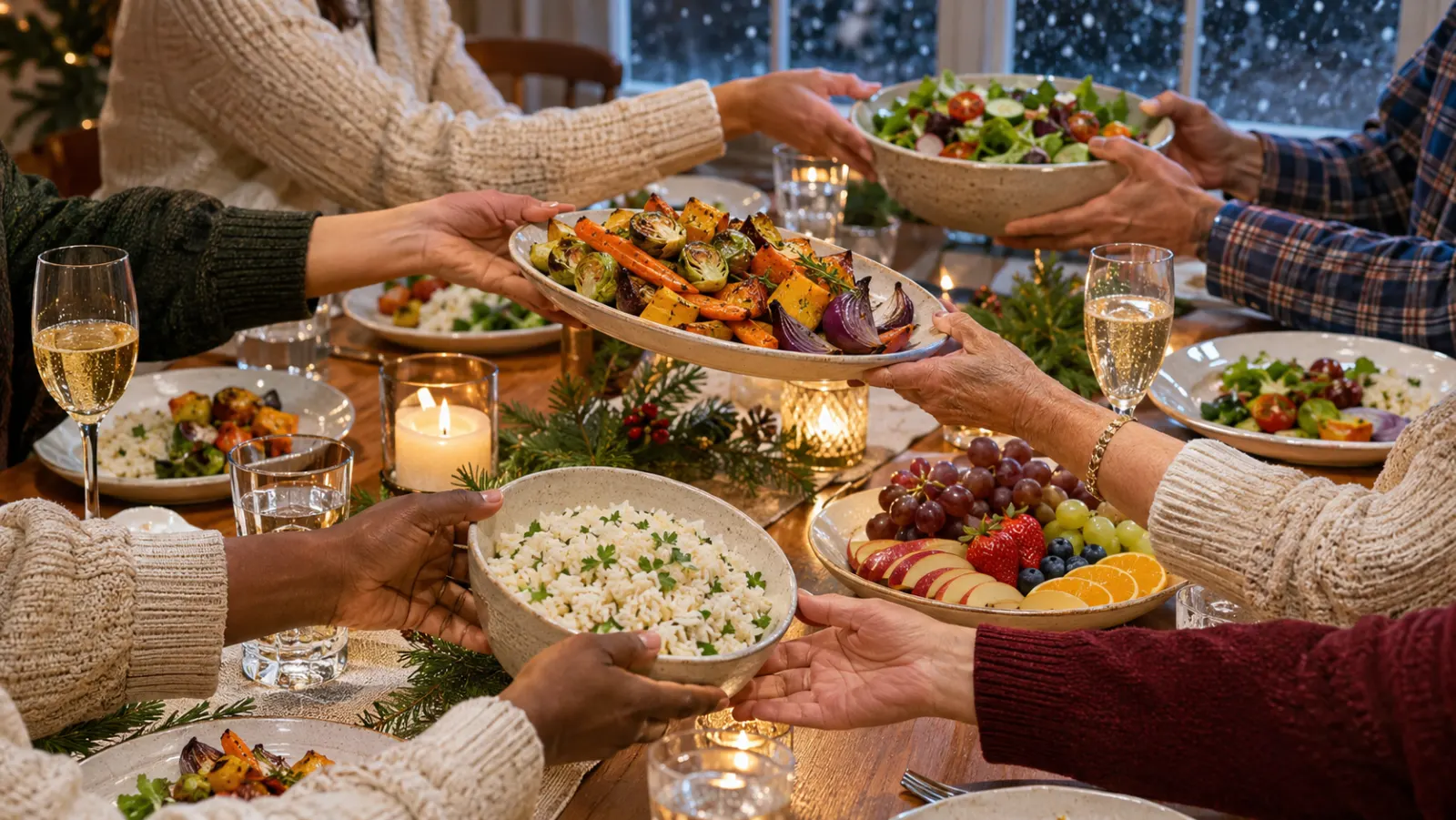
The last two weeks of December run on a different clock. Work winds down or ramps up, kids are home from school, relatives arrive from the airport, and the calendar fills with dinners, open houses, religious services and get-togethers in crowded living rooms. Across Scarborough, the season looks different from one home to the next, with Christmas, New Year’s and other celebrations shaped by dozens of cultures and traditions. What many of those gatherings share is food, lots of it, late nights, and a break from everyday routines.
For most people, that break is welcome and a little indulgence does no harm. But the holidays can also be the time when a prescription runs out on the one day nobody is open, when blood sugar or blood pressure creeps up after a week of rich meals, when sleep disappears, or when loneliness lands harder than at any other time of year. A bit of planning in mid-December makes it much easier to actually enjoy the season.
This guide covers the practical side of staying well over the holidays in Scarborough: medications and refills, eating with chronic conditions in mind, alcohol, sleep, stress and mood, and keeping holiday meals safe. It is general information, so follow any specific advice your own clinician has given you.
Before the holidays: sort out your medications
This is the single most useful thing you can do in the week before the holidays. Clinics, pharmacies and labs often run reduced or changed hours over statutory holidays, and many people only realize their prescription has no refills left when they reach for the last few pills.
A quick medication check
- Count what you have. Look at every regular medication, including inhalers, insulin, blood thinners, seizure medications, thyroid pills, and mental health medications. Will you have enough to get through the first week of January?
- Check your refills. Your pharmacy label shows how many refills remain. If there are none, contact your clinic well before the holidays to arrange a renewal.
- Call your pharmacy early. Ask about their holiday hours and whether your medication needs to be ordered in.
- Travelling? If you are visiting family elsewhere in Ontario, in another province, or overseas, bring enough medication for the whole trip plus a few extra days in case of delays, carried in your hand luggage in original labelled containers.
- Supplies count too. Glucose test strips, lancets, pen needles, spacers and blood pressure cuff batteries are easy to forget.
Ontario pharmacists can, in many situations, provide an emergency supply or renew certain prescriptions. Ask your pharmacist what is possible for your specific medication, but treat this as a safety net, not the plan.
Do not wait to find out your own clinic’s holiday schedule from a locked door. Check it ahead of time, and if you are a HealthSmart Medical patient, call us or check before your refill runs low. Virtual care may also be an option for straightforward renewals.
Taking medications on a holiday schedule
Late nights, sleeping in and big meals at unusual times can throw off a medication routine. Setting a phone alarm, using a weekly pill organizer, or linking pills to something you do every day, such as brushing your teeth, keeps doses on track. If you take medication that needs to be taken with food, such as some diabetes medications, ask your clinician or pharmacist how to handle irregular mealtimes.
Eating well without missing the feast
Holiday food is part of the joy and the culture of the season, from roast turkey and tourtière to biryani, jollof rice, tamales, pastries, sweets and every kind of dessert tray. The goal is not to avoid it. It is to enjoy it in a way that does not leave you feeling unwell for days.
If you live with diabetes or prediabetes
Large meals with lots of refined starches and sweets can push blood sugar high, and several days of that in a row add up. Some practical approaches:
- Keep your usual meal timing as much as possible, rather than skipping breakfast to “save up” for dinner, which can lead to overeating and unstable sugars.
- Fill half your plate with vegetables or salad first, then add protein, then a smaller portion of rice, potatoes, bread or pasta.
- Pick the sweets you love most rather than sampling everything on the table.
- Take a walk after the big meal. Even fifteen minutes can help lower the after-meal rise in blood sugar.
- Check your sugars more often than usual if you have a meter, especially if you use insulin or medications that can cause lows.
If your readings are much higher or lower than usual over the holidays, or you feel unwell, contact your clinician. Our diabetes management visits are a good place to review things in January.
If you have high blood pressure or heart disease
Holiday foods are often very salty: gravy, cured meats, cheese platters, pickles, chips and many restaurant and takeout dishes. Salt can raise blood pressure and cause fluid retention, which is especially important for people with heart failure.
- Go easy on salty snacks and sauces, and taste before adding salt at the table.
- Keep taking your blood pressure medication on time.
- If you monitor at home, keep checking through the holidays.
- If you have heart failure and notice rapid weight gain, swollen ankles or more shortness of breath, contact your clinician promptly.
Our high blood pressure management service can help you look at your numbers once things settle down.
Heartburn and digestion
Large, late meals, rich foods and alcohol are common heartburn triggers. Eating smaller portions, finishing meals a few hours before lying down, and going easy on alcohol, coffee and very fatty foods can help.
Alcohol: lighter is better
Holiday parties often revolve around drinks, and it is easy to drink far more than you intended over a few weeks. Current Canadian guidance on alcohol and health makes it clear that drinking less is better for health, and that there is no level of drinking that is entirely risk-free.
Ideas for a lighter holiday season:
- Alternate alcoholic drinks with water or sparkling water.
- Eat before and while drinking.
- Set a limit before the party starts and tell a friend.
- Explore non-alcoholic drinks; many are now widely available.
- Never drink and drive. Plan your ride home, use transit or stay over.
Alcohol can interact with many medications, including some for sleep, anxiety, pain, diabetes and seizures, and it can worsen mood the next day. If you are unsure whether alcohol is safe with your medications, ask your pharmacist.
If you find that the holidays bring up concerns about how much you are drinking, you are not alone, and a confidential conversation with a family doctor is a good first step.
Sleep: the first thing to go
Late nights, early mornings with excited kids, houseguests on the pull-out sofa and a few too many desserts can quickly add up to a sleep deficit. Poor sleep affects mood, appetite, blood sugar control and immunity.
- Try to keep your wake-up time fairly consistent, even if bedtime shifts.
- Limit caffeine in the afternoon and evening.
- Keep alcohol modest; it may help you fall asleep but disrupts sleep later in the night.
- Get outside for daylight in the morning when you can, even in the cold.
- If you are travelling across time zones to visit family, give yourself a few days to adjust.
Stress, grief and loneliness
The holidays are portrayed as a time of joy, but for many people they are also stressful, exhausting or painful. Hosting large family gatherings, financial pressure, family tensions and the sheer number of obligations can leave people depleted. Others feel the absence of someone who has died, or of family far away. Newcomers to Canada may be spending their first holiday season away from home, and older adults living alone may go days without a visitor.
Looking after yourself
- Lower the bar. A simpler meal, a smaller gathering or a store-bought dessert is fine.
- Share the work. In big families, hosting can fall on one or two people. Ask for help with cooking, cleaning and driving.
- Protect some downtime. A quiet walk, a nap, or an hour alone with a book counts as care.
- Stick to a budget. Financial stress can linger well into the new year.
- Make space for grief. It is okay to change traditions, light a candle, or talk about the person you miss.
Looking out for others
A phone call, an invitation, or dropping off a plate of food can mean a great deal to a neighbour, an older relative or a new co-worker who may be on their own. Faith communities and community centres across Scarborough often run holiday meals and events that welcome everyone.
When it is more than holiday blues
If low mood, hopelessness, anxiety or loss of interest last more than a couple of weeks, or start interfering with daily life, it is worth talking to a clinician. If you or someone you know is thinking about suicide, call or text 988, the Suicide Crisis Helpline, any time, or call 911 or go to the nearest emergency department if there is immediate danger.
Keeping holiday meals safe
Cooking for a crowd brings its own risks, especially with large roasts, buffets and dishes that sit out for hours.
- Thaw safely. Thaw a frozen turkey in the refrigerator, which can take several days for a large bird, or in cold water that is changed often. Do not thaw it on the counter.
- Cook thoroughly. Use a food thermometer. Health Canada recommends cooking whole poultry to an internal temperature of 82°C. Cooking stuffing separately, rather than inside the bird, is the safer choice.
- Keep it out of the danger zone. Bacteria grow quickly between 4°C and 60°C. Keep hot foods hot and cold foods cold, and do not leave dishes at room temperature for more than about two hours.
- Cool leftovers quickly. Divide large amounts into shallow containers and refrigerate promptly. Eat or freeze leftovers within a few days.
- Wash hands and surfaces often, and use separate cutting boards for raw meat and ready-to-eat foods.
- Cooks who are sick should step back. Someone with vomiting or diarrhea should not prepare food for others.
When to seek care over the holidays
Illness does not take holidays off, and neither should good judgment about where to go.
Call 911 or go to emergency for:
- Chest pain or pressure, or sudden shortness of breath
- Signs of stroke, such as facial drooping, arm weakness or trouble speaking
- Severe allergic reactions, including swelling of the lips or throat after eating
- Very high or very low blood sugar with confusion or drowsiness
- Serious injuries, such as from falls on ice or kitchen accidents with heavy bleeding
For less urgent concerns
Health811 offers free advice from a registered nurse by phone or online, at any hour. Your pharmacist can help with minor ailments and medication questions. For colds, minor infections, prescription renewals and other non-emergency concerns, a walk-in or same-day appointment can help once clinics are open.
A healthy start to the new year in Scarborough
The holidays are meant to be enjoyed, and staying well through them is mostly about a few small steps: refill early, keep medications on schedule, eat and drink with some balance, protect your sleep, and reach out when the season feels heavy. Those habits carry nicely into January.
If you need a prescription renewal before the holidays, or want to check in on your blood sugar, blood pressure or mood once they are over, HealthSmart Medical is at 2425 Eglinton Ave. East, Unit 12, in Scarborough. Call 416-757-7117 or book online.
This article is for general information and is not a substitute for medical advice. If you have severe or worsening symptoms, call 911 or go to the nearest emergency department.