You log into the lab portal on your phone while waiting for the bus, and there it is: a page of numbers with words like LDL, HDL, non-HDL, and triglycerides. A few of them are flagged in bold. Some have an “H” beside them. You have no idea whether this is a minor footnote or a serious problem, and the appointment to discuss it is not until next week.
High cholesterol is one of the most common things family doctors talk about with patients, and one of the most misunderstood. It almost never causes symptoms. You cannot feel it. Yet over decades, it contributes to the narrowing of arteries that leads to heart attacks and strokes. Because of that, the decision about what to do with a cholesterol result is rarely about the number alone. It is about your overall risk.
This article walks through how to read a lipid report in general terms, why LDL gets so much attention, how family history and background change the picture, what food can and cannot do, and the common myths about statins that keep people from taking a medication that might help them. It is written for adults in Scarborough who have just seen their results, or who have been avoiding the conversation for a while.
What cholesterol is, and why the body needs it
Cholesterol is a waxy, fat-like substance. Your body uses it to build cell walls, make certain hormones, and produce vitamin D and bile. Most of it is made by your own liver; the rest comes from food.
Cholesterol cannot travel through the blood on its own, so it is carried in particles called lipoproteins. The type of particle it travels in determines whether it tends to help or harm your arteries. That is why a lipid test reports several different numbers instead of just one.
Reading your lipid results
In Canada, results are reported in millimoles per litre (mmol/L). If you have seen numbers from another country in mg/dL, they will look very different, so do not compare them directly. The exact layout of a report varies between labs, but you will usually see the following.
Total cholesterol
This is the overall amount of cholesterol in your blood. On its own, it is not very useful, because it combines the helpful and less helpful types. Two people with the same total cholesterol can have very different risks.
LDL cholesterol
Low-density lipoprotein, often called “bad” cholesterol, carries cholesterol into the artery walls, where it can contribute to plaque. This is the number doctors usually focus on most, and the one most treatments aim to lower.
HDL cholesterol
High-density lipoprotein, often called “good” cholesterol, helps carry cholesterol away from the arteries. Higher levels are generally associated with lower risk, although medications that only raise HDL have not been shown to prevent heart disease. It is part of the picture, not a target to chase.
Non-HDL cholesterol
This is your total cholesterol minus HDL. It captures all the cholesterol carried in potentially harmful particles, including LDL and others. Canadian guidance increasingly uses non-HDL alongside LDL, and it has the advantage of being reliable even if you did not fast before the test.
Triglycerides
Triglycerides are a type of fat in the blood that rises after meals, with alcohol, and with excess sugar and refined carbohydrates. High levels are common in people with diabetes, prediabetes, fatty liver, or extra weight around the middle. Very high triglycerides can also cause inflammation of the pancreas, which is one reason they are monitored.
Do I need to fast?
Many people in Ontario no longer need to fast before a routine lipid test. In some situations, such as very high triglycerides, your doctor may ask you to fast. Follow the instructions on your requisition, and ask if you are unsure.
Why “normal” on the report may not mean normal for you
The reference ranges printed on a lab report are broad. A result that is not flagged might still be too high for someone who has had a heart attack or has diabetes, while a mildly flagged result might be acceptable in a young person with no other risk factors. This is why your doctor interprets the numbers in the context of your whole health rather than reading the flags.
How your doctor estimates overall risk
Before deciding on treatment, your doctor will usually estimate your chance of having a heart attack or stroke over the coming years. This takes into account things like:
- Age and sex
- Blood pressure, and whether it is treated
- Smoking
- Diabetes
- Your lipid numbers
- Kidney function
- Family history of early heart disease
- Any existing heart disease, stroke, or narrowed arteries
People who have already had a heart attack or stroke, or who have certain conditions such as diabetes with complications or chronic kidney disease, are usually considered higher risk and are often advised to take medication regardless of their exact cholesterol number.
Your doctor can confirm what current Canadian and Ontario guidelines recommend for how often you should be tested and what your personal target should be.
Family history and background
When it runs in the family
Some people have high cholesterol mainly because of their genes, regardless of diet. One inherited condition, familial hypercholesterolemia, causes very high LDL from birth and can lead to heart disease at a young age if untreated. Clues include:
- A very high LDL, especially in a young adult
- A parent, sibling, or grandparent who had a heart attack or stroke at a young age
- Several relatives on cholesterol medication from early adulthood
- Yellowish deposits on the eyelids or thickened tendons, particularly at the back of the ankle
If this sounds like your family, tell your doctor. It may affect how your results are interpreted, and other family members, including children, may benefit from being tested.
Lipoprotein(a)
Some guidelines suggest checking a blood marker called lipoprotein(a), usually once in a lifetime, because a high level is largely inherited and adds to cardiovascular risk. It may not be covered in every situation, so ask your doctor whether it makes sense for you and whether there is a cost.
Ethnic background
People of South Asian descent tend to develop heart disease at younger ages, often with a pattern of higher triglycerides, lower HDL, and more insulin resistance. Many Scarborough families have roots in India, Pakistan, Sri Lanka, Bangladesh, and the Caribbean, and these patterns are worth keeping in mind. If heart disease runs in your family, starting the conversation about cholesterol earlier is sensible.
What food can do
Diet has a real but sometimes modest effect on cholesterol. For some people it makes a large difference; for others, especially those with a strong genetic component, it is not enough on its own. Either way, eating well protects the heart in ways that go beyond the lipid numbers.
Foods that help
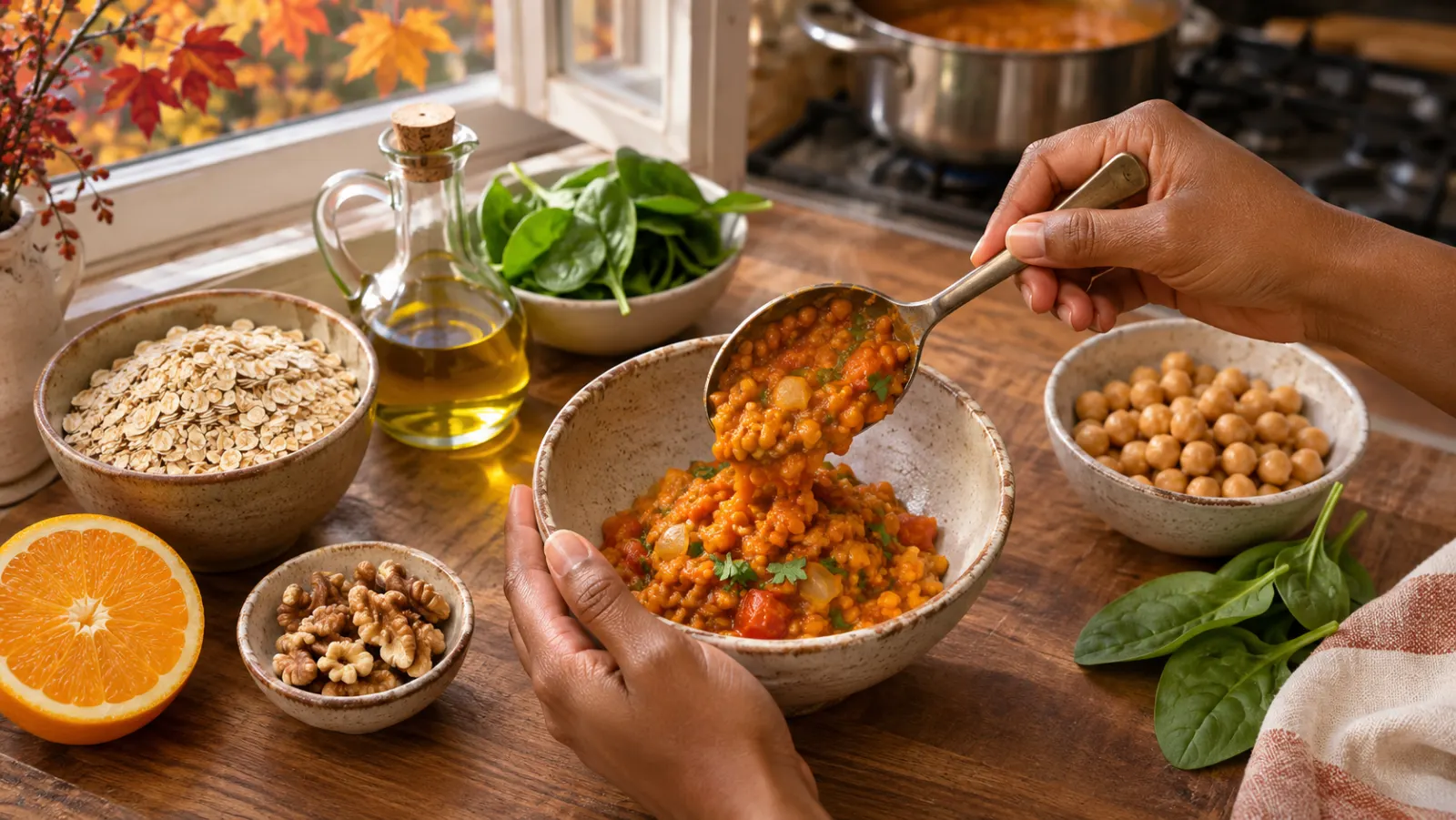
- Soluble fibre from oats, barley, beans, lentils, chickpeas, okra, eggplant, apples, and citrus can lower LDL. Dals, chana, rajma, and bean stews are excellent sources.
- Nuts such as almonds, walnuts, and pistachios, in a small handful.
- Plant proteins like tofu, edamame, and legumes in place of some red or processed meat.
- Fish, especially oily types like salmon, sardines, and mackerel, a couple of times a week.
- Unsaturated oils such as canola or olive oil instead of butter, ghee, lard, or coconut oil.
- Vegetables and fruit at most meals.
Things to cut back on
- Saturated fat from fatty meats, butter, ghee, cream, and many fried snacks
- Processed meats like sausages, bacon, and deli slices
- Deep-fried foods, especially from restaurants and takeout
- Sugary drinks, sweets, and refined carbohydrates, which raise triglycerides
- Alcohol, which can also raise triglycerides
You do not need to abandon the dishes you grew up with. Using less ghee in a curry, baking samosas instead of frying, choosing brown rice or adding lentils to rice, and keeping sweets for celebrations rather than every day all add up.
The rest of the lifestyle picture
Regular activity, a healthier weight, quitting smoking, and good sleep all improve your cardiovascular risk. Brisk walking on a crisp October afternoon, or laps of the mall once the weather turns, is a fine place to start.
Statins: separating myths from facts
Statins are the most commonly prescribed cholesterol medications. They work by reducing the amount of cholesterol the liver makes and have been studied extensively for decades. Still, many people hesitate to take them, often because of things they have heard from friends, relatives, or social media.
“Once I start, I can never stop.”
Statins work only while you take them, so for most people they are long term, in the same way blood pressure pills are. That is not because they are addictive. It is because the risk they reduce does not go away. If you ever want to stop, talk with your doctor first.
“My numbers are normal now, so I don’t need it.”
Your numbers are likely normal because of the medication. Stopping usually lets them rise back to where they were.
“Statins wreck your muscles.”
Muscle aches are the most common complaint, but studies suggest that many aches people blame on statins also happen on placebo. True statin-related muscle problems do occur, and a small number of people get more serious muscle injury, which is rare. If you develop aches, tell your doctor. Options include checking for other causes, trying a lower dose, a different statin, or a different schedule. Many people who stopped one statin tolerate another.
Seek medical attention promptly if you have severe muscle pain or weakness, especially with dark, cola-coloured urine.
“They damage your liver.”
Mild changes in liver blood tests can occur, but serious liver problems are uncommon. Your doctor may check liver tests when you start. In fact, many people with fatty liver can take statins safely.
“They cause diabetes.”
Statins can slightly raise blood sugar, and in people already close to the diabetes range, this may tip the result over sooner. For most people at risk of heart disease, the protection against heart attack and stroke outweighs this effect. Your doctor can monitor your blood sugar.
“I’d rather use something natural.”
Some supplements are marketed for cholesterol, but their effects are usually small and their quality varies. Some, such as red yeast rice, contain a substance chemically similar to a statin without the same quality control. Always tell your doctor and pharmacist about any supplements you take.
Other medications
Statins are not the only option. If you cannot take them, or if your LDL needs to come down further, there are other medicines that work in different ways. Your doctor can explain what might suit you.
When a cholesterol result is not the urgent issue
High cholesterol itself is not an emergency. But the heart disease it contributes to can be. Call 911 for:
- Chest pain, pressure, or tightness, especially if it spreads to the arm, neck, jaw, or back
- Shortness of breath, sweating, nausea, or lightheadedness with chest discomfort
- Sudden face drooping, arm weakness, or difficulty speaking
Do not wait to see whether it passes, and do not drive yourself to hospital.
Talking it through with us in Scarborough
A lipid report is just a starting point. What matters is how those numbers fit with the rest of your health and your family history, and what you are willing and able to change.
HealthSmart Medical in Scarborough offers cholesterol monitoring, blood work requisitions, and broader heart health monitoring to help you understand your risk and plan the next steps. If you have not had your cholesterol checked in a while, an annual physical exam is a good time to ask. You can book online or call 416-757-7117. We are at 2425 Eglinton Ave. East, Unit 12.
This article is for general information and is not a substitute for medical advice. If you have severe or worsening symptoms, call 911 or go to the nearest emergency department.