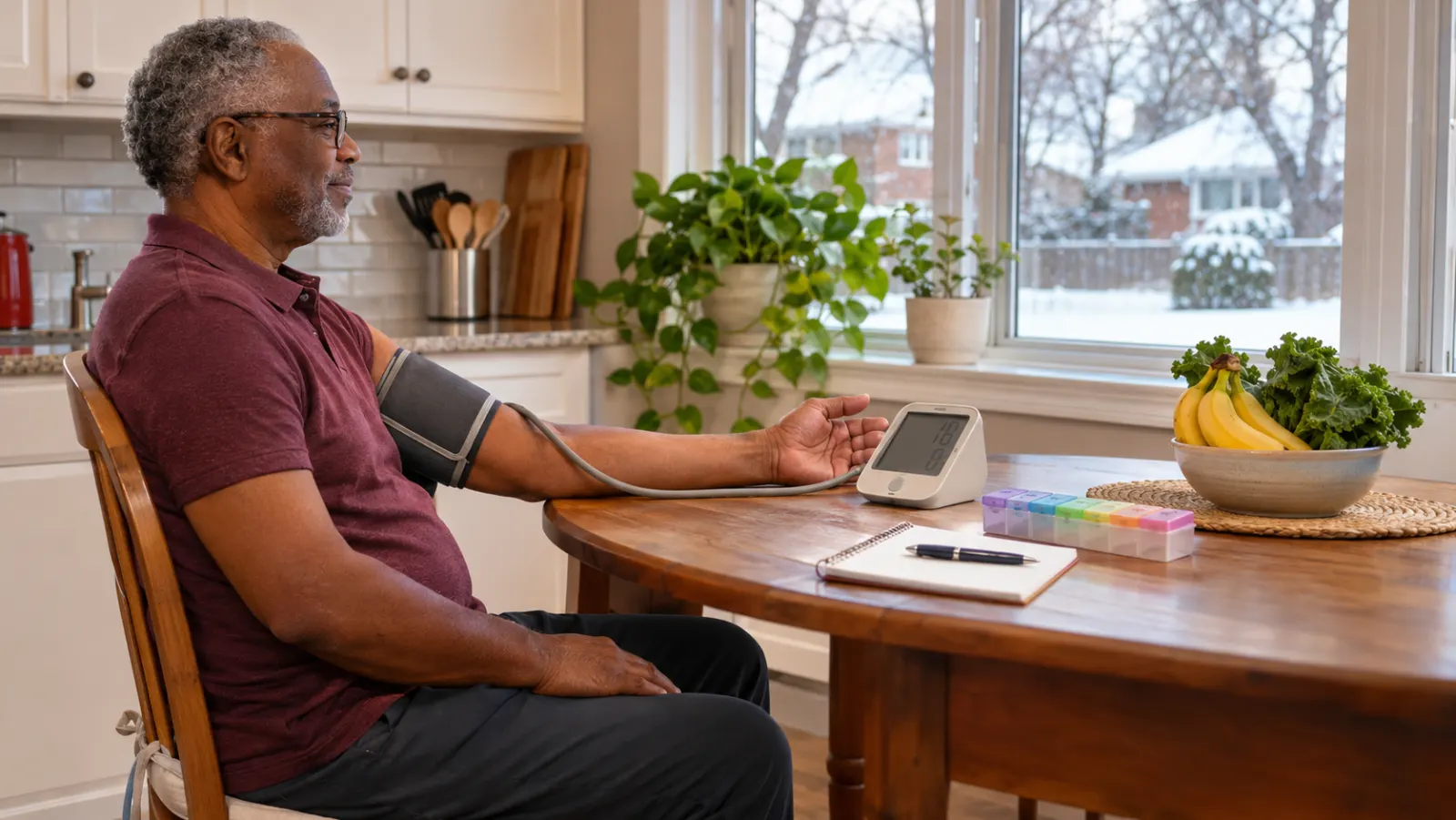
A man in his fifties comes in for a form to be filled out for work. He feels fine. He has no headaches, no chest pain, nothing unusual. The nurse wraps the cuff around his arm, and the reading is well above where it should be. A second reading a few minutes later is much the same. This is how high blood pressure is found more often than not: by accident, in someone who had no idea.
That is why hypertension is often called a silent condition. For years it can cause no symptoms at all while it puts steady strain on the heart, blood vessels, kidneys, eyes, and brain. Over time, that strain raises the risk of heart attack, stroke, heart failure, kidney disease, and dementia. The good news is that high blood pressure is easy to check, and it is one of the most treatable risk factors in medicine.
This article explains what the numbers mean, how to measure your blood pressure properly at home, what you can change in your daily life, and why taking medication consistently matters so much. It is written for people in Scarborough who have just been told their pressure is high, who have been on treatment for years, or who are looking after a parent or grandparent with the condition.
What the numbers mean
A blood pressure reading has two numbers, written like 128/82.
- The top number (systolic) is the pressure in your arteries when the heart beats.
- The bottom number (diastolic) is the pressure between beats, when the heart relaxes.
Both matter. Blood pressure naturally goes up and down through the day with activity, stress, caffeine, pain, and even talking. That is why a single high reading is not a diagnosis. Your clinician will look at several readings over time, ideally including some taken at home or with an automated device, before deciding whether you have hypertension.
Target numbers differ from person to person. Someone with diabetes, kidney disease, or a history of heart problems may be given a lower target than someone without these conditions. Ask your clinician what your personal goal is and write it down.
Who is at higher risk?
Anyone can develop high blood pressure, but risk rises with:
- Age
- A family history of hypertension, stroke, or early heart disease
- Diabetes or kidney disease
- Carrying extra weight, especially around the waist
- A diet high in salt and low in vegetables and fruit
- Physical inactivity
- Regular heavy alcohol use
- Smoking
- Sleep apnea
- Some medications, including certain decongestants and anti-inflammatory pain relievers
People of African, Caribbean, and South Asian descent tend to develop high blood pressure earlier and may have more complications from it. Many Scarborough households include people from these backgrounds, often living together across three generations. When one person in the family has hypertension, it is a good reason for the others to have their pressure checked too.
Measuring at home: getting it right
Home monitoring is one of the most useful tools for managing blood pressure. It shows how your pressure behaves in everyday life, away from the slight nervousness many people feel in a clinic, sometimes called “white coat” hypertension. It can also reveal the opposite pattern, where readings at the clinic look fine but are high at home.
The catch is that home readings are only helpful when they are taken properly. Small mistakes can push the number up or down by a surprising amount.
Choosing a monitor
Look for an automatic upper-arm cuff that has been validated for accuracy. Hypertension Canada maintains information on recommended devices, and a pharmacist can help you choose. Wrist and finger monitors are generally less reliable.
Cuff size matters more than people realize. A cuff that is too small gives falsely high readings; one that is too large may read too low. If you have a larger or smaller arm, ask about the right size. You are welcome to bring your monitor to an appointment so it can be checked against the clinic’s reading.
Preparing for a reading
For thirty minutes before you measure:
- Avoid caffeine, smoking, and exercise
- Empty your bladder
Then:
- Sit in a chair with your back supported and both feet flat on the floor. Do not cross your legs.
- Rest your arm on a table so the cuff is at the level of your heart.
- Put the cuff on bare skin, not over a sleeve.
- Sit quietly for five minutes without talking, checking your phone, or watching the news.
- Take two readings about a minute apart and record both.
When and how often
A common approach is to measure in the morning before medication and breakfast, and again in the evening, for about a week before a follow-up appointment. Your clinician may suggest a different schedule. Outside those weeks, many people do not need to check daily. Over-checking can create anxiety without improving care.
Keeping a log
Write down the date, time, both readings, and anything unusual (you had just come home from shovelling the driveway, or you missed a dose). Many monitors store readings, but a simple written log or a note on your phone is easy to bring to an appointment and discuss.
The salt problem is mostly hidden
When people hear “cut back on salt,” they picture the salt shaker. In reality, most sodium in a typical Canadian diet comes from processed and prepared foods: bread, deli meats, canned soups, sauces, frozen meals, restaurant dishes, and snacks. You may be eating far more than you think without ever touching the shaker.
Where sodium hides
- Instant noodles and their flavour packets
- Pickles, achar, and preserved vegetables
- Soy sauce, fish sauce, oyster sauce, and stock cubes
- Store-bought spice mixes and marinades
- Cheese, cured meats, and sausages
- Takeout, especially fried and saucy dishes
- Bread, roti, and baked goods made with salt or baking soda
None of these foods need to disappear forever. The idea is to notice where sodium is concentrated and make adjustments that fit your family’s cooking.
Practical swaps
- Read the Nutrition Facts table and compare the percent Daily Value for sodium between brands. Five percent or less is a little; fifteen percent or more is a lot.
- Use lemon, vinegar, garlic, ginger, herbs, and fresh chilies for flavour.
- Make your own masala, jerk, or curry blends without added salt.
- Rinse canned beans and vegetables.
- Cook a larger batch at home on the weekend so busy weeknights do not default to takeout.
- Ask for sauces on the side when eating out.
Taste buds adjust. After a few weeks of eating less salt, many people find that food they used to enjoy now tastes too salty.
Other lifestyle changes that genuinely help
Eat more plants
Eating patterns rich in vegetables, fruits, legumes, whole grains, nuts, and low-fat dairy, and lower in red and processed meats, are linked to lower blood pressure. Potassium from foods like bananas, beans, lentils, potatoes, and leafy greens helps balance the effect of sodium. People with kidney disease or those taking certain medications should check with their clinician before increasing potassium.
Move most days
Regular moderate activity, such as brisk walking, cycling, or swimming, can lower blood pressure. It does not have to be a gym membership. Getting off the bus a stop early, walking laps at Scarborough Town Centre during a cold February, or taking the stairs adds up. Aim for something you can keep doing.
Weight, alcohol, and smoking
Even a modest weight loss can bring readings down. Reducing alcohol helps, and quitting smoking lowers your overall heart and stroke risk significantly even though its effect on blood pressure numbers is more complicated.
Sleep and stress
Loud snoring, gasping at night, and daytime sleepiness can be signs of sleep apnea, which is linked to high blood pressure. Mention it. Chronic stress and poor sleep also affect blood pressure, and they are worth discussing as part of your plan.
Medication: why sticking with it matters
Lifestyle changes help everyone, but many people also need medication to reach their target. Needing pills is not a failure. Genetics and age play a large part in blood pressure, and some people simply need more help.
Common reasons people stop
- “I feel fine, so I don’t need it anymore.” Feeling well is the whole point; the medication is doing its job.
- “My readings are normal now.” Usually that is because of the medication. Stopping often lets the pressure climb back up.
- Side effects such as dizziness, swelling, a dry cough, or more frequent urination.
- Cost or running out between refills.
- Confusion about multiple pills, especially for older adults taking several medications.
Never stop or change a blood pressure medication on your own. If something is bothering you, tell your clinician. There are many different medications, and switching to another option or adjusting the dose often solves the problem.
Habits that make it easier
- Take your medication at the same time each day, linked to a routine like brushing your teeth.
- Use a weekly pill organizer.
- Set a phone alarm.
- Ask your pharmacist about blister packs if you take several medications.
- Request refills before you run out, especially before a long weekend or a trip.
- Bring every medication bottle to your appointment so your list stays accurate.
Families can help here. An adult child who fills a parent’s pill organizer every Sunday, or a grandchild who sets up phone reminders, can make a meaningful difference.
Warning signs that need urgent care
Very high blood pressure can occasionally cause a medical emergency. Call 911 if you have a high reading together with any of the following:
- Chest pain or pressure
- Severe shortness of breath
- Sudden weakness, numbness, or drooping on one side of the face or body
- Trouble speaking or understanding speech
- Sudden severe headache, confusion, or vision changes
Remember the signs of stroke with the word FAST: Face drooping, Arm weakness, Speech difficulty, Time to call 911. Do not drive yourself to hospital.
If you get an unexpectedly high reading at home but feel well, sit quietly for a few minutes and measure again. If it stays very high, contact your clinician promptly or call Health811 for advice.
Getting your blood pressure under control in Scarborough
High blood pressure is a long-term condition, but it is one you can manage well with good information, accurate readings, a few sustainable habits, and the right medication when it is needed. You do not have to work it out alone.
HealthSmart Medical provides high blood pressure management in Scarborough, along with heart health monitoring and cholesterol monitoring for patients whose overall cardiovascular risk needs attention. Bring your home log and your monitor to your next visit. You can book online or call 416-757-7117, and we are at 2425 Eglinton Ave. East, Unit 12.
This article is for general information and is not a substitute for medical advice. If you have severe or worsening symptoms, call 911 or go to the nearest emergency department.