Here is a scenario that clinicians hear about far too often. A woman in her third trimester has had a nagging headache for two days. Her feet and hands are puffy, but everyone tells her that is just pregnancy. She sees a few sparkly spots in her vision, puts it down to being tired, and decides to wait until her appointment next week. By the time she is checked, her blood pressure is dangerously high.
Most of the time, headaches and swelling in pregnancy are harmless. But sometimes they are the visible edge of preeclampsia, a pregnancy complication that can develop quickly and affect the liver, kidneys, brain, and placenta. The tricky part is that early preeclampsia often causes no symptoms at all, and when symptoms do appear, they are easy to dismiss as ordinary pregnancy discomforts.
This article is about learning to tell the difference. It covers the different kinds of high blood pressure in pregnancy, the warning signs that mean you should be seen urgently, how blood pressure is watched during pregnancy, and the often-overlooked risk of preeclampsia after the baby is born. It is general information for families in Scarborough and is not a replacement for care from your own prenatal provider.
The different kinds of high blood pressure in pregnancy
Blood pressure problems in pregnancy are not all the same. Your provider may use one of these terms:
- Chronic hypertension. High blood pressure that was present before pregnancy, or that is found in the first half of pregnancy. People already on blood pressure medication need a review early on, because some medicines are preferred in pregnancy and others should be switched. Do not stop your medication on your own.
- Gestational hypertension. High blood pressure that appears for the first time in the second half of pregnancy, without the other signs of preeclampsia. It needs close watching, because it can progress.
- Preeclampsia. High blood pressure in the second half of pregnancy along with signs that other organs are affected. This might show up as protein in the urine, abnormal blood tests for the liver, kidneys, or platelets, symptoms such as headache or vision changes, or concerns about the baby’s growth.
- Severe complications. Preeclampsia can occasionally lead to seizures (eclampsia), a serious condition involving the liver and blood clotting called HELLP syndrome, stroke, or separation of the placenta. These are emergencies, and they are the reason early recognition matters so much.
Who is more likely to develop preeclampsia
Preeclampsia can affect anyone, including people with no risk factors at all. That said, it is more common in people who:
- Had preeclampsia in a previous pregnancy
- Have chronic high blood pressure, diabetes, kidney disease, or certain autoimmune conditions
- Are pregnant for the first time
- Are carrying twins or more
- Conceived with fertility treatment
- Have a family history of preeclampsia
- Are older or have a higher body weight
If you have higher-risk factors, your provider may recommend low-dose aspirin, usually started fairly early in pregnancy, to lower the chance of developing preeclampsia. This is a decision to make with your provider, not something to start on your own, and the timing matters. If you think you might be in a higher-risk group and nobody has mentioned it, ask at your next visit.
Warning signs that need urgent care
These symptoms can be signs of preeclampsia, especially after about 20 weeks of pregnancy and in the weeks after delivery. Do not wait for your next scheduled appointment if you notice them.
Go to the hospital or call 911 right away for
- A severe headache that does not go away with rest, fluids, or acetaminophen, or a headache that is different from your usual headaches
- Vision changes, such as blurring, flashing lights, seeing spots, light sensitivity, or loss of part of your vision
- Pain in the upper belly, especially under the ribs on the right side or in the middle just below the breastbone. It can feel like severe heartburn or indigestion that does not settle.
- Sudden swelling of the face, hands, or around the eyes, or swelling that appears quickly over a day or two
- Shortness of breath, chest pain, or trouble breathing when lying down
- Nausea or vomiting that starts suddenly in the second half of pregnancy
- Confusion, unusual drowsiness, or a seizure
- Your baby moving less than usual
- Bleeding from the vagina, or constant abdominal pain or a hard, tender belly
In Scarborough, the hospitals serving our community have labour and delivery units that assess pregnant patients with these concerns. If you are already registered with a hospital for your birth, your provider can tell you whether to go straight to the labour and delivery assessment area rather than the general emergency department. If you are unsure, or if symptoms are severe, call 911.
Swelling: what is normal and what is not
Some swelling of the feet and ankles is very common in late pregnancy, especially at the end of the day, after standing for a long time, or on warm days. It usually improves overnight or when you put your feet up.
Swelling that deserves a call is the kind that:
- Appears suddenly or worsens quickly
- Affects the face, eyelids, or hands (for example, rings suddenly no longer fit)
- Is much worse on one leg than the other, which can also be a sign of a blood clot
- Comes with any of the warning signs above
A note on headaches
Pregnancy headaches are common, particularly in the first trimester, and most are not dangerous. A headache in the second half of pregnancy that is severe, persistent, unlike your usual headaches, or comes with vision changes needs to be checked the same day, with a blood pressure reading. Do not try to ride it out.
How blood pressure is watched in pregnancy
At every prenatal visit your blood pressure is measured, and your urine may be checked. This routine is one of the main ways preeclampsia is caught early, often before any symptoms appear. If a reading is high, you may be asked to come back for repeat checks, have blood work to look at your kidneys, liver, and platelets, and have extra monitoring of the baby.
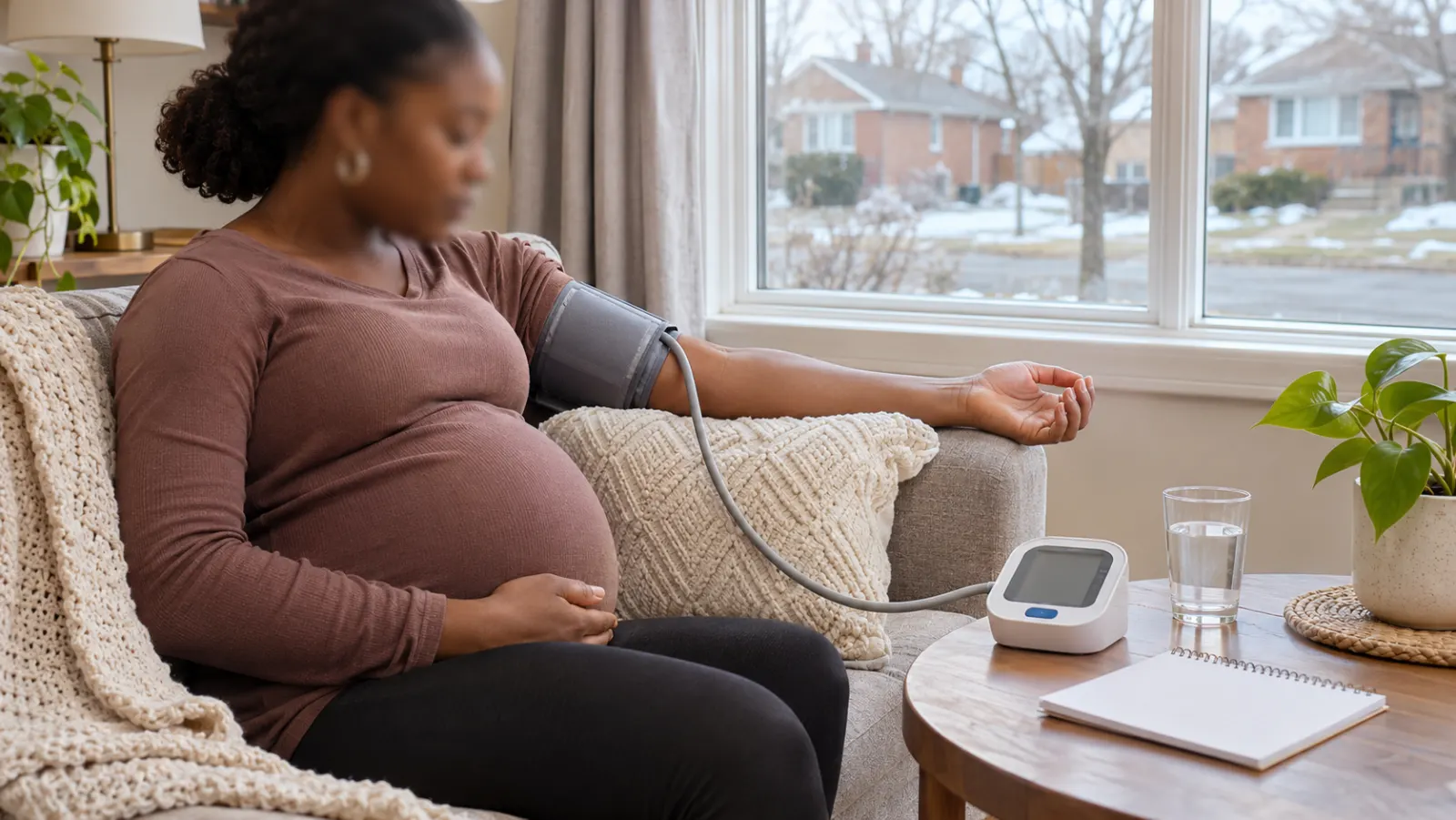
Checking at home
Some people are asked to monitor their blood pressure at home. If so:
- Use a validated automatic upper-arm monitor with the correct cuff size for your arm. Wrist monitors are generally less reliable.
- Sit quietly for a few minutes first, with your back supported, feet flat on the floor, and arm resting at heart level.
- Avoid caffeine, exercise, and smoking for at least half an hour before measuring.
- Take two readings a minute or so apart and write them both down.
- Ask your provider exactly which numbers should prompt a call, and which mean go to hospital. Keep those numbers on the fridge or saved in your phone.
Bring your monitor to an appointment once so the reading can be compared with the clinic’s. Our high blood pressure management visits can help check your technique.
Treatment during pregnancy
Treatment depends on how high your blood pressure is, how far along you are, and whether there are signs of preeclampsia. It may include blood pressure medication that is considered appropriate in pregnancy, more frequent visits, and closer monitoring of the baby. For more serious cases, care moves to hospital.
The only cure for preeclampsia is delivery of the baby and placenta. Depending on how far along the pregnancy is and how severe things are, your care team will weigh the benefits of delivering against the benefits of giving the baby more time to grow. These are big decisions, and you should expect them to be explained clearly and to be part of the conversation.
Preeclampsia after the baby is born
This is the part that surprises many families. Preeclampsia can appear or get worse after delivery, sometimes in someone whose blood pressure was completely normal throughout pregnancy. Postpartum preeclampsia most often appears in the first few days after birth, but it can develop up to several weeks later, when you are at home, exhausted, and focused on a newborn.
The warning signs are much the same: severe headache, vision changes, upper belly pain, sudden swelling, shortness of breath, or feeling generally very unwell. It is easy to blame these on sleep deprivation or the strain of the first weeks. Please do not.
If you have any of these symptoms in the weeks after giving birth:
- Go to the emergency department or call 911.
- Tell every person who assesses you that you recently had a baby, and when. This helps them think of postpartum preeclampsia quickly.
- If you were sent home on blood pressure medication, keep taking it as prescribed and keep your follow-up appointments, even if you feel fine.
Partners, parents, and in-laws who are helping out in those early weeks can be important here. In many multigenerational Scarborough households, a relative is the one who notices that a new mother seems confused or is holding her head. Share this list with whoever is helping you at home.
Your heart health in the years ahead
Having high blood pressure or preeclampsia in pregnancy is linked with a higher risk of heart disease, stroke, and high blood pressure later in life. It is a useful early warning that most people never get. Tell your family doctor about it, and make sure it stays in your health record, even years later.
Regular blood pressure checks, a look at cholesterol and blood sugar, and an annual physical exam are sensible next steps once you have recovered. If you are thinking about another pregnancy, a visit beforehand lets your doctor plan ahead, including whether low-dose aspirin might be recommended next time.
Care for pregnant and new parents in Scarborough
Most pregnancies with high blood pressure end with a healthy parent and a healthy baby, largely because of regular monitoring and quick action when warning signs appear. Your part is simple but important: keep your prenatal appointments, learn the red flags, and trust your instincts when something feels wrong.
HealthSmart Medical supports patients in Scarborough with blood pressure checks, referrals to prenatal care, and follow-up after delivery. Visit us at 2425 Eglinton Ave. East, Unit 12, call 416-757-7117, or book online. For any of the urgent warning signs in this article, do not wait for a clinic appointment: go to hospital or call 911.
This article is for general information and is not a substitute for medical advice. If you have severe or worsening symptoms, call 911 or go to the nearest emergency department.