Few people walk into a clinic and say the word “hemorrhoids” without lowering their voice. Some never say it at all. They mention “a bit of trouble down there” at the very end of a visit about something else, or they skip the appointment entirely and spend months buying creams at the pharmacy, hoping no one they know is in the same aisle.
Here is the thing we want every reader to hear: hemorrhoids are one of the most ordinary problems in medicine. A large share of adults will deal with them at some point, and clinicians examine and treat them all the time. There is nothing embarrassing about asking for help, and there is a real reason to ask, because the main symptom people worry about, bleeding from the bottom, is something that should be properly assessed at least once.
This article covers what hemorrhoids are, why they flare up, what you can do at home to settle them, and which signs mean you should book a visit rather than reaching for another tube of ointment.
First, what are hemorrhoids?
Everyone has hemorrhoids. They are cushions of blood vessels, connective tissue, and a little muscle that line the lower rectum and anal canal. In their normal state they help with continence by sealing the anus gently closed. When people say they “have hemorrhoids,” what they mean is that these cushions have become swollen, stretched, or irritated and are causing symptoms.
Internal hemorrhoids
These sit higher up, inside the rectum, where there are few pain-sensing nerves. Because of that, they often do not hurt. The most common sign is painless bright red blood: streaks on the toilet paper, drops in the toilet bowl, or blood coating the outside of the stool. Larger internal hemorrhoids can slip down and poke out of the anus during a bowel movement (this is called prolapse). Some go back in on their own; others need to be gently pushed back.
External hemorrhoids
These form under the skin around the anal opening, where there are plenty of nerves. They can cause itching, swelling, and discomfort when sitting or wiping.
Thrombosed hemorrhoids
Sometimes a blood clot forms inside an external hemorrhoid. The result is a sudden, very painful, firm, bluish lump at the edge of the anus. It is not dangerous, but it can be intensely sore for several days. The pain is usually worst in the first two or three days and then slowly improves. If you are seen early, a clinician may discuss options for relieving it; after that window, it is usually best managed with home care while it settles.
Why they flare up
Hemorrhoids swell when there is increased pressure in the veins of the lower rectum, or when the supporting tissue weakens over time. Common reasons include:
- Straining on the toilet. This is the big one, and it is usually linked to constipation or hard stools.
- Sitting on the toilet for a long time. Scrolling on your phone for fifteen minutes puts steady pressure on those veins, even if you are not pushing.
- Long periods of sitting in general. Desk jobs, long drives, and lengthy commutes all play a role. Someone who drives a delivery route or sits through a long bus ride across Scarborough every day may notice symptoms worsen.
- Pregnancy. The growing uterus presses on pelvic veins, hormones relax blood vessel walls, and constipation is common. Pushing during delivery can also bring them out. Many new mothers notice hemorrhoids for the first time after birth.
- Chronic diarrhea. Frequent loose stools irritate the area too.
- Heavy lifting. Regularly lifting heavy loads at work or the gym and holding your breath while you do it raises abdominal pressure.
- Ageing. The supporting tissue becomes less firm with time.
- A low-fibre diet and not drinking enough fluid, which leads back to hard stools.
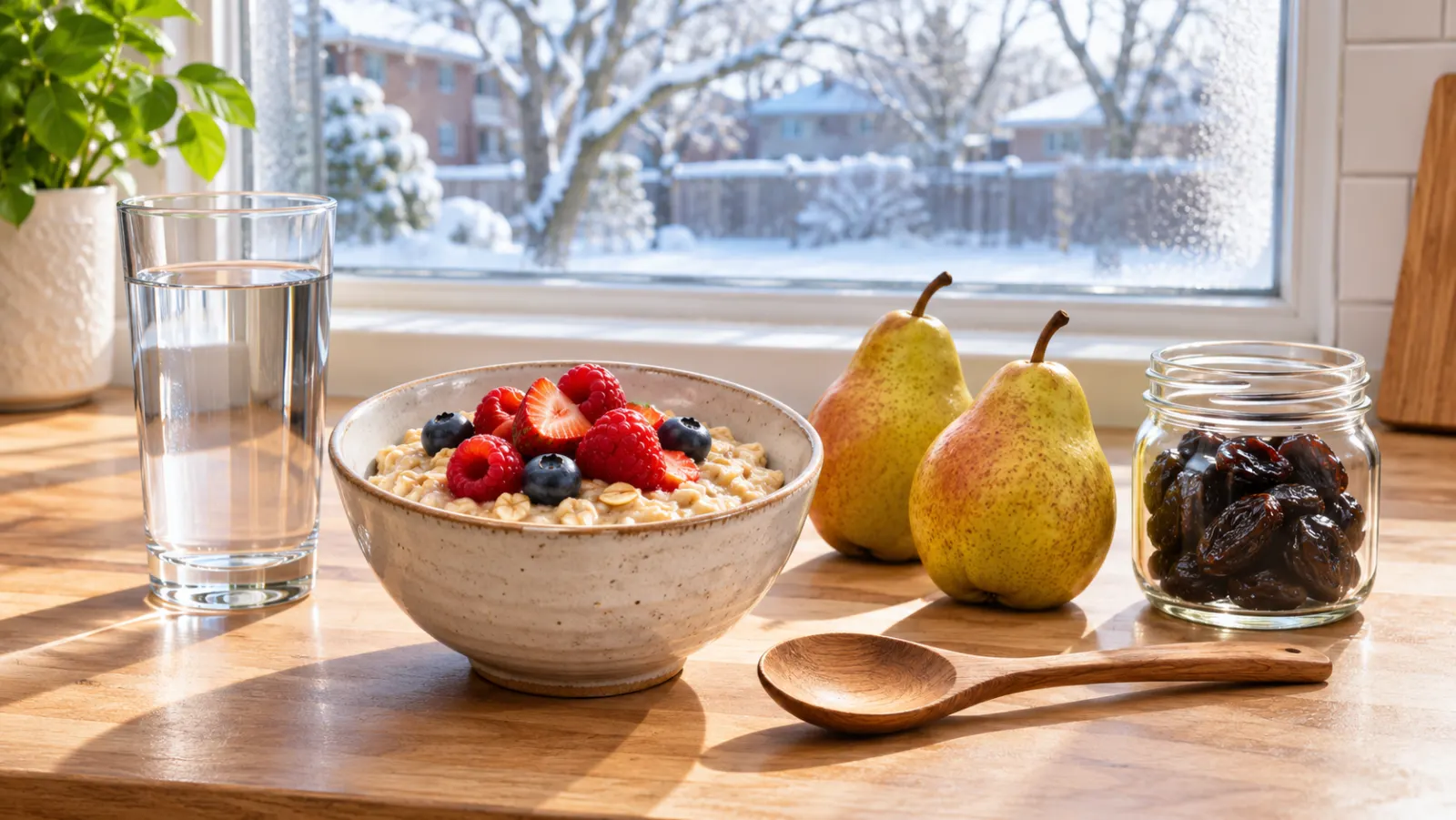
Winter can quietly make things worse. People move less, drink less water because they are not thirsty in the cold, and often eat heavier food with fewer fresh fruits and vegetables. The result is firmer stools and more straining, right when you are spending more time sitting indoors.
Settling a flare at home
Most hemorrhoid flares improve within a week or so with simple care. The goals are to soften stools, reduce straining, and soothe the irritated area.
Make stools easier to pass
This is the foundation of treatment, and the most effective step for preventing future flares.
- Increase fibre gradually. Good sources include oats, beans, lentils, chickpeas, whole grains, pears, berries, prunes, and vegetables. Many traditional dishes cooked in Scarborough households, from dal to bean stews, are naturally high in fibre. A fibre supplement such as psyllium can help if diet alone is not enough.
- Drink enough fluid. Fibre needs water to work. Without it, extra fibre can actually make constipation worse.
- Move your body. A daily walk helps the bowel move. Indoor options count on icy days.
- Ask about a stool softener if your stools are still hard. A pharmacist or clinician can suggest one that suits you.
Change your toilet habits
- Go when you feel the urge rather than putting it off.
- Do not strain or hold your breath.
- Limit your time on the toilet to a few minutes. Leave the phone outside.
- Try a small footstool under your feet so your knees are higher than your hips. Many people find this position makes emptying easier.
Soothe the area
- Sitz baths. Sitting in a few inches of warm water for 10 to 15 minutes, a few times a day and after bowel movements, can ease pain, itching, and muscle spasm. You can use a bathtub or a small basin designed to fit over the toilet.
- Gentle cleaning. Use plain water or unscented wipes rather than rubbing with dry toilet paper. Pat dry. Avoid soaps with perfume.
- Cold packs wrapped in a cloth can help with swelling for short periods.
- Over-the-counter creams or suppositories. These can relieve itching and discomfort for a few days. Products containing a steroid should only be used for a short time, as directed on the package or by a pharmacist, since long-term use can thin the skin.
- Pain relief. Acetaminophen or an anti-inflammatory may help if they are safe for you. Be aware that some pain medications containing codeine cause constipation, which can make the problem worse.
- Loose cotton underwear and avoiding sitting on hard surfaces for long stretches. A cushion can make a long day at a desk more bearable.
The question everyone actually has: is this bleeding just hemorrhoids?
Hemorrhoids are the most common cause of bright red blood on the toilet paper. But they are not the only cause, and you cannot tell the difference on your own. Anal fissures (small tears), infections, inflammatory bowel disease, polyps, and colorectal cancer can all cause bleeding too. That is why rectal bleeding should be assessed by a clinician, even if you are fairly sure it is “just hemorrhoids.”
Please book an appointment if:
- You have rectal bleeding and have never had it checked
- The bleeding is different from your usual pattern, heavier, or more frequent
- The blood is dark red or mixed into the stool, or your stools are black and tarry
- You have a change in bowel habits that lasts more than a few weeks, such as new constipation, diarrhea, or narrower stools
- You are losing weight without trying, or feel unusually tired or short of breath (possible signs of anemia)
- You are around 50 or older with new symptoms, or have a family history of colorectal cancer or inflammatory bowel disease
- Symptoms are not improving after a week of home care
- A lump at the anus is getting bigger, very painful, or will not go back in
None of these automatically means something serious. Most of the time, the cause turns out to be benign. But the only way to know is to be examined, and sometimes to have further testing such as blood work or a referral for a colonoscopy.
If you are in the age range for colon cancer screening, keep in mind that a home stool test is designed for people without symptoms. If you are actually having bleeding, tell your clinician rather than relying on a screening kit, because symptoms call for a different kind of investigation.
When to go to emergency
Call 911 or go to the nearest emergency department if you have:
- A large amount of rectal bleeding, or bleeding that will not stop
- Bleeding along with dizziness, fainting, a racing heart, or feeling very weak
- Severe pain in the anal area with fever, chills, or swelling that is spreading, which may signal an infection or abscess
- Severe abdominal pain
What happens at an appointment
We know this is the part people dread, so here is what usually happens.
Your clinician will ask about your symptoms, your bowel habits, any bleeding, your diet, and your family history. Then, with your permission, they may look at the outside of the anal area and may do a gentle internal exam with a gloved finger. You will lie on your side on the exam table with a sheet covering you. It takes a minute or two, and while it can be a little uncomfortable, it should not be painful. You can ask for a chaperone, and you can ask for the clinician to stop at any point.
Depending on what is found, next steps might include:
- Advice on home care and a plan to prevent constipation
- A prescription cream or suppository
- Blood work to check for anemia if there has been ongoing bleeding
- A specialist referral for further investigation, such as a colonoscopy, or for treatment of hemorrhoids that keep coming back
Treatments beyond home care
For internal hemorrhoids that keep bleeding or prolapsing despite good habits, specialists offer procedures that are usually done as an outpatient. The most common is rubber band ligation, where a tiny band is placed at the base of the hemorrhoid, cutting off its blood supply so it shrinks and falls off over a week or so. Other options exist, and surgery is reserved for large or very troublesome hemorrhoids. Your clinician can explain whether a referral makes sense for you.
Preventing the next flare
Once a flare settles, the same habits that helped you recover are what keep hemorrhoids quiet over the long term:
- Aim for soft, easy bowel movements every day or two through fibre, fluids, and activity
- Do not linger on the toilet
- Break up long periods of sitting by standing or walking for a few minutes each hour
- Exhale during heavy lifting rather than holding your breath
- Treat constipation early instead of waiting for it to become a problem
If you are pregnant or recently gave birth, mention hemorrhoids at your prenatal or postpartum visits. They are expected, and your care provider can suggest options that are safe for you and your baby.
Getting checked in Scarborough without the awkwardness
If you have been putting this off, consider this your sign to book. At HealthSmart Medical in Scarborough, our clinicians assess bowel concerns every day as part of gastrointestinal care, and we will treat the conversation as routinely as any other. Prefer to start with a few questions first? A virtual care appointment can be a comfortable first step, and we will let you know if an in-person exam is needed.
Visit us at 2425 Eglinton Ave. East, Unit 12, in Scarborough, call 416-757-7117, or book online.
This article is for general information and is not a substitute for medical advice. If you have severe or worsening symptoms, call 911 or go to the nearest emergency department.