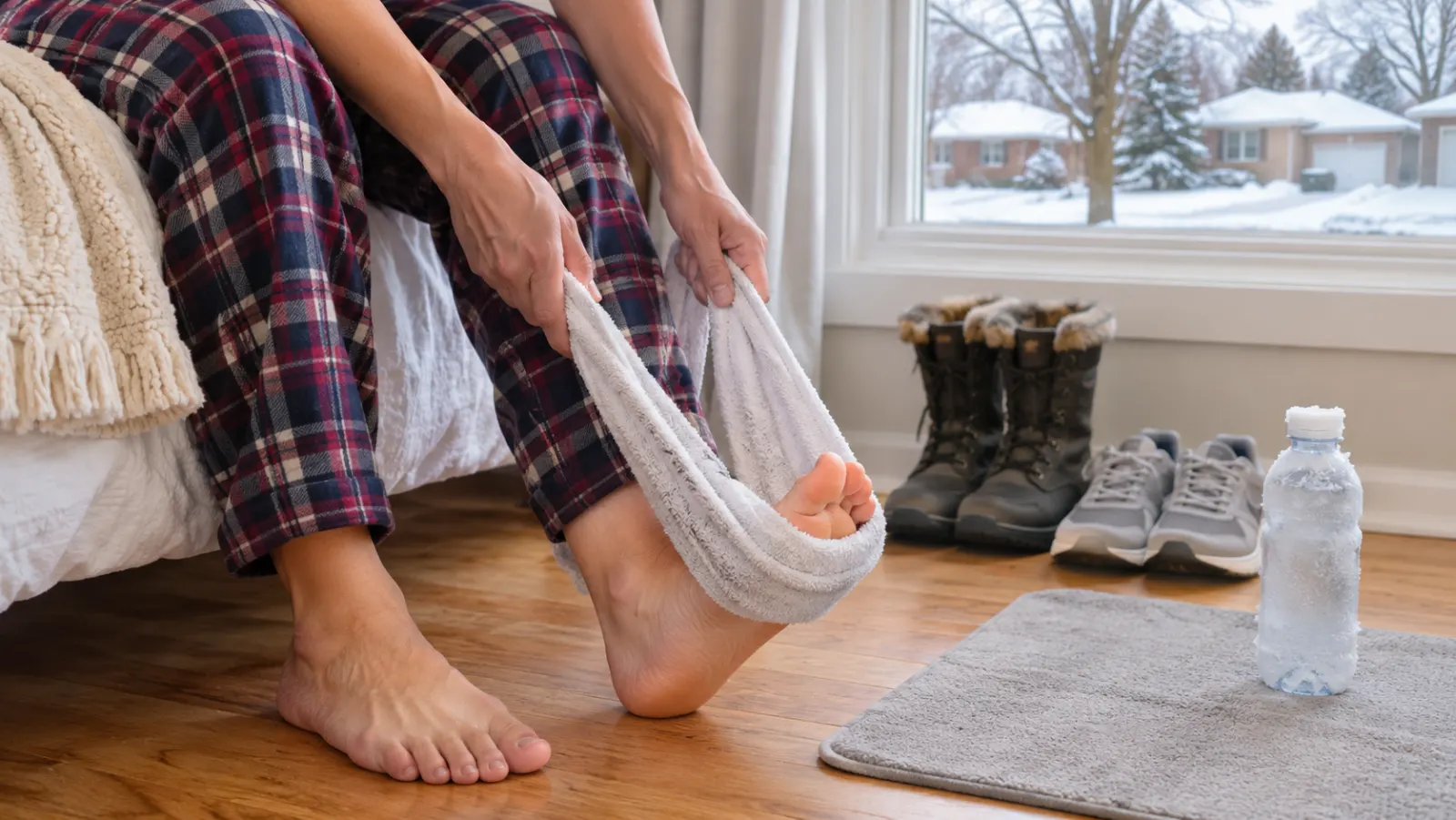
You swing your legs out of bed, put your foot on the floor, and a sharp, stabbing pain shoots through the bottom of your heel. You hobble to the bathroom, and after a few minutes of walking it eases to a dull ache. By lunchtime you have nearly forgotten it. Then you sit through a long meeting or a bus ride home, stand up, and there it is again.
If that pattern sounds familiar, you may be dealing with plantar fasciitis, one of the most common causes of heel pain in adults. It tends to flare in the winter months in Scarborough, when people swap supportive sneakers for flat, stiff boots, walk less evenly on snow and ice, and spend long days on hard floors at work. It is rarely dangerous, but it can be stubborn, and it can make everything from a grocery run to a warehouse shift miserable.
This guide covers why heel pain happens, what you can do at home, how footwear matters, and when a sore foot needs a doctor’s attention, including a few words about foot checks for people with diabetes. It is general information only, so if your pain is severe, unusual or not improving, please get it assessed.
What the plantar fascia does
The plantar fascia is a thick band of tissue running along the sole of your foot, from the bottom of the heel bone to the base of the toes. It works like a bowstring, supporting the arch and absorbing the force of every step. When it is strained repeatedly, faster than it can recover, the tissue near the heel becomes irritated and painful. Despite the “itis” in the name, doctors now think of it more as an overuse and degeneration problem than a simple inflammation.
Classic signs
- Sharp or stabbing pain under the heel or along the inner edge of the heel
- Pain that is worst with the first steps in the morning
- Pain that returns after sitting or resting, then eases with gentle walking
- An ache that builds after long periods of standing or walking
- Tenderness when pressing on the bottom of the heel
It usually affects one foot, though both can be involved.
Why heel pain shows up so often in Scarborough
Winter footwear
Many winter boots are built for warmth and grip, not for arch support. Some are flat and rigid; others are soft and unsupportive. Wearing them all day, including indoors at work, can put extra strain on the plantar fascia. Slippery sidewalks and snowbanks also change the way people walk, often with shorter, more cautious steps that load the feet differently.
Shoes-off homes
In many Scarborough households, shoes come off at the door, which is a good habit for clean floors. The downside is that people then spend hours barefoot or in thin slippers on tile, laminate or hardwood. For someone prone to heel pain, that can make things worse.
Standing and walking jobs
Retail, warehousing, manufacturing, health care, food service, security and personal support work all involve long hours on hard surfaces. Many people in these roles also commute on the TTC and stand on the bus or at the platform, adding even more time on their feet.
Other risk factors
- Tight calf muscles or a tight Achilles tendon
- Higher body weight, which increases load on the feet
- Sudden increases in activity, like starting a new walking program or returning to running
- Very high arches or very flat feet
- Worn-out shoes with little cushioning
- Middle age, when the heel’s natural fat pad tends to thin
Not all heel pain is plantar fasciitis
Your doctor will think about other possibilities, particularly if the pain does not follow the typical pattern. These include:
- Achilles tendon problems, with pain at the back of the heel or just above it
- Stress fractures of the heel bone, more likely after a sudden jump in activity or in people with weak bones
- Nerve irritation, which can cause burning, tingling or numbness
- Arthritis, including inflammatory types that may also affect other joints, and gout, which more often affects the big toe
- Fat pad bruising, causing pain right in the centre of the heel
- Heel spurs, small bony growths seen on X-ray. Many people have spurs without any pain, so finding one does not always explain the symptoms.
Most cases of plantar fasciitis are diagnosed with a history and physical examination alone. Imaging is not always needed, but your doctor may arrange it through diagnostic imaging referrals if something else is suspected or the pain is not settling.
What you can do at home
The good news is that most people with plantar fasciitis improve with simple, consistent self-care, although it can take several months. Patience and daily effort matter more than any single trick.
Stretch before your first step
Because morning pain is so typical, stretching before you get out of bed can help.
- Towel stretch. Sit up in bed with your legs straight. Loop a towel or scarf around the ball of your foot and gently pull toward you until you feel a stretch in the calf and sole. Hold for about 30 seconds and repeat a few times.
- Toe pull. Cross the affected foot over your other knee, hold your toes and gently pull them back toward your shin. You should feel the band under your arch tighten. Hold and repeat.
- Foot circles. Before standing, slowly trace circles with your feet to warm them up.
Stretch your calves during the day
Tight calves pull on the heel and increase strain on the fascia.
- Wall calf stretch. Stand facing a wall with your hands on it. Step the affected foot back, keep the heel on the floor and the back knee straight, and lean forward until you feel a stretch in the calf. Hold, then repeat with the back knee slightly bent to target the lower calf.
- Step stretch. Stand on a stair with your heels hanging off the edge, holding the rail, and lower your heels gently. Be careful on icy outdoor steps; this one is for indoors.
Stretches should feel like a pull, not sharp pain. If an exercise makes things clearly worse, stop and ask a health professional.
Roll and cool
- Roll the sole of your foot over a tennis ball or a frozen water bottle for a few minutes, especially after work.
- Ice can help settle pain at the end of a long day. Wrap ice in a cloth, and avoid applying it directly to skin. People with diabetes or poor circulation should be cautious with ice and heat.
Adjust your activity, do not abandon it
You do not have to stop moving, but you may need to change how you move for a while. Swap some walking or running for cycling, swimming or other low-impact exercise. Take short sitting breaks during long shifts if your workplace allows. Increase activity gradually once pain improves.
Pain relief
Some people find over-the-counter pain relievers helpful for short periods. Check with your doctor or pharmacist first, particularly if you have kidney problems, stomach ulcers, high blood pressure, heart disease, or take blood thinners.
Footwear that works with your feet
Shoes are often the single biggest factor you can control.
Look for
- Firm support under the arch
- A cushioned, slightly raised heel rather than completely flat soles
- A firm heel counter (the back of the shoe) that does not collapse when squeezed
- Enough room in the toe box
At home
If your household is shoes-off, keep a pair of supportive indoor shoes or structured slippers by the door. Avoid going barefoot on hard floors while your heel is sore.
In winter
Choose boots with good traction and some arch support, or add a supportive insole. If you wear heavy boots on the commute, consider changing into supportive shoes once you arrive at work. Replace old boots and running shoes that have lost their cushioning.
Insoles and orthotics
Over-the-counter arch supports or heel cups help many people. Custom orthotics are an option for some, but they are not always necessary. Some people also benefit from a night splint that keeps the foot gently flexed while sleeping. Your doctor can help you decide what makes sense.
When home care is not enough
If pain is not improving after several weeks of consistent self-care, or if it is limiting your work or daily life, see a doctor. Depending on your situation, options may include:
- A structured physiotherapy program
- Taping techniques and footwear advice
- Assessment for orthotics
- In some cases, a corticosteroid injection, which can ease pain for a while but is used carefully because of possible side effects
- Referral for other treatments, such as shockwave therapy, or to a foot specialist, through a specialist referral
Surgery is rarely needed and is usually considered only after a long period of other treatment has failed.
Red flags: get prompt care
Some foot problems should not wait. Seek urgent medical attention, or call 911 or go to the emergency department where appropriate, if you have:
- A sudden snap or pop at the back of the heel with pain and difficulty pushing off or walking, which may mean an Achilles tendon rupture
- Inability to put weight on the foot after a fall, twist or slip on ice
- A foot that is hot, red, swollen and painful, especially with fever or chills
- A foot that is suddenly cold, pale or blue, or very painful at rest
- New numbness or weakness in the foot or leg
- Heel pain with unexplained weight loss, night sweats, or pain that wakes you at night and does not ease with rest
A word about diabetes and your feet
If you live with diabetes, foot pain and foot changes need extra care. Diabetes can reduce feeling in the feet and slow healing, so small injuries such as a blister from new winter boots can turn into ulcers or infections without much warning.
- Check your feet every day, including between the toes. Use a mirror or ask a family member to help.
- Never walk barefoot, indoors or out.
- Keep skin moisturised, but not between the toes.
- Have your feet checked by a health professional regularly. Your doctor can confirm how often based on your health.
- See a doctor promptly for any sore, blister, colour change or swelling that does not improve.
Our team provides ongoing diabetes management, and foot checks are an important part of that care.
Getting back on your feet in Scarborough
Heel pain can make every step feel like a negotiation, but with the right approach most people get back to walking comfortably. At HealthSmart Medical, 2425 Eglinton Ave. East, Unit 12, our clinicians can examine your foot, look at your footwear and daily routine, rule out other causes, and help you plan treatment and referrals if needed. If your pain started suddenly or you are worried about it today, ask about same-day medical appointments.
Call 416-757-7117 or book online. A sore heel in Scarborough’s long winter is common, but you do not have to limp through until spring.
This article is for general information and is not a substitute for medical advice. If you have severe or worsening symptoms, call 911 or go to the nearest emergency department.