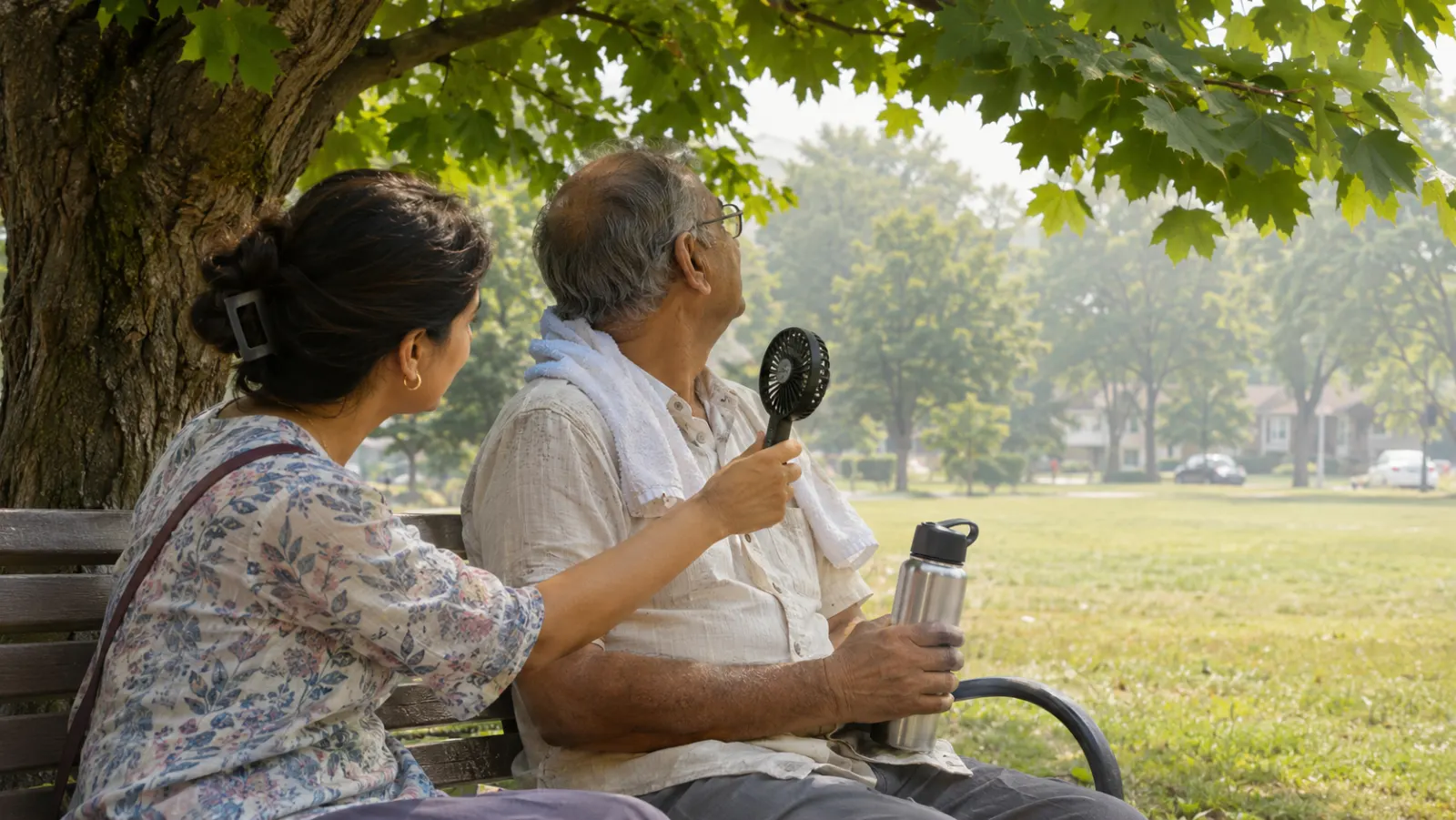
A Toronto heat wave has a particular feel to it. The air goes heavy by mid-morning, the humidex climbs well past the actual temperature, and the night barely cools things off before the next day starts all over again. For many households in Scarborough, especially those in older apartment towers or upper-floor units without central air, it can be hard to find relief indoors, let alone outside.
Most of the time, hot weather is simply uncomfortable. But the body has limits on how much heat it can shed, and when those limits are crossed, heat-related illness follows. It usually begins with something mild, like heavy sweating, a pounding headache, or cramping legs, and it can progress to heat exhaustion. If nobody steps in, heat exhaustion can tip into heat stroke, which is a true medical emergency.
This article explains how heat illness develops, who in your family needs extra watching, practical ways to stay cool during a Scarborough summer, and the specific signs that mean it is time to stop managing things at home and call 911.
How your body handles heat, and how it fails
Your body works to keep its core temperature in a narrow range. When it gets hot, blood vessels near the skin widen so heat can escape, and you sweat so that evaporation cools you down. Both of those systems depend on having enough fluid on board and on the air being dry enough for sweat to evaporate.
Humidity is the problem in southern Ontario. On a muggy day, sweat drips off instead of evaporating, so you lose water and salt without getting much cooling in return. Add physical work, direct sun, a hot apartment that does not cool off overnight, or a body that already struggles to regulate temperature, and heat starts to build faster than you can get rid of it.
Heat illness is best thought of as a spectrum rather than a set of separate conditions.
Milder heat effects
- Heat rash: small red bumps or prickly patches, often in skin folds, on the neck, or under clothing, caused by blocked sweat ducts
- Heat cramps: painful muscle spasms, usually in the legs, arms, or abdomen, often during or after exertion
- Heat swelling: puffy ankles and feet, more common in older adults after a long day in the heat
- Fainting from heat: a brief light-headed spell or faint, often after standing for a long time or getting up quickly
These are warning shots. They are telling you to get somewhere cooler, drink, and rest.
Heat exhaustion
Heat exhaustion happens when the body is losing the battle but still functioning. Typical signs include:
- Heavy sweating, with skin that feels cool and clammy
- Weakness, unusual tiredness, or feeling faint
- Headache and dizziness
- Nausea or vomiting
- Muscle cramps
- A fast, weak pulse
- Thirst and dark urine
- A body temperature that is raised but usually below 40°C
The key point is that a person with heat exhaustion is still thinking clearly. They may feel awful, but they know where they are, they can answer questions, and they can follow instructions.
Heat stroke
Heat stroke is when the body’s cooling system has broken down and core temperature rises to dangerous levels, typically 40°C or higher. At that point, the brain and other organs start to be affected. The defining feature is a change in mental state:
- Confusion, disorientation, slurred speech, or strange behaviour
- Agitation or irritability that is out of character
- Severe drowsiness, collapse, or loss of consciousness
- Seizures
- Hot skin, which may be dry, though people who were exercising hard can still be sweating
- A rapid, strong pulse and fast breathing
Heat stroke can be fatal. Call 911 right away. Do not wait for a thermometer reading, and do not drive the person to a clinic. Start cooling them while you wait for paramedics.
Who needs extra attention during a heat wave
Anyone can get heat illness, but some people are far more vulnerable. In a city as diverse and multigenerational as Scarborough, many households include at least one person on this list.
Older adults
Grandparents and older parents are among the most at risk. As we age, the body sweats less efficiently and the sense of thirst becomes weaker, so an older person can be quite dehydrated without feeling thirsty. Many also live with heart disease, diabetes, or kidney problems, and take medications that affect fluid balance. Older adults who live alone, or who are reluctant to turn on air conditioning because of the cost, are of particular concern.
Babies and young children
Little ones heat up quickly and depend entirely on adults to give them fluids, shade, and rest. They may not tell you they feel unwell; instead, they become cranky, unusually sleepy, or stop wanting to play. Never leave a child in a parked car, even for a minute, and even with the windows cracked. The inside of a car can become dangerously hot remarkably fast.
Outdoor and hot-environment workers
Construction crews, landscapers, delivery drivers, warehouse staff, kitchen workers, and anyone in a factory or loading dock without good ventilation all face real risk. In Ontario, employers have responsibilities around heat stress, and workers can raise concerns about water, shade, rest breaks, and gradual adjustment to hot conditions. If you have been hurt on the job, including from heat, a WSIB assessment can be part of documenting what happened.
People with chronic health conditions
Heart disease, high blood pressure, diabetes, kidney disease, lung conditions such as COPD, obesity, and some mental health conditions all make it harder to cope with heat. If you are managing one of these, it is worth reviewing a heat plan with your doctor before summer arrives, ideally as part of regular chronic disease management.
People taking certain medications
A long list of common medications can reduce sweating, increase fluid loss, or blunt the body’s ability to sense heat. Examples include:
- Diuretics (“water pills”) used for blood pressure or heart failure
- Some blood pressure medications, such as beta blockers
- Certain antidepressants and antipsychotics
- Antihistamines and other drugs with “anticholinergic” effects, including some bladder and sleep medicines
- Stimulants, including some ADHD medications
Please do not stop or change a prescription on your own because of the heat. Instead, ask your doctor or pharmacist whether any of your medications increase your heat risk and what you should do differently on very hot days. Some people need to monitor their weight or fluid intake more closely; others simply need to be more careful about staying cool.
Others to keep in mind
People experiencing homelessness, those who are socially isolated, people who use alcohol or recreational drugs heavily, and newcomers from cooler climates who are not yet used to Ontario’s humid summers can all be at higher risk. Athletes and weekend warriors who push hard on a scorching afternoon are also a common group seen with heat exhaustion.
Practical ways to stay cool in Scarborough
When Environment Canada issues a heat warning for Toronto, a little planning goes a long way.
At home
- Close blinds and curtains on sun-facing windows during the day, then open windows at night if it is cooler outside
- Use air conditioning if you have it; even one cool room to sleep in can make a big difference
- Fans help move air, but on their own they may not be enough to prevent heat illness when indoor temperatures are very high; pair them with cool showers, damp cloths, and other cooling
- Take cool showers or baths, or soak your feet in cool water
- Avoid using the oven during the hottest part of the day; summer is a good time for no-cook meals
- Spend a few hours somewhere air-conditioned, such as a library, community centre, or shopping mall. During heat warnings, the City of Toronto opens cool spaces; calling 311 or checking the city’s website can point you to one near you
Drinking enough
- Drink water regularly throughout the day, before you feel thirsty
- Keep a bottle with you on the TTC, at work, or at the park
- Limit alcohol and very sugary drinks, which do not hydrate well
- If you are sweating heavily for long periods, ask a pharmacist about electrolyte options
- If your doctor has told you to limit fluids because of a heart or kidney condition, ask them how to adjust that limit during a heat wave rather than guessing
When you are out and about
- Plan errands, walks, and exercise for early morning or evening
- Wear loose, light-coloured, breathable clothing and a wide-brimmed hat
- Use sunscreen; sunburn makes it harder for skin to release heat
- Seek shade at every chance, and take breaks
- Waiting at a sunny bus stop on Eglinton or Kingston Road in a heat wave can be surprisingly draining, so carry water and look for shade where you can
Check on people
One of the simplest life-saving habits during a heat wave is checking in. Call or visit older relatives, neighbours who live alone, and anyone in your building who you know is unwell. Ask whether their home is cool enough, whether they are drinking, and whether they feel confused or dizzy. Twice a day is not too often during a long heat event.
What to do if someone is overheating
For heat cramps or heat exhaustion
If someone is sweaty, weak, dizzy, and nauseated but alert and making sense:
- Move them to a cooler place, ideally air-conditioned, or at least into the shade
- Have them lie down and raise their legs slightly if they feel faint
- Loosen or remove extra clothing
- Cool the skin with cool, wet cloths, a spray bottle, or a cool shower, and use a fan if available
- Give sips of cool water or an electrolyte drink if they are not vomiting and can swallow normally
- Stay with them and watch closely
Most people with heat exhaustion start to feel better within about 30 minutes to an hour of cooling and fluids. If they are not improving, are getting worse, or cannot keep fluids down, they need medical attention. If at any point they become confused or drowsy, treat it as heat stroke.
For suspected heat stroke
- Call 911 immediately.
- Move the person out of the heat.
- Begin cooling right away and as aggressively as you safely can. Immersing the body in cool or cold water, such as a tub, is very effective if available and the person can be supervised safely. Otherwise, soak them with water, fan them hard, and place cold packs or ice wrapped in cloth at the neck, armpits, and groin.
- Do not give fluids by mouth if they are confused, very drowsy, or vomiting, as they could choke.
- Do not give acetaminophen or ibuprofen to bring down the temperature; these do not help with heat stroke.
- Keep cooling until paramedics take over.
Fast cooling is what makes the biggest difference to how someone recovers. Every minute counts.
If you are unsure whether symptoms are serious, you can call Health811 any time of day to speak with a registered nurse. But for confusion, collapse, or seizures, skip the phone advice and call 911.
After a heat-related illness
Even after someone recovers from heat exhaustion, the body can stay more sensitive to heat for a while. Take it easy for a day or two, keep drinking well, and avoid strenuous activity in the heat until you feel fully yourself. Anyone who had heat stroke will usually be followed up by the hospital team, and it is important to see your own doctor afterward too.
A follow-up visit makes sense if:
- You had heat exhaustion and are still feeling weak, dizzy, or unwell after a day or two
- You noticed swelling, unusual shortness of breath, or very little urine
- You take medications that may have contributed and want them reviewed
- You need a note for work or school after being unwell; we can provide sick notes following an assessment
- You work outdoors and want to talk about how to return to the job safely
Getting ready before the next heat wave
Summer in Scarborough usually brings more than one stretch of extreme heat. A few steps before the next one can make it much easier:
- Ask your doctor or pharmacist whether any of your medications raise your heat risk
- If you care for an older relative, agree on a daily check-in plan with siblings or neighbours
- Find out where your nearest air-conditioned public space is
- Keep a few freezer packs and a spray bottle on hand
- Make sure kids know to come inside, drink water, and tell an adult if they feel sick or dizzy while playing
- If you have a chronic condition, book a review before the hot months so you have a clear plan
HealthSmart Medical is close by
Heat illness is largely preventable, and the people most at risk are often the ones who are least likely to ask for help. If you are concerned about how a heat wave might affect you or someone in your family, or you are recovering from a bout of heat exhaustion and still do not feel right, HealthSmart Medical can help. You will find us at 2425 Eglinton Ave. East, Unit 12, in Scarborough. Walk in, call 416-757-7117, or book online for an acute illness assessment or a medication review before the next hot spell arrives.
This article is for general information and is not a substitute for medical advice. If you have severe or worsening symptoms, call 911 or go to the nearest emergency department.