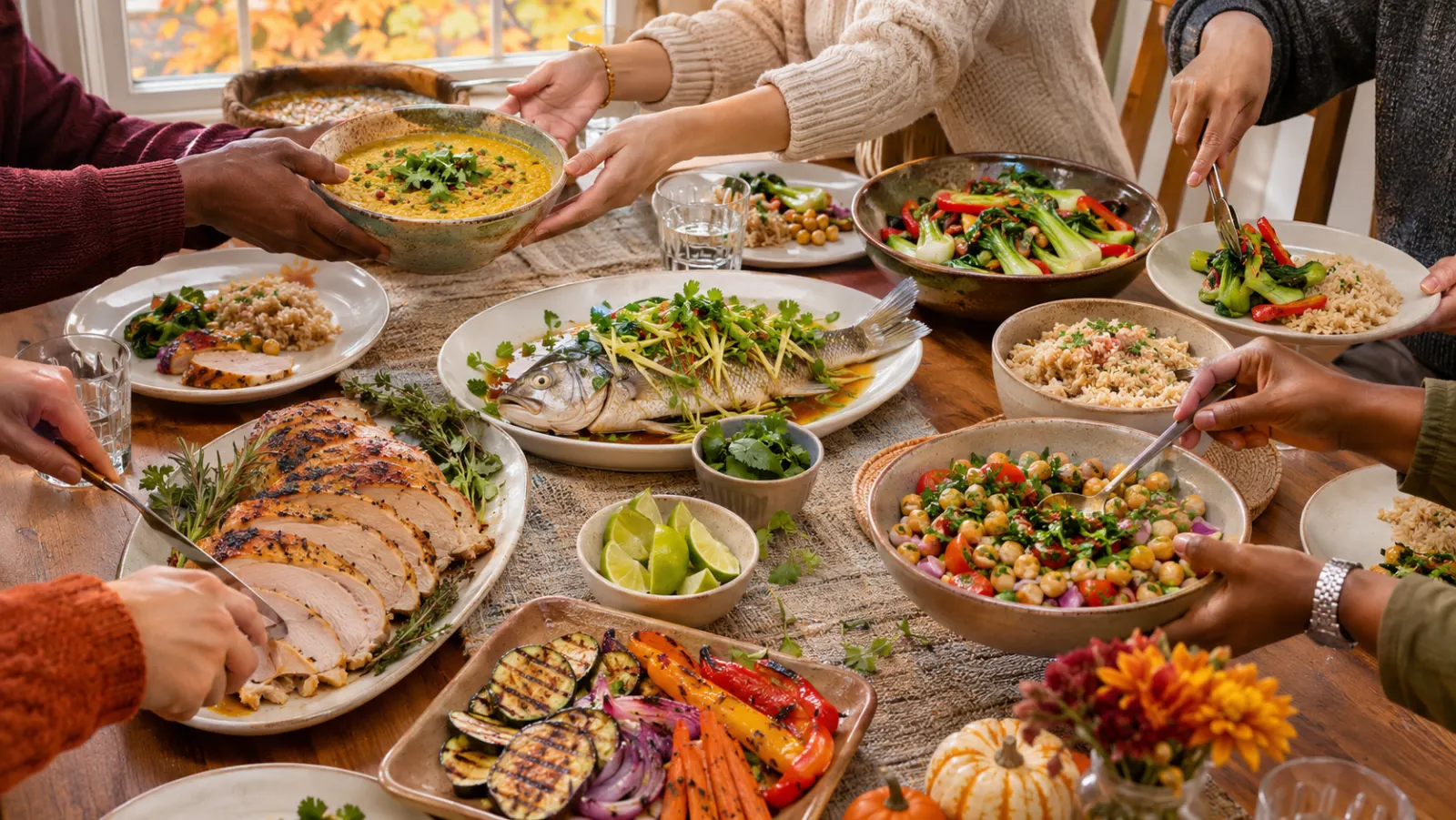
Walk into almost any home in Scarborough this Thanksgiving weekend and the table will tell a story. There may be a turkey, but sitting next to it might be biryani, curry goat and rice and peas, pancit, a steaming pot of sambar, a tray of kibbeh, or a whole steamed fish with ginger and scallions. Food is how many families here hold on to where they came from, how grandparents show love, and how the generations end up in the same room.
So when a doctor says “watch your diet for your heart,” it can land badly. It can sound like you are being asked to give up your culture in exchange for plain grilled chicken and a salad. That is not what heart-healthy eating has to mean, and it is not what this article is about.
Instead, this is a practical look at the three things that matter most for heart health in almost any kitchen: salt, fat, and portions. Every cooking tradition has dishes that are already very good for the heart, and every tradition has ways to adjust the heavier ones without losing what makes them taste like home. The goal is not to cook someone else’s food. It is to cook your own a little differently, most of the time.
Why this matters for Scarborough families
Heart disease and stroke remain among the leading causes of death in Canada. Many of the conditions that lead to them, including high blood pressure, high cholesterol, and type 2 diabetes, are common across Scarborough’s communities, and some develop at younger ages in people of South Asian, African, Caribbean, and East Asian backgrounds. These conditions usually cause no symptoms for years.
Food is not the only factor. Genetics, activity, smoking, sleep, and stress all play a role, and many people will need medication no matter how carefully they eat. But diet is something you can influence every single day, and changes made in the family kitchen protect everyone who eats there, from the grandparents to the kids.
The big three: salt, fat, portions
Salt: the hidden load
Most of the sodium people eat does not come from the salt shaker at the table. It comes from what goes into the pot and from packaged foods. Sodium raises blood pressure in many people, and high blood pressure strains the heart, kidneys, and blood vessels in the brain.
Common sources across many kitchens include:
- Bouillon cubes and stock powders
- Soy sauce, fish sauce, oyster sauce, and similar condiments
- Pickles, achaar, and preserved vegetables
- Salted, dried, or smoked fish and meats
- Seasoning blends and marinade mixes that list salt as a main ingredient
- Instant noodles and their flavour packets
- Processed meats like hot dogs, luncheon meat, sausages, and deli slices
- Store-bought breads, snack foods, and frozen meals
Fat: the type matters more than the amount
Fats are not all the same. Unsaturated fats, found in vegetable oils like canola and olive, nuts, seeds, and fish, are generally better for the heart. Saturated fats, found in fatty meats, butter, ghee, lard, coconut oil, palm oil, full-fat dairy, and many fried and baked goods, tend to raise LDL (“bad”) cholesterol when eaten in large amounts.
That does not mean ghee, coconut milk, or butter are forbidden. It means they work best as flavour, not as the foundation of every meal.
Deep frying deserves its own mention. Samosas, pakoras, fried plantain, festival, spring rolls, lumpia, falafel, and fried chicken are delicious and often central to celebrations. They are also very easy to eat in large amounts. Keeping them for special occasions rather than everyday meals makes a real difference.
Portions: the quiet factor
Many families express care through generous servings, and “have some more” is a form of love. But large helpings of rice, roti, bread, noodles, or potatoes, piled on before the vegetables get a look in, add up over time, especially for people managing blood sugar or weight.
A simple visual guide that fits nearly any cuisine is the plate approach used in Canada’s Food Guide: fill about half your plate with vegetables and fruit, about a quarter with protein foods, and about a quarter with whole grains or starchy foods. The plate can hold any dish you like.
Cooking your own food, a little lighter
The ideas below are grouped by technique rather than by culture, because most adjustments work across many kitchens. Use what fits how your family cooks.
Build flavour without as much salt
- Lean on aromatics. Onion, garlic, ginger, scallions, lemongrass, chilies, and fresh herbs carry enormous flavour. Doubling them often means you can cut salt without anyone noticing.
- Toast your spices. Blooming cumin, mustard seed, curry leaves, or whole spices in a little oil releases flavour that makes up for less salt.
- Add acid at the end. A squeeze of lime or lemon, a splash of vinegar, tamarind, or sour fruit brightens a dish the way salt does.
- Use half the cube. If a recipe calls for a bouillon cube or seasoning packet, try half, or switch to a lower-sodium version, and taste before adding more salt.
- Choose reduced-sodium sauces. Lower-sodium soy sauce is widely available. Dilute fish sauce or oyster sauce, or use less and add fresh lime or herbs.
- Soak or rinse salted ingredients. Salt fish, salted pork, and canned beans can be soaked or rinsed to remove some sodium.
- Taste before you salt at the table. Many people salt by habit, not by taste.
Rethink the oil
- Measure it. Many recipes start with a generous pour. Measuring with a spoon for a few weeks shows how much you actually use, and most dishes taste just as good with less.
- Switch the everyday fat. Use canola, olive, or another vegetable oil for daily cooking, and keep ghee, butter, or coconut oil as a finishing touch for flavour.
- Go lighter on coconut milk. A lighter coconut milk, or using part coconut milk and part water or stock, keeps the richness while lowering saturated fat.
- Skim the top. Stews, curries, and soups made with meat often have a layer of fat. Chill them and lift it off, or skim while cooking.
- Bake, air-fry, steam, or grill. Many snacks traditionally fried can be baked or air-fried with a light brush of oil. Steaming and grilling suit fish and vegetables beautifully.
Choose proteins thoughtfully
- Bring more beans and lentils to the table. Dal, chana, rajma, black-eyed peas, kidney beans, chickpea salads, ful medames, mung bean dishes, and tofu are traditional in many cuisines and are excellent for heart health, providing fibre and protein with little saturated fat.
- Favour fish. Fish, especially oily fish like salmon, sardines, mackerel, and trout, is a great choice a couple of times a week. Steaming, baking, or grilling keeps it lighter than frying.
- Trim the meat. Choose leaner cuts, remove skin from poultry, and trim visible fat from goat, lamb, pork, and beef. A curry or stew can often use less meat and more vegetables or legumes without losing heartiness.
- Limit processed meats. These tend to be high in both sodium and saturated fat.
Make grains work harder
- Mix in whole grains. Try brown or mixed rice, whole wheat roti or chapati, bulgur, barley, or whole grain noodles. Even mixing half white and half brown rice is a start.
- Watch the starch stack. Some meals end up with rice, bread, and potatoes together. Choosing one or two is plenty.
- Bulk up with vegetables. Add extra greens, okra, squash, eggplant, bitter melon, bok choy, cabbage, or carrots to rice dishes, noodles, and stews.
A few examples from Scarborough kitchens
These are illustrations, not prescriptions, drawn from the kinds of meals cooked every week in Scarborough. Every family cooks differently, and only you know what will fly with the people at your table.
- A Sunday curry, whether chicken, goat, fish, or vegetable, can start with less oil, include more vegetables, use leaner meat, and be served with a smaller scoop of rice alongside a generous salad or a vegetable side.
- A pot of dal or sambar is already a heart-friendly meal. The adjustment might simply be less ghee in the tempering.
- Stir-fries can use less oil in a hot wok, lower-sodium sauces, more vegetables, and lean protein or tofu.
- Rice and peas can be made with lighter coconut milk and less salt, keeping the thyme, scallion, and pimento that make it sing.
- Adobo, sinigang, or other braised dishes can use leaner cuts and less soy sauce, with extra vinegar, garlic, or tamarind for flavour.
- Mezze spreads with hummus, tabbouleh, lentil soup, and grilled vegetables are naturally heart-friendly; serve fried items on the side rather than as the centrepiece.
Getting through a holiday feast
Thanksgiving, Diwali, Eid, Christmas, Lunar New Year, Pongal, and family birthdays all bring big meals. One feast does not undo months of careful eating, and enjoying it is part of a healthy life. A few gentle strategies help:
- Fill half your first plate with vegetables, salads, or lentil dishes before adding the rich items
- Take a small portion of each special dish rather than seconds of everything
- Go easy on sugary drinks and juices; water, unsweetened tea, or sparkling water with lime work well
- Take a walk after the meal, even around the block, which is easier to manage on a crisp October afternoon than in January
- Send leftovers home with guests rather than eating them for a week
For people with diabetes, heart disease, or kidney disease, ask your care team before a holiday about any special considerations, such as timing medications around large meals.
Making change stick in a multigenerational home
In many households in Scarborough, the person who cooks is not the person who has been told to cut back. A grandmother may run the kitchen while her son has the high cholesterol. A few approaches help:
- Make it a family project. Explain why the changes matter. Many older relatives respond better to “the doctor said this is good for all of us” than to being singled out.
- Change one thing at a time. Start with less salt in one dish, or one meatless day a week. Small changes are easier to accept and to keep.
- Respect the cook. Ask for their ideas. People who have cooked for decades usually know exactly how to adjust a dish if asked.
- Read labels together. Compare the sodium in two brands of the same product at the grocery store. It can be eye-opening.
Food and the bigger picture
Heart-healthy eating works best alongside the rest of your care. That includes knowing your blood pressure, checking cholesterol and blood sugar as recommended, staying active, not smoking, and taking prescribed medications as directed. Our clinicians offer cholesterol monitoring, high blood pressure management, and diabetes management to help you track what your efforts in the kitchen are doing.
If you have kidney disease, are on blood thinners, or take medications that affect potassium, some foods and salt substitutes may not be appropriate for you. Check with your clinician or a registered dietitian before making big changes.
Warning signs that are not about food
Food choices are long-term protection. They cannot treat an emergency. Call 911 right away for:
- Chest pain, pressure, or tightness, especially spreading to the arm, jaw, neck, or back
- Shortness of breath, sweating, nausea, or light-headedness with chest discomfort
- Sudden weakness or numbness of the face, arm, or leg
- Sudden trouble speaking, seeing, or walking
Do not drive yourself to the hospital.
Bring your questions to HealthSmart Medical
You do not have to choose between your heart and your heritage. With a few changes in how much salt goes in, which oil comes out of the bottle, and how the plate is filled, the dishes your family loves can stay on the table for years to come.
If you would like help understanding your numbers or making a realistic plan, our team in Scarborough is here for you. Visit heart health monitoring to learn more, then book online or call 416-757-7117. HealthSmart Medical is at 2425 Eglinton Ave. East, Unit 12. Happy Thanksgiving from all of us.
This article is for general information and is not a substitute for medical advice. If you have severe or worsening symptoms, call 911 or go to the nearest emergency department.