“Heart failure” is one of the most frightening phrases a patient can hear. It sounds as though the heart has stopped, or is about to. In reality, it means something quite different. The heart is still beating. It is simply not pumping as well as the body needs, or not filling properly between beats, and fluid starts to build up as a result.
Heart failure is a long-term condition, but many people live with it for years, working, travelling, and enjoying their grandchildren. How well that goes depends a great deal on the day-to-day: weighing yourself every morning, watching salt, taking medications consistently, and recognizing early when things are heading the wrong way.
This guide is for people in Scarborough who have recently been told they have heart failure, and for the family members who help them manage it. As the weather cools and the season for colds and flu begins, it is a good time to review the basics, because chest infections are one of the common triggers that can make heart failure worse.
What heart failure actually means
Your heart is a pump. With each beat, it pushes blood out to the body, and between beats it relaxes and fills again. In heart failure, one or both of those steps is not working well enough.
- In some people, the heart muscle is weakened and does not squeeze strongly. Doctors sometimes describe this using the “ejection fraction,” a measure of how much blood is pushed out with each beat.
- In others, the heart squeezes normally but is stiff and does not relax and fill properly.
Both types can cause similar symptoms, and both are real heart failure. Your doctor or cardiologist can tell you which type you have, which matters because some treatments work better for one than the other.
Common causes
Heart failure is usually the result of something else that has strained the heart over time, such as:
- A previous heart attack or blocked heart arteries
- Long-standing high blood pressure
- Diabetes
- Heart valve problems
- Irregular heart rhythms such as atrial fibrillation
- Heavy alcohol use
- Some infections, medications, or inherited heart muscle conditions
Treating the underlying cause is part of managing heart failure. Keeping blood pressure, blood sugar, and heart rhythm under control helps protect the heart from further strain.
Why fluid builds up
When the heart cannot keep up, blood backs up in the veins, and the kidneys respond by holding on to salt and water. That extra fluid has to go somewhere. It collects in the legs and ankles, in the abdomen, and in the lungs. Much of what people with heart failure feel, and much of the daily routine, comes back to this fluid.
Swelling
Swelling, also called edema, often starts in the feet and ankles, especially by the end of the day. You might notice:
- Shoes that feel tight by evening
- Socks leaving deep marks around your ankles
- A dent that stays for a few seconds when you press on the swollen skin
- Swelling that moves up the legs, or appears in the lower back if you spend a lot of time lying down
- A bloated feeling in the belly, or clothes fitting tighter around the waist
Breathlessness, especially lying flat
When fluid gathers in the lungs, breathing becomes harder. Breathlessness may first show up when climbing stairs or carrying groceries, and later with less effort.
A particular pattern is worth knowing about. Many people with heart failure find it harder to breathe when they lie flat, because fluid shifts toward the lungs. Signs of this include:
- Needing more pillows than before to sleep comfortably
- Preferring to sleep sitting up in a recliner
- Waking at night suddenly short of breath and needing to sit up or stand by an open window to recover
- A cough that is worse at night or when lying down
If you notice any of these, tell your doctor. They are clues that fluid is building up and your treatment may need adjusting.
Other symptoms
- Tiredness and reduced ability to do usual activities
- Poor appetite or feeling full quickly
- Needing to urinate more at night
- Feeling lightheaded, particularly with certain medications
Daily weights: the simplest early warning system
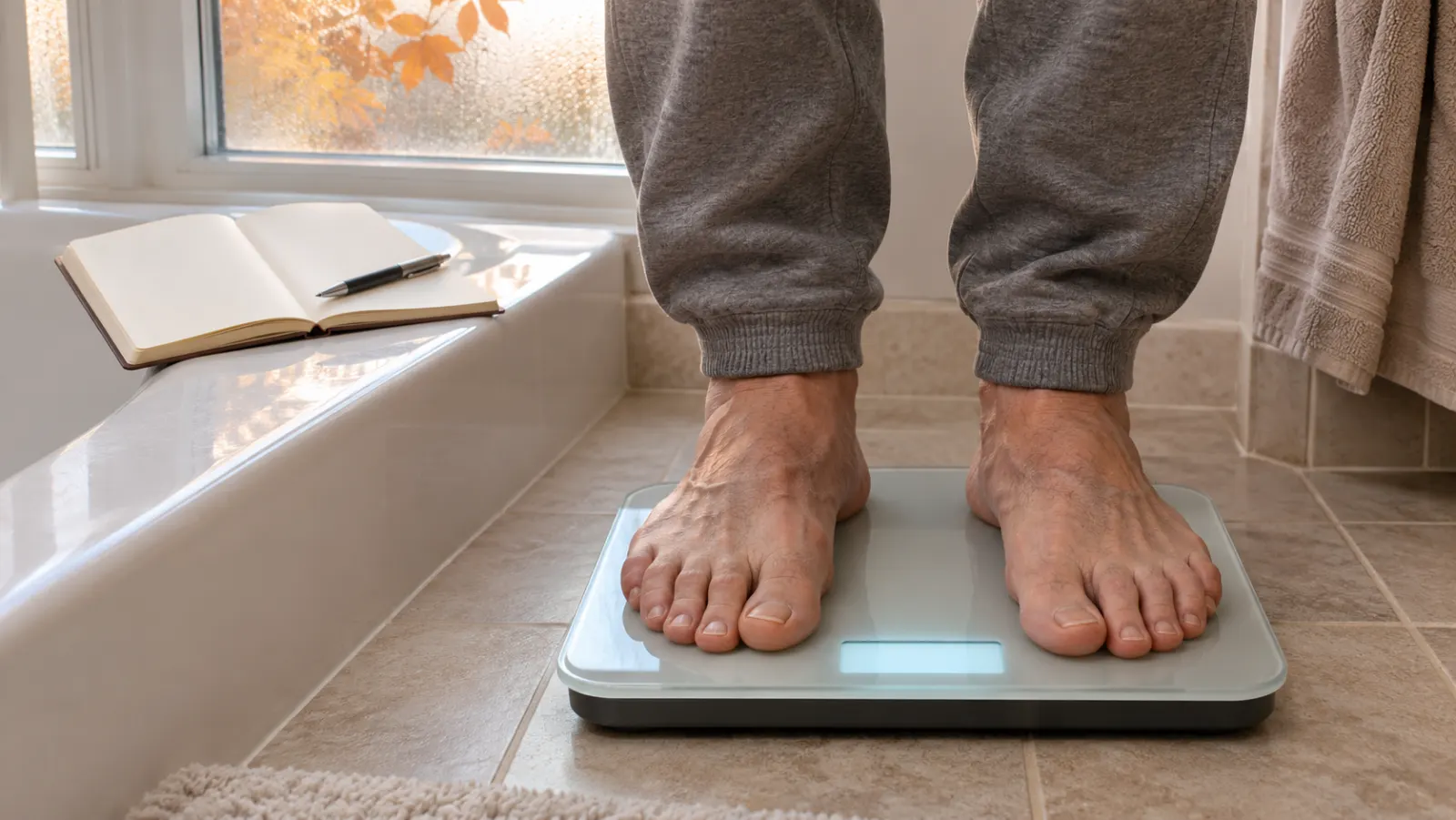
If you take one habit away from this article, make it this one. Fluid adds weight before it causes obvious symptoms. A rising number on the scale can be the first sign of trouble, often days before you feel breathless.
How to weigh yourself properly
- Weigh yourself every morning, at the same time.
- Do it after you empty your bladder and before you eat or drink.
- Wear similar clothing each day, or none.
- Use the same scale, placed on a hard, flat floor rather than carpet.
- Write the number down in a notebook or on a calendar by the bathroom.
What to watch for
Your health care team will give you your own action plan, including your “dry weight” and the amount of gain that should prompt a call. A commonly used guide is to contact your doctor if you gain about 2 kg (around 4 to 5 lbs) over two or three days, or a smaller amount steadily over a week, but follow the specific numbers you have been given.
A sudden drop in weight, especially with dizziness, thirst, or very little urine, can also matter. It may mean you are dehydrated or your water pill dose is too strong.
Bring your weight log to every appointment. A page of numbers tells your doctor more than “I think I’ve been okay.”
Salt and fluids
Salt
Sodium makes the body hold on to water. For many people with heart failure, cutting back on salt helps reduce swelling and breathlessness. Your doctor or a dietitian can tell you how strict you need to be.
Most salt comes from packaged and prepared foods rather than the shaker. Bread, soups, deli meats, sauces, frozen meals, and takeout are common sources. Scarborough’s food scene is one of its great pleasures, and nobody expects you to give up the dishes you love. Some practical approaches:
- Read the sodium line on the Nutrition Facts table and compare brands.
- Cook at home more often, using herbs, garlic, ginger, lemon, and salt-free spice blends for flavour.
- Ask for less salt or sauces on the side when ordering out.
- Watch for hidden salt in pickles, stock cubes, soy and fish sauces, and seasoning packets.
- Be cautious with salt substitutes. Many contain potassium, which can be unsafe with some heart failure medications. Ask your doctor or pharmacist first.
Fluids
Some people with heart failure are asked to limit how much they drink each day. Others are not. This is very individual, so do not restrict fluids unless your care team has told you to, and if they have, ask exactly how much.
If you have a fluid limit, remember it includes soup, tea, milk, ice cream, and jelly, not just water. Tips that help with thirst:
- Use a smaller cup.
- Spread your fluids through the day.
- Suck on ice chips or frozen grapes.
- Rinse your mouth without swallowing.
- Keep salt low, since salty food makes you thirstier.
Medications
Heart failure treatment has improved a great deal over the past couple of decades, and medications are a big part of why many people now live longer and feel better. Depending on your type of heart failure and other conditions, you may be prescribed medicines from several groups:
- Diuretics (water pills) to remove extra fluid and ease swelling and breathlessness
- Medicines that relax blood vessels and protect the heart, such as ACE inhibitors, angiotensin receptor blockers, or newer combination medicines
- Beta-blockers, which slow the heart and, over time, help it work more efficiently
- Medicines that block the hormone aldosterone
- SGLT2 inhibitors, a group first used for diabetes that is now also used for many people with heart failure
Many of these are started at a low dose and increased gradually. It can feel like a lot of pills, but each one tends to do a different job.
Medication safety tips
- Take them every day, even when you feel well.
- Do not stop or change a dose on your own. If side effects bother you, such as dizziness, a cough, or frequent urination, talk to your doctor.
- Keep an up-to-date list of everything you take, including vitamins and herbal products.
- Check before taking over-the-counter anti-inflammatory pain relievers like ibuprofen or naproxen. These can cause fluid retention and make heart failure worse.
- Some cold remedies and decongestants can also be a problem. Ask your pharmacist before buying.
- Ask about blister packs if you take several medications.
You may need regular blood tests to check kidney function and potassium levels, since several heart failure medicines affect both.
Staying active and avoiding setbacks
Rest is important when you are unwell, but regular gentle activity helps most people with stable heart failure feel stronger. Walking is a good place to start. When the sidewalks are icy later in the season, indoor walking at a mall or community centre is a safer option. Ask your doctor what level of activity is right for you, and whether a cardiac rehabilitation program might be available.
Other steps that help prevent flare-ups:
- Stay up to date with vaccines. Getting your flu shot each fall and keeping other recommended vaccines current lowers the risk of an infection tipping you into a flare-up.
- Limit alcohol and stop smoking.
- Get enough sleep, and mention loud snoring or pauses in breathing, which can point to sleep apnea.
- Keep regular follow-up appointments, even when things are going well.
Warning signs: when to call and when to go
Call your doctor soon if you notice
- Weight gain beyond the amount in your action plan
- More swelling in your legs, ankles, or belly
- Needing more pillows or waking at night short of breath
- Getting breathless with less activity than usual
- A new cough that will not settle
- Feeling dizzy, very tired, or less able to manage daily tasks
- Side effects from your medications
If you cannot reach your doctor, Health811 can offer advice at any hour.
Call 911 right away if you have
- Severe shortness of breath, or breathlessness at rest that is not improving
- Chest pain or pressure
- Coughing up frothy or pink-tinged mucus
- Fainting or nearly fainting
- A very fast or irregular heartbeat with feeling unwell
- New confusion, or signs of stroke such as face drooping, arm weakness, or slurred speech
Do not drive yourself to hospital.
How we support heart failure care in Scarborough
Heart failure works best as a partnership between you, your family, your family doctor, and often a cardiologist or heart function clinic. Your family doctor can help coordinate that care, review your weight log and symptoms, adjust medications in consultation with specialists, arrange blood work, and keep an eye on related conditions like blood pressure and diabetes.
At HealthSmart Medical in Scarborough, we offer heart health monitoring, ECG testing, and ongoing chronic disease management, along with specialist referrals when you need a cardiologist’s input. Bring your weight log, your medication list, and a family member if you like. You can book online or call 416-757-7117. Visit us at 2425 Eglinton Ave. East, Unit 12.
This article is for general information and is not a substitute for medical advice. If you have severe or worsening symptoms, call 911 or go to the nearest emergency department.