A parent once described the moment perfectly: her eight-year-old came home from a birthday party, pulled at his shirt in front of the mirror, and asked whether he was fat. She froze. She had been quietly worried about his weight for a year, but hearing him say it out loud made her realize that whatever she did next mattered far more than any number on a scale.
Many families in Scarborough carry some version of that worry. A doctor mentions that a child’s growth curve is climbing faster than expected. A grandparent insists a chubby child is a healthy child, while a school nurse hints otherwise. A teenager starts skipping breakfast. Parents want to help, but they are afraid of saying the wrong thing, starting a lifelong struggle with food, or making a child feel bad about their body.
Here is the most useful thing to know at the outset: for children, the focus belongs on habits, not on weight. When the whole household eats, moves, and sleeps a little better together, children’s health improves, and their bodies are free to grow into the size they are meant to be. This article covers how to do that in a real, busy, multigenerational Scarborough home, without diets, without shame, and without turning dinner into a battleground.
Why habits matter more than the scale
Children are still growing. A number that looks high at age seven can look very different at age ten once a growth spurt arrives. That is why clinicians plot a child’s height and weight on growth charts over time and look at the overall trend, rather than reacting to a single measurement.
Putting a child on a diet is generally not recommended unless it is specifically supervised for a medical reason. Restrictive eating in childhood can interfere with growth, energy, and concentration, and it is linked with a higher risk of disordered eating later. Teasing, nagging about portions, and commenting on bodies tend to backfire too. Children who feel judged about weight often eat in secret, avoid physical activity, and feel worse about themselves.
What does work is changing the environment around a child so that the healthy choice becomes the easy one, and doing it as a family so no one is singled out.
Words to use, and words to skip
- Talk about food in terms of what it does: “This will give you energy for soccer,” rather than “good” or “bad” food.
- Avoid labelling anyone’s body, including your own. Children absorb how adults talk about themselves.
- Never use food as a reward, bribe, or punishment.
- If your child asks about their weight, stay calm and curious: “What made you think about that?” Then reassure them that bodies come in all shapes and that your family is focused on feeling strong and healthy.
Family meals: the quiet superpower
Eating together regularly is one of the most protective habits a family can build. It does not have to be dinner, and it does not have to be every night. A shared weekend breakfast or an evening snack around the table counts. Shift work and long commutes on the Eglinton and Kingston Road bus routes make perfect family dinners unrealistic for many Scarborough households, so aim for what you can manage.
Building a balanced plate
Canada’s Food Guide offers a simple picture that works across cuisines:
- About half the plate vegetables and fruit
- About a quarter whole grains, such as brown rice, whole wheat roti or chapati, oats, or whole grain bread
- About a quarter protein foods, including beans, lentils, dal, tofu, eggs, fish, chicken, nuts, and seeds
- Water as the usual drink
That model fits rice and curry, jollof, stir-fry, pasta, injera with stews, and shepherd’s pie equally well. You do not have to change your family’s cuisine. Small shifts, like adding a vegetable side to every meal, using a bit less oil or ghee, choosing brown rice some nights, or serving fruit for dessert, add up over time.
Who decides what
Many paediatric experts recommend a simple division of jobs. Adults decide what food is offered, when, and where. Children decide whether to eat and how much. That means offering balanced meals and snacks at regular times, then trusting your child to listen to their own hunger and fullness. No clean-plate rule, no pressure to take “one more bite,” and no second, separate dinner cooked on demand.
Back-to-school lunches and snacks
September brings the return of packed lunches and the after-school hunger rush. A few ideas:
- Pack lunches with a vegetable or fruit, a protein, and a whole grain, plus water.
- Let children help choose between two or three healthy options so they feel ownership.
- Plan an after-school snack, such as fruit with yogurt, hummus and veggies, or a small handful of nuts where school rules allow, so children are not raiding the cupboard.
- Keep the treat foods for occasions rather than everyday staples, without making them forbidden.
Sugary drinks: the easiest win
If you change only one thing, look at what your family drinks. Pop, sports drinks, energy drinks, sweetened iced teas, fruit punches, sweetened coffee drinks, and even large amounts of 100% juice add a lot of sugar without making children feel full. They also contribute to tooth decay.
- Make water the default drink at meals and between meals. Keep a jug of cold water in the fridge, perhaps with slices of cucumber, lemon, or orange.
- Plain milk or unsweetened fortified soy beverage at meals is a good option for many children.
- Offer whole fruit instead of juice most of the time. If you do serve juice, keep it to a small glass.
- Energy drinks are not recommended for children or teens.
- Save sweet drinks, such as mango lassi, bubble tea, or pop at a party, for special occasions.
Movement: think play, not exercise
Children and teens are generally encouraged to get at least an hour a day of moderate to vigorous physical activity, the kind that makes them breathe harder, along with plenty of lighter movement and limited time sitting. That hour can be broken into chunks across the day.
Structured sports are great if your child enjoys them, but they are not the only route. Fall is one of the best seasons for active play in Scarborough: the ravine trails, the parks along the waterfront at the Bluffs, community centre gyms and pools, and simply the street out front after dinner while it is still light.
Ways to fit in more movement
- Walk or bike to school if it is safe, or get off the bus a stop early.
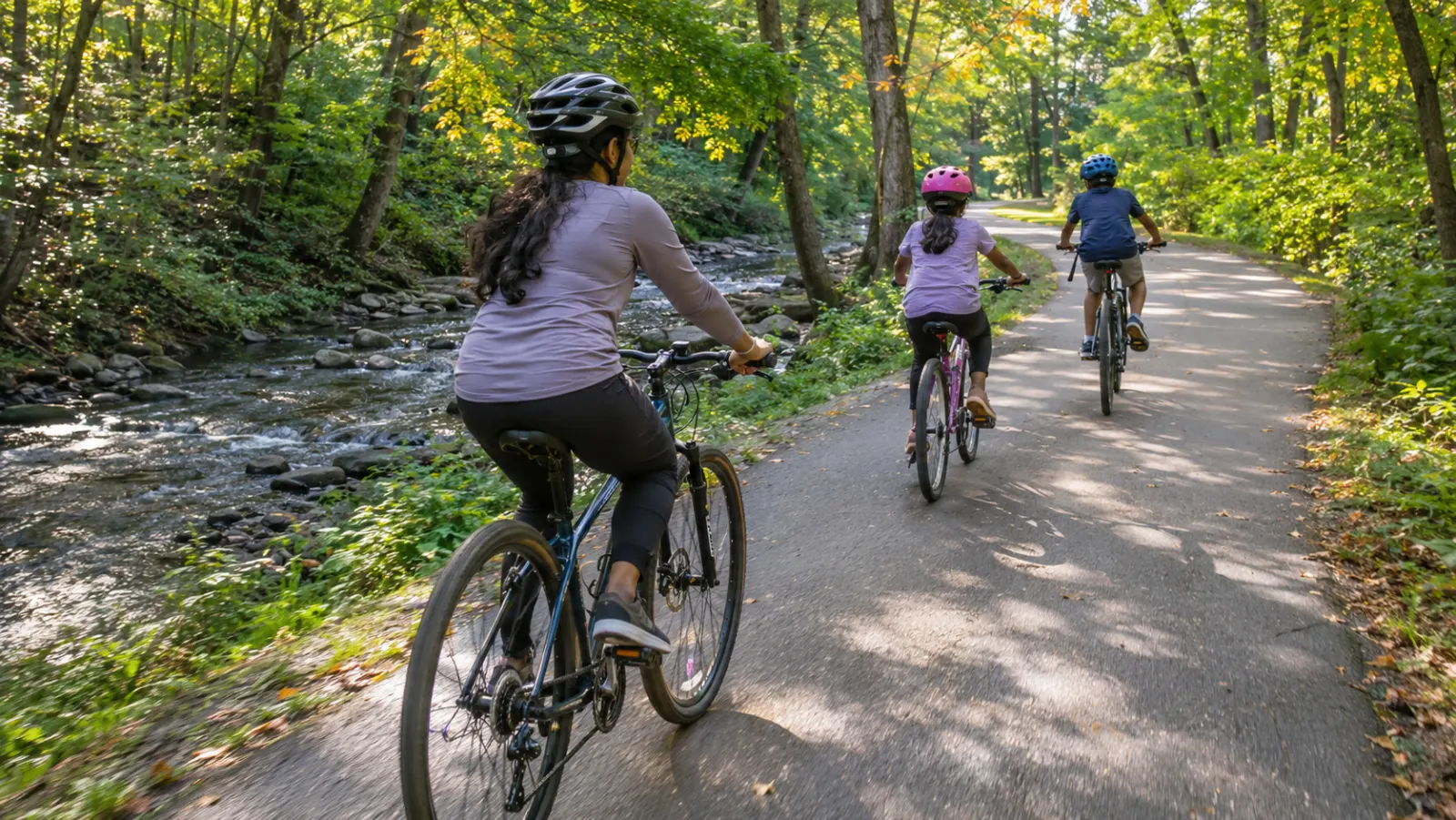
- Make family weekends active, with a hike, a bike ride, a game of cricket or soccer at the park, or a swim.
- Dance in the kitchen. Seriously, it counts.
- Give children chores that involve moving: raking leaves this fall, carrying groceries, shovelling snow in winter.
- Look into City of Toronto recreation programs, many of which are low cost, or ask about free options at your local community centre.
- Let children choose the activity. A child who loves an activity will keep doing it.
Screens deserve a mention here. Long stretches of recreational screen time tend to replace active play and sleep, so setting predictable limits, especially on school nights and in the hour before bed, supports every other habit on this list.
Sleep: the overlooked habit
Sleep is closely tied to appetite, energy, mood, and weight. Tired children tend to crave sugary and high-energy foods, have less energy for play, and find it harder to manage emotions. School-aged children generally need around 9 to 11 hours a night, and teens around 8 to 10.
- Keep a consistent bedtime and wake time, even on weekends, within about an hour.
- Build a calm wind-down routine without screens.
- Keep devices out of bedrooms overnight.
- Make the bedroom dark, quiet, and cool.
- Avoid caffeine, including pop, iced tea, and energy drinks, especially in the afternoon and evening.
If your child snores loudly most nights, seems to stop breathing during sleep, or is very sleepy during the day despite enough time in bed, mention it to your doctor.
Getting the whole household on board
In many Scarborough homes, children are raised by a village: parents, grandparents, aunts, uncles, and older siblings. That is a great strength, and it also means changes only stick if everyone is involved. A grandmother who shows love with fried snacks and extra helpings is not doing anything wrong; she is expressing care in the way she knows.
Rather than criticizing, try inviting others in. Explain that the family is trying to eat more vegetables or drink more water together. Ask a grandparent to teach the children to cook a traditional dish, with a vegetable-heavy twist. Celebrate cultural foods and festivals fully; healthy habits are about the everyday pattern, not about giving up the sweets at Diwali, Eid, Christmas, or a birthday.
Small changes that tend to last
- Pick one or two changes at a time, not ten.
- Make them family rules, not rules for one child.
- Keep healthy foods visible and ready to eat, like washed fruit on the counter.
- Praise effort and behaviour (“You tried a new vegetable!”) rather than appearance.
- Expect setbacks. Holidays and busy weeks happen. Just return to the routine.
When to check in with a doctor
A visit can be useful if you are concerned about your child’s growth or weight in either direction, or about their eating, energy, or mood. It is a chance to look at the growth chart together, rule out medical causes, and make a plan that suits your family. Our clinicians offer growth and development assessments and regular children’s health checkups, and can arrange blood work if it is needed.
Book an appointment if your child:
- Has had a sudden change in growth or weight, either up or down
- Seems constantly thirsty, urinates much more than usual, or is unusually tired
- Snores heavily or has pauses in breathing during sleep
- Has joint pain, especially in the hips or knees, or a new limp
- Has dark, velvety patches of skin on the neck or in the armpits
- Has early signs of puberty, or puberty that seems very delayed
- Is being teased or bullied about their body, or seems withdrawn or low
- Is skipping meals, eating in secret, vomiting after eating, exercising compulsively, or talking a lot about dieting or body shape
That last group of signs can point toward an eating disorder, which can affect children and teens of any size and any background. It deserves prompt attention.
When it is urgent
Go to the nearest emergency department or call 911 if a child has signs of serious illness such as vomiting with heavy, fast breathing and confusion, fainting, a very fast or irregular heartbeat, or is extremely drowsy or hard to wake. These can be signs of a medical emergency, including very high blood sugar or severe complications of restrictive eating.
Building healthy habits in Scarborough, one family at a time
You do not need to be perfect, and your child does not need a different body. They need a home where good food is easy to reach, water is the usual drink, play happens most days, sleep is protected, and they feel loved exactly as they are.
If you would like support, HealthSmart Medical offers paediatric care and family medicine for children and teens in Scarborough, with a non-judgmental approach to growth, eating, and activity. Visit us at 2425 Eglinton Ave. East, Unit 12, call 416-757-7117, or book online. Bring your questions, and bring the grandparents too if they would like to come.
This article is for general information and is not a substitute for medical advice. If you have severe or worsening symptoms, call 911 or go to the nearest emergency department.