The note comes home in a backpack, or arrives as an email from the daycare director: “A case of hand, foot and mouth disease has been reported in your child’s room.” A few days later, your preschooler refuses breakfast, says their mouth hurts, and by evening you are looking at a row of small red spots on their palms and wondering how worried you should be.
Hand, foot and mouth disease, often shortened to HFMD, is a common viral illness in young children. It sweeps through daycares, day camps, and summer programs in Scarborough most years, usually peaking in the summer and early fall. Despite the slightly alarming name, it is not related to the foot-and-mouth disease that affects cattle and other farm animals, and you cannot catch it from pets.
For most children, HFMD is uncomfortable and inconvenient rather than dangerous. The real challenges are keeping a child with a sore mouth drinking enough, figuring out when they can go back to care, and trying not to have the whole household catch it. This guide walks through each of those.
What causes HFMD
HFMD is caused by a group of viruses called enteroviruses, most commonly strains of coxsackievirus. Because several different viruses can cause it, a child can have HFMD more than once over the years. Having it one summer does not guarantee protection the next.
It is most common in children under 5, which is exactly why it travels so efficiently through daycares, where toddlers share toys, put everything in their mouths, and are still learning to wash their hands. Older children, teens, and adults can catch it too. Adults often have milder symptoms, though some feel quite unwell.
Recognizing the signs
Symptoms usually start about three to six days after exposure. The illness tends to unfold in a fairly predictable order.
The first day or two
The early signs are vague and look like many other childhood viruses:
- Fever, often mild to moderate
- Reduced appetite
- Sore throat
- Tiredness and general crankiness
Mouth sores
A day or two after the fever starts, painful sores appear in the mouth. They often begin as small red spots on the tongue, gums, inside of the cheeks, or the back of the throat, and turn into shallow ulcers. These sores are usually what makes children so miserable. A toddler who cannot explain mouth pain may simply drool more, refuse food or the bottle, or cry when trying to eat.
The skin rash
Around the same time, a rash appears. Classic spots are:
- Flat or slightly raised red spots, sometimes with small blisters
- On the palms of the hands and soles of the feet
- Often on the buttocks, diaper area, knees, or elbows as well
The rash is usually not very itchy, though it can be tender. Some strains cause a more widespread rash that can look quite dramatic, including around the mouth, on the arms and legs, or in areas where a child has eczema. If the rash looks unusual or extensive, it is reasonable to have it checked.
Not every child gets all three features. Some have only mouth sores, and some have only a rash with a mild fever.
A surprise weeks later
A few weeks after recovering, some children lose one or more fingernails or toenails, or develop ridges across their nails. This can be startling, but it is a known after-effect of certain strains. The nails grow back normally without treatment. If you notice it, mention it at your child’s next visit, but there is no need to panic.
Keeping a child with a sore mouth hydrated
Dehydration is the main thing to watch for with HFMD. A sore mouth plus a fever is a perfect recipe for a child who quietly stops drinking. Food matters much less than fluids for the few days the sores are worst.
What tends to go down easily
- Cold drinks such as water or milk
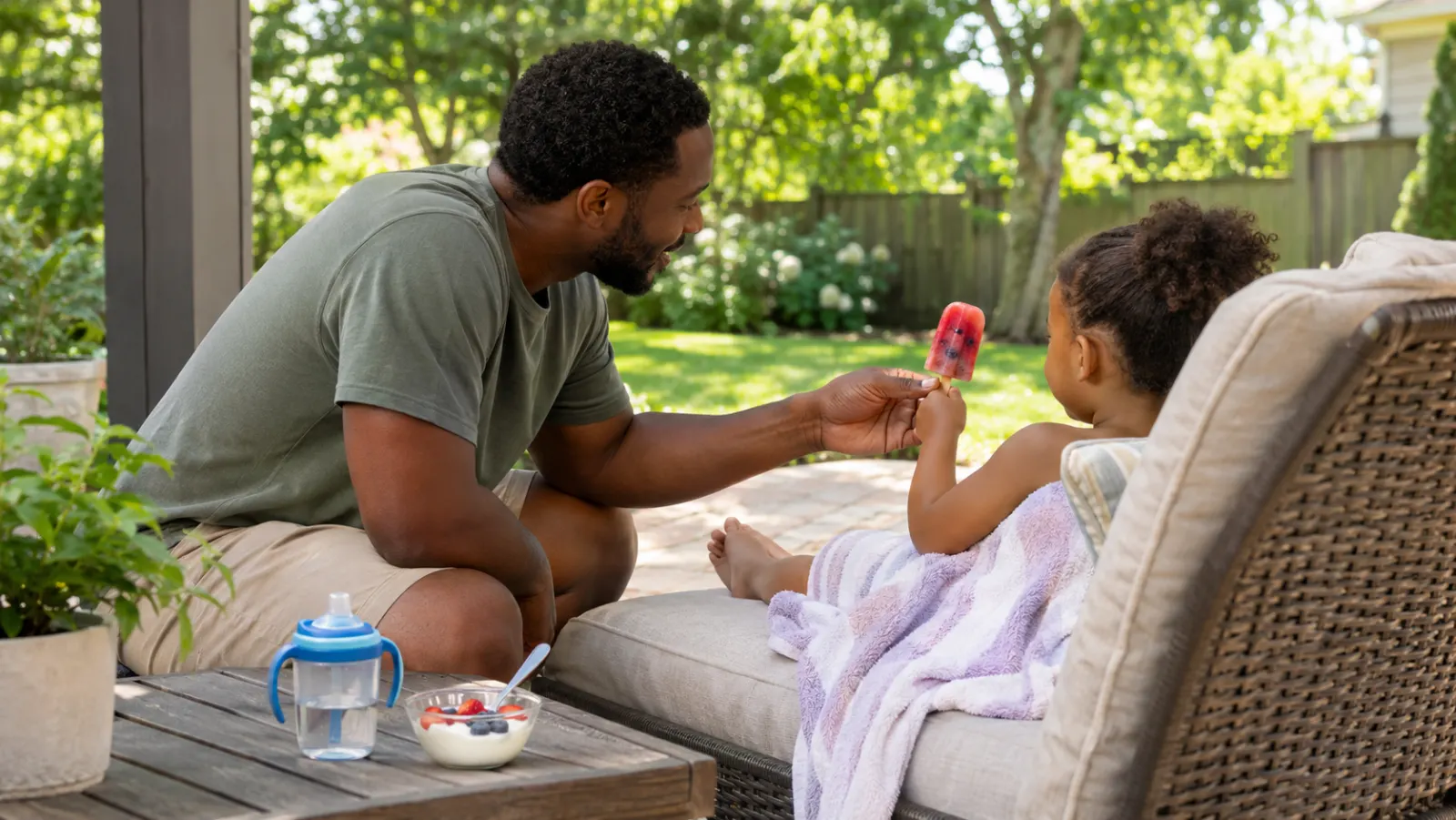
- Popsicles, including homemade ones made from diluted juice or an oral rehydration solution
- Smoothies, yogurt, and pudding
- Soft, bland foods like mashed potatoes, rice porridge, congee, plain pasta, soft dal, or scrambled eggs
- Cool foods rather than hot ones
What usually stings
- Citrus juices such as orange or lemonade
- Tomato-based sauces
- Spicy, salty, or crunchy foods
Many Scarborough households have a family remedy or a favourite sick-day dish. If it is soft, bland, and not too hot or spicy, it is probably fine. A straw or a sippy cup can help some children avoid the sore spots, and older children may prefer sipping from a cup slowly.
Pain relief
Acetaminophen or ibuprofen, dosed by your child’s weight according to the package directions, can ease mouth pain and fever. Giving a dose about half an hour before a meal or drink sometimes helps a child take fluids more comfortably. Ibuprofen is generally not used in babies under 6 months without a doctor’s advice, and ASA (aspirin) should never be given to children or teens. If you are unsure about a dose, a pharmacist can help.
Avoid numbing gels or mouthwashes unless a clinician recommends a specific product, since some are not suitable for young children.
How to tell if your child is getting dehydrated
Watch for:
- Fewer wet diapers or much less urine than usual (for example, a baby with no wet diaper in six hours or more, or an older child who has not peed in eight hours or more)
- Dark yellow urine
- A dry mouth and lips, or crying without tears
- Unusual sleepiness, weakness, or irritability
- Sunken eyes, or a sunken soft spot on a baby’s head
Mild dryness can often be turned around at home with small, frequent sips. More than that needs medical attention.
How contagious is it, and for how long?
HFMD spreads easily. The virus is found in saliva, nose and throat secretions, blister fluid, and stool. It can pass from person to person through coughing and sneezing, close contact like kissing or sharing cups, touching contaminated surfaces and toys, and changing diapers.
A child is usually most contagious during the first week of illness. However, the virus can stay in the stool for several weeks after the child feels better, and some people, especially adults, carry and spread it without ever showing symptoms. That is part of why outbreaks are so hard to stop in group settings.
Protecting the rest of the household
In multigenerational Scarborough homes, where a toddler might share a room with a sibling and get cuddles from grandparents every day, a few habits can limit spread:
- Wash hands with soap and water, especially after diaper changes, using the bathroom, and wiping noses. Soap and water is more effective against this type of virus than alcohol-based hand sanitizer, so use sanitizer only when a sink is not available.
- Do not share cups, utensils, toothbrushes, or towels.
- Clean high-touch surfaces and toys regularly. Wash plastic toys that end up in mouths with soap and water, and use a household disinfectant on surfaces following the product directions.
- Wash bedding and clothes that have had contact with blisters or diaper leaks.
- Hold off on kisses on the mouth for a while, tempting as it is.
A note for pregnant family members
HFMD is usually mild in adults, and most pregnant people who are exposed have no problems. If you are pregnant, especially close to your due date, and someone in your home has HFMD, mention it to your pregnancy care provider so they can advise you.
Returning to daycare and day camp
This is the question most parents want answered first, because it determines who stays home from work. The answer has two parts: general public health guidance and your specific program’s rules.
In Ontario, children with HFMD are not always required to stay home for a fixed number of days, partly because the virus lingers in stool for weeks and keeping children home that long would not be practical or effective. Many programs follow guidance along these lines: a child can return once they are fever-free, feel well enough to take part in normal activities, and are eating and drinking adequately. Blisters that are drying up are generally less of a concern than open, weeping ones.
That said, individual daycares and camps can set stricter policies, especially during an outbreak. Some will ask that sores be dry, or may have specific instructions from Toronto Public Health during a cluster of cases. Check with your program before sending your child back.
Working parents and documentation
If you need to stay home from work to care for a sick child, or if your employer asks for documentation, our clinic can see your child and provide a sick note where appropriate. Some daycares and camps ask for a note confirming a child is well enough to return. It is worth calling the program first to find out exactly what they need, so you can bring the right form to the visit.
When to have your child seen
Most children with HFMD recover in about seven to ten days with comfort care at home. Book a visit or come to the clinic if:
- Your child is not drinking enough or shows early signs of dehydration
- The fever lasts more than three days
- Mouth pain is so severe your child refuses almost all fluids
- The rash looks infected, with spreading redness, warmth, swelling, or pus
- Your baby is under 6 months old
- Your child has a weakened immune system or another significant health condition
- Symptoms are not improving after about ten days
- You are not sure whether it is HFMD or something else, such as chickenpox, strep throat, or another rash illness
The childhood illness treatment we offer includes a hands-on look at the mouth, skin, and hydration, plus guidance on fluids and pain control specific to your child’s age and weight.
Get emergency care right away
Rarely, the viruses that cause HFMD can lead to serious complications affecting the brain or nervous system. Call 911 or go to the nearest emergency department if your child:
- Has a stiff neck, severe headache, or seems confused
- Is very difficult to wake or unusually floppy
- Has a seizure
- Has trouble breathing or is breathing very fast
- Has weakness or cannot move part of the body normally
- Has jerky, twitching movements
- Shows signs of significant dehydration, such as no urine for many hours, sunken eyes, or extreme lethargy
These complications are uncommon, but knowing the signs means you can act quickly. For non-urgent questions after hours, Health811 is available by phone across Ontario.
Summer bugs and Scarborough families
July and August in Scarborough mean splash pads, day camps at community centres, swimming lessons, and long weekends with cousins. All of that togetherness is wonderful, and it is also exactly how childhood viruses get passed around. You cannot prevent every illness, and there is currently no vaccine for HFMD available in Canada. What you can do is keep up good handwashing habits, keep sick children home while they are feverish and unwell, and know when to get help.
If HFMD shows up in your household, it helps to remember that it is usually a short, self-limited illness. A week of popsicles, cartoons, and patience is the typical course.
Visit HealthSmart Medical in Scarborough
If your child has a fever, mouth sores, or a rash and you would like someone to take a look, HealthSmart Medical sees children for walk-in and booked visits as part of our children’s health services. We can confirm what is going on, check for dehydration, and help you plan the return to daycare or camp.
Find us at 2425 Eglinton Ave. East, Unit 12, in Scarborough. Call 416-757-7117 or book online before you head over.
This article is for general information and is not a substitute for medical advice. If you have severe or worsening symptoms, call 911 or go to the nearest emergency department.