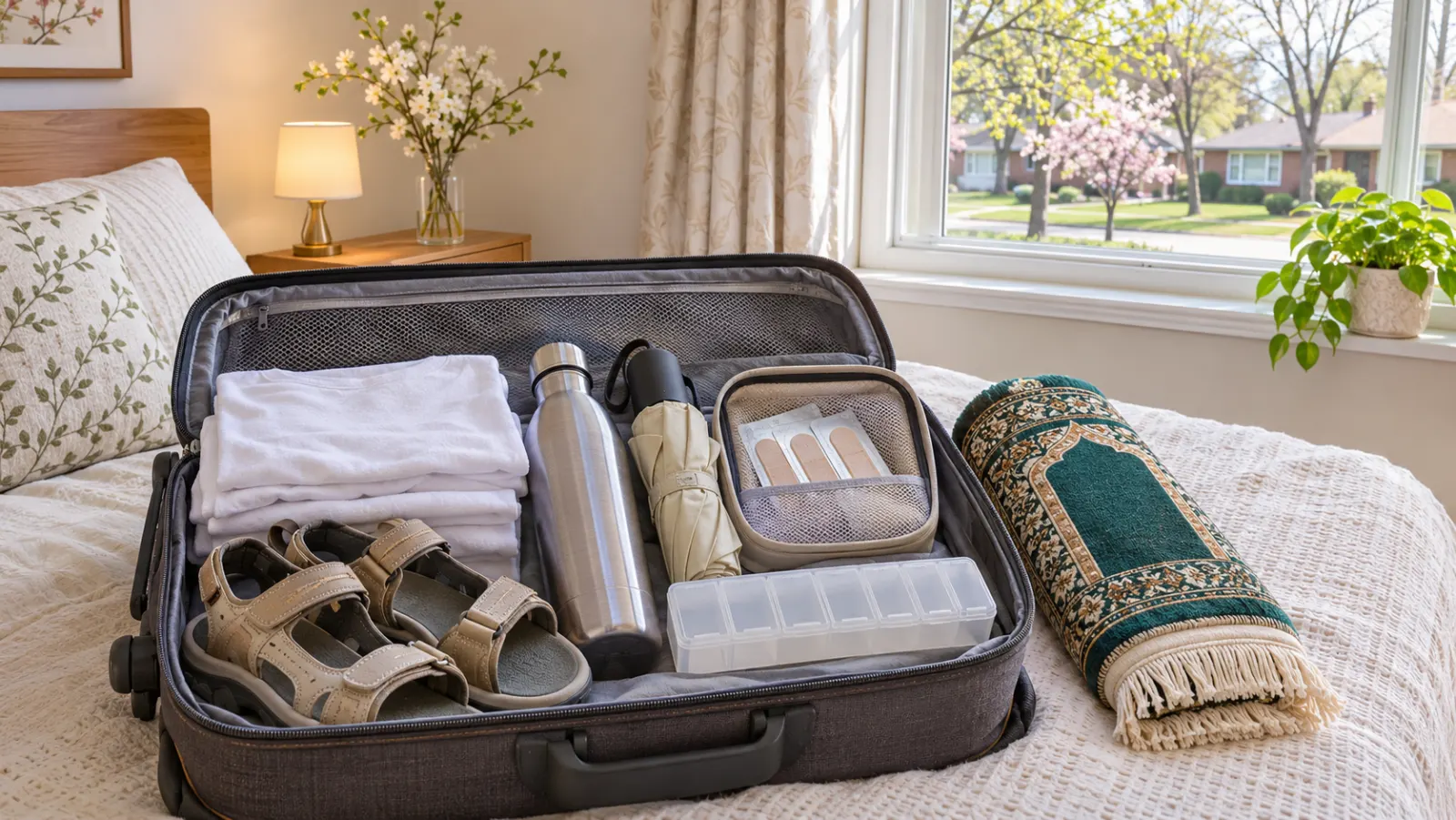
For many families in Scarborough, the pilgrimage to Makkah is the journey of a lifetime. Some have saved for years. Some are taking an elderly parent who has waited decades for this moment. Others are going for Umrah during a school break, or returning for a second or third time. Whatever the circumstances, the weeks before departure tend to fill up quickly with paperwork, packing, travel group meetings, and visits from relatives offering advice and asking for duas.
Health preparation can easily slip down that list. Yet Hajj in particular is physically demanding in a way few other trips are. Pilgrims walk long distances, sleep in shared tents, stand for hours in the open, and move through some of the largest crowds anywhere in the world, often in serious heat. Umrah is shorter and more flexible, but it still involves crowds, walking, and a long-haul flight. A little planning in the weeks before you leave can make the difference between spending your time in worship and spending it unwell in your hotel room.
This guide walks through the main health considerations for pilgrims leaving from Scarborough: vaccine requirements, heat, respiratory infections, foot care, managing chronic conditions far from home, and what to watch for after you return. It is general information, not a substitute for a personal visit, and it is written with respect for the spiritual significance of the journey.
Start early: why timing matters
The best time to think about your health is when you first book, not the week you fly. A few reasons:
- Some vaccines need at least ten days to two weeks before they offer good protection, and certificates may need to be issued before your visa is processed.
- If you take regular medication, you will want enough to last the whole trip plus extra, and that may need a prescription renewal.
- If you have a condition such as diabetes, heart disease, or high blood pressure, it is worth checking that it is well controlled before you leave, not discovering a problem in Mina.
- Your travel agent or group organizer may have deadlines for documents that come sooner than you expect.
A pre-travel medical evaluation about six to eight weeks before departure gives enough time to sort out vaccines, review medications, and talk through any concerns. If you are already closer to your travel date than that, it is still worth coming in. Some preparation is always better than none.
The meningococcal vaccine requirement
Saudi Arabia has long required pilgrims to show proof of vaccination against meningococcal disease, a bacterial infection that can cause meningitis and bloodstream infection. Outbreaks have been linked to mass gatherings in the past, which is why the requirement exists. The vaccine generally required is a quadrivalent (ACWY) meningococcal vaccine, given within a certain window before arrival, with the vaccination recorded on a certificate.
The exact rules, such as how recently the vaccine must have been given, which vaccine types are accepted, and what documentation is needed, are set by Saudi authorities and can change from season to season. Please confirm the current requirements with your Hajj or Umrah travel operator and official Saudi sources before your appointment, so we can make sure you leave with what you need.
HealthSmart Medical offers travel vaccinations and can help with international travel health certificates. Bring your passport and any previous vaccination records to your visit. If you are travelling as a family group, it often saves time to book everyone around the same week.
Other vaccines worth reviewing
Beyond the required meningococcal vaccine, your clinician may suggest checking that you are up to date with:
- Seasonal influenza. Respiratory infections spread easily in crowded tents and buses. Depending on the time of year and vaccine availability, a flu shot may be recommended.
- COVID-19. Recommendations vary by age and health; ask whether an updated dose makes sense for you.
- Routine adult vaccines, including tetanus and diphtheria, and measles if you are not sure you are immune.
- Pneumococcal vaccine for older adults or people with certain chronic conditions.
- Hepatitis A and sometimes hepatitis B, depending on your history and plans.
Not everyone needs every vaccine. The point of a visit is to sort out what applies to you.
Heat: the biggest everyday risk
Even when the dates fall outside the hottest months, temperatures in Makkah can be far beyond anything most of us experience in Scarborough. Coming from an Ontario spring, where we have only just put away our winter coats, the body has very little time to adjust. Heat exhaustion and heat stroke are among the most common reasons pilgrims need medical care.
Habits that help
- Drink water steadily throughout the day, not just when you feel thirsty. Older adults in particular often do not feel thirst until they are already dehydrated.
- Use an umbrella for shade during rituals performed outdoors. Many pilgrims find a light-coloured umbrella makes a noticeable difference.
- Plan the most strenuous walking for cooler times when your group schedule and the rites allow it.
- Rest in the shade whenever you can, and do not push through dizziness out of a sense that you should keep going.
- Watch your urine. Dark yellow urine, or very little of it, is a sign you need more fluid.
- Consider oral rehydration salts if you are sweating heavily or have diarrhea. Ask before you go whether these are suitable for you, especially if you have heart or kidney problems.
Recognizing heat illness
Heat exhaustion can cause heavy sweating, weakness, headache, nausea, cramps, and dizziness. Move to a cool place, loosen clothing, sip water, and rest. If symptoms do not improve within an hour or so, seek help from the medical services available on site.
Heat stroke is an emergency. Warning signs include confusion, slurred speech, collapse, seizures, or hot skin with very high body temperature, sometimes after sweating has stopped. Get medical help immediately and start cooling the person while you wait. Travel companions should know these signs too, particularly when travelling with an older parent.
Crowds, coughs and respiratory infections
Many pilgrims come home with what is sometimes called “Hajj cough”: a cough, sore throat, and congestion picked up in close quarters and made worse by dust, dry air, and exhaustion. Most cases are viral and settle on their own, but they can be harder on people with asthma, COPD, heart disease, or diabetes.
Some practical steps:
- Wash or sanitize your hands often, especially before eating and after touching shared surfaces.
- Consider a mask in packed areas, on buses, and in tents. Some pilgrims find a mask also helps with dust.
- Avoid sharing cups, towels, and razors. Razor sharing in particular can spread blood-borne infections, so use a licensed barber with a fresh blade for the ritual shaving, or bring your own disposable razor.
- Rest when you can. Sleep is often short during Hajj, but exhaustion weakens your defences.
If you have asthma or COPD, bring your inhalers in your hand luggage, carry a written action plan, and talk to your clinician about whether you should have a standby supply of other medication. If you develop high fever, shortness of breath, chest pain, or a cough that is getting rapidly worse, seek medical care on site rather than waiting until you get home.
Crowd safety
Crowd surges are a real danger during peak times. Follow your group leader’s instructions and the scheduled times assigned to your group, especially for the stoning ritual. Older pilgrims, people with mobility problems, and those with heart or lung conditions should be particularly cautious about the busiest periods. Keep your group’s contact numbers and your hotel address written on a card in your pocket, in case your phone is lost or the battery dies.
Looking after your feet
Pilgrims often walk many kilometres a day, much of it on hot stone or pavement, sometimes in sandals that were bought the week before. Blisters, cracked heels, and burns on the soles of the feet are very common. For people with diabetes, a small foot wound can turn into a serious infection.
- Break in your footwear at home. Walk in the sandals you plan to wear for several weeks before you leave. A few laps of a neighbourhood park or a long walk to the Kennedy subway station counts as training.
- Pack a small foot kit: blister plasters, antiseptic, a moisturizing cream for cracked heels, clean socks for times when socks are permitted, and a small towel.
- Check your feet every evening, especially if you have diabetes or reduced feeling in your feet. Look for blisters, redness, cuts, or swelling.
- Be careful on marble and stone floors that become very hot in direct sun, and try not to walk barefoot outdoors.
If a foot wound becomes red, swollen, warm, or starts to drain pus, have it looked at promptly by medical services there or as soon as you are home.
Chronic conditions and medications on the journey
Many pilgrims from Scarborough are older adults who live with diabetes, high blood pressure, heart disease, kidney disease, or arthritis. These conditions do not need to stop anyone from going, but they do call for planning.
Before you go
- Book a review of your condition. If your blood sugar or blood pressure has been unsteady, it is better to adjust medication now than to experiment abroad. Our team provides chronic disease management and can help you plan.
- Ask for a written medication list with generic names and doses. Brand names differ between countries.
- Carry more medication than you need, split between your hand luggage and a companion’s bag in case one goes missing.
- Keep medications in their original packaging, with prescriptions or a letter from your doctor, particularly for insulin, injectables, or controlled medications.
- Ask about insulin storage. Insulin should not be left in a hot bag or a hot bus. Cooling pouches designed for insulin can help.
Diabetes in particular
The combination of heat, long walks, irregular meals, and disrupted sleep makes blood sugar harder to predict. Low blood sugar is a particular risk during long rituals if meals are delayed. Carry glucose tablets or a quick sugar snack, check your sugars more often than at home, and make sure at least one travel companion knows how to recognize and treat a low. Dehydration from heat can also push sugars up, so steady fluid intake matters twice over.
Heart and blood pressure
Heat and exertion put extra strain on the heart. If you have chest pain, palpitations, or shortness of breath with exertion at home, mention it before you travel so it can be properly assessed. Some blood pressure and heart medications, especially water pills, can make dehydration more likely in hot weather; do not stop or change any medication on your own, but ask your clinician how to adjust for the trip.
Food, water and stomach upsets
Traveller’s diarrhea is common during pilgrimage. Bottled or properly treated water, freshly cooked hot food, and good hand hygiene reduce the risk. Be wary of food that has been sitting out in the heat. If you get diarrhea, focus on replacing fluids. Seek care if you have blood in your stool, high fever, signs of significant dehydration, or symptoms lasting more than a few days.
Women’s health considerations
Some women choose to discuss options for managing the timing of their period during Hajj or Umrah. This is a personal decision, and it is something to talk through with a clinician well in advance rather than in the final days, since some approaches take time to work and are not suitable for everyone. Pregnant women considering the journey should have a careful conversation with their doctor about the physical demands, heat, and access to care.
After you come home
The return is often joyful, with family gathering to welcome pilgrims home and hear about the experience. In the excitement it is easy to ignore lingering symptoms. See a clinician if, in the weeks after returning, you develop:
- Fever, especially with headache, stiff neck, a rash, or confusion. Meningococcal disease is rare but serious, and it needs emergency care. Call 911 or go to the nearest emergency department if someone is very unwell with these symptoms.
- A cough that is lasting more than a couple of weeks, or getting worse
- Shortness of breath or chest pain
- Diarrhea that has not settled
- A foot wound that is not healing
When you see a clinician, mention that you recently returned from Hajj or Umrah. That travel history helps guide which tests and treatments make sense. If you are unsure whether symptoms need attention, Health811 can offer advice by phone.
Getting ready for the pilgrimage in Scarborough
The spiritual preparation for Hajj and Umrah is deeply personal. The physical preparation is something we can help with. At HealthSmart Medical in Scarborough, we understand how much this journey means to pilgrims and their families. We can review the vaccine requirements you have confirmed with your operator, provide the vaccinations and documentation you need, check in on chronic conditions, and help you put together a plan for medications and travel supplies.
You can book online or call 416-757-7117 to arrange a visit. We are at 2425 Eglinton Ave. East, Unit 12, in Scarborough. We wish every pilgrim a safe journey and an accepted Hajj or Umrah.
This article is for general information and is not a substitute for medical advice. If you have severe or worsening symptoms, call 911 or go to the nearest emergency department.