The phone call often comes a few days after a long morning in the lab waiting room. Your glucose test came back higher than expected, and your prenatal provider would like to talk about gestational diabetes. For a lot of people, the first reaction is guilt: what did I eat, what did I do wrong? The honest answer is usually nothing. Gestational diabetes is driven largely by pregnancy hormones and by factors you cannot control, such as family history and genetics.
The second reaction is often worry about the baby. That worry is understandable, and it is also where the good news lives. Gestational diabetes is one of the most manageable conditions in pregnancy. With monitoring, some changes to eating and activity, and medication when needed, most people with gestational diabetes go on to have healthy pregnancies and healthy babies.
This guide explains how screening works, who is more likely to develop the condition, what day-to-day management looks like, and why the story does not end at delivery. It is written with Scarborough families in mind, many of whom juggle work, commuting, and cooking for a household that spans several generations. As always, it is general information. Your own care team will tailor the plan to you.
What gestational diabetes actually is
During pregnancy, the placenta makes hormones that help the baby grow. Some of those hormones make the body’s cells less responsive to insulin, the hormone that moves sugar out of the blood and into cells. Most people’s bodies make extra insulin to compensate. When the body cannot keep up, blood sugar rises, and that is gestational diabetes.
It typically appears in the second half of pregnancy, which is why screening is timed the way it is. It is different from type 1 or type 2 diabetes that was present before pregnancy, although sometimes pregnancy screening uncovers type 2 diabetes that was already there but had not been diagnosed.
Why it matters
When blood sugar stays high during pregnancy, extra sugar crosses the placenta and the baby may grow larger than expected. That can make delivery more complicated and can mean the baby has low blood sugar for a short time after birth. High blood sugar in pregnancy is also linked to a higher chance of high blood pressure problems. Keeping sugar in the target range lowers these risks considerably, which is the whole point of treatment.
How screening works
In Canada, pregnant people without known diabetes are usually offered screening for gestational diabetes in the second trimester, most often somewhere between 24 and 28 weeks. Your prenatal provider will give you a requisition for the lab, and you will go to a community laboratory for the test.
There are a few common approaches, and the one you are offered depends on your provider and local practice:
- A screening drink test. You drink a measured sugary drink and have your blood taken after a set time. You usually do not need to fast for this one. If the result is high, a longer diagnostic test follows.
- A longer glucose tolerance test. You fast beforehand, have blood taken, drink the sugar solution, and then have more blood drawn at timed intervals over a couple of hours.
Practical tips for test day:
- Ask in advance whether you need to fast, and for how long.
- Plan to stay seated at the lab for the full test. Walking around or leaving can affect the results.
- Bring water if you are allowed it, something to read, and a snack for afterward.
- If you know the sweet drink tends to make you vomit, tell the lab staff and your provider, since vomiting means the test may need to be repeated.
Earlier testing for some people
People at higher risk are sometimes tested earlier in pregnancy, as well as again at the usual time. This is partly to catch type 2 diabetes that may have been present before pregnancy. If you have had gestational diabetes before, or you have several of the risk factors below, ask your provider whether early testing makes sense for you.
Who is more likely to develop it
Anyone can develop gestational diabetes, including people who are slim, active, and eat well. Risk is a matter of likelihood, not a judgement. Factors that are generally associated with a higher chance include:
- Having had gestational diabetes in a previous pregnancy
- A parent or sibling with type 2 diabetes
- Being older at the time of pregnancy
- A higher body weight before pregnancy
- Having been told you have prediabetes
- Polycystic ovary syndrome
- Having previously given birth to a large baby
- Taking certain medications, such as steroids
- Belonging to certain ancestral backgrounds that carry a higher risk of type 2 diabetes, including people of South Asian, East and Southeast Asian, African, Caribbean, Hispanic, Middle Eastern, and Indigenous descent
That last point is relevant in a community as diverse as ours. Many families in Scarborough have roots in regions where type 2 diabetes is common, often at younger ages and at lower body weights than you might expect. That is not a reason for alarm, but it is a good reason not to skip screening, and to mention family history to your provider even if it feels like old news.
Managing blood sugar day to day
Once gestational diabetes is diagnosed, most people are referred to a diabetes in pregnancy program or a team that may include a doctor, a dietitian, and a diabetes educator. Your prenatal care referral provider usually coordinates this. Here is what management generally involves.
Checking your sugar at home
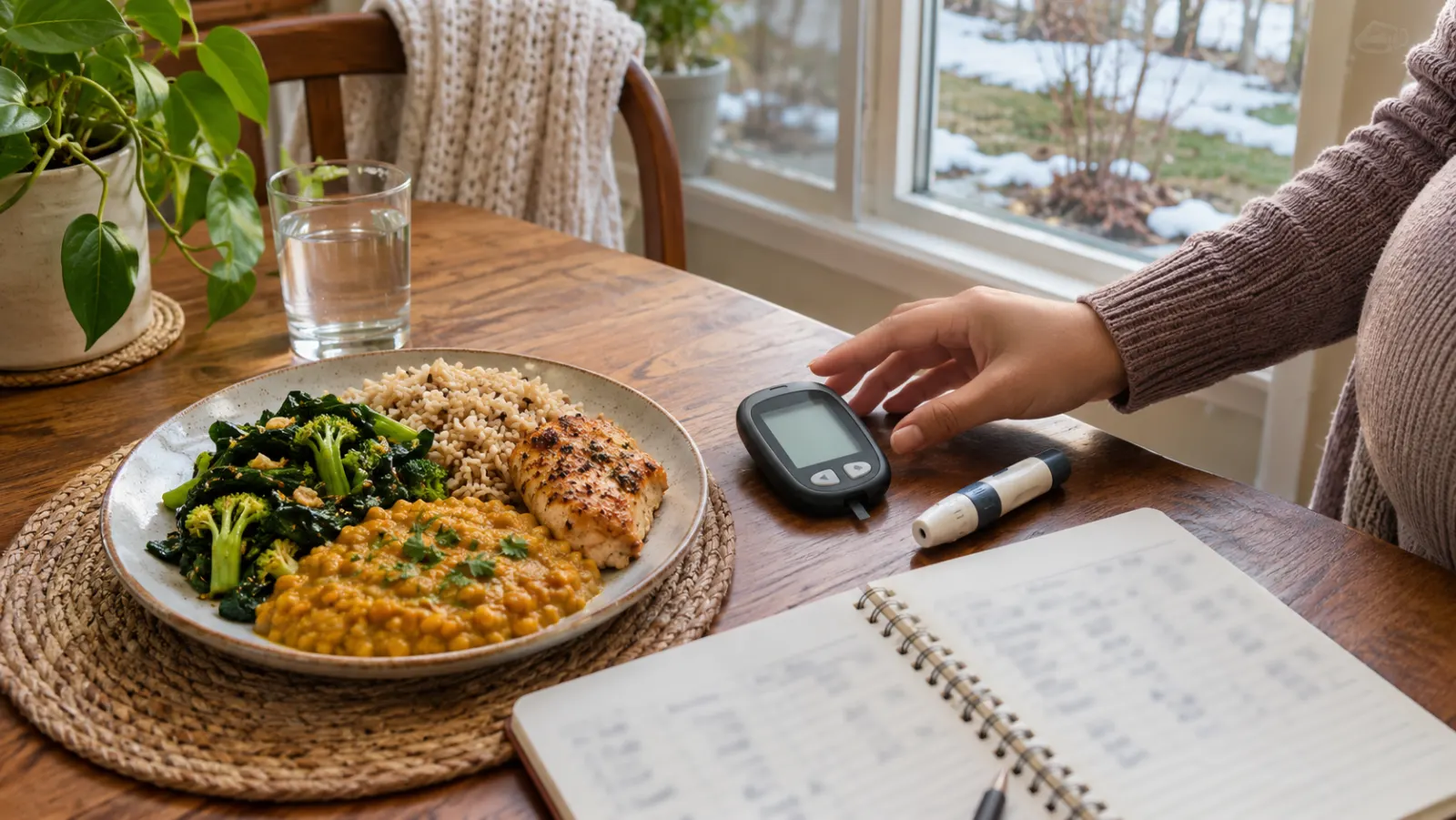
You will typically learn to check your blood sugar with a small meter, often first thing in the morning and after meals. Your team will give you target ranges and tell you how often to test. Keeping a simple log, on paper or in an app, makes appointments far more useful because it shows patterns, such as a breakfast that consistently sends your numbers up.
Food: adjusting, not abandoning
A gestational diabetes meal plan is not about cutting out entire food groups or giving up the dishes you love. It is about how much carbohydrate you eat at once, how it is spread across the day, and what you pair it with. General principles that dietitians often share include:
- Spread carbohydrates out across three moderate meals and a few snacks, rather than having a lot at once.
- Pair carbohydrates with protein and fibre. Rice with lentils, vegetables, and chicken will usually affect blood sugar more gently than a large plate of rice on its own.
- Watch portion sizes of starchy staples, such as rice, roti, naan, pasta, bread, potatoes, and plantain. You do not have to give them up. A dietitian can help you find the right amount.
- Choose whole grains and legumes where you can. Brown or parboiled rice, whole-wheat flour, oats, beans, chickpeas, and lentils tend to be digested more slowly.
- Be cautious with sweet drinks, including juice, pop, sweetened chai, and bubble tea. Liquid sugar raises blood sugar quickly.
- Breakfast is often the trickiest meal because hormones make sugar run higher in the morning. Many people find a lower-carbohydrate, higher-protein breakfast works best.
Do not skip meals or try to diet your way out of gestational diabetes. Pregnancy is not the time for weight loss, and going too long without food can cause problems of its own. If family members cook for you, bring them into the conversation. In multigenerational homes, a grandmother’s cooking is often an act of love, and small changes to portions and pairings are usually easier to agree on than overhauling the menu.
Moving your body
Regular physical activity helps your muscles use sugar and can noticeably lower readings after meals. If your provider has said exercise is safe for your pregnancy:
- A 10 to 15 minute walk after meals can be surprisingly effective.
- On cold or slushy March days, walking laps of an indoor mall or climbing stairs in your building is a good substitute for the sidewalk.
- Prenatal yoga, swimming, and stationary cycling are generally gentle options.
- Stop and call your provider if you have bleeding, pain, dizziness, fluid leaking, or contractions during activity.
When medication is needed
Sometimes, even with careful eating and regular activity, blood sugar stays above target. This is not a failure. Hormones increase as pregnancy progresses, and many people eventually need help from medication.
Insulin is the most commonly used treatment for gestational diabetes. It does not cross the placenta in a meaningful way, and it can be adjusted precisely as your needs change. Your team will teach you how to inject it, how to store it, and how to recognize and treat low blood sugar. In some cases, an oral medication may be discussed instead. Your team will explain the pros and cons of each option for your situation.
Extra monitoring in pregnancy
With gestational diabetes you may be offered additional appointments and ultrasounds to check the baby’s growth, along with closer attention to your blood pressure. Your care team will also talk with you about timing and planning for delivery. These extra checks are precautions, not a sign that something has gone wrong.
Call your provider promptly if you notice your baby moving less than usual, if your readings are much higher than your targets despite following your plan, or if you have symptoms of low blood sugar, such as shakiness, sweating, confusion, or a pounding heart, especially once you are on insulin. Go to the hospital or call 911 for severe headache, vision changes, sudden swelling of the face or hands, heavy bleeding, or if you cannot be woken easily or are confused.
After delivery: the part people forget
For most people, gestational diabetes goes away soon after the baby is born, because the placental hormones that caused it are gone. Insulin is often stopped right after delivery. Your baby’s blood sugar may be checked in the hours after birth, and feeding early and often helps keep it stable.
But gestational diabetes leaves an important clue. People who have had it have a higher chance of developing type 2 diabetes later in life, and of having gestational diabetes again in a future pregnancy. That is why follow-up matters.
Follow-up testing
- A glucose test is usually recommended in the months after delivery to confirm that blood sugar has returned to normal. Your provider will let you know the timing, and you can get a requisition through your family doctor.
- After that, periodic diabetes screening is recommended for the long term. Ask your family doctor how often you should be tested based on current guidelines.
- If you are planning another pregnancy, a check before conceiving is a good idea.
It is easy for this to fall through the cracks during the sleepless, busy months with a newborn. Put a reminder in your phone before you leave the hospital.
Lowering your long-term risk
The habits you built during pregnancy, such as balanced plates, regular walks, and paying attention to sweet drinks, are the same ones that help lower the risk of type 2 diabetes later. Breastfeeding, if it works for you, may also offer some benefit. Keeping up with an annual physical gives your family doctor a regular chance to check your sugar, weight, and blood pressure.
Getting support in Scarborough
A diagnosis of gestational diabetes brings a learning curve, but you will not be doing it alone, and it is a very manageable condition for most people. If you are pregnant and have not been screened yet, or you have had gestational diabetes in the past and are overdue for follow-up testing, HealthSmart Medical can help.
Our family physicians in Scarborough provide blood work requisitions, referrals to prenatal care, and ongoing diabetes management for patients who go on to need it. Visit us at 2425 Eglinton Ave. East, Unit 12, call 416-757-7117, or book online through our contact page.
This article is for general information and is not a substitute for medical advice. If you have severe or worsening symptoms, call 911 or go to the nearest emergency department.