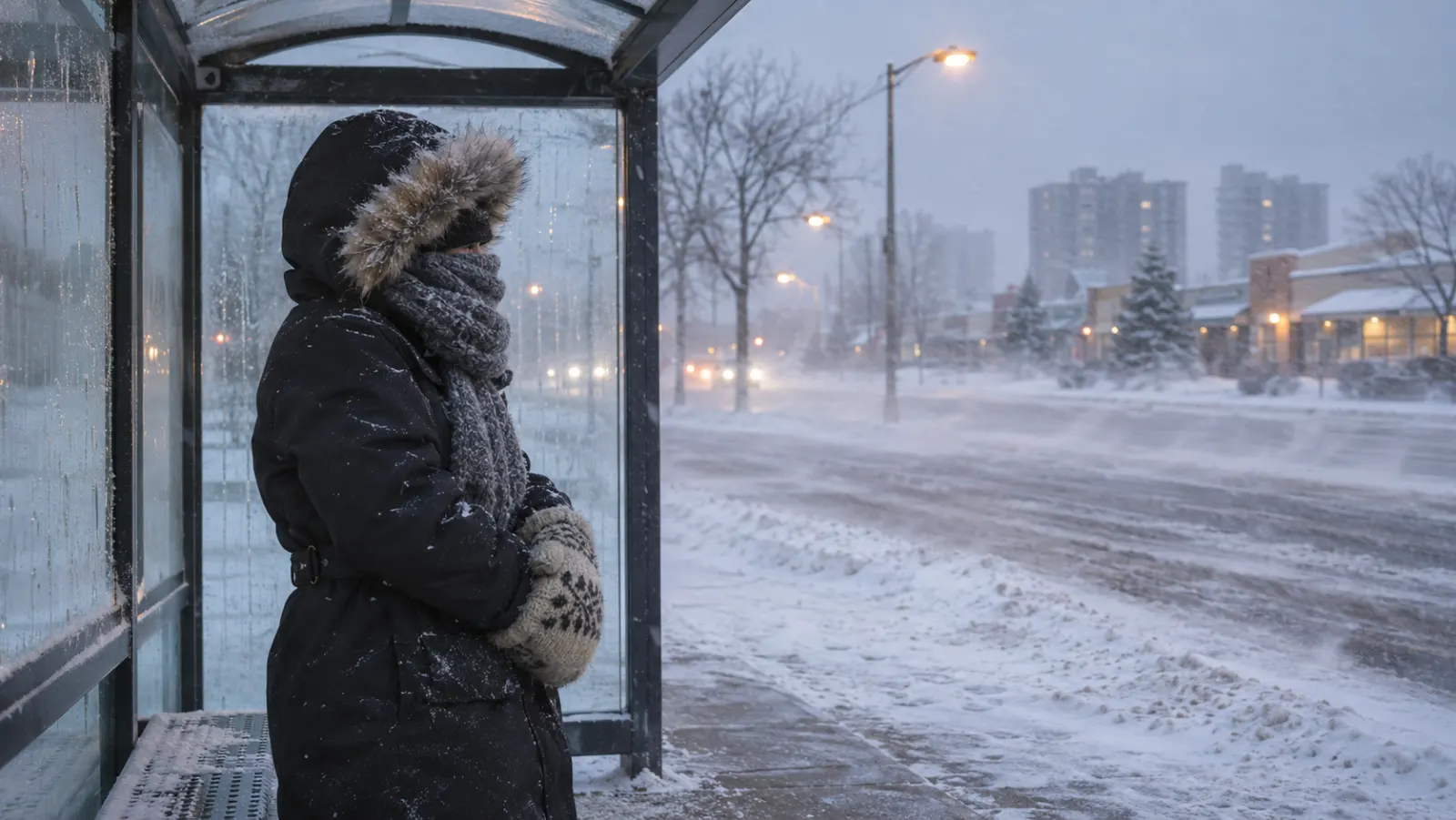
Most of the time, a cold Scarborough winter is simply uncomfortable. You pull your toque lower, walk a little faster to the bus shelter, and warm your hands on a coffee once you get inside. But on the bitterest days, when the temperature plunges and a hard wind comes across open parking lots and wide arterial roads, exposed skin can be injured in a surprisingly short time, and the body itself can start to lose heat faster than it can make it.
Frostbite and hypothermia are not just risks for mountain climbers and winter campers. In cities, they happen to people waiting for a late bus, workers on long outdoor shifts, seniors who slip and cannot get up, teenagers who underestimate the weather, and, most seriously, people who have nowhere warm to go. They are largely preventable, and recognizing the early signs can stop a minor cold injury from becoming a permanent one.
This guide explains how cold injuries happen, how to tell frostnip from frostbite, what hypothermia looks like, and how to rewarm someone safely. It is general information. If you are ever unsure whether a cold injury is serious, treat it as serious and get help.
How cold actually hurts the body
Your body works hard to keep its core, the brain, heart and other vital organs, at a steady temperature. When it is cold, blood vessels in the skin, fingers, toes, ears and nose narrow so that less warm blood is lost at the surface. That is a smart survival strategy, but it means those outer parts get colder and colder. If they get cold enough, ice crystals can form in the tissue itself, damaging cells and blood vessels. That is frostbite.
If heat loss continues, the core temperature itself begins to fall. That is hypothermia, and it affects the whole body, including the brain and heart.
Wind chill is not just a number on the forecast
Moving air strips heat away from skin much faster than still air. That is why a moderately cold day with strong wind can be more dangerous than a colder, calm day. Environment Canada’s wind chill index estimates how cold it feels on exposed skin, and on very high wind chill days, frostbite can develop on bare skin within minutes. Weather alerts often state how quickly exposed skin may freeze; take that information seriously when you plan your day.
The City of Toronto issues Extreme Cold Weather Alerts during severe cold, which can trigger extra services for people who are unhoused, including warming centres. Calling 311 is a good way to find out what is currently open.
Who is most at risk in Scarborough
Anyone can get frostbite or hypothermia, but some people face much higher risk:
- People experiencing homelessness, who may have no reliable way to get out of the cold, especially overnight
- Outdoor workers, including construction crews, couriers, parking attendants, crossing guards, snow-clearing crews and those working at loading docks
- Transit commuters facing long waits at exposed stops, particularly early in the morning or late at night when service is less frequent
- Older adults, who may feel cold less sharply and generate less body heat, and who may be on medications that affect temperature control
- Infants and young children, who lose heat quickly
- People with diabetes, peripheral vascular disease or Raynaud’s, whose circulation to the hands and feet may already be reduced
- Anyone drinking alcohol or using drugs, which can impair judgment, widen blood vessels so heat escapes faster, and reduce awareness of cold
- People with dementia or certain mental health conditions, who may wander outside or not dress appropriately
- Newcomers to Canada experiencing their first real winter, who may not yet have proper boots, layers or a feel for what minus twenty with wind actually means
Wet clothing dramatically increases risk. Sweat from a long walk, snow melting into jeans, or soaked gloves all pull heat away from the body far faster than dry layers.
Frostnip, frostbite and the difference between them
Frostnip
Frostnip is the earliest and mildest form of cold injury. The skin, often on the cheeks, ears, nose, fingers or toes, becomes red and then pale, and may feel cold, numb or tingly. There is no permanent damage. Once the area is warmed, sensation returns, sometimes with tingling or a stinging pain, and the skin may stay a little red for a while.
Frostnip is a warning. It means you need to get somewhere warm now, before it progresses.
Superficial frostbite
With superficial frostbite, the skin itself is starting to freeze. It may look white, greyish or waxy, and in darker skin tones it may look ashen or greyish-blue, or simply different from the surrounding skin. It may feel unusually firm to the touch while the tissue underneath is still soft. After rewarming, the area may swell, turn red or purplish, and develop fluid-filled blisters within a day or so.
Deep frostbite
Deep frostbite involves the tissue beneath the skin, sometimes down to muscle and bone. The area becomes hard, cold and completely numb. After rewarming, there may be large blood-filled blisters, and over the following days and weeks the skin can turn dark or black. Deep frostbite can cause permanent damage and needs urgent hospital care.
It can be difficult to tell superficial from deep frostbite in the first hours, even for clinicians. Any frostbite beyond simple frostnip should be assessed by a medical professional.
Hypothermia: when the whole body is losing heat
Hypothermia develops when the body’s core temperature drops below normal. It can come on gradually and is often not noticed by the person experiencing it, because confusion is one of its early effects.
Early signs
- Uncontrollable shivering
- Cold, pale skin
- Clumsiness and fumbling with zippers or keys
- Slurred speech or mumbling
- Poor judgment or unusual behaviour
As it worsens
- Shivering may slow or stop, which is a danger sign, not a sign of improvement
- Increasing confusion, drowsiness or acting strangely, such as removing clothing
- Slow, shallow breathing and a weak pulse
- Loss of consciousness
Hypothermia can also happen indoors. An older adult living alone in a poorly heated apartment, or someone who falls and lies on a cold floor for hours, can develop it without ever stepping outside.
Safe first aid for cold injuries
Call 911 immediately if:
- Someone is confused, very drowsy, slurring words, or not shivering despite being very cold
- Someone is unconscious, or breathing is slow or irregular
- Skin is hard, waxy, white or grey and does not soften with gentle warming
- Large areas are affected, or there are signs of both frostbite and hypothermia
Hypothermia takes priority over frostbite. Treat the whole person first.
While waiting for help with hypothermia
- Move the person somewhere warm and sheltered if you can do so safely.
- Handle them gently; rough movement can trigger dangerous heart rhythms in severe hypothermia.
- Remove wet clothing and replace it with dry layers or blankets, covering the head and neck.
- If they are alert and able to swallow, offer warm, sweet, non-alcoholic drinks.
- Do not put them in a hot bath or rub their arms and legs.
Rewarming frostnip and mild frostbite
For frostnip, getting indoors and warming the area against your own body, such as tucking fingers into your armpits, is usually enough.
For suspected frostbite:
- Only rewarm if there is no chance of refreezing. Thawing and then refreezing causes more damage than staying frozen until you reach shelter.
- Remove rings, watches and tight clothing from the area before swelling starts.
- Rewarm in warm water, about body temperature, comfortable to the touch of an unaffected hand, not hot. Rewarming can take some time and is often painful.
- Do not rub or massage the area, and never rub it with snow. Rubbing damages frozen tissue.
- Do not use direct dry heat, such as a heating pad, hair dryer, fireplace or car heater vent. Numb skin cannot sense burns.
- Avoid walking on frostbitten feet if possible.
- Do not break any blisters. Cover the area loosely with clean, dry dressings, placing gauze between affected fingers or toes.
After rewarming, get the area assessed. Some frostbite injuries need specialized hospital treatment that is time-sensitive.
Prevention: dressing and planning for real cold
Layers that work
- Base layer: something that wicks moisture, such as wool or a synthetic fabric. Cotton holds sweat and stays wet.
- Middle layer: fleece or wool to trap warm air.
- Outer layer: a windproof, water-resistant shell or parka.
- Extremities: a hat that covers the ears, a scarf or neck warmer over the face, and mittens, which are warmer than gloves. Insulated, waterproof boots with warm socks, plus a spare pair of socks if you will be out a long time.
Habits that help
- Check the forecast and wind chill before leaving home, and plan shorter outdoor exposure on extreme days.
- Use transit apps to time your arrival at the stop so you are not standing outside longer than necessary, and wait inside a shelter or nearby building when you can.
- Keep a spare toque, mittens and hand warmers in your bag or car.
- Change out of wet clothing as soon as possible.
- Avoid alcohol before being out in severe cold.
- Check on older neighbours and relatives during cold snaps, especially those who live alone.
For employers and outdoor workers
Workers should have access to warm breaks, a heated space, and the ability to change wet gear. Pairing up so co-workers can watch each other’s faces for pale patches is a simple and effective habit. If you have been injured by cold on the job, report it to your employer; a WSIB assessment can help document a workplace injury.
Helping someone who is unhoused
If you see someone outside in dangerous cold who seems unwell, confused or unresponsive, call 911. If they are alert and not in immediate danger but need shelter, calling 311 can connect you with information about warming centres and street outreach services. A warm drink, dry socks or a pair of mittens can make a real difference, and asking someone directly whether they need help is often the best first step.
Recovery and follow-up care
Even after mild frostbite, the affected area may stay sensitive to cold, tingly or painful for weeks or longer, and it may be more vulnerable to frostbite in future. People with diabetes or circulation problems should keep a close eye on healing, since their risk of infection and slow healing is higher.
A family doctor or walk-in clinician can check healing blisters, look for signs of infection, help with pain, and decide whether specialist follow-up is needed. Our minor wound care and dressing changes services can support recovery once hospital care, if needed, is complete. If you live with diabetes, make cold-weather foot care part of your regular diabetes management visits.
Staying warm and safe in Scarborough this winter
Severe cold in Scarborough is a fact of life for a few weeks each year, and a bit of planning goes a long way: good layers, mittens over gloves, dry socks, and a willingness to cut outdoor time short when the wind is brutal. Look out for the people around you, especially older neighbours and anyone without shelter.
For follow-up on a cold injury, worries about circulation in your hands and feet, or advice on staying safe at work through the winter, visit HealthSmart Medical at 2425 Eglinton Ave. East, Unit 12, in Scarborough. Call 416-757-7117 or book online. For anything that looks like serious frostbite or hypothermia, call 911 first.
This article is for general information and is not a substitute for medical advice. If you have severe or worsening symptoms, call 911 or go to the nearest emergency department.