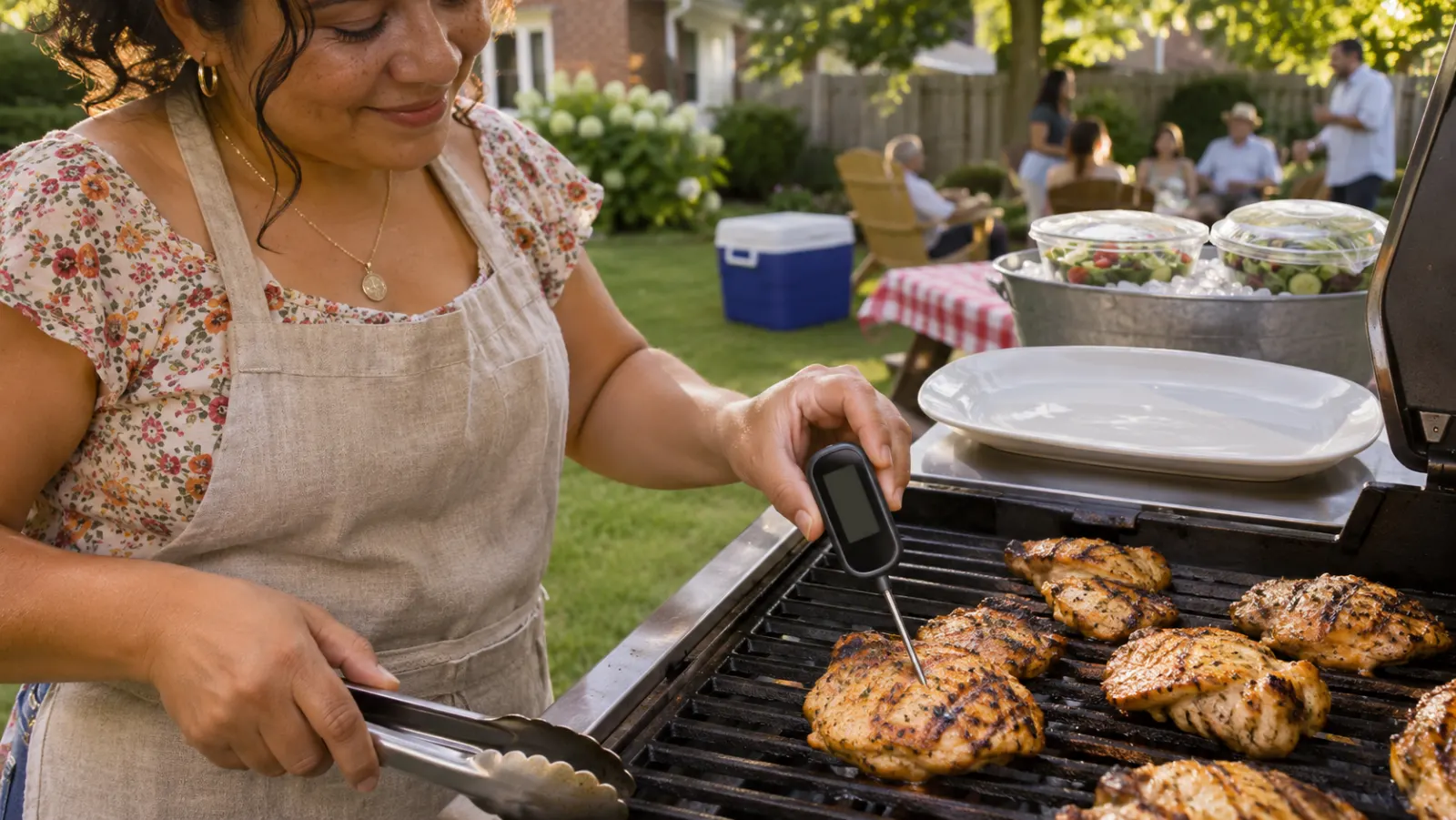
Summer in Scarborough is built for eating together. Long weekends at Thomson Memorial Park, family reunions under a rented pavilion at Morningside, backyard grills going on every street, a cousin’s graduation party with trays of food from three different kitchens. It is one of the best parts of the season.
It is also when food poisoning quietly picks up. Bacteria that cause foodborne illness multiply fastest in warm conditions, and summer gatherings are full of opportunities for them: food carried across the city in a hot car, platters sitting on a picnic table for the whole afternoon, raw chicken and salad sharing the same cutting board, and burgers that look done on the outside but are still pink in the middle.
We have written separately about viral stomach bugs and how to manage dehydration at home. This article focuses on the food side of the story: what actually causes food poisoning, how the timing of symptoms can hint at the culprit, the habits that prevent it at your next barbecue, and the signs that mean you should stop waiting it out.
What “food poisoning” really means
Food poisoning, or foodborne illness, is what happens when you eat or drink something contaminated with germs or the toxins they produce. In Canada, the usual suspects are bacteria such as Salmonella, Campylobacter, certain strains of E. coli, Staphylococcus aureus, Bacillus cereus, and Listeria, along with viruses like norovirus and, less often, parasites.
Some of these germs make you sick by infecting your gut. Others do their damage before you take a single bite: they grow in food left at the wrong temperature and release toxins, and those toxins cause symptoms even if the food is later reheated. That second point surprises many people. Reheating leftovers thoroughly is important, but it cannot always undo the harm from food that sat out too long.
Timing can be a clue
People often blame the last thing they ate. In reality, the gap between eating contaminated food and feeling sick can range from under an hour to several days, or in rare cases weeks. General patterns include:
Within a few hours
Sudden, intense nausea and vomiting that starts within roughly one to six hours of eating often points to a toxin that was already in the food. Two common causes:
- Staphylococcus aureus, which can get into food from hands and then multiplies when foods like cream-filled desserts, egg or potato salads, sandwiches, and sliced meats are left out.
- Bacillus cereus, which is closely linked to cooked rice that was left at room temperature too long before being refrigerated. In a city where fried rice, biryani, pulao, jollof, and rice and peas feature at so many family events, this one is worth knowing about.
These illnesses tend to be dramatic but short, often settling within a day.
From about half a day to a few days
Diarrhea, cramps, fever, and sometimes vomiting starting anywhere from several hours to a few days after a meal are more typical of an infection such as:
- Salmonella, often associated with undercooked poultry and eggs, and cross-contamination in the kitchen
- Campylobacter, commonly linked to raw or undercooked chicken
- Norovirus, which spreads easily through food handled by someone who is sick
Several days later
Some infections take longer to show up:
- E. coli O157 and related strains, often linked to undercooked ground beef, unwashed produce, and unpasteurized juice or milk, may start a few days after exposure. They can cause severe cramps and diarrhea that becomes bloody.
- Listeria, found in some deli meats, unpasteurized dairy, soft cheeses, smoked fish, and pre-cut melon, can take days to weeks to cause illness. It is of particular concern during pregnancy.
You do not need to work out the exact germ yourself. But if you tell your clinician what you ate, when, and who else got sick, it helps a great deal.
Common symptoms
Most cases include some mix of:
- Nausea and vomiting
- Diarrhea, sometimes watery and frequent
- Stomach cramps
- Fever or chills
- Headache, muscle aches, and tiredness
- Loss of appetite
Most healthy adults recover within a few days with rest and fluids. The main risk, as with any stomach illness, is dehydration from losing more fluid than you take in.
Looking after yourself at home
For most people, food poisoning is managed the same way as a viral stomach bug:
- Sip fluids steadily. Small, frequent sips of water or an oral rehydration solution from the pharmacy are easier to keep down than big gulps.
- Rest. Your body is working hard.
- Eat when you are ready. Plain, easy foods first; there is no need to force yourself or to fast for days.
- Be careful with anti-diarrheal medicine. It is not a good idea if you have bloody diarrhea or a high fever, and it should not be given to young children unless a doctor recommends it. A pharmacist can help you decide.
- Do not prepare food for others while you are sick and for a couple of days afterward, and wash your hands carefully.
If you take medications for diabetes, blood pressure, heart failure, or kidney disease, being unable to eat or drink normally can affect how those medicines work. Call your clinic or pharmacist for advice before skipping or changing any dose.
When food poisoning needs medical attention
Book a visit or come in the same day if:
- Symptoms are not improving after two or three days
- You are unable to keep fluids down for more than a day
- You have a fever above about 38.5°C, or one that persists
- There is blood or mucus in the stool
- Diarrhea has gone on for more than a few days
- You have signs of dehydration: very little or very dark urine, dizziness when standing, a dry mouth, or unusual tiredness
- You are pregnant, over 65, have a weakened immune system, or have a chronic illness such as diabetes or kidney disease
- A baby or young child is affected and is drinking poorly, having fewer wet diapers, or seems unusually sleepy
At the visit, your clinician may ask about recent meals, travel, and contacts, check for dehydration, examine your abdomen, and in some cases arrange a stool sample or blood work. Antibiotics are not needed for most food poisoning and can occasionally do harm, for example with some strains of E. coli, so the decision is made case by case. You can read more about our approach to gastrointestinal illness treatment.
Call 911 or go to the emergency department for
- Signs of severe dehydration, such as no urine for many hours, fainting, confusion, or a racing heart
- Vomiting blood, or black, tarry stools
- Severe or worsening abdominal pain, especially with a rigid belly
- Bloody diarrhea along with much less urine than usual, unusual paleness, or extreme tiredness, particularly in a child, since this can be a sign of a rare kidney complication after certain E. coli infections
- Blurred or double vision, drooping eyelids, slurred speech, trouble swallowing, or muscle weakness after eating, especially home-canned, home-preserved, or fermented foods; these can be signs of botulism, which is rare but life-threatening
- A stiff neck, severe headache, and fever in a pregnant person, an older adult, or someone with weakened immunity
When in doubt, Health811 lets you speak with a registered nurse 24 hours a day.
Pregnancy and food safety
Pregnancy changes the immune system in ways that make some foodborne infections more dangerous. Listeria in particular can pass to the baby even when the parent has only mild, flu-like symptoms. During pregnancy, it is generally recommended to avoid unpasteurized milk and cheeses, cold deli meats and hot dogs unless heated until steaming, refrigerated smoked fish, raw sprouts, and raw or undercooked meat, eggs, and seafood. If you are pregnant and develop a fever or stomach symptoms after a questionable meal, call your health care provider promptly rather than waiting.
Making your next BBQ or picnic safer
Most food poisoning is preventable. The rules are simple, but they are easy to forget when you are hosting thirty relatives in the backyard.
Keep it cold on the way
- Pack perishable food in a cooler with plenty of ice or freezer packs, and keep the cooler in the shade with the lid closed
- Use one cooler for drinks, which gets opened constantly, and another for food
- Do not leave coolers or grocery bags in a hot car while you run another errand on the way to the park
Watch the clock
Bacteria grow quickly between about 4°C and 60°C, the range food safety experts call the “danger zone.” As a rule:
- Do not leave perishable food out for more than two hours
- On a hot day, that safe window shrinks to about one hour
- Serve cold dishes in smaller portions and keep the rest in the cooler, or set serving bowls over ice
- Keep hot food hot, above 60°C, if it is going to sit out
Cook it all the way through
Colour is not a reliable guide. A burger can turn brown before it is safe, and chicken can look done on the outside while the centre is still undercooked. A digital food thermometer is one of the most useful kitchen tools you can own. Health Canada’s recommended minimum internal temperatures include:
- Ground beef, pork, and lamb (burgers, kebabs, sausages): 71°C
- Chicken and turkey pieces: 74°C
- Whole poultry: 82°C
- Leftovers, when reheated: 74°C
Insert the thermometer into the thickest part of the meat, away from bone.
Avoid cross-contamination
- Use separate cutting boards and knives for raw meat and ready-to-eat foods like salad, fruit, and bread
- Never put cooked food back on the plate that held it raw
- Do not reuse marinade from raw meat as a sauce unless you boil it first
- Wash your hands with soap after handling raw meat; at a park, bring water, soap, and paper towels, or at least hand wipes and sanitizer
Wash produce
Rinse fruits and vegetables under running water, including melons and others with a rind you do not eat; a knife can drag bacteria from the outside into the flesh. Keep cut fruit cold.
Handle leftovers with care
- Refrigerate leftovers within two hours, or sooner on a hot day
- Divide large pots of rice, curry, stew, or soup into shallow containers so they cool quickly; a big pot left on the stove overnight to cool is a classic setup for trouble
- Keep your fridge at 4°C or below
- Eat refrigerated leftovers within about three or four days
- Reheat until steaming hot throughout
- When in doubt, throw it out. Smell and appearance are not reliable signs of safety.
Big gatherings, many cooks
Large family events, religious celebrations, and community potlucks are a wonderful part of life in Scarborough, and often involve food cooked in several homes and transported long distances. A little coordination helps: agree on who is bringing what, ask cooks to chill dishes thoroughly before travelling, and assign one person to put food away once the meal is done.
If you think a restaurant or event made you sick
If you suspect your illness came from a restaurant, takeout, caterer, or a large community event, you can report it to Toronto Public Health by calling 311. Reports help public health staff spot outbreaks and investigate. If you still have some of the food, keep it sealed and labelled in the fridge in case it is needed. Let your clinician know too, especially if several people who ate the same food are sick.
Care close to home in Scarborough
A bout of food poisoning is miserable, but for most people it passes in a few days. If it is lingering, if you are worried about dehydration, or if someone vulnerable in your household is sick, HealthSmart Medical can help. We offer same-day medical appointments for suitable concerns, can arrange laboratory testing such as a stool sample when it is needed, and can provide sick notes after an assessment.
Visit us at 2425 Eglinton Ave. East, Unit 12, call 416-757-7117, or book online. And at your next barbecue, bring the thermometer.
This article is for general information and is not a substitute for medical advice. If you have severe or worsening symptoms, call 911 or go to the nearest emergency department.