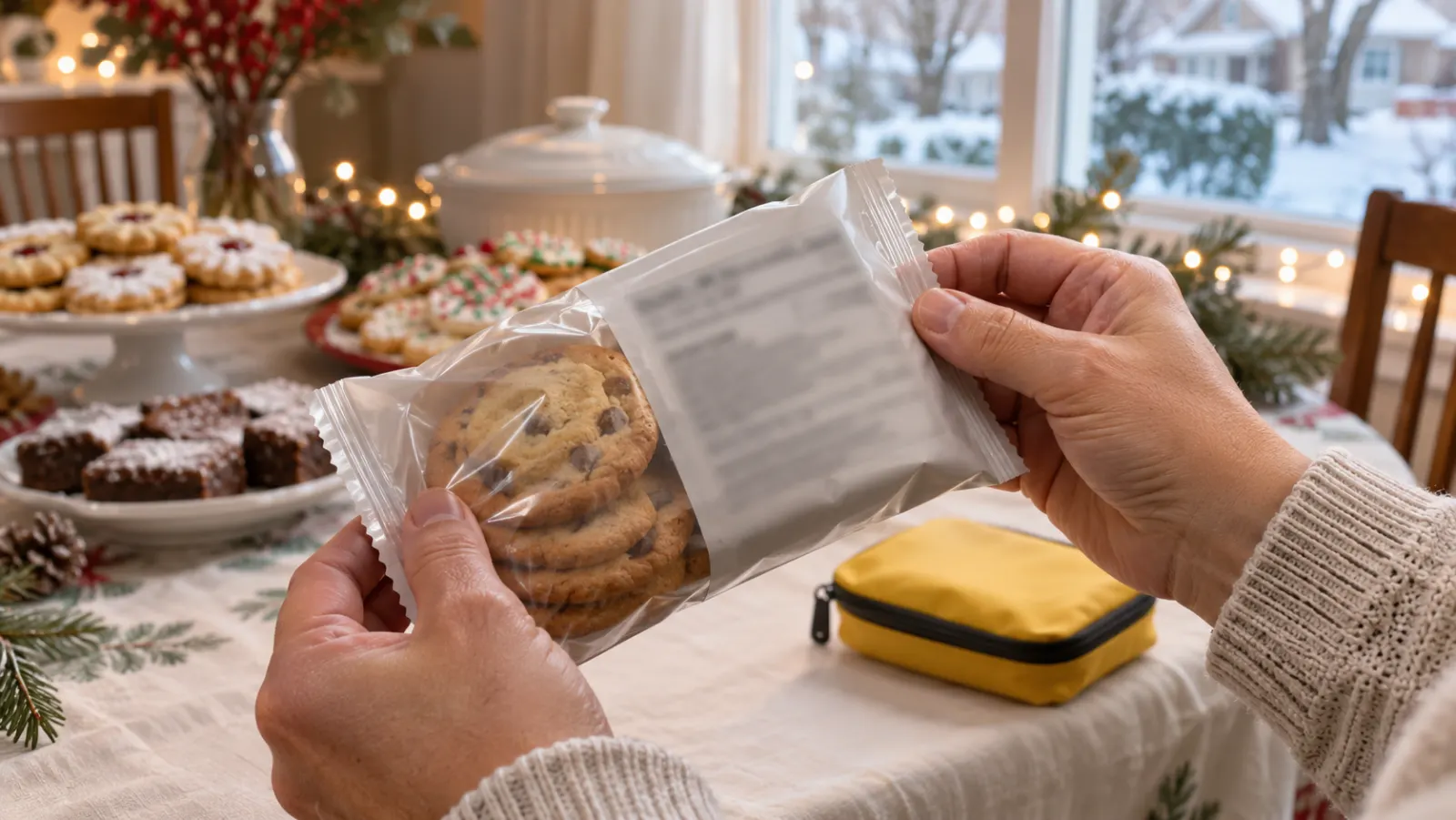
For most families, December means food. Trays of cookies at a neighbour’s open house, a classroom party with cupcakes, a relative’s living room filled with homemade sweets, and a long table at a community hall where everyone brings a dish. For parents of a child with a food allergy, the same scenes come with a quiet, constant calculation: what is in that, who made it, did the serving spoon go into the other bowl?
Food allergies in children are common enough that most classrooms have at least one child who needs a plan, and families in Scarborough deal with them across every cuisine and culture. The holiday season is a particular challenge, because food is shared, homemade, unlabelled and everywhere. That does not mean an allergic child has to sit out the celebrations. It means a little preparation, a clear plan for reactions, and adults who know what to do.
This guide focuses on food allergies specifically: how to read Canadian labels, how to handle gatherings, what a reaction looks like, how to use an epinephrine auto-injector, and how Ontario schools are expected to support students at risk. It is general information. Your child’s own allergy action plan, from your doctor or allergist, always comes first.
Allergy, intolerance, or something else?
The word “allergy” gets used loosely, so it helps to be precise.
A food allergy is an immune system reaction. The body mistakes a food protein for a threat and releases chemicals such as histamine. Reactions usually start within minutes to a couple of hours of eating the food, and they can involve the skin, gut, breathing and circulation. Even a tiny amount can trigger a reaction in some children.
A food intolerance, such as lactose intolerance, is a digestive issue. It can cause bloating, gas or diarrhea, and is unpleasant, but it is not dangerous in the same way and does not cause anaphylaxis.
Other reactions, such as a rash around the mouth after acidic fruit like tomatoes or strawberries, or a stomach upset during a bout of illness, are often mistaken for allergies. Getting the label right matters. Calling something an allergy when it is not can lead to unnecessary restrictions, especially for children who are picky eaters already. Missing a true allergy can be dangerous.
The foods most often involved
Health Canada lists a group of priority food allergens that must be clearly identified on packaged foods: peanuts, tree nuts, sesame, milk, eggs, fish, crustaceans and shellfish, soy, wheat and triticale, and mustard, along with gluten sources and added sulphites. In young children, milk, egg and peanut are among the most frequent. Some children outgrow milk and egg allergies over time; peanut, tree nut, sesame and seafood allergies are more likely to last, though not always.
Reading labels in Canada
Canadian labelling rules require priority allergens in pre-packaged foods to be declared, either in the ingredient list or in a “Contains” statement after it. That is a real help, but labels still take practice.
- Read the label every single time, even for a product you have bought for years. Manufacturers change recipes and facilities, and holiday or limited-edition versions of familiar treats are sometimes made on different lines.
- Check the “Contains” statement and the full ingredient list. Allergens can hide under other names in the list, though the law requires the common name to appear somewhere.
- Take “may contain” warnings seriously. Precautionary statements such as “may contain peanuts” or “made in a facility that also processes tree nuts” are voluntary, which means a product without one is not guaranteed to be free of cross-contact. Most allergists advise avoiding products with a “may contain” warning for your child’s allergen, but ask what your own child’s plan says.
- Be extra cautious with imported, bulk and bakery items. Treats from a specialty grocer, a bakery counter or a bulk bin may have incomplete labelling or no label at all. If you cannot confirm what is in it, it is safer to skip it.
- Seasonal chocolates and advent calendars deserve a careful look. Nut-containing and nut-free chocolates are often produced side by side.
When in doubt, many families use a simple rule: no label, no eat.
Holiday gatherings and potlucks
Scarborough’s holidays bring together food from many traditions in one room: shortbread and butter tarts, nut-filled baklava, sesame sweets, coconut and cashew mithai, almond cookies, peanut-sauced noodles, fish dishes, egg-based custards. That variety is wonderful, and it also means allergens can turn up where you do not expect them.
Before you go
- Talk to the host ahead of time. A short, friendly message usually works: “My son has a sesame allergy. Would you mind if I brought a dish he can eat and asked about a few of the others?” Most hosts are glad to help when they know in advance.
- Bring safe food. Bringing a dish your child can eat freely, plus a few safe treats, takes pressure off everyone.
- Feed your child before you leave so they are not arriving hungry and tempted.
- Pack the essentials. Your child’s epinephrine auto-injector (two, if that is what your plan says), their allergy action plan, and your phone should all come along, every time.
At the table
- Serve your child first, before other guests have dipped spoons from one dish into another.
- Watch for cross-contact. A serving spoon moved from the peanut noodles to the rice, or a knife used on a nut cake and then a plain one, is enough to transfer allergen.
- Ask who made each dish and what is in it. Homemade food is where questions matter most. Be wary of anything where the cook is not sure.
- Keep an eye on younger children. Toddlers pick up food from plates, coffee tables and the floor. Older cousins share snacks with good intentions.
- Hand-washing matters. Soap and water removes food proteins from hands. Hand sanitizer does not reliably do this. Wipe tables and toys too, if small children are playing where food has been.
Talking to relatives
In multigenerational families, grandparents and aunties often show love through food, and a child’s allergy can feel like a rejection of that care. It may help to explain that even a small taste, or a sweet “with only a little bit” of nuts, can cause a serious reaction, and that cooking or baking does not destroy most allergens. Inviting a grandparent to help make a safe version of a family recipe can turn a source of tension into a new tradition.
What an allergic reaction looks like
Reactions can be mild or severe, and a mild start does not guarantee a mild finish. Signs can include:
- Skin: hives, flushing, itching, or swelling of the lips, face or eyes
- Mouth and throat: itching, tingling, hoarse voice, difficulty swallowing, drooling, throat tightness
- Breathing: coughing, wheezing, noisy breathing, shortness of breath, a child saying their chest feels tight
- Gut: vomiting, repeated vomiting, stomach cramps, diarrhea
- Circulation: pale or bluish skin, dizziness, fainting, weakness
- Behaviour: a sudden sense of fear or doom, unusual crying, or a baby or toddler who becomes suddenly floppy and quiet
Young children often cannot describe what they feel. They may say their mouth is “spicy,” their tongue feels “fat,” or they may scratch at their throat or ears. Trust your instincts.
Anaphylaxis is a severe, potentially life-threatening allergic reaction. It typically involves two or more body systems, such as hives plus vomiting, or swelling plus coughing, or any breathing or circulation symptoms on their own after a likely exposure.
Using an epinephrine auto-injector
Epinephrine is the first-line treatment for anaphylaxis. It works quickly to open the airways and support blood pressure. Antihistamines such as cetirizine or diphenhydramine may ease itching and hives, but they do not stop anaphylaxis and should never be used instead of epinephrine.
The steps
Follow the instructions printed on your child’s device and your action plan. In general:
- Give epinephrine right away at the first signs of a serious reaction. Inject into the outer middle thigh. It can go through clothing.
- Call 911. Say your child is having an allergic reaction and has been given epinephrine. Do not drive your child to hospital yourself if you can avoid it.
- Position your child. Have them lie down, with legs raised if they are dizzy or pale. If they are having trouble breathing, they may need to sit up. If they are vomiting, lay them on their side. Do not have them suddenly stand or walk.
- Give a second dose after 5 minutes or more if symptoms are not improving or are getting worse, if a second device is available.
- Go to hospital even if your child seems better. Symptoms can return hours later, and your child needs to be observed.
Common hesitations
Many parents worry about giving the injection when it is not needed. In general, epinephrine is very safe for children. Side effects such as a racing heart, shakiness or paleness are usually short-lived. Delaying epinephrine during anaphylaxis is far more dangerous than giving it when it turns out not to have been strictly necessary. If you are unsure whether it is anaphylaxis, most action plans say to give it.
Looking after the device
- Check the expiry date and set a phone reminder to replace it.
- Store it at room temperature. Do not leave it in a freezing car overnight during a Scarborough winter or on a hot dashboard in summer.
- Make sure the dose still fits your child’s weight as they grow. Your doctor will choose the appropriate strength.
- Practise with a trainer device, and make sure grandparents, babysitters and older siblings know where it is and how to use it.
School, daycare and Sabrina’s Law
Ontario’s Sabrina’s Law requires publicly funded school boards to have an anaphylaxis policy. Schools are expected to develop an individual plan for each student at risk of anaphylaxis, train staff, and have strategies to reduce exposure to allergens. The law is named after Sabrina Shannon, a teenager who died after an allergic reaction at school.
For parents, this translates into a few practical tasks:
- Tell the school about your child’s allergy at registration and at the start of each year.
- Provide the school’s forms, filled out with your doctor’s input, along with an up-to-date auto-injector and a current photo if requested.
- Discuss where the device will be kept. Many children carry their own auto-injector once they are old enough; younger children may have one kept in a known, accessible location.
- Ask about class parties, field trips and lunchtime supervision, especially in December, when classroom treats are common.
- Teach your child, step by step, to say no to shared food, to tell an adult right away if they feel unwell, and, when they are ready, how to use their own device.
Daycares and before- and after-school programs should also have your child’s plan. Our medical forms completion service can help with the paperwork that schools and programs request.
Getting a proper diagnosis
If you suspect your child has a food allergy, avoid testing foods at home and avoid ordering broad panels of allergy tests online. Allergy blood and skin tests can show “sensitization” to foods a child actually eats without any problem, which can lead to unnecessary avoidance.
A good diagnosis starts with a careful history: what your child ate, how much, how quickly symptoms started, and what they looked like. Photos of a rash on your phone can be very helpful. From there, your doctor may recommend avoiding the food for now, provide a prescription for an auto-injector if appropriate, and arrange a referral to an allergist for testing and, sometimes, a supervised food challenge. Our allergy treatment and pediatric care visits are a good starting point, and we can arrange specialist referrals when needed.
Babies and new foods
Current Canadian advice generally supports introducing common allergens such as peanut and egg to babies around six months of age, once they are developmentally ready for solids, rather than delaying them. For babies with severe eczema or an existing food allergy, it is worth discussing timing with your doctor first. Once a food is introduced without problems, keeping it in the diet regularly seems to matter.
Enjoying the season in Scarborough
A food allergy in Scarborough’s busy holiday season asks a lot of parents, but children with allergies can still enjoy every party, potluck and classroom celebration. Read labels every time, bring safe food, serve your child first, carry epinephrine everywhere, and make sure the adults around your child know the plan. When in doubt, use the epinephrine and call 911.
If your child has had a reaction, needs a refill or a form, or you simply want to review their plan before the holidays, we are happy to help. HealthSmart Medical is at 2425 Eglinton Ave. East, Unit 12, in Scarborough. Call 416-757-7117 or book online.
This article is for general information and is not a substitute for medical advice. If you have severe or worsening symptoms, call 911 or go to the nearest emergency department.