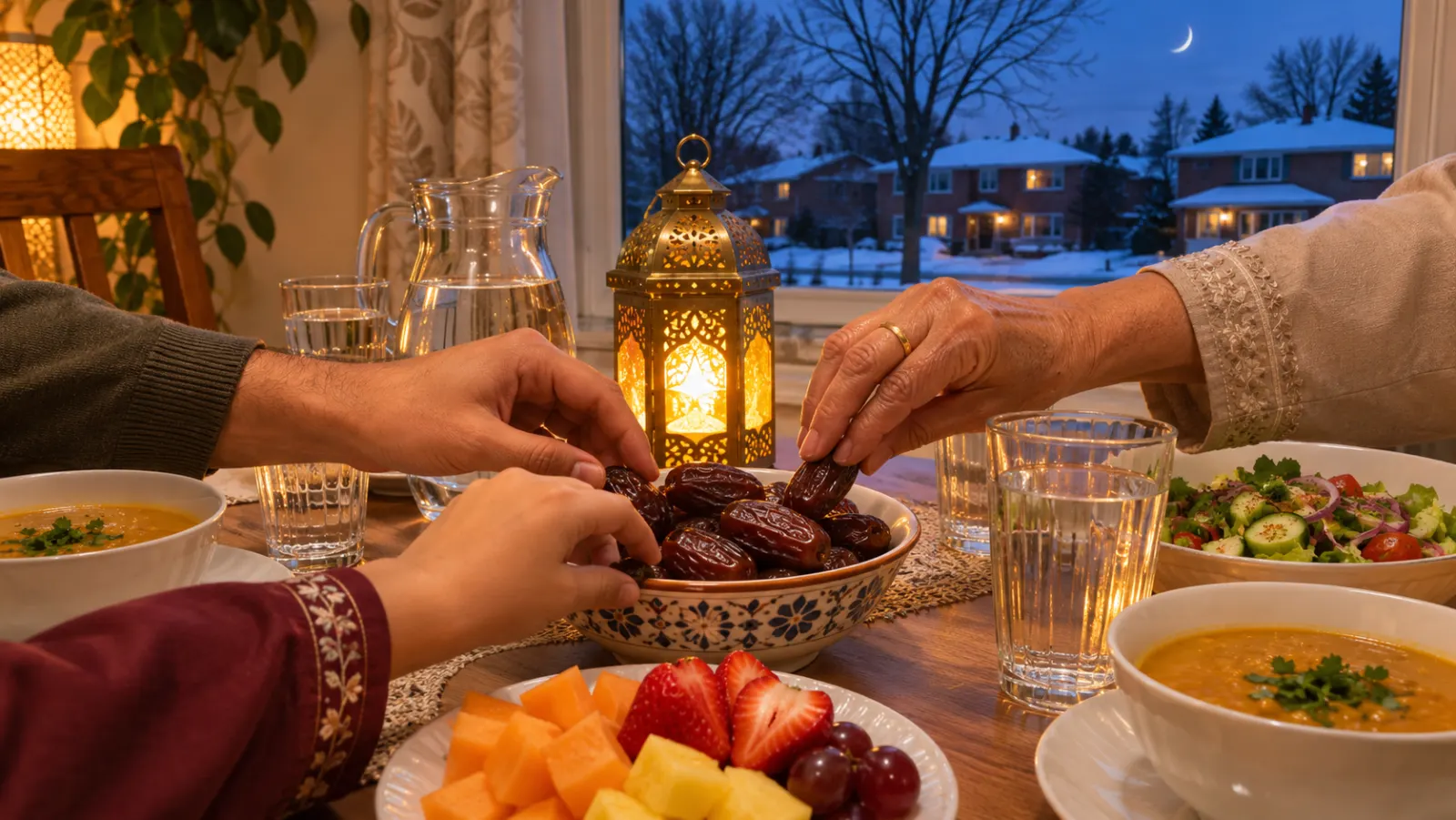
Ramadan Mubarak in advance to our Muslim patients and neighbours. With the new moon expected around the end of February, Ramadan 2025 is set to begin within days, and households across Scarborough are already stocking up on dates, planning iftar gatherings, and adjusting work and school routines for the month ahead.
For most healthy adults, fasting from dawn to sunset is safe, and many people describe the month as a time of renewed focus, gratitude and community. But fasting changes when you eat, when you drink, when you sleep and when you take medications, all at once. For people living with diabetes, high blood pressure, kidney disease or other ongoing conditions, those changes need some planning.
This article is a practical medical guide for fasting safely. It is not a religious ruling. Questions about whether you should fast, or how to make up missed days, are best discussed with your imam or a trusted scholar, ideally alongside advice from your doctor. The two conversations work well together, and both start from the same principle: protecting your health.
What this year’s fast looks like in Scarborough
Ramadan moves about 11 days earlier each year, which means fasting hours change from one year to the next. In early spring, Toronto-area fasts are considerably shorter than the long, hot summer fasts that some families remember, though they will lengthen gradually as the days get longer through March.
Two local details are worth keeping in mind:
- Daylight Saving Time begins on March 9. When the clocks spring forward, suhoor and iftar shift an hour later on the clock. If you take medications at fixed clock times, or have set phone alarms for doses, update them that weekend.
- Late-winter weather still matters. Indoor heating dries the air, and people often drink less when it is cold. Neither helps hydration during a fast.
Many people also commute to work or school on the TTC, work long warehouse or healthcare shifts, or care for children and elders while fasting. A plan that fits your actual daily routine is more useful than a generic one.
Talk to your doctor before the month begins
The ideal time for a pre-Ramadan appointment is several weeks before the month starts, but even with only a few days to go, a quick visit or virtual care appointment is still worthwhile if you take regular medications or manage a chronic condition. A good pre-Ramadan conversation covers:
- Whether fasting is reasonably safe for you this year, given your current health
- How to adjust the timing, and sometimes the dose, of each medication
- What blood sugar or blood pressure readings should prompt you to break your fast
- Whether any recent blood work needs repeating, such as kidney function or A1C
- What to eat and drink at suhoor and iftar to stay steady
Bring all your medications, including vitamins, herbal products and anything prescribed by a specialist, so nothing is missed. If you have a home glucose meter or blood pressure cuff, bring your recent readings as well.
Diabetes and fasting
Diabetes deserves particular attention, because fasting raises the risk of both low blood sugar during the day and high blood sugar after large evening meals. Dehydration and, in some cases, a dangerous condition called diabetic ketoacidosis are also concerns.
Who is at higher risk
Doctors generally consider fasting higher risk for people who:
- Have type 1 diabetes, particularly if control is not stable
- Have had severe low blood sugar or diabetic ketoacidosis in recent months
- Often have hypoglycemia, or do not feel the warning signs of a low
- Are pregnant and have diabetes
- Have advanced kidney disease, significant heart disease, or other serious complications
- Take insulin or certain diabetes pills that can cause lows, such as sulfonylureas
- Are older and frail, or live alone with complex health needs
Many people with well-controlled type 2 diabetes managed with diet or medicines that rarely cause low blood sugar are able to fast with planning. The decision is individual, and your doctor can help you weigh it honestly. Our diabetes management visits are a good place to start.
Medication timing for diabetes
Do not change your diabetes medications on your own. Your doctor may suggest adjustments such as:
- Moving once-daily medications to iftar, or splitting twice-daily ones between iftar and suhoor
- Reducing the dose of medications more likely to cause lows, often especially the suhoor dose
- Adjusting long-acting and mealtime insulin doses and timing
- Reviewing medicines that can increase dehydration, such as SGLT2 inhibitors, which may need special precautions or a temporary change
Every regimen is different. A plan written down on paper, ideally in the language you read most comfortably, is easier to follow at 4:30 a.m. than one you are trying to remember.
Check your blood sugar
Many Islamic scholars hold that a finger-prick glucose check does not break the fast, so testing is encouraged, especially:
- Before suhoor and a few hours after it
- Around midday and in the mid-afternoon
- Before iftar and a couple of hours afterward
- Any time you feel unwell
When to break your fast
Most diabetes guidance advises breaking the fast immediately if:
- Your blood sugar drops below about 3.9 mmol/L, or you have symptoms of a low such as shaking, sweating, confusion or a racing heart
- Your blood sugar rises above about 16.7 mmol/L
- You feel faint, confused, very unwell or are vomiting
Your doctor may give you personalized numbers. Treat a low promptly with fast-acting sugar, and never “push through” until sunset. Breaking a fast to protect your health is widely recognized within Islamic teaching.
Other medications: a general guide
Many medications can be shifted to fit eating hours. Some general patterns:
- Once-daily medicines can often be taken at iftar or suhoor, at the same time each day.
- Twice-daily medicines can often be split between suhoor and iftar.
- Medicines taken three or four times a day may need to be switched to a longer-acting version for the month. Ask early.
- Thyroid medication is usually taken on an empty stomach; your doctor may suggest taking it at bedtime or before suhoor with a gap before eating.
- Blood pressure medicines, especially water pills (diuretics), can increase dehydration and dizziness during a fast. Some people need a dose change, so it is worth discussing with your high blood pressure management team.
- Blood thinners, seizure medications, heart medications and transplant drugs need careful, individual advice. Never stop these on your own.
Scholarly views differ on whether some treatments, such as inhalers, eye drops, injections or patches, affect the fast. If you use an inhaler for asthma or COPD, talk with both your doctor and your imam rather than skipping doses, because uncontrolled breathing problems can become serious quickly.
Your pharmacist is also a helpful partner for reviewing timing, and many pharmacies in Scarborough are familiar with these questions.
Hydration at suhoor and iftar
Dehydration is the most common health problem during fasting, and it often shows up as afternoon headaches, dizziness when standing, constipation, or dark urine.
Practical ways to stay ahead:
- Spread water out between iftar and suhoor. Rather than drinking a large amount at once, aim for a glass or two at iftar, more through the evening, and another glass or two at suhoor.
- Eat water-rich foods such as soups, lentil and vegetable stews, cucumbers, tomatoes, watermelon, oranges and yogurt.
- Go easy on very salty foods like pickles, salted snacks and some processed meats, which can increase thirst the next day.
- Limit caffeine at suhoor. Coffee and strong tea can make you lose more fluid. If you rely on caffeine, gradually reducing it in the days before Ramadan helps prevent withdrawal headaches.
- Be cautious with sugary drinks. Traditional sweet drinks are part of many iftar tables, but large amounts can spike blood sugar and do not hydrate as well as water.
People with heart failure or advanced kidney disease may have specific fluid limits, so follow your doctor’s guidance rather than general advice.
Eating well when the window is short
Suhoor: do not skip it
Suhoor is what carries you through the day. A balanced pre-dawn meal with slow-digesting foods helps keep blood sugar steadier and hunger at bay. Good options include:
- Whole-grain bread, oats or brown rice
- Eggs, beans, lentils, yogurt, cheese or other protein
- Fruit and vegetables for fibre and fluid
- A little healthy fat, such as nuts or olive oil
Eating suhoor as close to dawn as practical, rather than at midnight before bed, generally helps the fast feel more manageable.
Iftar: start gently
Breaking the fast with dates and water is a long-standing tradition, and it is a sensible way to bring blood sugar up gently. After that:
- Pause before a large meal. Pray, rest, or take a few minutes before eating the main course.
- Fill half your plate with vegetables or salad, and choose baked or grilled options over deep-fried ones more often.
- Watch portion sizes of sweets and fried snacks, especially if you have diabetes, reflux or high cholesterol.
- Avoid lying down right after a heavy meal if you are prone to heartburn.
Community iftars at mosques and family homes across Scarborough are one of the joys of the month. It is fine to enjoy them, while keeping an eye on how often heavy meals stack up during the week.
Who may be exempt from fasting
Islamic teaching generally exempts people for whom fasting would cause harm. While the details are a matter for religious guidance, exemptions are commonly understood to include people who are ill, travelling, pregnant or breastfeeding when fasting may affect their or the baby’s health, menstruating or recovering after childbirth, elderly or frail, or children who have not reached puberty.
From a medical perspective, people who should have a careful conversation with their doctor, and often should not fast, include those with:
- Unstable or high-risk diabetes, as described above
- Advanced kidney disease or a history of kidney stones that recur with dehydration
- Heart failure, recent heart attack or unstable heart rhythm problems
- Pregnancy, especially with complications such as gestational diabetes or high blood pressure
- Eating disorders, or a history of them
- Conditions requiring medication at strict intervals throughout the day
- Recent surgery or acute illness
If your doctor advises you not to fast, it can feel disappointing, especially when the rest of the family is fasting together. Many people find meaningful ways to take part in the month through prayer, charity, reading and community, and your imam can advise on alternatives such as making up days later or offering fidya.
Warning signs: stop fasting and get help
Break your fast and seek medical attention if you experience:
- Fainting or near-fainting
- Confusion, unusual drowsiness or difficulty speaking
- Chest pain or shortness of breath
- Symptoms of low blood sugar that do not improve after treatment
- Repeated vomiting, or being unable to keep fluids down
- Very little or no urine, or very dark urine with dizziness
- Severe abdominal pain
Call 911 for chest pain, signs of stroke, severe confusion, a seizure or loss of consciousness. For less urgent questions, Health811 offers nurse advice around the clock, including in the late-night and pre-dawn hours when many people are awake for suhoor.
Children, teens and older relatives
Children often like to try practice fasts, perhaps half a day or a few days on weekends. That can be a meaningful experience, but watch for headaches, fatigue and dehydration, especially on days with gym class or sports. Teens fasting during exams or after-school jobs may need extra attention to sleep and suhoor.
Older relatives, particularly those on several medications, are more prone to dehydration, dizziness and falls. If a grandparent in your household is planning to fast, a medication review beforehand is a kind and practical step.
Plan your Ramadan with HealthSmart Medical
Whether you have diabetes, take daily medications, or simply want to make sure fasting is safe for you this year, our team is happy to help you prepare. We offer diabetes and blood pressure care, blood work requisitions if your doctor wants updated results, and virtual visits for quick medication questions during the month.
Visit HealthSmart Medical at 2425 Eglinton Ave. East, Unit 12, in Scarborough, call 416-757-7117, or book online. Bring your medications and your questions, and we will work out a plan that respects your faith and protects your health. Wishing you and your family a peaceful and healthy Ramadan.
This article is for general information and is not a substitute for medical advice. If you have severe or worsening symptoms, call 911 or go to the nearest emergency department.