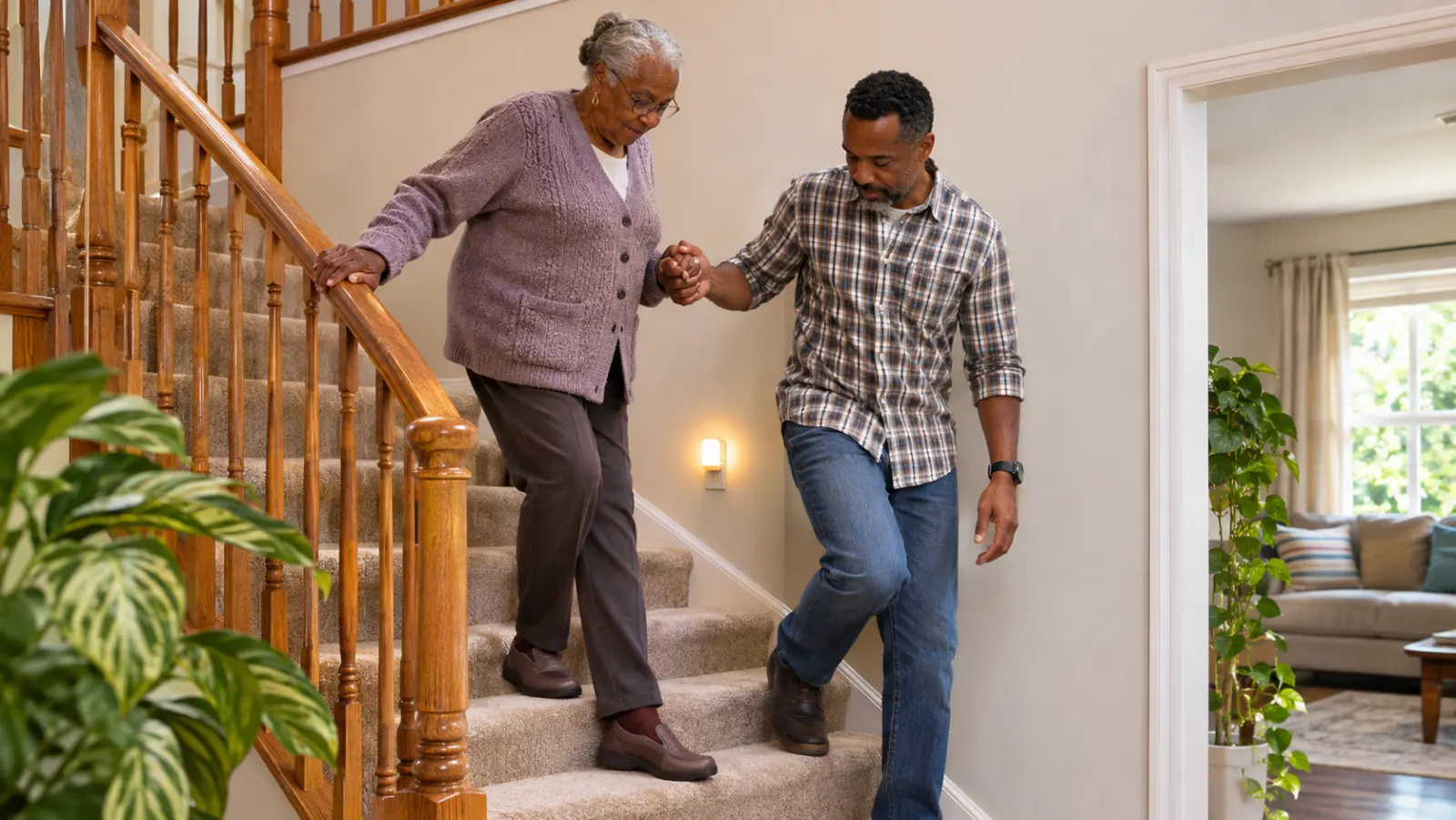
Ask almost any family in Scarborough and someone will have a story. A grandfather who slipped on black ice on the way to morning prayers. A mother who tripped over a bath mat in the middle of the night. An aunt who has been “fine” since her fall, except that she no longer goes out alone. Falls are among the most common reasons older adults lose independence, and they are often treated as bad luck, something that simply happens with age.
They do not have to be. Falls usually result from a mix of factors that build on each other: weaker leg muscles, slower balance reactions, medications that cause dizziness, poor lighting, a loose rug, worn-out boots, a slick sidewalk. Each of those can be changed. Address a few of them and the risk drops.
This guide is for seniors and for the adult children, grandchildren, and caregivers who look out for them. It covers the outdoor hazards of a Scarborough winter, the risks hiding inside the home, how medications and vision play a part, the exercises that genuinely improve balance, and what to do if a fall happens. It is general information, and your own clinician can give advice suited to your health.
Why falls matter so much later in life
A fall at 30 usually means a bruise and some embarrassment. A fall at 80 can mean a broken hip, a head injury, a long hospital stay, or a move out of one’s own home. Bones tend to become thinner with age, especially after menopause, and conditions like osteoporosis mean a simple fall can cause a fracture. Blood thinners, which many older adults take, raise the risk of serious bleeding after a head bump.
There is also a quieter cost. After a fall, many seniors become afraid of falling again. They go out less, move less, and see friends less. Less movement weakens muscles further, which in turn makes another fall more likely. Breaking that cycle is one of the most important goals of fall prevention.
Common risk factors
You may be at higher risk of falling if you:
- Have fallen in the past year, even without injury
- Feel unsteady when standing or walking, or need to hold onto furniture
- Worry about falling
- Take several medications, especially ones that cause drowsiness or dizziness
- Have weak legs, joint pain, or foot problems
- Have vision changes, numbness in the feet, or memory problems
- Have conditions such as Parkinson’s disease, stroke, arthritis, diabetes, or low blood pressure when standing
- Drink alcohol, especially alongside medications
Having several of these together raises the risk more than any one alone.
Getting through a Scarborough winter safely
From December through March, ice is a serious concern. Freeze-thaw cycles leave driveways, bus stops, and plaza parking lots slick, and black ice is often invisible until you are on it. Some practical precautions:
Footwear and gear
- Wear boots with deep, non-slip treads and a low, wide heel. Replace worn-out winter boots before the season starts.
- Consider ice grips or cleats that slip over boots for outdoor walking. Remember to remove them before walking on smooth indoor floors, where they can be slippery.
- Use a cane or walker if one has been recommended, and consider an ice pick tip for a cane in winter.
- Keep hands free. Carry bags in a backpack or use a small shopping cart so you can hold railings.
Planning your trips
- Clear and salt your steps, walkway, and driveway, or arrange help from family, neighbours, or a snow removal service. The City of Toronto has offered snow clearing help for some seniors and people with disabilities; check what is currently available.
- Leave extra time so you are never rushing to catch a bus.
- Walk with short, flat-footed steps, like a penguin, on slippery surfaces.
- Use handrails at TTC stations, building entrances, and stairs.
- On the worst ice days, postpone non-essential trips, have groceries delivered, or ask a relative to drive.
- Walk indoors at a shopping centre during winter to keep your strength up without the risk of ice.
Making the home safer, room by room
Most falls among older adults happen at home, often during ordinary activities like getting up at night, climbing stairs, or stepping out of the shower. A home safety check is one of the most useful things a family can do together.
Floors and walkways
- Remove or secure loose rugs and runners, or use non-slip backing.
- Keep cords, shoes, grandchildren’s toys, and clutter off walking paths.
- Wipe up spills right away.
- Arrange furniture so there are clear, wide paths through each room.
Lighting
- Use bright, even lighting in hallways and on stairs.
- Put night lights between the bedroom and washroom.
- Keep a lamp or flashlight within reach of the bed.
- Make sure there are light switches at both the top and bottom of staircases.
Stairs
- Install sturdy handrails on both sides of the staircase, running the full length.
- Mark the edge of each step with contrasting tape if steps are hard to see.
- Repair loose or uneven steps promptly.
- Avoid carrying heavy or bulky loads that block your view of your feet.
Bathroom
- Install grab bars by the toilet and in the shower or tub. Towel racks are not designed to hold body weight.
- Use a non-slip mat or adhesive strips in the tub or shower.
- Consider a shower chair and a handheld shower head.
- A raised toilet seat can make standing up easier.
Kitchen and bedroom
- Store everyday items on lower shelves so you do not need a step stool.
- If you must reach high, use a stable step stool with a handrail, never a chair.
- Sit on the edge of the bed for a moment before standing, especially at night.
In multigenerational homes, everyone can help. Grandchildren can learn to keep stairs clear, and the family can agree on a “night light rule” for hallways.
Medications: a hidden contributor
Medications are among the most changeable fall risks. Some commonly used medicines can cause drowsiness, dizziness, slowed reactions, or a drop in blood pressure when standing up. These include some sleeping pills, anti-anxiety medications, antidepressants, certain pain medications, some allergy medicines that cause drowsiness, muscle relaxants, and medications for blood pressure or bladder control.
The risk tends to rise with the number of medications someone takes. Older adults often see several specialists, each adding a prescription, and nobody steps back to look at the whole list.
Ask for a medication review
Bring every medication, including vitamins, herbal remedies, and over-the-counter products, to a visit with your clinician or pharmacist and ask:
- Could any of these be making me dizzy, sleepy, or unsteady?
- Are there any I no longer need?
- Could a dose be lowered, or the timing changed?
- Is there a safer alternative?
Do not stop a medication on your own, as some need to be reduced gradually. If you feel lightheaded when standing up, mention it, since your clinician may want to check your blood pressure lying and standing.
Vision, feet, and hearing
Eyes
Changes in vision, such as cataracts, glaucoma, or simply outdated glasses, make it harder to judge steps and spot hazards. Regular eye exams with an optometrist are important for older adults; in Ontario, OHIP generally covers routine eye exams for seniors, and your optometrist can confirm current coverage. Be cautious with bifocals or progressive lenses on stairs, since looking down through the reading part of the lens can blur the edge of a step.
Feet and footwear
Painful feet, bunions, long toenails, and numbness from diabetes all affect balance. Indoors, wear well-fitting shoes or slippers with closed backs and non-slip soles instead of socks alone or loose backless slippers. Many older adults wear sandals or go barefoot at home; supportive house shoes are much safer.
Hearing and the inner ear
Hearing loss has been linked to a higher risk of falls, and inner ear problems can cause dizziness or vertigo. Sudden dizziness deserves a medical assessment. Sometimes the cause is something simple, like ear wax buildup affecting hearing, though wax is not usually a cause of balance problems on its own.
Strength and balance: the best protection
Of everything in this article, exercise that builds strength and balance is among the most effective ways to prevent falls. It is never too late to start, and even people in their eighties and nineties can improve.
Useful types of activity include:
- Balance exercises, such as standing on one foot while holding a counter, heel-to-toe walking along a hallway, and side steps.
- Leg strengthening, such as sit-to-stand from a sturdy chair, heel raises, and mini squats with support.
- Tai chi, which has good evidence for reducing falls and is offered at many community centres and in some parks across Scarborough in warmer months.
- Walking, at whatever pace and distance feels right, gradually increasing over time.
Always exercise with something sturdy nearby to hold, and stop if you feel dizzy or have chest pain. Your clinician can help decide what level of activity is safe, and may suggest a referral to a physiotherapist for a tailored program, especially after a fall or if you use a walking aid.
Bone health
While exercise reduces the chance of falling, strong bones reduce the chance that a fall causes a fracture. Ask your clinician whether you should be assessed for osteoporosis, and whether calcium, vitamin D, or other treatment is appropriate for you.
If a fall happens
Getting up safely
If you fall and are not badly hurt, stay still for a moment and check yourself. Then roll onto your side, get onto your hands and knees, crawl to a sturdy chair, and slowly push yourself up. If you cannot get up, try to stay warm, call for help, and move to a softer surface if you can. A medical alert device or keeping a phone in your pocket at all times can make a huge difference for seniors who live alone or spend long periods alone during the day.
When to call 911
Call 911 if the person:
- Hit their head and takes a blood thinner, or has a headache, vomiting, confusion, or drowsiness
- Cannot get up or cannot put weight on a leg
- Has severe pain, especially in the hip, back, or neck
- Has a limb that looks deformed or is shortened and turned outward
- Lost consciousness, even briefly
- Has chest pain, shortness of breath, or signs of a stroke such as facial drooping, arm weakness, or trouble speaking
Do not move someone who may have a neck or back injury unless they are in danger.
After any fall, even a minor one
Tell your doctor. Every fall is a clue. A visit can look for causes such as new medications, low blood pressure, an infection, heart rhythm changes, or worsening vision, and can help prevent the next fall. Minor scrapes may need wound care, while persistent pain could need imaging, which your clinician can arrange through a diagnostic imaging referral.
Keeping older adults steady with HealthSmart Medical in Scarborough
At HealthSmart Medical, 2425 Eglinton Ave. East, Unit 12, our clinicians can review medications, check blood pressure and balance-related concerns, look into dizziness, and arrange referrals when needed. If you or a parent has had a fall, a near miss, or just a growing worry about unsteadiness, a visit is a good place to start. Ongoing chronic disease management for conditions like diabetes and high blood pressure is also part of keeping older adults safe on their feet.
Call 416-757-7117 or book online. A few changes to the home, the medicine cabinet, and the weekly routine can help seniors in Scarborough stay independent, active, and on their feet through every season.
This article is for general information and is not a substitute for medical advice. If you have severe or worsening symptoms, call 911 or go to the nearest emergency department.