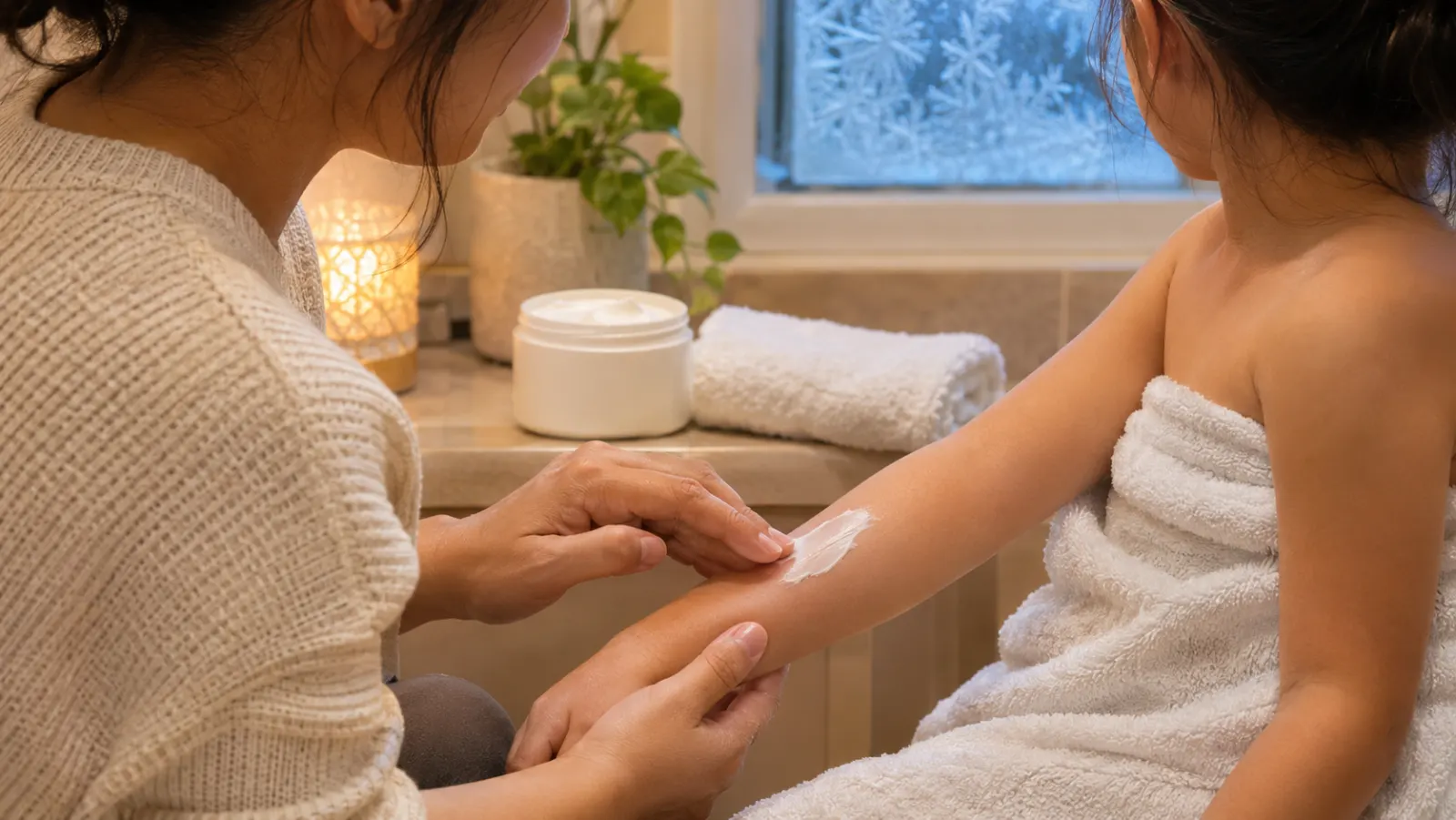
Eczema has a way of taking over a household. There is the scratching at night that wakes everyone up, the cupboard full of half-used creams, the cotton mittens on the baby, the arguments with well-meaning relatives about what you should or should not be putting on the skin. For adults, it can mean hiding hands at work, avoiding short sleeves, or quietly losing sleep for weeks at a time.
Eczema, most often the type called atopic dermatitis, is a long-term skin condition that causes dry, itchy, inflamed patches that come and go. It is very common in babies and young children, and while many children improve as they grow, it can continue into adulthood or even appear for the first time later in life. It is not contagious, and it is not caused by poor hygiene.
There is no single cure, but eczema can usually be controlled well with a steady daily routine and the right treatment for flares. This guide focuses on what that looks like in practice for families in Scarborough, where the skin has to deal with bone-dry winters, humid summers, and plenty in between.
Why eczema skin behaves differently
Healthy skin works like a brick wall. Skin cells are the bricks, and natural oils and fats are the mortar that holds them together and keeps moisture in. In people with eczema, that mortar is weaker. Water escapes more easily, so the skin dries out, and irritants and allergens get in more easily, which triggers inflammation and itch.
Then the itch-scratch cycle takes over. Scratching damages the skin barrier further, which leads to more inflammation, which leads to more itch. Breaking that cycle is a big part of treatment.
Eczema often runs in families, especially families with a history of eczema, asthma, hay fever, or food allergies. Children with eczema are more likely than others to develop these conditions too, though many never do.
What it looks like at different ages
Babies
In infants, eczema usually starts in the first few months. It often appears on the cheeks, forehead, and scalp, and may spread to the outer arms, legs, and trunk. The diaper area is usually spared because it stays moist. Babies can be very itchy and may rub their faces on bedding or their parents’ shoulders.
Toddlers and school-aged children
As children grow, eczema tends to move to the creases: the insides of the elbows, behind the knees, the wrists, the ankles, and around the neck. Skin in these areas can become thickened and leathery from repeated scratching.
Teens and adults
In older patients, eczema often affects the hands, eyelids, neck, and creases. Hand eczema is especially common in people whose jobs involve frequent handwashing or wet work, such as health care workers, cleaners, hairdressers, food service staff, and parents of young children.
Eczema on darker skin
Many guides describe eczema as red. On brown and Black skin, which is common across Scarborough’s communities, inflamed patches may instead look dark brown, purple, or grey, and can be harder to spot. Eczema on darker skin can also show up as small bumps around hair follicles. After a flare settles, it is common for the skin to stay lighter or darker than the surrounding area for weeks or months. This pigment change usually fades with time once the eczema is controlled, and good control is the best way to prevent it.
Scarborough seasons and your skin
Winter: the dry season
When the furnace runs from November to April and outdoor air is cold and dry, many people with eczema notice their skin getting worse. Indoor heating pulls moisture out of the air, hot showers feel wonderful but strip the skin of oils, and wool scarves and layers can irritate. Waiting at a windy TTC stop on Eglinton in January does not help chapped hands.
Winter strategies:
- Moisturize more often, and switch to a thicker product if a lotion is not keeping up
- Use a humidifier in bedrooms if indoor air is very dry, and keep it clean
- Wear soft cotton layers next to the skin, with wool on the outside if needed
- Protect hands with gloves outdoors, and moisturize after every handwash
Summer: heat, sweat and chlorine
Summer brings a different set of problems. Heat and sweat are common itch triggers, and sunscreen, insect repellent, and pool chlorine can sting sensitive skin. For some people, though, summer humidity and sunshine actually improve their eczema.
Summer strategies:
- Rinse off sweat with lukewarm water soon after exercise or a hot commute, then moisturize
- Shower and moisturize after swimming in chlorinated pools
- Choose loose, breathable cotton clothing
- Test new sunscreens on a small patch first; mineral sunscreens with zinc oxide or titanium dioxide are often better tolerated
- Keep cool at night with a fan rather than heavy covers
The daily routine that does the heavy lifting
The most important eczema treatment is not a prescription. It is moisturizing, consistently, every day, even when the skin looks fine.
Choosing a moisturizer
- Ointments (such as petroleum jelly) are the most protective and usually the least stinging, but feel greasy.
- Creams are a good middle ground and are often what people use day to day.
- Lotions are thinner and contain more water, so they often do not do enough for eczema skin.
Fragrance-free products are best. A higher price does not mean better results, and plain, inexpensive products often work just as well as specialty brands. Pharmacists can help you compare options.
Soak and seal
A simple bathing routine helps many people:
- Bathe or shower in lukewarm water, not hot, for about 5 to 10 minutes.
- Use a gentle, fragrance-free cleanser only where needed, rather than soaping the whole body.
- Pat the skin gently with a towel, leaving it slightly damp.
- Apply any prescribed treatment to flared areas first, then moisturizer generously everywhere else, within a few minutes of getting out.
For children, a nightly bath followed by moisturizer can become a calm part of the bedtime routine.
How much is enough?
More than most people think. For a child with widespread eczema, a large tub of moisturizer may last only a week or two. Apply it in a thick layer, in the direction of hair growth, and reapply through the day, especially on hands and any area that feels tight or dry.
Everyday irritants to rethink
- Fragranced soaps, bubble baths, laundry detergents, and fabric softeners
- Rough or scratchy fabrics
- Long, hot showers
- Overheating at night
- Some traditional home remedies and oils, which can be helpful for some people but irritating for others. If you want to try one, test a small patch first and let your clinician know.
When the skin flares
Even with a good routine, flares happen. They may be triggered by a cold, stress, a change in weather, new products, sweat, or sometimes nothing obvious at all.
Prescription treatments
For flares, a clinician may prescribe an anti-inflammatory medicine to apply to the skin. The most common are topical corticosteroids, which come in different strengths for different parts of the body and different ages. Many parents are nervous about steroid creams. That concern is understandable, but when they are used as directed, in the right strength, for the right length of time, they are safe and very effective. Undertreating a flare often leads to more scratching, more skin damage, and in the end more medicine.
For sensitive areas such as the face and eyelids, or for people who need regular treatment, non-steroid prescription creams and ointments are also available. Your clinician can explain which option suits your situation and how to step treatment down once the flare settles.
Managing the itch
- Keep nails short and smooth, especially in children
- Use cotton mittens or sleepers with fold-over cuffs for babies who scratch at night
- Try a cool, damp cloth on very itchy areas
- Ask your clinician whether an antihistamine at bedtime might help with sleep. They do not treat the eczema itself, but sedating ones are sometimes used short term.
Food allergies and eczema
Many parents wonder whether a food is causing their child’s eczema. In some infants with moderate to severe eczema, food allergy can play a role, but in most people food is not the main driver. Cutting out foods without proper assessment can lead to nutritional problems and, in some cases, may increase the risk of developing a true allergy. Talk to your clinician before removing foods, and see our page on allergy treatment if allergies are part of the picture.
When eczema becomes infected
Broken, scratched skin is more vulnerable to infection, and infection is one of the common reasons a flare suddenly gets much worse or stops responding to the usual treatment.
Bacterial infection
Signs include:
- Yellow or honey-coloured crusting
- Weeping or oozing, or small pus-filled bumps
- Increasing pain, warmth, or swelling
- Fever, or feeling unwell
This needs to be seen by a clinician, who may recommend an antibiotic cream or oral antibiotic.
Eczema herpeticum: a skin emergency
Rarely, the cold sore virus can spread widely across eczema-affected skin. This is called eczema herpeticum. It may look like clusters of small, painful blisters or punched-out sores that may bleed or crust, often spreading quickly, and frequently with fever and feeling unwell. It needs urgent medical care the same day. If your child or you seem very unwell, have a high fever, or the sores are near the eyes, go to the nearest emergency department.
Keep anyone with an active cold sore from kissing a baby or child with eczema.
When to book a visit
Make an appointment if:
- Eczema is keeping you or your child from sleeping
- Moisturizing and over-the-counter care are not controlling it
- You are not sure whether a rash is eczema or something else
- You have been using a prescription treatment without improvement
- The skin is affecting school, work, or mood
- You suspect a food or contact allergy
For hard-to-control eczema, your clinician may suggest seeing a dermatologist or allergist through a specialist referral. Ongoing follow-up visits help adjust treatment as seasons change and children grow.
Eczema care in Scarborough at HealthSmart Medical
Living with eczema takes patience, but with a routine that suits your skin and a clear plan for flares, most people can spend far more time comfortable than itchy. The right approach for a baby with dry cheeks in February is different from what a teenager needs after summer swim practice, and different again for a nurse with cracked hands. A conversation with a clinician can sort out what will actually work for you.
HealthSmart Medical sees patients of all ages with skin concerns as part of our general medical consultations and children’s health care. Visit us at 2425 Eglinton Ave. East, Unit 12, in Scarborough. Call 416-757-7117 or book online, and bring the creams you have been using so we can review them together.
This article is for general information and is not a substitute for medical advice. If you have severe or worsening symptoms, call 911 or go to the nearest emergency department.