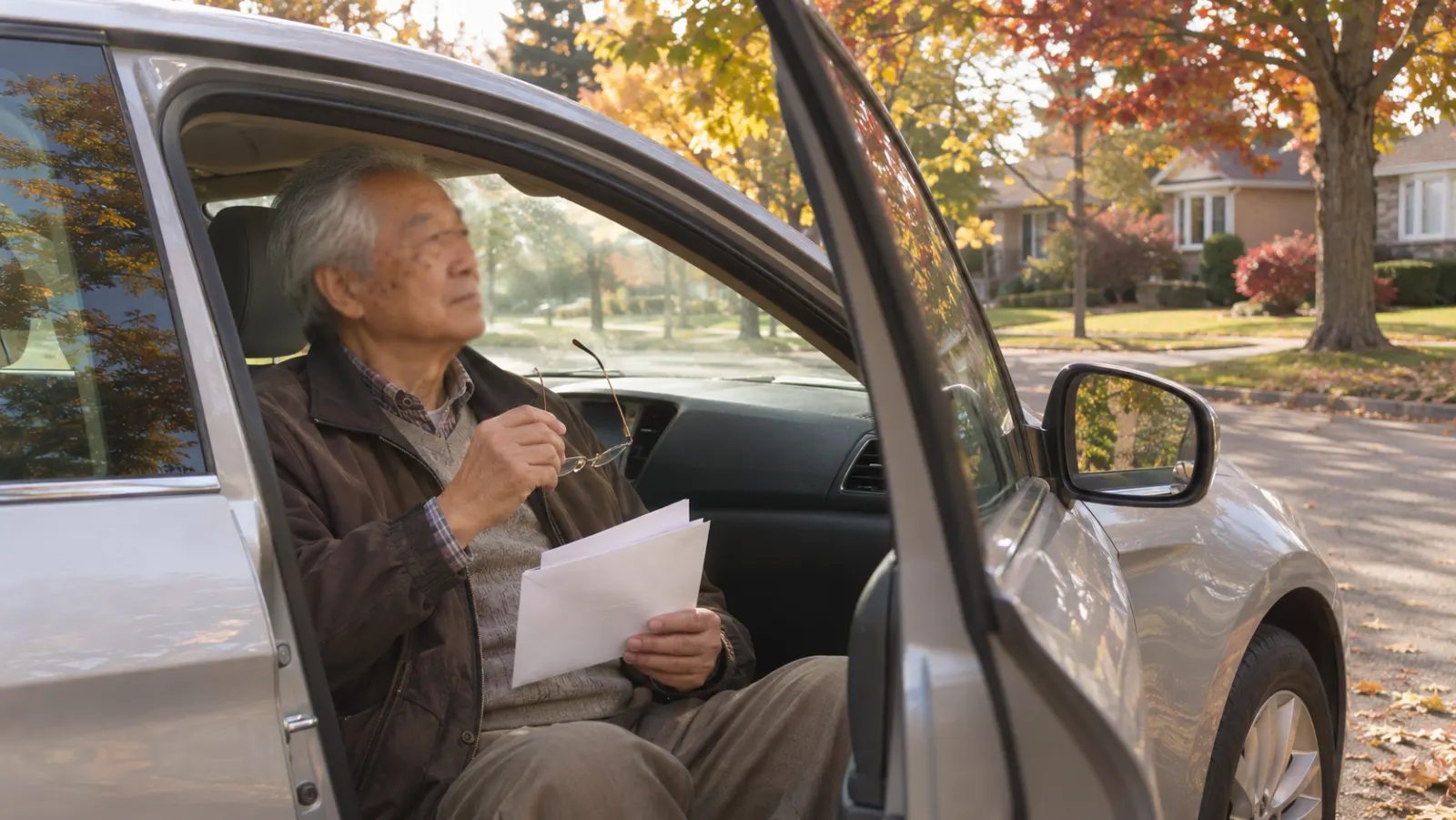
For a lot of people, a driver’s licence is not a convenience. It is how they get to work, pick up grandchildren from school, haul freight across the province, or reach a specialist appointment across the city. So when a letter arrives from the Ministry of Transportation asking for a medical report, or when a new job requires a commercial licence, the natural reaction is a mix of confusion and worry. What exactly are they checking? Could I lose my licence? What do I need to bring?
Driver’s medical exams are routine for many drivers in Ontario. Truck and bus drivers have them as a regular part of keeping their licence. Others are asked for a medical report after a health event, a change in vision, or a review triggered by age or a doctor’s report. For drivers in Scarborough, where many households depend on one or two drivers and where the trucking and delivery industries employ a lot of residents, these exams come up more often than you might expect.
This guide explains the common reasons Ontario drivers need a medical, what a typical exam involves, how to prepare, and what happens if a health issue turns up. The MTO and your clinician remain the authorities on your specific case, and requirements do change, so treat this as a starting point rather than a rulebook.
Who usually needs a driver’s medical?
Commercial licence applicants and holders
If you are applying for, upgrading to, or renewing certain commercial licence classes in Ontario, you will typically need a medical report completed by a physician or nurse practitioner. This includes classes used for tractor-trailers, trucks, buses, and some ambulances. Medicals are generally required when you first apply and then at regular intervals while you hold the licence, with the intervals becoming more frequent as drivers get older. The MTO sends reminders and the correct form when a medical is due, and the form tells you the deadline.
Commercial drivers are held to a higher medical standard than people driving a private car. That makes sense: a large truck or a bus full of passengers carries more risk if the driver suddenly becomes unwell, drowsy, or unable to see clearly.
Drivers asked by the MTO for a medical review
Sometimes the MTO asks for a medical report from a driver with a regular passenger licence. This may happen because:
- A physician, nurse practitioner, or optometrist reported a medical or vision condition that may affect safe driving
- The driver disclosed a condition on a licence application or renewal
- There was a collision or incident that raised questions about health
- A previous review requires follow-up after a period of time
The letter usually explains what information is needed and by when. It is important not to ignore it. Missing the deadline can lead to a licence suspension, even if your health is fine.
Senior drivers
Ontario has a renewal program for drivers aged 80 and older that includes things like a vision test, a review of your driving record, and in-class screening activities. A full medical exam is not automatically part of that process, but some senior drivers are asked for a medical report, either because of something found during renewal or because a health condition has been reported. Older drivers and their families sometimes come to us simply wanting an honest conversation about whether a health condition is affecting driving, before anyone else raises it.
Other situations
Some employers ask for medical clearance before a driving job, even when the MTO does not require it. Some drivers coming from another province or country may need a medical as part of exchanging or obtaining an Ontario licence for certain classes. If you are not sure whether you need one, the MTO or your employer can confirm.
What the exam actually checks
A driver’s medical is not a general physical, although it overlaps with one. The goal is to answer a fairly specific question: is there anything about this person’s health that could make it unsafe for them to drive the class of vehicle they are licensed for?
Common areas include:
- Vision. Visual acuity (how clearly you see), visual fields (how wide your side vision is), and sometimes colour vision or depth perception. If you wear glasses or contacts, bring them. Some forms require an eye specialist to complete the vision portion.
- Hearing. Especially for commercial drivers, who need to hear horns, sirens, and mechanical warning sounds.
- Heart health. Blood pressure, heart rhythm, history of heart attack, heart failure, fainting, or devices such as pacemakers. An ECG may sometimes be requested.
- Neurological conditions. Seizures, stroke, mini-strokes, dizziness or vertigo, conditions affecting coordination, and memory or thinking changes.
- Diabetes. Particularly the risk of low blood sugar for people taking insulin or certain other medications.
- Sleep. Signs of sleep apnea or other conditions that cause daytime drowsiness.
- Mental health and substance use. Including medications or substances that can affect alertness or judgment.
- Musculoskeletal function. Whether you can safely turn your head, grip the wheel, operate pedals, and, for commercial drivers, handle the physical demands of the job.
- Medications. Many common medications, including some for sleep, pain, allergies, anxiety, and mood, can cause drowsiness.
Your clinician will ask detailed questions, examine you, and fill out the relevant sections of the form honestly and completely. Clinicians cannot leave out information that the form asks for. That can feel uncomfortable, but it also protects you; a form that is incomplete or inaccurate tends to cause more delays.
What to bring
Preparation saves time and often prevents a second visit. Before your appointment, gather:
- The MTO form or letter, unopened sections and all. Do not fill in the clinician’s parts yourself.
- Your driver’s licence and your health card.
- Your glasses, contact lenses, or hearing aids, if you use them.
- A complete list of your medications, including doses, plus any supplements and over-the-counter products. The bottles themselves are fine too.
- Recent reports from specialists, such as a cardiologist, neurologist, endocrinologist, sleep clinic, or eye doctor, especially if the MTO letter mentions a specific condition.
- Recent test results you have copies of, such as blood work, sleep study results, or blood sugar logs.
- Any previous MTO correspondence relating to your licence.
If you are not sure whether a specialist report is needed, call the clinic ahead of time with the letter in hand. In some cases, the MTO asks for information that only a specialist can provide, and knowing that early avoids a wasted trip.
A note on cost
Driver’s medicals requested for licensing are generally considered third-party services and are often not covered by OHIP. Ask the clinic about any fees when you book, so there are no surprises.
If a health issue comes up
This is the part people worry about most. A few reassurances and realities:
Most medical conditions do not mean you lose your licence. Plenty of people drive safely with diabetes, heart disease, epilepsy that is well controlled, sleep apnea that is treated, or vision that is corrected with glasses. What matters is whether the condition is stable and managed.
Sometimes the answer is “not yet” rather than “no.” For example, after certain heart events or seizures, there is usually a waiting period before driving resumes. After that period, and with appropriate follow-up, many drivers return to the road.
Treatment can change the outcome. Untreated sleep apnea, uncontrolled blood pressure, or poorly controlled blood sugar may raise concerns. Getting these conditions properly managed often resolves the issue. Regular follow-up through chronic disease management can put you in a much stronger position.
Clinicians have reporting responsibilities. In Ontario, physicians and nurse practitioners are required to report certain high-risk medical conditions to the MTO, and they have discretion to report others. Optometrists also have reporting duties for some vision conditions. This is a legal obligation, not a personal judgment. The final decision about your licence is made by the MTO, not by the clinic.
You can usually provide more information. If the MTO suspends or restricts a licence on medical grounds, drivers can typically submit further medical information for reconsideration. Your clinician can help you understand what additional documentation might be useful.
Driving safely between exams
The exam is a snapshot. Your health keeps changing between visits, and it is your responsibility to drive only when you are fit to do so. A few good habits:
- Do not drive if you feel drowsy, dizzy, or unwell, especially after starting a new medication.
- Ask your pharmacist whether new medications, including over-the-counter allergy and cold products, can affect driving.
- Get your eyes checked regularly, and update your glasses when needed.
- If you have diabetes and use insulin or certain other medications, check your blood sugar before driving and keep a fast-acting sugar source in the car.
- Take long-haul fatigue seriously. If you snore loudly, wake unrefreshed, or nod off during the day, ask about sleep apnea testing.
- Report new symptoms such as fainting, a seizure, sudden vision changes, or confusion to a clinician promptly.
Call 911 if you or someone else has signs of a stroke (sudden face drooping, arm weakness, or speech trouble), chest pain, a seizure, or loses consciousness, whether behind the wheel or not. Do not drive yourself to hospital with these symptoms.
Families and older drivers
For many families in Scarborough, an older parent’s driving becomes a gentle but difficult topic. Nobody wants to take away someone’s independence, and nobody wants a preventable collision either. If you are worried about a family member, notice specifics: new dents in the car, getting lost on familiar routes, near-misses, trouble judging gaps on busy roads like Kingston Road or Eglinton, or difficulty turning to check blind spots.
Encouraging a check-up, ideally with their family doctor, can be a less confrontational first step than a direct conversation about giving up the keys. Clinicians can look at vision, memory, medications, and physical function, and can help families plan for alternatives such as TTC routes, Wheel-Trans eligibility, or rides from relatives, if driving does need to stop.
Booking a driver’s medical in Scarborough
HealthSmart Medical completes driver’s medical forms for commercial licence holders and drivers who have received an MTO request. You can read more on our driver’s medical exams page, or see our other medical forms and assessments.
We are at 2425 Eglinton Ave. East, Unit 12. Call 416-757-7117 or book online, and please have your MTO form or letter with you when you book, so we can tell you if anything else is needed before your visit. Getting the paperwork right the first time is the easiest way to keep you on the road.
This article is for general information and is not a substitute for medical advice. If you have severe or worsening symptoms, call 911 or go to the nearest emergency department.